
A $30 million transaction just closed on a 70-megawatt Paraguay operation. This deal is changing how smart investors think about digital assets. Bitfarms sold their Paso Peña site to Sympatheia Power Fund.
This isn’t some fringe deal. It’s proof that established players are reshaping their portfolios right now.
I’ve watched this space evolve from garage setups to industrial-scale infrastructure. Evaluating a bitcoin mining facility for sale means more than just buying equipment. You’re acquiring energy capacity, production infrastructure, and a stake in a maturing industry.
The landscape has shifted dramatically over the past 18 months. Bitfarms is now focused entirely on North American operations—341 MW energized. They have a 2.1 GW pipeline in development.
I’m going to walk you through what actually matters when buying a cryptocurrency mining operation. You might be diversifying from traditional tech investments or scaling up from home rigs. Understanding the financial realities beats the hype every time.
Let’s dig into the specifics.
Key Takeaways
- Recent $30M Bitfarms transaction demonstrates active institutional market for megawatt-scale operations
- Modern facilities represent energy infrastructure investments, not just hardware purchases
- Established operators are repositioning portfolios, creating acquisition opportunities for new entrants
- North American sites now dominate strategic planning, with multi-gigawatt development pipelines
- Due diligence requires understanding energy contracts, cooling systems, and utility partnerships
- Scaling from residential to commercial operations demands different financial and operational expertise
Understanding Bitcoin Mining Facilities
A bitcoin mining facility isn’t just a building with computers. It’s an industrial operation requiring data center precision and small factory power consumption. Too many people focus on revenue potential without understanding infrastructure demands.
The difference between hobby garage mining and a commercial crypto mining setup is massive. Think lemonade stand versus bottling plant. The fundamentals match, but scale and operational demands exist in completely different worlds.
What is a Bitcoin Mining Facility?
A bitcoin mining facility is a specialized data center with one purpose. It solves cryptographic puzzles to validate blockchain transactions and earn bitcoin rewards.
A turnkey bitcoin mining business for sale includes several integrated systems working together. The physical structure might be a repurposed warehouse or purpose-built facility. Some operations use shipping containers arranged in industrial parks.
I toured one operation in Texas using an old textile factory. The high ceilings and concrete floors made it perfect for heat management.
Inside these facilities, rows of ASIC miners run continuously. These aren’t regular computers. They’re machines built for one task: performing SHA-256 hashing calculations as fast as possible.
The electrical infrastructure separates amateur operations from professional ones. A commercial crypto mining setup needs industrial-grade power distribution handling sustained loads of several megawatts. Power consumption rivals small manufacturing plants.
Cooling systems are equally critical. Thousands of machines running simultaneously generate tremendous heat. Some facilities use traditional HVAC systems with industrial-strength air conditioning.
Others have adopted immersion cooling. Miners sit in tanks of dielectric fluid that absorbs heat more efficiently than air.
Network infrastructure connects everything to the blockchain and mining pools. You need reliable, high-speed internet. Bandwidth requirements are surprisingly modest compared to power demands.
A facility drawing 10 megawatts might run perfectly fine on a 100 Mbps connection.
Importance of Location in Mining
Location determines whether your mining operation makes money or bleeds cash. This isn’t negotiable. You can’t fix it after purchase.
Electricity costs drive everything. Power costs exceeding $0.08 per kilowatt-hour make mining profitability challenging. Sweet spots include areas with abundant hydroelectric power or natural gas infrastructure.
Companies like Bitfarms cluster facilities in data center hotspots. These locations have existing power and fiber infrastructure. They’ve identified regions where electrical grids support megawatt-scale operations without requiring massive infrastructure investments.
I’ve seen Pacific Northwest operations benefit from hydroelectric power at $0.03 per kWh. Similar California facilities struggle at $0.15 per kWh. That price difference alone determines profitability regardless of bitcoin’s market price.
Climate matters more than you’d think. Cold-climate locations reduce cooling costs significantly. A facility in Iceland or Quebec spends far less on temperature management.
Arizona or Texas facilities face higher summer costs.
Regulatory environment affects long-term viability. Some jurisdictions welcome mining operations with tax incentives and streamlined permitting. Others have implemented restrictions or outright bans.
You’re not just buying a facility. You’re buying into a local government’s attitude toward crypto.
Grid reliability prevents catastrophic losses. Mining operations experiencing frequent power outages lose revenue during downtime. Power surges risk hardware damage.
Access to stable grid infrastructure with backup capacity is non-negotiable.
Key Components of a Mining Facility
You need to assess whether core components work together efficiently. Are you inheriting someone else’s problems? Each system depends on the others.
The miners themselves represent the largest capital investment. Modern ASIC miners like the Antminer S19 XP cost thousands of dollars each. A commercial operation might deploy hundreds or thousands of units.
These machines have limited lifespans. They typically last 3-5 years before becoming uneconomical to operate.
Power distribution systems must handle continuous heavy loads without creating fire hazards. This includes transformers to step down voltage from utility levels. Distribution panels route power to mining racks.
Individual power supply units serve each miner. I’ve seen facilities where inadequate power distribution created voltage sag problems. This reduced mining efficiency by 15%.
Cooling infrastructure prevents thermal throttling that kills profitability. Air-cooled setups use industrial fans and ventilation systems to exhaust hot air. Immersion cooling systems submerge miners in specialized fluid.
This offers better thermal management but requires different facility design.
The following table breaks down essential components in any serious mining operation:
| Component Category | Primary Function | Critical Specifications | Common Issues |
|---|---|---|---|
| ASIC Miners | Perform cryptographic hashing | Hash rate (TH/s), power efficiency (J/TH) | Hardware degradation, obsolescence risk |
| Power Infrastructure | Deliver consistent electricity | Total capacity (MW), voltage stability, redundancy | Insufficient capacity, poor power quality |
| Cooling Systems | Maintain optimal temperature | Heat rejection capacity (BTU/hr), efficiency ratio | Inadequate capacity during peak heat, high operating costs |
| Network Equipment | Connect to blockchain and pools | Bandwidth (Mbps), latency, redundancy | Single point of failure, inadequate redundancy |
| Management Software | Monitor and optimize performance | Real-time monitoring, remote management, analytics | Poor visibility into operations, delayed problem detection |
Network infrastructure connects your operation to mining pools and the broader blockchain network. Despite massive power consumption, bandwidth needs are surprisingly modest. But reliability is critical.
Losing network connectivity means losing revenue every second you’re offline.
Management software has become increasingly sophisticated. Modern systems monitor thousands of miners simultaneously. They alert operators to hardware failures, temperature anomalies, or performance degradation.
The best setups allow remote management. You’re not driving to the facility every time a miner needs rebooting.
Physical security protects valuable hardware. A facility housing $2 million in mining equipment needs proper access controls. Surveillance systems and sometimes armed security are essential depending on location.
I know operators who’ve had entire rows of miners stolen during break-ins.
Fire suppression systems are legally required and practically essential. Dense concentrations of electrical equipment run at high temperatures. Fire risk is real.
Most facilities use specialized suppression systems that won’t damage electronics like water sprinklers would.
You’re really evaluating whether components integrate effectively. A facility with top-tier miners but inadequate cooling is expensive hardware waiting to fail. One with perfect infrastructure but obsolete equipment won’t generate competitive returns.
Market Overview of Bitcoin Mining
The mining market has changed dramatically. Geographic and operational landscapes have shifted in major ways. This isn’t the wild-west bitcoin of 2017 anymore.
Today’s numbers reflect a mature, consolidated industry. Serious capital and infrastructure planning now dominate the conversation. ASIC mining farm investment opportunities require careful evaluation.
Understanding these market dynamics is essential before evaluating properties. Statistics, growth patterns, and predictions paint a clear picture. They show where this industry is heading and whether facilities make financial sense.
Current Statistics on Bitcoin Mining
Bitcoin mining numbers show consolidation and scale. As of early 2026, the total Bitcoin network hash rate sits at 750 EH/s (exahashes per second). That’s a staggering amount of computational power.
North American operations now account for roughly 38% of global mining capacity. That’s up from under 5% just five years ago. This geographic shift directly impacts the value of any bitcoin data center for purchase in this region.
Bitfarms provides a real-world example of current scale. Their energy portfolio shows the industry’s massive growth:
- 341 MW of energized capacity currently operational
- 430 MW under active development (100% U.S.-based projects)
- 2.1 GW total multi-year pipeline across North America (~90% U.S.-based)
One MW can support roughly 300-400 modern ASIC miners. Bitfarms’ current energized capacity alone could house over 100,000 mining machines. These are industrial-scale facilities that require serious infrastructure planning.
Growth Trends in the Crypto Industry
Growth patterns show a clear evolution from hobbyist operations to industrial facilities. Several interconnected factors are driving this transformation.
Increasing mining difficulty means you need more hash power for the same revenue. Solo miners and small operations can’t compete with large facility efficiency. The margin for profitability has narrowed significantly.
Institutional capital has entered the space in a big way. Public mining companies, private equity firms, and energy companies now see ASIC mining farm investment as legitimate. This professionalization brings better practices but increases competition for prime locations.
Companies like Bitfarms have exited Latin America to focus on North America. Regulatory clarity matters more as operations scale up. Infrastructure reliability directly impacts your bottom line.
Here are the key growth drivers:
- Consolidation of mining power into fewer, larger operations
- Geographic concentration in regions with favorable power costs and regulations
- Technology upgrades to more efficient mining hardware
- Integration with renewable energy sources to reduce operating costs
- Increased focus on infrastructure quality over pure hash rate expansion
Predictions for Bitcoin in 2024
Looking at fundamentals and recent data, we can make educated assessments. The industry has humbled plenty of forecasters.
The 2024 halving event was a major inflection point. Block rewards dropped from 6.25 BTC to 3.125 BTC. This immediately squeezed out inefficient operators.
Evaluating a bitcoin data center for purchase in 2026 means making two bets. First, that bitcoin price appreciation and transaction fees will offset reduced block subsidy. Second, that your operational efficiency will keep you profitable when competitors shut down.
Market dynamics favor established facilities with proven economics over new builds. Construction costs have increased significantly. Lead times for equipment can stretch months.
Buying an operational facility means you skip the ramp-up period. You start generating revenue immediately.
Continued consolidation is expected in the industry. The operators who survive will have:
- Access to electricity below $0.04 per kWh
- Modern, efficient mining hardware (100+ TH/s per unit)
- Robust cooling and power infrastructure
- Strong balance sheets to weather price volatility
The professionalization of bitcoin mining means the barrier to entry keeps rising. For investors with capital and operational expertise, established facilities represent unique opportunities. The market rewards efficiency and scale while punishing those who can’t deliver both.
Benefits of Owning a Mining Facility
Mining facility ownership comes down to practical economics and long-term value creation. The benefits extend beyond just mining bitcoin. They touch revenue diversification, tax strategy, and infrastructure value that persists regardless of crypto market cycles.
Revenue Potential and ROI
Revenue from mining operations comes from two primary sources: block rewards and transaction fees. Assuming bitcoin trades around $95,000, a well-optimized 1 MW facility might generate $150,000 to $200,000 monthly. Your electricity costs will typically run $50,000 to $80,000 depending on your power rate.
That puts gross margins in the 50-60% range under favorable conditions. These numbers fluctuate significantly with bitcoin price volatility. Network difficulty adjustments happen every two weeks and also affect your returns.
Here’s real-world evidence: Bitfarms expects to receive $9 million in cash upon closing and up to $21 million over 10 months based on payment milestones. Their 70 MW facility transaction values their operation at roughly $30 million total. That’s about $428,000 per MW of capacity.
ROI timelines typically run 18-36 months for the bitcoin mining hardware infrastructure component. This assumes you’re buying at reasonable prices and bitcoin doesn’t experience a major crash. But here’s what most people overlook: the crypto mining real estate itself holds value independent of mining profitability.
The power-dense facilities built for bitcoin mining are increasingly valuable for AI training and inference workloads.
You own physical infrastructure—buildings, electrical systems, cooling equipment—that can be repurposed for other high-performance computing applications. Bitfarms explicitly mentioned reinvesting capital in “HPC/AI energy infrastructure,” recognizing this dual-use potential. That’s your insurance policy against crypto market downturns.
Tax Advantages for Mining Operations
Tax benefits vary by jurisdiction, but U.S. operators have several valuable deductions available. You can typically depreciate mining hardware over five years using the Modified Accelerated Cost Recovery System (MACRS). The facility building itself depreciates over 39 years.
If you’re using renewable power sources, you may qualify for energy investment tax credits. These credits can offset 10-30% of your installation costs. Some operators strategically locate facilities in Opportunity Zones for additional tax deferral benefits on capital gains.
Mining operations can also deduct ordinary business expenses: electricity costs, maintenance, insurance, and property taxes. If you’re structured as a pass-through entity like an LLC, these deductions flow directly to your personal tax return. Proper planning with qualified crypto tax specialists can significantly reduce your effective tax rate.
Sustainability and Green Mining Options
Sustainability isn’t just feel-good marketing anymore—it’s becoming economically necessary. Operations using hydroelectric, solar, wind, or captured flared natural gas often access power at lower costs. Grid-dependent facilities typically pay more for their electricity.
Operations in Texas curtail mining during peak demand periods and actually get paid by grid operators. This provides demand flexibility that grid operators need. This demand response revenue can add 5-15% to your bottom line during summer months.
Green mining operations increasingly attract institutional investors and corporate partnerships who face ESG reporting requirements. The bitcoin mining hardware infrastructure you’re building needs to be thought of as energy monetization infrastructure first, bitcoin mining second. That mindset shift separates successful facility owners from those who panic-sell during market downturns.
Renewable-powered facilities also face less regulatory scrutiny. Several states are considering restrictions on fossil-fuel-powered mining. Meanwhile, they actively encourage renewable operations through tax incentives and expedited permitting.
Factors to Consider When Buying
Too many people get excited about buying a mining facility and miss critical planning factors. The enthusiasm around owning your operation can cloud judgment fast. You need a clear view of what you’re getting into before committing capital.
The path from interest to ownership involves navigating financial commitments, technical requirements, and legal complexities. Each element determines whether your investment succeeds or becomes an expensive lesson. Let me walk you through the major considerations that separate successful purchases from regrettable ones.
Initial Costs and Setup Expenses
The price tag on a blockchain mining operation acquisition goes beyond what sellers advertise. Most listings focus on the facility purchase price and maybe the miner count. That’s like buying a car and forgetting about insurance, gas, and maintenance.
Here’s what your budget actually needs to cover:
- Real estate costs: Purchase price or long-term lease agreements, property taxes, and insurance premiums
- Electrical infrastructure: Transformer installations, distribution panels, substations for multi-megawatt operations
- Mining hardware: ASIC miners ranging from $2,000 to $4,000 per unit depending on efficiency ratings
- Cooling and ventilation: HVAC systems, immersion cooling tanks, or air circulation equipment
- Network infrastructure: Internet connectivity, security systems, monitoring equipment
- Legal and permitting: Attorney fees, environmental studies, building permits, utility connection fees
A 1 MW facility typically requires $2-3 million in total initial investment. That’s everything included, not just the miners. Existing facilities for sale hopefully have much of this infrastructure already in place.
You can’t just trust what’s there. I recommend hiring an independent electrical engineer to assess transformers, switchgear, and distribution systems. You need to know the remaining useful life of every major component.
The miners themselves depreciate fast in this industry. A two-year-old ASIC might be worth half its original purchase price. Calculate replacement timelines into your financial model from day one.
Power Supply and Cooling Solutions
Power availability makes or breaks an industrial bitcoin mining location. You need reliable electricity at prices that allow profitable operation. The details get complicated quickly.
Your utility’s rate structure matters more than the base kilowatt-hour price. Time-of-use pricing can spike costs during peak hours. Demand charges hit you based on your highest usage moment in a billing period.
Some facilities negotiate special industrial rates with their utility providers. Others participate in demand-response programs where they curtail operations during grid stress for lower rates. These arrangements require specific contract terms you’ll want to understand before purchasing.
| Power Consideration | Impact on Operations | Cost Implications |
|---|---|---|
| Time-of-use rates | May require operational adjustments during peak hours | 15-30% higher costs during peak periods |
| Demand charges | Penalizes peak usage spikes | Can add 20-40% to monthly bills |
| Interruptible power contracts | Occasional forced shutdowns during grid emergencies | 30-50% discount on base rates |
| Industrial rate agreements | Requires minimum usage commitments | Best long-term pricing stability |
Cooling solutions depend heavily on your climate and facility design. In cold regions like Canada or northern states, you can leverage outside air economization. You’re basically using free cold air to cool your miners most of the year.
Hot climates present bigger challenges. Arizona or Texas facilities might need evaporative cooling systems or full HVAC installations. The newest approach is immersion cooling, where miners sit in dielectric fluid that efficiently removes heat.
Each cooling method affects both your upfront capital needs and ongoing operational expenses. Immersion cooling costs more initially but can reduce power consumption by 10-15% compared to air cooling. That math changes your ROI calculations significantly.
Regulations and Compliance Issues
Regulatory compliance is the wild card that can kill an otherwise solid deal. I’ve seen buyers get months into due diligence only to discover local zoning codes don’t permit their intended use. That’s money and time you’ll never recover.
Local zoning regulations might classify mining operations as industrial data centers, which aren’t allowed in all areas. Noise ordinances present another common problem. Mining facilities generate constant fan noise that neighbors might find objectionable, leading to complaints and enforcement actions.
Several jurisdictions have imposed moratoriums on new crypto mining operations. New York State enacted temporary bans in certain regions. Some counties in Washington and Montana have similar restrictions.
You need to verify current regulations and understand any pending legislative changes. Environmental regulations around energy consumption are tightening nationwide. Some states require renewable energy percentages or carbon offset purchases.
Companies like Bitfarms operate throughout the Americas with headquarters in New York and Toronto. They deal with multiple regulatory frameworks. Their transactions typically include clauses stating that closing is subject to satisfaction of customary closing conditions.
Don’t underestimate what might surface during due diligence. I’ve watched deals collapse because electrical utilities refused to commit to required power levels. Other times, local opposition creates political pressure that makes permits impossible to obtain.
Your due diligence checklist should include:
- Current zoning classification and permitted uses for the property
- Noise ordinance limits and measurement methodologies
- Environmental impact requirements and air quality permits
- Utility commission approvals for high-load industrial customers
- Building code compliance for electrical and fire safety systems
Hire local attorneys who understand both real estate law and emerging cryptocurrency regulations. This isn’t the place to cut costs. A good legal team identifies problems before you’re contractually committed, saving you from expensive mistakes later.
Tools and Technologies for Successful Mining
The tools and technologies reveal everything about how an operation was managed. Professional setups separate themselves from amateur ones here. This is where serious money gets made or lost.
I’ve walked into facilities with outdated technology that made profitability impossible. Then I’ve seen operations running like clockwork with integrated systems. The technology choices directly impact your potential returns.
The right equipment and software determine whether a commercial crypto mining setup runs at 95% uptime or 75%. That 20% difference translates to hundreds of thousands in lost revenue annually. Let’s break down what actually matters.
Hardware Requirements for Mining
Hardware requirements start with the ASICs themselves. This isn’t a “buy once and forget” situation. Mining hardware evolves rapidly, with new generations offering 20-30% efficiency improvements.
Right now, machines like the Antminer S21 series or Whatsminer M60 series are current-generation equipment. These machines deliver around 25-30 J/TH (joules per terahash). This energy efficiency metric determines profitability.
I immediately assess the age and efficiency of existing hardware at any bitcoin mining farm for sale. Miners from 2021 might still generate hash rate. However, they’re probably unprofitable unless electricity costs stay under $0.04/kWh.
Beyond the miners themselves, you need proper PDUs—power distribution units. These must handle the electrical load and provide remote switching capabilities. I’m talking about enterprise-grade equipment here, not consumer-level power strips.
Networking equipment that can support potentially thousands of devices becomes critical at scale. Environmental sensors throughout the facility monitor temperature, humidity, and air quality in real-time. That integration matters more than most people realize.
Companies like Bitfarms build and operate vertically integrated facilities. They connect all these hardware components into cohesive systems.
| ASIC Generation | Efficiency (J/TH) | Hash Rate (TH/s) | Profitability Threshold |
|---|---|---|---|
| 2021 Models (S19 Pro) | 29.5 | 110 | $0.04/kWh or lower |
| 2022 Models (S19 XP) | 21.5 | 140 | $0.06/kWh or lower |
| 2023-24 Models (S21) | 17.5 | 200 | $0.08/kWh or lower |
| Latest Generation (M60S) | 16.0 | 220 | $0.10/kWh or lower |
Software Solutions for Management
Software solutions are criminally underappreciated by people entering the mining space. You need firmware management systems that can update thousands of machines remotely. This capability alone saves countless hours and reduces downtime significantly.
Mining pool software distributes your hash rate effectively across different mining pools. Automated profit-switching algorithms move hash power between different cryptocurrencies or pools. These systems run 24/7 making decisions faster than any human could.
Tools like Foreman, Awesome Miner, or Hive OS provide centralized management interfaces. You can monitor and control your entire operation from a single dashboard. Successful operations use software that connects mining operations to power management and thermal control.
The best mining operations aren’t just running hardware—they’re running integrated technology platforms where every system communicates and optimizes in real-time.
Ask to see their software stack at any turnkey bitcoin mining business. If they’re managing everything manually or using basic monitoring tools, that’s a major red flag. Professional operations use enterprise-grade management platforms that provide granular control and comprehensive analytics.
Monitoring and Optimization Tools
Monitoring and optimization tools separate facilities running at peak performance from those constantly troubleshooting problems. You need real-time monitoring of hash rate, temperature, power consumption, and error rates. Not just facility-wide averages—individual device metrics.
Automated alert systems notify you immediately when miners go offline or performance degrades. I’ve seen operations lose days of production because nobody noticed machines had failed. With proper monitoring, you get alerts on your phone within minutes.
Predictive maintenance tools use historical data to identify machines likely to fail before they do. This proactive approach prevents unexpected downtime and allows you to schedule repairs during optimal windows. Some advanced operations even use machine learning models to optimize power consumption.
I want to see comprehensive monitoring dashboards showing both facility-wide metrics and individual machine performance. The data should include uptime percentages, efficiency trends, temperature patterns, and maintenance histories. If the seller can’t show you detailed operational data going back months, the facility hasn’t been managed professionally.
The optimization piece extends beyond just monitoring—it’s about continuous improvement. The best systems analyze performance data to identify inefficiencies and automatically adjust configurations. This might mean tweaking fan speeds based on ambient temperature.
Dashboard interfaces should provide actionable insights, not just raw data dumps. You want to see visualizations that highlight problems immediately. The technology exists to run these operations with minimal manual intervention—but only if proper systems are in place.
Evaluating Different Properties
Evaluating mining properties requires a different mindset than typical real estate investing. You’re buying power infrastructure first, building second. The crypto mining real estate market has unique evaluation criteria beyond square footage.
I’ve walked through facilities that looked incredible from the outside. But their electrical systems couldn’t support another rack of miners without major upgrades.
What separates successful operations from money pits becomes clear during evaluation. You need a systematic approach covering technical infrastructure, location strategy, and operational economics. Skip any area and you’re gambling with six or seven figures.
Critical Infrastructure Elements Every Buyer Should Verify
Power infrastructure deserves your primary attention when evaluating any potential facility. I’m talking about available capacity in megawatts. You need what the utility can actually deliver, not just what’s currently used.
You need documentation directly from the power company. Don’t just take the seller’s word for it.
Voltage matters more than most buyers initially realize. Higher voltage transmission like 13.8kV or above means lower distribution losses. It also means better efficiency for large-scale operations.
Single-feed power versus multiple redundant feeds impacts your operational reliability significantly. I’ve seen facilities go dark for hours. They relied on a single transformer that failed.
Power contract terms require intense scrutiny. What’s the contracted rate per kilowatt-hour? Critically, when does that contract expire?
I’ve encountered situations where facilities had great rates expiring within six months. Renewal rates would’ve made the entire operation unprofitable. That’s either a negotiating opportunity or a financial disaster.
Physical infrastructure assessment covers multiple dimensions. Building condition and roof integrity matter, especially if you’re considering adding solar panels later. Floor loading capacity isn’t optional—mining equipment is remarkably heavy.
I’ve seen installations where the floor couldn’t safely support the planned density of miners.
For any bitcoin data center for purchase, fiber connectivity should be non-negotiable. Business cable internet doesn’t cut it for serious operations. You need fiber with adequate bandwidth and redundancy.
Latency matters less for mining than some applications. But reliability and bandwidth are absolutely crucial for pool connections and monitoring.
Security systems and access controls protect significant capital investment. Facilities with the least operational problems maintained robust security infrastructure from day one. This includes perimeter security, access logging, and surveillance systems that actually work.
Strategic Location Comparison Framework
Comparing different locations involves both hard financial numbers and strategic positioning considerations. Major operators like Bitfarms shifted toward approximately 90% U.S.-based operations. This reflects real-world practical considerations that smaller operators should notice.
Regulatory environment impacts everything from permitting to long-term operational security. States like Texas, Wyoming, and parts of the Pacific Northwest offer favorable attitudes toward mining operations. Political stability and consistent policy matter for decade-long infrastructure investments.
Electricity costs obviously deserve comparison, but look at the complete cost structure. Property taxes vary enormously between jurisdictions. Labor costs for maintenance and technical staff differ significantly by region.
Insurance premiums reflect local risk profiles and regulatory environments.
Climate directly impacts operational costs in ways that aren’t immediately obvious. A facility in Montana benefits from natural cooling advantages compared to one in Arizona. This potentially saves hundreds of thousands annually in cooling costs.
However, you trade that against potential harsh winter impacts on infrastructure and access. If you’re serious about maximizing your crypto earnings, location climate factors into ongoing profitability significantly.
| Location Factor | High Priority Regions | Key Advantages | Primary Considerations |
|---|---|---|---|
| Electricity Rates | Texas, Washington, Wyoming | Industrial rates $0.03-0.06/kWh | Contract terms and stability |
| Regulatory Environment | Wyoming, Texas, Montana | Favorable legislation, minimal restrictions | Future policy trajectory |
| Climate Benefits | Montana, Idaho, North Dakota | Natural cooling reduces costs 30-40% | Winter infrastructure resilience |
| Grid Reliability | Pacific Northwest, Upper Midwest | Stable power delivery, low outage rates | Demand response programs |
| Infrastructure Access | Data center corridors in Virginia, Texas | Fiber networks, technical workforce | Competition for power resources |
Banking and business operations ease shouldn’t be underestimated. Some jurisdictions make it significantly easier to operate crypto-related businesses. They also make it easier to open business accounts and manage financial operations.
The cumulative friction from unfavorable banking environments adds up quickly.
Technical Due Diligence That Actually Matters
Assessing existing infrastructure requires getting into technical details that most real estate transactions never touch. During due diligence on a bitcoin data center for purchase, you need electrical engineers evaluating power systems. You also need HVAC specialists assessing cooling infrastructure.
IT professionals should audit network and monitoring systems.
Maintenance records for all equipment tell you what you’re actually buying. Look at the historical maintenance logs, repair frequency, and replacement patterns. Facilities with documented preventive maintenance programs perform substantially better than those operated reactively.
Miner hash boards should be checked for failure rates if you’re buying an operational facility with equipment. Higher-than-normal failure rates indicate either environmental problems or equipment pushed too hard. These patterns predict your future operational costs and headaches.
Verify claimed power capacity against actual utility documentation directly. I’ve personally encountered situations where sellers claimed 10 megawatts available. But the utility would only confirm 7 megawatts approved for that service address.
That 3-megawatt difference represents millions in potential revenue over the facility lifetime.
Cooling system efficiency impacts your operational costs every single hour. Examine the cooling infrastructure capacity relative to the heat load from mining equipment. Inadequate cooling doesn’t just increase electricity costs—it accelerates equipment failure.
It also reduces mining efficiency through thermal throttling.
Network infrastructure assessment should include redundancy evaluation, bandwidth testing, and latency measurements to your preferred mining pools. Connection reliability directly impacts your mining uptime and profitability. A facility that loses connectivity for even an hour during high-difficulty periods represents significant lost revenue.
The difference between buying a well-maintained facility and buying someone’s problem child is enormous. Don’t skip technical due diligence just because you’re excited about getting into mining. That excitement-driven urgency has cost people fortunes in this space.
Financing Options for Your Purchase
Getting money for a mining facility is different from financing a warehouse. Traditional lenders view crypto operations with curiosity and doubt. The financing you choose affects your flexibility, risk, and profits.
Buyers often struggle with this process. Some create structured deals, others bring in partners, and a few convince banks. Understanding your options saves time and prevents future problems.
Traditional Financing vs. Crypto Financing
Most conventional lenders hesitate about crypto-related businesses. They don’t understand the risk profile fully. This makes traditional financing for bitcoin mining more complicated.
Some regional banks in mining-friendly states offer specialized lending programs. Texas, Wyoming, and Montana have institutions that get it. These lenders require 30-40% down payment, personal guarantees, and higher interest rates.
Asset-based lending against the facility is possible. Lenders discount collateral value significantly because miners depreciate quickly. Your $50,000 mining rig might count as only $20,000 collateral.
The challenge with traditional mining facility financing isn’t just the risk perception—it’s that the asset class doesn’t fit existing underwriting models, leaving both lenders and borrowers in unfamiliar territory.
Crypto financing options have emerged as compelling alternatives. Specialized lenders provide equipment financing specifically for miners. Some loans are denominated in bitcoin rather than dollars.
Hash rate financing represents another emerging model. Lenders advance capital secured by your future mining production. You get capital now, they get guaranteed bitcoin later.
The Bitfarms transaction shows how sophisticated deals work. They received $9 million cash upon closing with up to $21 million in milestone payments. This approach allowed payment from operational cash flow.
| Financing Type | Down Payment Required | Interest Rate Range | Primary Advantage | Main Risk Factor |
|---|---|---|---|---|
| Traditional Bank Loan | 30-40% | 7-12% | Fixed dollar obligations | Limited availability, personal guarantees |
| Crypto Equipment Financing | 10-25% | Variable | Industry understanding | BTC-denominated payments |
| Hash Rate Financing | 0-15% | Discount rate 15-30% | No upfront equity | Locks in future production prices |
| Seller Financing | 10-30% | 5-10% | Flexible terms, milestone-based | Seller retains interest in performance |
Partnerships and Investment Opportunities
Larger acquisitions increasingly involve strategic partnerships. Partners provide capital for equity or profit-sharing arrangements. This spreads risk while preserving operational control.
Successful partnerships often include energy companies viewing mining as complementary. Data center REITs understand infrastructure requirements and sometimes invest. These partners bring operational expertise and industry relationships.
Family offices and institutional investors enter the space cautiously. They prefer investing in operational facilities with proven track records. Buying an existing farm with production history strengthens your position.
Partnership structure needs crystal-clear documentation. Define operational control, profit distribution, decision-making authority, and exit provisions upfront. Bitcoin price movements create divergent interests between partners.
Partnerships can implode without proper documentation. One operation split when bitcoin dropped 40%. Partners disagreed on liquidation but had no dispute resolution process.
Consider these partnership models:
- Equity partnerships: Partners receive ownership percentage in exchange for capital contribution
- Revenue sharing: Partners receive percentage of mining revenue without equity stake
- Preferred return structures: Capital partners receive guaranteed return before profits split
- Convertible arrangements: Debt that converts to equity based on performance milestones
Leasing vs. Buying a Facility
The lease-versus-buy decision deserves serious financial modeling. Each approach creates different risk profiles and capital requirements. These impact your operation in ways that aren’t immediately obvious.
Leasing the facility reduces initial capital requirements substantially. You might put down first month, last month, and security deposit. This preserves capital for equipment purchases and operational reserves.
The flexibility advantage is real. Exiting a lease is significantly easier than selling property. You’re also not exposed to real estate market fluctuations.
However, you’re building zero equity in the real estate. Every lease payment is a pure expense with no residual value. Over 5-10 years, you might pay enough to have purchased outright.
Buying provides complete control over the property. You can modify electrical infrastructure and expand cooling systems. You capture real estate value appreciation and can leverage the property.
The downside is capital intensity and reduced flexibility. Your down payment ties up capital. Selling commercial real estate takes months, not days.
Some operators use a hybrid approach—lease initially with a purchase option. This lets you prove out the operation and generate cash flow. You can validate location assumptions before committing full capital.
Your decision should factor in:
- Available capital and opportunity cost of deploying it in real estate versus equipment
- Conviction level about long-term mining profitability in that specific location
- Local real estate market trends and appreciation potential
- Lease terms and whether landlord understands mining operations
- Exit strategy timeline and flexibility requirements
There’s no universal right answer. A well-capitalized operator with strong conviction should probably buy. A newer operator with limited capital should probably lease.
FAQs About Bitcoin Mining Facilities
I hear many questions about entering the mining business. They show genuine curiosity and some misunderstandings about how this industry works. I’ve spent years navigating this space.
The same concerns keep surfacing from potential buyers. Let me address these directly. Understanding the real answers will determine if a cryptocurrency mining operation makes sense for you.
Common Questions from Potential Buyers
“Is it too late to get into bitcoin mining?” This is the number one question I encounter. The honest answer? Not necessarily, but the game has changed.
You won’t profitably mine with garage machines anymore. This has become an industrial-scale infrastructure business. Success requires cheap power and the ability to operate at scale.
Here’s where a blockchain mining operation acquisition gives you an advantage. You’re bypassing the hardest part. An existing facility has already solved permitting, grid connection, and operational problems.
“How much can I really make?” I wish there was a simple answer. Profitability varies wildly based on several factors.
Your returns depend on bitcoin price and network difficulty. They also depend on power costs and operational efficiency. Let me give you a framework that reflects current market conditions.
At $0.05/kWh power and $95,000 BTC, you might net $100-150 per day per MW. Scale that to a 10 MW facility. You’re looking at $1,000-1,500 daily or $365,000-$550,000 annually.
Here’s the crucial part most people gloss over. Bitcoin at $60,000 instead of $95,000 changes everything. That same operation could become marginally unprofitable or barely break-even.
“What happens if bitcoin crashes?” This is a legitimate concern that deserves a serious answer. Professional operators build in buffers. They have shutdown prices below which they turn off machines.
The real asset value in infrastructure provides downside protection. Bitfarms’ recent pivot toward HPC and AI infrastructure shows smart evolution. Companies founded in 2017, like Bitfarms, have proven that diversification creates resilience.
Their strategic facility sales demonstrate something important. Operational infrastructure retains value even during market volatility.
Addressing Concerns and Misconceptions
“Mining is environmentally terrible” is the biggest misconception I need to address. Modern operations increasingly use renewable or stranded energy. This energy would otherwise be wasted.
Mining can improve grid economics. It provides flexible demand that absorbs excess renewable generation. It’s not all coal plants and environmental destruction like headlines suggest.
“Mining is just gambling” misunderstands the business model. You’re running infrastructure that provides computational services. The Bitcoin network pays you for it.
There’s volatility, yes. But it’s more like any commodity production business than pure speculation. You have real assets, operational costs, and predictable revenue streams.
“You need millions to get started” isn’t quite accurate. Mega-facilities require huge capital outlays. But you can acquire smaller operations for much less.
Facilities in the 1-5 MW range can be acquired for under $5 million. That includes everything—equipment, infrastructure, and power agreements. That’s substantial but not the tens of millions people assume.
How to Get Started in Mining
If you’re serious about entering this space, here’s my practical roadmap:
- Educate yourself thoroughly on the technical and economic fundamentals. Read operational guides, join communities like the Bitcoin Mining Council, and attend industry conferences where real operators share insights.
- Build relationships with equipment suppliers, power brokers, and existing operators. Some facilities are quietly looking to sell, and you’ll never hear about them without connections in the industry.
- Identify favorable locations with low power costs and supportive regulatory environments. Power expense is your largest ongoing cost, so this determines your baseline profitability.
- Engage professional advisors if you’re serious about a facility acquisition. You need mining-specialized attorneys, electrical engineers, and accountants who understand crypto taxation.
- Consider starting small or partnering before committing to a major facility. Some people get operational experience by co-locating machines in someone else’s facility first.
The timeline from companies like Bitfarms shows this is a marathon. Founded in 2017, they’re now a major operator with digital infrastructure throughout the Americas. They’ve evolved from pure mining to diversified infrastructure, which is the smart play.
Learn the operational realities before betting millions on a cryptocurrency mining operation. The most successful operators I know understood the business at smaller scale first.
Your path into mining doesn’t have to follow the traditional route. You might explore a full facility purchase or start with hosted capacity. Understanding these fundamentals will keep you from making expensive mistakes.
Case Studies and Success Stories
Real transactions reveal more than projections ever will. Bitfarms recently sold their 70 MW Paraguay facility to Sympatheia Power Fund for $30 million. That’s actual value creation, not theoretical spreadsheets.
CEO Ben Gagnon noted this move brings forward “an estimated two to three years of anticipated free cash flows” to reinvest in North American infrastructure.
The company now focuses on 341 MW of energized capacity across North America. They have 2.1 GW in their development pipeline. That kind of strategic repositioning shows maturity in the space.
Sometimes consolidating around your strongest positions beats maintaining geographic diversity.
Real Results from Established Operations
Marathon Digital and Riot Platforms built massive Texas facilities that survived multiple market cycles. CleanSpark expanded aggressively by acquiring existing sites rather than building from scratch.
These operators share common traits: power costs under $0.04/kWh, professional management, and balance sheets that weather volatility.
The survivors weren’t lucky. They had structural advantages that worked when bitcoin dropped to $16,000 in 2022.
What Actually Works Long-Term
Power cost determines everything. Uptime translates directly to revenue. Diversification reduces risk.
The 2024 halving eliminated inefficient operations overnight. A turnkey bitcoin mining business needs economics that survive at $40,000 bitcoin, not just all-time highs.
The Sympatheia Power Fund acquisition proves dedicated infrastructure funds see value in established operations. That’s your potential exit liquidity. Buy facilities with defensible economics, not optimistic projections.
FAQs About Bitcoin Mining Facilities
Is it too late to get into bitcoin mining in 2026?
FAQs About Bitcoin Mining Facilities
Is it too late to get into bitcoin mining in 2026?
Not necessarily, but the game has changed completely. You won’t profitably mine with a few machines in your garage anymore. It’s become an industrial-scale infrastructure business.
The operators succeeding now have access to cheap power, typically under
FAQs About Bitcoin Mining Facilities
Is it too late to get into bitcoin mining in 2026?
Not necessarily, but the game has changed completely. You won’t profitably mine with a few machines in your garage anymore. It’s become an industrial-scale infrastructure business.
The operators succeeding now have access to cheap power, typically under $0.04/kWh. They also operate at scale. If you’re looking at a bitcoin mining facility for sale, you’re bypassing the hardest part—getting permitted and operational.
The key is finding a cryptocurrency mining operation with structural advantages. Look for low power costs and favorable locations. These can survive bitcoin at $40,000-50,000, not just at all-time highs.
How much can I really make from owning a mining facility?
This varies wildly based on several factors. Bitcoin price, network difficulty, power costs, and operational efficiency all matter. Here’s a rough framework to consider.
At $0.05/kWh power and $95,000 BTC, you might net $100-150 per day per MW. This is after all costs. Scale that to a 10 MW commercial crypto mining setup and you’re looking at $1,000-1,500 daily.
That’s $365,000-$550,000 annually. But bitcoin at $60,000 instead of $95,000 could make that same operation marginally unprofitable. The Bitfarms transaction valued their 70 MW facility at $30 million.
This gives you a real benchmark: roughly $428,000 per MW of capacity. ROI timelines typically run 18-36 months for the hardware component. This assumes you’re buying at reasonable prices and bitcoin doesn’t crash.
What happens to my mining facility if bitcoin crashes?
This is a legitimate concern. Professional operators build in buffers and have shutdown prices. Below these prices, they turn off machines rather than mine at a loss.
Bitcoin dropped from $69,000 in 2021 to under $16,000 in late 2022. Mining profitability collapsed and many operators went bankrupt. The survivors had low power costs, strong balance sheets, and diversified revenue.
The real asset value in the bitcoin mining hardware infrastructure provides some downside protection. You own physical infrastructure including buildings, electrical systems, and cooling infrastructure. These can be repurposed for other high-performance computing applications.
Bitfarms’ pivot toward HPC/AI infrastructure shows the smart evolution. These facilities have use cases beyond just bitcoin mining. That’s why crypto mining real estate maintains value independent of bitcoin prices.
How much capital do I need to purchase a mining facility?
While mega-facilities require huge capital, you can acquire smaller operations for less. A 1-5 MW facility costs under $5 million including everything.
For an industrial bitcoin mining location at 1 MW capacity, expect several cost buckets. These total $2-3 million and include the real estate itself, electrical infrastructure upgrades, and the miners themselves.
Modern ASICs currently cost $2,000-$4,000 each. You’ll also need racking and cooling infrastructure, network and security systems, plus permitting and legal costs.
Evaluating a turnkey bitcoin mining business for purchase means much of this is already in place. Most conventional lenders require substantial equity, typically 30-40% down and personal guarantees.
For ASIC mining farm investment opportunities, specialized crypto lenders and seller financing options exist. The Bitfarms structure included $9 million upfront and $21 million in milestone payments, reducing upfront capital requirements.
What’s the most important factor when evaluating a mining facility for purchase?
Power cost is everything. If your electricity isn’t competitive, nothing else matters. Equipment efficiency and operational excellence won’t overcome expensive power.
Evaluating crypto mining real estate requires understanding the utility’s rate structure. Is it time-of-use pricing where costs spike during peak hours? Are there demand charges based on peak usage?
What’s the contracted rate and term? I’ve seen facilities where the power contract was expiring in six months. The renewal rate would make the operation unprofitable.
A bitcoin data center for purchase needs electricity under $0.05/kWh to be competitive. Ideally, aim for $0.03-0.04/kWh. The Bitfarms shift to 90% U.S.-based operations reflects strategic positioning in locations with favorable power costs.
Is bitcoin mining environmentally destructive?
Modern operations increasingly use renewable or stranded energy that would otherwise be wasted. Mining can actually improve grid economics by providing flexible demand. This absorbs excess renewable generation.
I’ve seen operations in Texas specifically curtailing mining during peak demand periods. They actually get paid by grid operators for providing demand flexibility. Green mining operations using hydroelectric, solar, or capturing flared natural gas are increasingly attractive.
Evaluating a blockchain mining operation acquisition means considering sustainability. It’s not just feel-good marketing anymore—it’s becoming economically necessary.
Operations with renewable energy credentials often negotiate better power rates. They face fewer regulatory hurdles and have access to additional revenue streams through grid participation programs.
What’s the difference between buying an existing facility versus building one from scratch?
Buying an existing bitcoin mining facility for sale bypasses the most time-consuming and risky phases. This includes permitting, utility negotiations, construction, and initial commissioning.
You’re acquiring proven infrastructure with established power contracts. You also get demonstrated uptime history and existing relationships with utilities and local authorities.
Building from scratch gives you complete control over design and equipment selection. But you’re facing 12-24 months before revenue generation. You also risk permitting uncertainty, construction cost overruns, and deteriorating market conditions.
The Bitfarms transaction demonstrates that established facilities with proven economics have real liquidity. Sympatheia Power Fund was willing to pay $30 million for their 70 MW Paraguay operation.
For most investors, acquiring a turnkey bitcoin mining business with documented performance makes more sense. Building from scratch only works if you have specific infrastructure advantages or locations unavailable in existing facilities.
What happens to mining profitability after bitcoin halving events?
The 2024 halving event reduced block rewards from 6.25 to 3.125 BTC. This squeezed out inefficient operators and increased the premium on low-cost power.
After halving events, mining difficulty typically drops temporarily as unprofitable miners shut down. It then gradually increases as bitcoin price appreciation historically compensates for reduced block rewards.
Evaluating a commercial crypto mining setup post-halving means betting on bitcoin price appreciation. You’re also betting that transaction fee growth will offset the reduced block subsidy.
Your power costs and operational efficiency must keep you profitable when less-optimized competitors shut down. The 2024 halving created an inflection point where operations without structural advantages became unprofitable overnight.
The market is professionalizing rapidly. Buying an established cryptocurrency mining operation with economics that work at current post-halving reward levels makes more sense. Don’t speculate on facilities that only work with pre-halving rewards.
Can I finance a mining facility purchase, or do I need all cash?
Traditional financing through banks is possible but complicated. Most conventional lenders are still hesitant about crypto-related businesses.
Some regional banks in mining-friendly states have developed specialized lending programs. These programs for ASIC mining farm investment opportunities typically require 30-40% equity and personal guarantees. They also charge higher interest rates than conventional commercial real estate.
Crypto financing options have emerged as alternatives. Specialized lenders provide equipment financing specifically for miners, sometimes denominated in bitcoin. Hash rate financing is another model where lenders advance capital secured by future mining production.
The Bitfarms transaction structure shows how deals often include seller financing components with milestone payments. This allows buyers to pay from operational cash flow.
Partnerships with strategic investors, energy companies, or data center REITs can also provide capital. These partners understand the infrastructure side for bitcoin data center for purchase transactions without requiring full cash upfront.
What should I look for during due diligence on a mining facility?
You need a systematic technical evaluation, not just financial review. Get electrical engineers to assess the power systems. Have HVAC specialists evaluate cooling infrastructure and IT professionals audit the network and monitoring systems.
Verify that claimed power capacity matches actual utility documentation. I’ve seen sellers claim 10 MW available when the utility would only confirm 7 MW approved.
Check maintenance records for all equipment. Examine miner hash boards for failure rates and verify uptime claims against actual operational data.
For the bitcoin mining hardware infrastructure, assess the age and efficiency of existing ASICs. Miners from 2021 might still hash, but they’re probably unprofitable unless electricity is under $0.04/kWh.
Review the power contract terms carefully, including rate, expiration, and renewal provisions. Understand local regulations, zoning compliance, and any pending regulatory changes.
The difference between buying a well-maintained industrial bitcoin mining location with documented performance and buying someone’s problem child is enormous. Don’t skip technical due diligence just because you’re excited about getting into mining.
How do I get started if I’m serious about buying a mining facility?
First, educate yourself thoroughly on the technical and economic fundamentals. Read operational guides, join communities like the Bitcoin Mining Council, and attend industry conferences.
Second, start building relationships with equipment suppliers, power brokers, and existing operators. Some might be looking to sell.
Third, identify locations with favorable power costs under $0.05/kWh and regulatory environments. States like Texas, Wyoming, and certain parts of the Pacific Northwest have favorable regulatory attitudes and abundant power.
Fourth, if you’re serious about a blockchain mining operation acquisition, engage professional advisors. You’ll need mining-specialized attorneys, electrical engineers, and accountants who understand crypto taxation.
Fifth, consider starting small or partnering before going all-in on a major facility. Some people get operational experience by co-locating machines in someone else’s facility before committing to ownership.
There’s no shame in learning the operational realities before betting millions on a facility purchase. The Bitfarms timeline shows this is a marathon, not a sprint. They were founded in 2017 and are now a major operator.
What makes a mining facility location better than others?
Location matters more than most people realize. You need to be where electricity is cheap and reliable. This usually means proximity to hydroelectric, natural gas, or stranded renewable energy sources.
The Bitfarms model of clustering facilities in “data center hotspots” isn’t accidental. These locations have the grid infrastructure, fiber connectivity, and favorable regulatory environments that make operations viable long-term.
Compare electricity costs obviously, but also look at the full cost structure. This includes property taxes, labor costs for maintenance, and insurance.
Climate impacts operational costs significantly. A facility in Montana has natural cooling advantages over one in Arizona. However, you trade that against potential harsh winter impacts on infrastructure.
The regulatory environment matters enormously. Some jurisdictions have imposed moratoriums on new crypto mining operations. Others actively court mining businesses with favorable policies.
Evaluating crypto mining real estate means prioritizing locations with all three critical factors. These are cheap power, favorable regulations, and reliable infrastructure.
FAQs About Bitcoin Mining Facilities
Is it too late to get into bitcoin mining in 2026?
Not necessarily, but the game has changed completely. You won’t profitably mine with a few machines in your garage anymore. It’s become an industrial-scale infrastructure business.
The operators succeeding now have access to cheap power, typically under
FAQs About Bitcoin Mining Facilities
Is it too late to get into bitcoin mining in 2026?
Not necessarily, but the game has changed completely. You won’t profitably mine with a few machines in your garage anymore. It’s become an industrial-scale infrastructure business.
The operators succeeding now have access to cheap power, typically under $0.04/kWh. They also operate at scale. If you’re looking at a bitcoin mining facility for sale, you’re bypassing the hardest part—getting permitted and operational.
The key is finding a cryptocurrency mining operation with structural advantages. Look for low power costs and favorable locations. These can survive bitcoin at $40,000-50,000, not just at all-time highs.
How much can I really make from owning a mining facility?
This varies wildly based on several factors. Bitcoin price, network difficulty, power costs, and operational efficiency all matter. Here’s a rough framework to consider.
At $0.05/kWh power and $95,000 BTC, you might net $100-150 per day per MW. This is after all costs. Scale that to a 10 MW commercial crypto mining setup and you’re looking at $1,000-1,500 daily.
That’s $365,000-$550,000 annually. But bitcoin at $60,000 instead of $95,000 could make that same operation marginally unprofitable. The Bitfarms transaction valued their 70 MW facility at $30 million.
This gives you a real benchmark: roughly $428,000 per MW of capacity. ROI timelines typically run 18-36 months for the hardware component. This assumes you’re buying at reasonable prices and bitcoin doesn’t crash.
What happens to my mining facility if bitcoin crashes?
This is a legitimate concern. Professional operators build in buffers and have shutdown prices. Below these prices, they turn off machines rather than mine at a loss.
Bitcoin dropped from $69,000 in 2021 to under $16,000 in late 2022. Mining profitability collapsed and many operators went bankrupt. The survivors had low power costs, strong balance sheets, and diversified revenue.
The real asset value in the bitcoin mining hardware infrastructure provides some downside protection. You own physical infrastructure including buildings, electrical systems, and cooling infrastructure. These can be repurposed for other high-performance computing applications.
Bitfarms’ pivot toward HPC/AI infrastructure shows the smart evolution. These facilities have use cases beyond just bitcoin mining. That’s why crypto mining real estate maintains value independent of bitcoin prices.
How much capital do I need to purchase a mining facility?
While mega-facilities require huge capital, you can acquire smaller operations for less. A 1-5 MW facility costs under $5 million including everything.
For an industrial bitcoin mining location at 1 MW capacity, expect several cost buckets. These total $2-3 million and include the real estate itself, electrical infrastructure upgrades, and the miners themselves.
Modern ASICs currently cost $2,000-$4,000 each. You’ll also need racking and cooling infrastructure, network and security systems, plus permitting and legal costs.
Evaluating a turnkey bitcoin mining business for purchase means much of this is already in place. Most conventional lenders require substantial equity, typically 30-40% down and personal guarantees.
For ASIC mining farm investment opportunities, specialized crypto lenders and seller financing options exist. The Bitfarms structure included $9 million upfront and $21 million in milestone payments, reducing upfront capital requirements.
What’s the most important factor when evaluating a mining facility for purchase?
Power cost is everything. If your electricity isn’t competitive, nothing else matters. Equipment efficiency and operational excellence won’t overcome expensive power.
Evaluating crypto mining real estate requires understanding the utility’s rate structure. Is it time-of-use pricing where costs spike during peak hours? Are there demand charges based on peak usage?
What’s the contracted rate and term? I’ve seen facilities where the power contract was expiring in six months. The renewal rate would make the operation unprofitable.
A bitcoin data center for purchase needs electricity under $0.05/kWh to be competitive. Ideally, aim for $0.03-0.04/kWh. The Bitfarms shift to 90% U.S.-based operations reflects strategic positioning in locations with favorable power costs.
Is bitcoin mining environmentally destructive?
Modern operations increasingly use renewable or stranded energy that would otherwise be wasted. Mining can actually improve grid economics by providing flexible demand. This absorbs excess renewable generation.
I’ve seen operations in Texas specifically curtailing mining during peak demand periods. They actually get paid by grid operators for providing demand flexibility. Green mining operations using hydroelectric, solar, or capturing flared natural gas are increasingly attractive.
Evaluating a blockchain mining operation acquisition means considering sustainability. It’s not just feel-good marketing anymore—it’s becoming economically necessary.
Operations with renewable energy credentials often negotiate better power rates. They face fewer regulatory hurdles and have access to additional revenue streams through grid participation programs.
What’s the difference between buying an existing facility versus building one from scratch?
Buying an existing bitcoin mining facility for sale bypasses the most time-consuming and risky phases. This includes permitting, utility negotiations, construction, and initial commissioning.
You’re acquiring proven infrastructure with established power contracts. You also get demonstrated uptime history and existing relationships with utilities and local authorities.
Building from scratch gives you complete control over design and equipment selection. But you’re facing 12-24 months before revenue generation. You also risk permitting uncertainty, construction cost overruns, and deteriorating market conditions.
The Bitfarms transaction demonstrates that established facilities with proven economics have real liquidity. Sympatheia Power Fund was willing to pay $30 million for their 70 MW Paraguay operation.
For most investors, acquiring a turnkey bitcoin mining business with documented performance makes more sense. Building from scratch only works if you have specific infrastructure advantages or locations unavailable in existing facilities.
What happens to mining profitability after bitcoin halving events?
The 2024 halving event reduced block rewards from 6.25 to 3.125 BTC. This squeezed out inefficient operators and increased the premium on low-cost power.
After halving events, mining difficulty typically drops temporarily as unprofitable miners shut down. It then gradually increases as bitcoin price appreciation historically compensates for reduced block rewards.
Evaluating a commercial crypto mining setup post-halving means betting on bitcoin price appreciation. You’re also betting that transaction fee growth will offset the reduced block subsidy.
Your power costs and operational efficiency must keep you profitable when less-optimized competitors shut down. The 2024 halving created an inflection point where operations without structural advantages became unprofitable overnight.
The market is professionalizing rapidly. Buying an established cryptocurrency mining operation with economics that work at current post-halving reward levels makes more sense. Don’t speculate on facilities that only work with pre-halving rewards.
Can I finance a mining facility purchase, or do I need all cash?
Traditional financing through banks is possible but complicated. Most conventional lenders are still hesitant about crypto-related businesses.
Some regional banks in mining-friendly states have developed specialized lending programs. These programs for ASIC mining farm investment opportunities typically require 30-40% equity and personal guarantees. They also charge higher interest rates than conventional commercial real estate.
Crypto financing options have emerged as alternatives. Specialized lenders provide equipment financing specifically for miners, sometimes denominated in bitcoin. Hash rate financing is another model where lenders advance capital secured by future mining production.
The Bitfarms transaction structure shows how deals often include seller financing components with milestone payments. This allows buyers to pay from operational cash flow.
Partnerships with strategic investors, energy companies, or data center REITs can also provide capital. These partners understand the infrastructure side for bitcoin data center for purchase transactions without requiring full cash upfront.
What should I look for during due diligence on a mining facility?
You need a systematic technical evaluation, not just financial review. Get electrical engineers to assess the power systems. Have HVAC specialists evaluate cooling infrastructure and IT professionals audit the network and monitoring systems.
Verify that claimed power capacity matches actual utility documentation. I’ve seen sellers claim 10 MW available when the utility would only confirm 7 MW approved.
Check maintenance records for all equipment. Examine miner hash boards for failure rates and verify uptime claims against actual operational data.
For the bitcoin mining hardware infrastructure, assess the age and efficiency of existing ASICs. Miners from 2021 might still hash, but they’re probably unprofitable unless electricity is under $0.04/kWh.
Review the power contract terms carefully, including rate, expiration, and renewal provisions. Understand local regulations, zoning compliance, and any pending regulatory changes.
The difference between buying a well-maintained industrial bitcoin mining location with documented performance and buying someone’s problem child is enormous. Don’t skip technical due diligence just because you’re excited about getting into mining.
How do I get started if I’m serious about buying a mining facility?
First, educate yourself thoroughly on the technical and economic fundamentals. Read operational guides, join communities like the Bitcoin Mining Council, and attend industry conferences.
Second, start building relationships with equipment suppliers, power brokers, and existing operators. Some might be looking to sell.
Third, identify locations with favorable power costs under $0.05/kWh and regulatory environments. States like Texas, Wyoming, and certain parts of the Pacific Northwest have favorable regulatory attitudes and abundant power.
Fourth, if you’re serious about a blockchain mining operation acquisition, engage professional advisors. You’ll need mining-specialized attorneys, electrical engineers, and accountants who understand crypto taxation.
Fifth, consider starting small or partnering before going all-in on a major facility. Some people get operational experience by co-locating machines in someone else’s facility before committing to ownership.
There’s no shame in learning the operational realities before betting millions on a facility purchase. The Bitfarms timeline shows this is a marathon, not a sprint. They were founded in 2017 and are now a major operator.
What makes a mining facility location better than others?
Location matters more than most people realize. You need to be where electricity is cheap and reliable. This usually means proximity to hydroelectric, natural gas, or stranded renewable energy sources.
The Bitfarms model of clustering facilities in “data center hotspots” isn’t accidental. These locations have the grid infrastructure, fiber connectivity, and favorable regulatory environments that make operations viable long-term.
Compare electricity costs obviously, but also look at the full cost structure. This includes property taxes, labor costs for maintenance, and insurance.
Climate impacts operational costs significantly. A facility in Montana has natural cooling advantages over one in Arizona. However, you trade that against potential harsh winter impacts on infrastructure.
The regulatory environment matters enormously. Some jurisdictions have imposed moratoriums on new crypto mining operations. Others actively court mining businesses with favorable policies.
Evaluating crypto mining real estate means prioritizing locations with all three critical factors. These are cheap power, favorable regulations, and reliable infrastructure.
FAQs About Bitcoin Mining Facilities
Is it too late to get into bitcoin mining in 2026?
Not necessarily, but the game has changed completely. You won’t profitably mine with a few machines in your garage anymore. It’s become an industrial-scale infrastructure business.
The operators succeeding now have access to cheap power, typically under
FAQs About Bitcoin Mining Facilities
Is it too late to get into bitcoin mining in 2026?
Not necessarily, but the game has changed completely. You won’t profitably mine with a few machines in your garage anymore. It’s become an industrial-scale infrastructure business.
The operators succeeding now have access to cheap power, typically under $0.04/kWh. They also operate at scale. If you’re looking at a bitcoin mining facility for sale, you’re bypassing the hardest part—getting permitted and operational.
The key is finding a cryptocurrency mining operation with structural advantages. Look for low power costs and favorable locations. These can survive bitcoin at $40,000-50,000, not just at all-time highs.
How much can I really make from owning a mining facility?
This varies wildly based on several factors. Bitcoin price, network difficulty, power costs, and operational efficiency all matter. Here’s a rough framework to consider.
At $0.05/kWh power and $95,000 BTC, you might net $100-150 per day per MW. This is after all costs. Scale that to a 10 MW commercial crypto mining setup and you’re looking at $1,000-1,500 daily.
That’s $365,000-$550,000 annually. But bitcoin at $60,000 instead of $95,000 could make that same operation marginally unprofitable. The Bitfarms transaction valued their 70 MW facility at $30 million.
This gives you a real benchmark: roughly $428,000 per MW of capacity. ROI timelines typically run 18-36 months for the hardware component. This assumes you’re buying at reasonable prices and bitcoin doesn’t crash.
What happens to my mining facility if bitcoin crashes?
This is a legitimate concern. Professional operators build in buffers and have shutdown prices. Below these prices, they turn off machines rather than mine at a loss.
Bitcoin dropped from $69,000 in 2021 to under $16,000 in late 2022. Mining profitability collapsed and many operators went bankrupt. The survivors had low power costs, strong balance sheets, and diversified revenue.
The real asset value in the bitcoin mining hardware infrastructure provides some downside protection. You own physical infrastructure including buildings, electrical systems, and cooling infrastructure. These can be repurposed for other high-performance computing applications.
Bitfarms’ pivot toward HPC/AI infrastructure shows the smart evolution. These facilities have use cases beyond just bitcoin mining. That’s why crypto mining real estate maintains value independent of bitcoin prices.
How much capital do I need to purchase a mining facility?
While mega-facilities require huge capital, you can acquire smaller operations for less. A 1-5 MW facility costs under $5 million including everything.
For an industrial bitcoin mining location at 1 MW capacity, expect several cost buckets. These total $2-3 million and include the real estate itself, electrical infrastructure upgrades, and the miners themselves.
Modern ASICs currently cost $2,000-$4,000 each. You’ll also need racking and cooling infrastructure, network and security systems, plus permitting and legal costs.
Evaluating a turnkey bitcoin mining business for purchase means much of this is already in place. Most conventional lenders require substantial equity, typically 30-40% down and personal guarantees.
For ASIC mining farm investment opportunities, specialized crypto lenders and seller financing options exist. The Bitfarms structure included $9 million upfront and $21 million in milestone payments, reducing upfront capital requirements.
What’s the most important factor when evaluating a mining facility for purchase?
Power cost is everything. If your electricity isn’t competitive, nothing else matters. Equipment efficiency and operational excellence won’t overcome expensive power.
Evaluating crypto mining real estate requires understanding the utility’s rate structure. Is it time-of-use pricing where costs spike during peak hours? Are there demand charges based on peak usage?
What’s the contracted rate and term? I’ve seen facilities where the power contract was expiring in six months. The renewal rate would make the operation unprofitable.
A bitcoin data center for purchase needs electricity under $0.05/kWh to be competitive. Ideally, aim for $0.03-0.04/kWh. The Bitfarms shift to 90% U.S.-based operations reflects strategic positioning in locations with favorable power costs.
Is bitcoin mining environmentally destructive?
Modern operations increasingly use renewable or stranded energy that would otherwise be wasted. Mining can actually improve grid economics by providing flexible demand. This absorbs excess renewable generation.
I’ve seen operations in Texas specifically curtailing mining during peak demand periods. They actually get paid by grid operators for providing demand flexibility. Green mining operations using hydroelectric, solar, or capturing flared natural gas are increasingly attractive.
Evaluating a blockchain mining operation acquisition means considering sustainability. It’s not just feel-good marketing anymore—it’s becoming economically necessary.
Operations with renewable energy credentials often negotiate better power rates. They face fewer regulatory hurdles and have access to additional revenue streams through grid participation programs.
What’s the difference between buying an existing facility versus building one from scratch?
Buying an existing bitcoin mining facility for sale bypasses the most time-consuming and risky phases. This includes permitting, utility negotiations, construction, and initial commissioning.
You’re acquiring proven infrastructure with established power contracts. You also get demonstrated uptime history and existing relationships with utilities and local authorities.
Building from scratch gives you complete control over design and equipment selection. But you’re facing 12-24 months before revenue generation. You also risk permitting uncertainty, construction cost overruns, and deteriorating market conditions.
The Bitfarms transaction demonstrates that established facilities with proven economics have real liquidity. Sympatheia Power Fund was willing to pay $30 million for their 70 MW Paraguay operation.
For most investors, acquiring a turnkey bitcoin mining business with documented performance makes more sense. Building from scratch only works if you have specific infrastructure advantages or locations unavailable in existing facilities.
What happens to mining profitability after bitcoin halving events?
The 2024 halving event reduced block rewards from 6.25 to 3.125 BTC. This squeezed out inefficient operators and increased the premium on low-cost power.
After halving events, mining difficulty typically drops temporarily as unprofitable miners shut down. It then gradually increases as bitcoin price appreciation historically compensates for reduced block rewards.
Evaluating a commercial crypto mining setup post-halving means betting on bitcoin price appreciation. You’re also betting that transaction fee growth will offset the reduced block subsidy.
Your power costs and operational efficiency must keep you profitable when less-optimized competitors shut down. The 2024 halving created an inflection point where operations without structural advantages became unprofitable overnight.
The market is professionalizing rapidly. Buying an established cryptocurrency mining operation with economics that work at current post-halving reward levels makes more sense. Don’t speculate on facilities that only work with pre-halving rewards.
Can I finance a mining facility purchase, or do I need all cash?
Traditional financing through banks is possible but complicated. Most conventional lenders are still hesitant about crypto-related businesses.
Some regional banks in mining-friendly states have developed specialized lending programs. These programs for ASIC mining farm investment opportunities typically require 30-40% equity and personal guarantees. They also charge higher interest rates than conventional commercial real estate.
Crypto financing options have emerged as alternatives. Specialized lenders provide equipment financing specifically for miners, sometimes denominated in bitcoin. Hash rate financing is another model where lenders advance capital secured by future mining production.
The Bitfarms transaction structure shows how deals often include seller financing components with milestone payments. This allows buyers to pay from operational cash flow.
Partnerships with strategic investors, energy companies, or data center REITs can also provide capital. These partners understand the infrastructure side for bitcoin data center for purchase transactions without requiring full cash upfront.
What should I look for during due diligence on a mining facility?
You need a systematic technical evaluation, not just financial review. Get electrical engineers to assess the power systems. Have HVAC specialists evaluate cooling infrastructure and IT professionals audit the network and monitoring systems.
Verify that claimed power capacity matches actual utility documentation. I’ve seen sellers claim 10 MW available when the utility would only confirm 7 MW approved.
Check maintenance records for all equipment. Examine miner hash boards for failure rates and verify uptime claims against actual operational data.
For the bitcoin mining hardware infrastructure, assess the age and efficiency of existing ASICs. Miners from 2021 might still hash, but they’re probably unprofitable unless electricity is under $0.04/kWh.
Review the power contract terms carefully, including rate, expiration, and renewal provisions. Understand local regulations, zoning compliance, and any pending regulatory changes.
The difference between buying a well-maintained industrial bitcoin mining location with documented performance and buying someone’s problem child is enormous. Don’t skip technical due diligence just because you’re excited about getting into mining.
How do I get started if I’m serious about buying a mining facility?
First, educate yourself thoroughly on the technical and economic fundamentals. Read operational guides, join communities like the Bitcoin Mining Council, and attend industry conferences.
Second, start building relationships with equipment suppliers, power brokers, and existing operators. Some might be looking to sell.
Third, identify locations with favorable power costs under $0.05/kWh and regulatory environments. States like Texas, Wyoming, and certain parts of the Pacific Northwest have favorable regulatory attitudes and abundant power.
Fourth, if you’re serious about a blockchain mining operation acquisition, engage professional advisors. You’ll need mining-specialized attorneys, electrical engineers, and accountants who understand crypto taxation.
Fifth, consider starting small or partnering before going all-in on a major facility. Some people get operational experience by co-locating machines in someone else’s facility before committing to ownership.
There’s no shame in learning the operational realities before betting millions on a facility purchase. The Bitfarms timeline shows this is a marathon, not a sprint. They were founded in 2017 and are now a major operator.
What makes a mining facility location better than others?
Location matters more than most people realize. You need to be where electricity is cheap and reliable. This usually means proximity to hydroelectric, natural gas, or stranded renewable energy sources.
The Bitfarms model of clustering facilities in “data center hotspots” isn’t accidental. These locations have the grid infrastructure, fiber connectivity, and favorable regulatory environments that make operations viable long-term.
Compare electricity costs obviously, but also look at the full cost structure. This includes property taxes, labor costs for maintenance, and insurance.
Climate impacts operational costs significantly. A facility in Montana has natural cooling advantages over one in Arizona. However, you trade that against potential harsh winter impacts on infrastructure.
The regulatory environment matters enormously. Some jurisdictions have imposed moratoriums on new crypto mining operations. Others actively court mining businesses with favorable policies.
Evaluating crypto mining real estate means prioritizing locations with all three critical factors. These are cheap power, favorable regulations, and reliable infrastructure.
FAQs About Bitcoin Mining Facilities
Is it too late to get into bitcoin mining in 2026?
Not necessarily, but the game has changed completely. You won’t profitably mine with a few machines in your garage anymore. It’s become an industrial-scale infrastructure business.
The operators succeeding now have access to cheap power, typically under
FAQs About Bitcoin Mining Facilities
Is it too late to get into bitcoin mining in 2026?
Not necessarily, but the game has changed completely. You won’t profitably mine with a few machines in your garage anymore. It’s become an industrial-scale infrastructure business.
The operators succeeding now have access to cheap power, typically under $0.04/kWh. They also operate at scale. If you’re looking at a bitcoin mining facility for sale, you’re bypassing the hardest part—getting permitted and operational.
The key is finding a cryptocurrency mining operation with structural advantages. Look for low power costs and favorable locations. These can survive bitcoin at $40,000-50,000, not just at all-time highs.
How much can I really make from owning a mining facility?
This varies wildly based on several factors. Bitcoin price, network difficulty, power costs, and operational efficiency all matter. Here’s a rough framework to consider.
At $0.05/kWh power and $95,000 BTC, you might net $100-150 per day per MW. This is after all costs. Scale that to a 10 MW commercial crypto mining setup and you’re looking at $1,000-1,500 daily.
That’s $365,000-$550,000 annually. But bitcoin at $60,000 instead of $95,000 could make that same operation marginally unprofitable. The Bitfarms transaction valued their 70 MW facility at $30 million.
This gives you a real benchmark: roughly $428,000 per MW of capacity. ROI timelines typically run 18-36 months for the hardware component. This assumes you’re buying at reasonable prices and bitcoin doesn’t crash.
What happens to my mining facility if bitcoin crashes?
This is a legitimate concern. Professional operators build in buffers and have shutdown prices. Below these prices, they turn off machines rather than mine at a loss.
Bitcoin dropped from $69,000 in 2021 to under $16,000 in late 2022. Mining profitability collapsed and many operators went bankrupt. The survivors had low power costs, strong balance sheets, and diversified revenue.
The real asset value in the bitcoin mining hardware infrastructure provides some downside protection. You own physical infrastructure including buildings, electrical systems, and cooling infrastructure. These can be repurposed for other high-performance computing applications.
Bitfarms’ pivot toward HPC/AI infrastructure shows the smart evolution. These facilities have use cases beyond just bitcoin mining. That’s why crypto mining real estate maintains value independent of bitcoin prices.
How much capital do I need to purchase a mining facility?
While mega-facilities require huge capital, you can acquire smaller operations for less. A 1-5 MW facility costs under $5 million including everything.
For an industrial bitcoin mining location at 1 MW capacity, expect several cost buckets. These total $2-3 million and include the real estate itself, electrical infrastructure upgrades, and the miners themselves.
Modern ASICs currently cost $2,000-$4,000 each. You’ll also need racking and cooling infrastructure, network and security systems, plus permitting and legal costs.
Evaluating a turnkey bitcoin mining business for purchase means much of this is already in place. Most conventional lenders require substantial equity, typically 30-40% down and personal guarantees.
For ASIC mining farm investment opportunities, specialized crypto lenders and seller financing options exist. The Bitfarms structure included $9 million upfront and $21 million in milestone payments, reducing upfront capital requirements.
What’s the most important factor when evaluating a mining facility for purchase?
Power cost is everything. If your electricity isn’t competitive, nothing else matters. Equipment efficiency and operational excellence won’t overcome expensive power.
Evaluating crypto mining real estate requires understanding the utility’s rate structure. Is it time-of-use pricing where costs spike during peak hours? Are there demand charges based on peak usage?
What’s the contracted rate and term? I’ve seen facilities where the power contract was expiring in six months. The renewal rate would make the operation unprofitable.
A bitcoin data center for purchase needs electricity under $0.05/kWh to be competitive. Ideally, aim for $0.03-0.04/kWh. The Bitfarms shift to 90% U.S.-based operations reflects strategic positioning in locations with favorable power costs.
Is bitcoin mining environmentally destructive?
Modern operations increasingly use renewable or stranded energy that would otherwise be wasted. Mining can actually improve grid economics by providing flexible demand. This absorbs excess renewable generation.
I’ve seen operations in Texas specifically curtailing mining during peak demand periods. They actually get paid by grid operators for providing demand flexibility. Green mining operations using hydroelectric, solar, or capturing flared natural gas are increasingly attractive.
Evaluating a blockchain mining operation acquisition means considering sustainability. It’s not just feel-good marketing anymore—it’s becoming economically necessary.
Operations with renewable energy credentials often negotiate better power rates. They face fewer regulatory hurdles and have access to additional revenue streams through grid participation programs.
What’s the difference between buying an existing facility versus building one from scratch?
Buying an existing bitcoin mining facility for sale bypasses the most time-consuming and risky phases. This includes permitting, utility negotiations, construction, and initial commissioning.
You’re acquiring proven infrastructure with established power contracts. You also get demonstrated uptime history and existing relationships with utilities and local authorities.
Building from scratch gives you complete control over design and equipment selection. But you’re facing 12-24 months before revenue generation. You also risk permitting uncertainty, construction cost overruns, and deteriorating market conditions.
The Bitfarms transaction demonstrates that established facilities with proven economics have real liquidity. Sympatheia Power Fund was willing to pay $30 million for their 70 MW Paraguay operation.
For most investors, acquiring a turnkey bitcoin mining business with documented performance makes more sense. Building from scratch only works if you have specific infrastructure advantages or locations unavailable in existing facilities.
What happens to mining profitability after bitcoin halving events?
The 2024 halving event reduced block rewards from 6.25 to 3.125 BTC. This squeezed out inefficient operators and increased the premium on low-cost power.
After halving events, mining difficulty typically drops temporarily as unprofitable miners shut down. It then gradually increases as bitcoin price appreciation historically compensates for reduced block rewards.
Evaluating a commercial crypto mining setup post-halving means betting on bitcoin price appreciation. You’re also betting that transaction fee growth will offset the reduced block subsidy.
Your power costs and operational efficiency must keep you profitable when less-optimized competitors shut down. The 2024 halving created an inflection point where operations without structural advantages became unprofitable overnight.
The market is professionalizing rapidly. Buying an established cryptocurrency mining operation with economics that work at current post-halving reward levels makes more sense. Don’t speculate on facilities that only work with pre-halving rewards.
Can I finance a mining facility purchase, or do I need all cash?
Traditional financing through banks is possible but complicated. Most conventional lenders are still hesitant about crypto-related businesses.
Some regional banks in mining-friendly states have developed specialized lending programs. These programs for ASIC mining farm investment opportunities typically require 30-40% equity and personal guarantees. They also charge higher interest rates than conventional commercial real estate.
Crypto financing options have emerged as alternatives. Specialized lenders provide equipment financing specifically for miners, sometimes denominated in bitcoin. Hash rate financing is another model where lenders advance capital secured by future mining production.
The Bitfarms transaction structure shows how deals often include seller financing components with milestone payments. This allows buyers to pay from operational cash flow.
Partnerships with strategic investors, energy companies, or data center REITs can also provide capital. These partners understand the infrastructure side for bitcoin data center for purchase transactions without requiring full cash upfront.
What should I look for during due diligence on a mining facility?
You need a systematic technical evaluation, not just financial review. Get electrical engineers to assess the power systems. Have HVAC specialists evaluate cooling infrastructure and IT professionals audit the network and monitoring systems.
Verify that claimed power capacity matches actual utility documentation. I’ve seen sellers claim 10 MW available when the utility would only confirm 7 MW approved.
Check maintenance records for all equipment. Examine miner hash boards for failure rates and verify uptime claims against actual operational data.
For the bitcoin mining hardware infrastructure, assess the age and efficiency of existing ASICs. Miners from 2021 might still hash, but they’re probably unprofitable unless electricity is under $0.04/kWh.
Review the power contract terms carefully, including rate, expiration, and renewal provisions. Understand local regulations, zoning compliance, and any pending regulatory changes.
The difference between buying a well-maintained industrial bitcoin mining location with documented performance and buying someone’s problem child is enormous. Don’t skip technical due diligence just because you’re excited about getting into mining.
How do I get started if I’m serious about buying a mining facility?
First, educate yourself thoroughly on the technical and economic fundamentals. Read operational guides, join communities like the Bitcoin Mining Council, and attend industry conferences.
Second, start building relationships with equipment suppliers, power brokers, and existing operators. Some might be looking to sell.
Third, identify locations with favorable power costs under $0.05/kWh and regulatory environments. States like Texas, Wyoming, and certain parts of the Pacific Northwest have favorable regulatory attitudes and abundant power.
Fourth, if you’re serious about a blockchain mining operation acquisition, engage professional advisors. You’ll need mining-specialized attorneys, electrical engineers, and accountants who understand crypto taxation.
Fifth, consider starting small or partnering before going all-in on a major facility. Some people get operational experience by co-locating machines in someone else’s facility before committing to ownership.
There’s no shame in learning the operational realities before betting millions on a facility purchase. The Bitfarms timeline shows this is a marathon, not a sprint. They were founded in 2017 and are now a major operator.
What makes a mining facility location better than others?
Location matters more than most people realize. You need to be where electricity is cheap and reliable. This usually means proximity to hydroelectric, natural gas, or stranded renewable energy sources.
The Bitfarms model of clustering facilities in “data center hotspots” isn’t accidental. These locations have the grid infrastructure, fiber connectivity, and favorable regulatory environments that make operations viable long-term.
Compare electricity costs obviously, but also look at the full cost structure. This includes property taxes, labor costs for maintenance, and insurance.
Climate impacts operational costs significantly. A facility in Montana has natural cooling advantages over one in Arizona. However, you trade that against potential harsh winter impacts on infrastructure.
The regulatory environment matters enormously. Some jurisdictions have imposed moratoriums on new crypto mining operations. Others actively court mining businesses with favorable policies.
Evaluating crypto mining real estate means prioritizing locations with all three critical factors. These are cheap power, favorable regulations, and reliable infrastructure.
FAQs About Bitcoin Mining Facilities
Is it too late to get into bitcoin mining in 2026?
Not necessarily, but the game has changed completely. You won’t profitably mine with a few machines in your garage anymore. It’s become an industrial-scale infrastructure business.
The operators succeeding now have access to cheap power, typically under
FAQs About Bitcoin Mining Facilities
Is it too late to get into bitcoin mining in 2026?
Not necessarily, but the game has changed completely. You won’t profitably mine with a few machines in your garage anymore. It’s become an industrial-scale infrastructure business.
The operators succeeding now have access to cheap power, typically under $0.04/kWh. They also operate at scale. If you’re looking at a bitcoin mining facility for sale, you’re bypassing the hardest part—getting permitted and operational.
The key is finding a cryptocurrency mining operation with structural advantages. Look for low power costs and favorable locations. These can survive bitcoin at $40,000-50,000, not just at all-time highs.
How much can I really make from owning a mining facility?
This varies wildly based on several factors. Bitcoin price, network difficulty, power costs, and operational efficiency all matter. Here’s a rough framework to consider.
At $0.05/kWh power and $95,000 BTC, you might net $100-150 per day per MW. This is after all costs. Scale that to a 10 MW commercial crypto mining setup and you’re looking at $1,000-1,500 daily.
That’s $365,000-$550,000 annually. But bitcoin at $60,000 instead of $95,000 could make that same operation marginally unprofitable. The Bitfarms transaction valued their 70 MW facility at $30 million.
This gives you a real benchmark: roughly $428,000 per MW of capacity. ROI timelines typically run 18-36 months for the hardware component. This assumes you’re buying at reasonable prices and bitcoin doesn’t crash.
What happens to my mining facility if bitcoin crashes?
This is a legitimate concern. Professional operators build in buffers and have shutdown prices. Below these prices, they turn off machines rather than mine at a loss.
Bitcoin dropped from $69,000 in 2021 to under $16,000 in late 2022. Mining profitability collapsed and many operators went bankrupt. The survivors had low power costs, strong balance sheets, and diversified revenue.
The real asset value in the bitcoin mining hardware infrastructure provides some downside protection. You own physical infrastructure including buildings, electrical systems, and cooling infrastructure. These can be repurposed for other high-performance computing applications.
Bitfarms’ pivot toward HPC/AI infrastructure shows the smart evolution. These facilities have use cases beyond just bitcoin mining. That’s why crypto mining real estate maintains value independent of bitcoin prices.
How much capital do I need to purchase a mining facility?
While mega-facilities require huge capital, you can acquire smaller operations for less. A 1-5 MW facility costs under $5 million including everything.
For an industrial bitcoin mining location at 1 MW capacity, expect several cost buckets. These total $2-3 million and include the real estate itself, electrical infrastructure upgrades, and the miners themselves.
Modern ASICs currently cost $2,000-$4,000 each. You’ll also need racking and cooling infrastructure, network and security systems, plus permitting and legal costs.
Evaluating a turnkey bitcoin mining business for purchase means much of this is already in place. Most conventional lenders require substantial equity, typically 30-40% down and personal guarantees.
For ASIC mining farm investment opportunities, specialized crypto lenders and seller financing options exist. The Bitfarms structure included $9 million upfront and $21 million in milestone payments, reducing upfront capital requirements.
What’s the most important factor when evaluating a mining facility for purchase?
Power cost is everything. If your electricity isn’t competitive, nothing else matters. Equipment efficiency and operational excellence won’t overcome expensive power.
Evaluating crypto mining real estate requires understanding the utility’s rate structure. Is it time-of-use pricing where costs spike during peak hours? Are there demand charges based on peak usage?
What’s the contracted rate and term? I’ve seen facilities where the power contract was expiring in six months. The renewal rate would make the operation unprofitable.
A bitcoin data center for purchase needs electricity under $0.05/kWh to be competitive. Ideally, aim for $0.03-0.04/kWh. The Bitfarms shift to 90% U.S.-based operations reflects strategic positioning in locations with favorable power costs.
Is bitcoin mining environmentally destructive?
Modern operations increasingly use renewable or stranded energy that would otherwise be wasted. Mining can actually improve grid economics by providing flexible demand. This absorbs excess renewable generation.
I’ve seen operations in Texas specifically curtailing mining during peak demand periods. They actually get paid by grid operators for providing demand flexibility. Green mining operations using hydroelectric, solar, or capturing flared natural gas are increasingly attractive.
Evaluating a blockchain mining operation acquisition means considering sustainability. It’s not just feel-good marketing anymore—it’s becoming economically necessary.
Operations with renewable energy credentials often negotiate better power rates. They face fewer regulatory hurdles and have access to additional revenue streams through grid participation programs.
What’s the difference between buying an existing facility versus building one from scratch?
Buying an existing bitcoin mining facility for sale bypasses the most time-consuming and risky phases. This includes permitting, utility negotiations, construction, and initial commissioning.
You’re acquiring proven infrastructure with established power contracts. You also get demonstrated uptime history and existing relationships with utilities and local authorities.
Building from scratch gives you complete control over design and equipment selection. But you’re facing 12-24 months before revenue generation. You also risk permitting uncertainty, construction cost overruns, and deteriorating market conditions.
The Bitfarms transaction demonstrates that established facilities with proven economics have real liquidity. Sympatheia Power Fund was willing to pay $30 million for their 70 MW Paraguay operation.
For most investors, acquiring a turnkey bitcoin mining business with documented performance makes more sense. Building from scratch only works if you have specific infrastructure advantages or locations unavailable in existing facilities.
What happens to mining profitability after bitcoin halving events?
The 2024 halving event reduced block rewards from 6.25 to 3.125 BTC. This squeezed out inefficient operators and increased the premium on low-cost power.
After halving events, mining difficulty typically drops temporarily as unprofitable miners shut down. It then gradually increases as bitcoin price appreciation historically compensates for reduced block rewards.
Evaluating a commercial crypto mining setup post-halving means betting on bitcoin price appreciation. You’re also betting that transaction fee growth will offset the reduced block subsidy.
Your power costs and operational efficiency must keep you profitable when less-optimized competitors shut down. The 2024 halving created an inflection point where operations without structural advantages became unprofitable overnight.
The market is professionalizing rapidly. Buying an established cryptocurrency mining operation with economics that work at current post-halving reward levels makes more sense. Don’t speculate on facilities that only work with pre-halving rewards.
Can I finance a mining facility purchase, or do I need all cash?
Traditional financing through banks is possible but complicated. Most conventional lenders are still hesitant about crypto-related businesses.
Some regional banks in mining-friendly states have developed specialized lending programs. These programs for ASIC mining farm investment opportunities typically require 30-40% equity and personal guarantees. They also charge higher interest rates than conventional commercial real estate.
Crypto financing options have emerged as alternatives. Specialized lenders provide equipment financing specifically for miners, sometimes denominated in bitcoin. Hash rate financing is another model where lenders advance capital secured by future mining production.
The Bitfarms transaction structure shows how deals often include seller financing components with milestone payments. This allows buyers to pay from operational cash flow.
Partnerships with strategic investors, energy companies, or data center REITs can also provide capital. These partners understand the infrastructure side for bitcoin data center for purchase transactions without requiring full cash upfront.
What should I look for during due diligence on a mining facility?
You need a systematic technical evaluation, not just financial review. Get electrical engineers to assess the power systems. Have HVAC specialists evaluate cooling infrastructure and IT professionals audit the network and monitoring systems.
Verify that claimed power capacity matches actual utility documentation. I’ve seen sellers claim 10 MW available when the utility would only confirm 7 MW approved.
Check maintenance records for all equipment. Examine miner hash boards for failure rates and verify uptime claims against actual operational data.
For the bitcoin mining hardware infrastructure, assess the age and efficiency of existing ASICs. Miners from 2021 might still hash, but they’re probably unprofitable unless electricity is under $0.04/kWh.
Review the power contract terms carefully, including rate, expiration, and renewal provisions. Understand local regulations, zoning compliance, and any pending regulatory changes.
The difference between buying a well-maintained industrial bitcoin mining location with documented performance and buying someone’s problem child is enormous. Don’t skip technical due diligence just because you’re excited about getting into mining.
How do I get started if I’m serious about buying a mining facility?
First, educate yourself thoroughly on the technical and economic fundamentals. Read operational guides, join communities like the Bitcoin Mining Council, and attend industry conferences.
Second, start building relationships with equipment suppliers, power brokers, and existing operators. Some might be looking to sell.
Third, identify locations with favorable power costs under $0.05/kWh and regulatory environments. States like Texas, Wyoming, and certain parts of the Pacific Northwest have favorable regulatory attitudes and abundant power.
Fourth, if you’re serious about a blockchain mining operation acquisition, engage professional advisors. You’ll need mining-specialized attorneys, electrical engineers, and accountants who understand crypto taxation.
Fifth, consider starting small or partnering before going all-in on a major facility. Some people get operational experience by co-locating machines in someone else’s facility before committing to ownership.
There’s no shame in learning the operational realities before betting millions on a facility purchase. The Bitfarms timeline shows this is a marathon, not a sprint. They were founded in 2017 and are now a major operator.
What makes a mining facility location better than others?
Location matters more than most people realize. You need to be where electricity is cheap and reliable. This usually means proximity to hydroelectric, natural gas, or stranded renewable energy sources.
The Bitfarms model of clustering facilities in “data center hotspots” isn’t accidental. These locations have the grid infrastructure, fiber connectivity, and favorable regulatory environments that make operations viable long-term.
Compare electricity costs obviously, but also look at the full cost structure. This includes property taxes, labor costs for maintenance, and insurance.
Climate impacts operational costs significantly. A facility in Montana has natural cooling advantages over one in Arizona. However, you trade that against potential harsh winter impacts on infrastructure.
The regulatory environment matters enormously. Some jurisdictions have imposed moratoriums on new crypto mining operations. Others actively court mining businesses with favorable policies.
Evaluating crypto mining real estate means prioritizing locations with all three critical factors. These are cheap power, favorable regulations, and reliable infrastructure.
FAQs About Bitcoin Mining Facilities
Is it too late to get into bitcoin mining in 2026?
Not necessarily, but the game has changed completely. You won’t profitably mine with a few machines in your garage anymore. It’s become an industrial-scale infrastructure business.
The operators succeeding now have access to cheap power, typically under
FAQs About Bitcoin Mining Facilities
Is it too late to get into bitcoin mining in 2026?
Not necessarily, but the game has changed completely. You won’t profitably mine with a few machines in your garage anymore. It’s become an industrial-scale infrastructure business.
The operators succeeding now have access to cheap power, typically under $0.04/kWh. They also operate at scale. If you’re looking at a bitcoin mining facility for sale, you’re bypassing the hardest part—getting permitted and operational.
The key is finding a cryptocurrency mining operation with structural advantages. Look for low power costs and favorable locations. These can survive bitcoin at $40,000-50,000, not just at all-time highs.
How much can I really make from owning a mining facility?
This varies wildly based on several factors. Bitcoin price, network difficulty, power costs, and operational efficiency all matter. Here’s a rough framework to consider.
At $0.05/kWh power and $95,000 BTC, you might net $100-150 per day per MW. This is after all costs. Scale that to a 10 MW commercial crypto mining setup and you’re looking at $1,000-1,500 daily.
That’s $365,000-$550,000 annually. But bitcoin at $60,000 instead of $95,000 could make that same operation marginally unprofitable. The Bitfarms transaction valued their 70 MW facility at $30 million.
This gives you a real benchmark: roughly $428,000 per MW of capacity. ROI timelines typically run 18-36 months for the hardware component. This assumes you’re buying at reasonable prices and bitcoin doesn’t crash.
What happens to my mining facility if bitcoin crashes?
This is a legitimate concern. Professional operators build in buffers and have shutdown prices. Below these prices, they turn off machines rather than mine at a loss.
Bitcoin dropped from $69,000 in 2021 to under $16,000 in late 2022. Mining profitability collapsed and many operators went bankrupt. The survivors had low power costs, strong balance sheets, and diversified revenue.
The real asset value in the bitcoin mining hardware infrastructure provides some downside protection. You own physical infrastructure including buildings, electrical systems, and cooling infrastructure. These can be repurposed for other high-performance computing applications.
Bitfarms’ pivot toward HPC/AI infrastructure shows the smart evolution. These facilities have use cases beyond just bitcoin mining. That’s why crypto mining real estate maintains value independent of bitcoin prices.
How much capital do I need to purchase a mining facility?
While mega-facilities require huge capital, you can acquire smaller operations for less. A 1-5 MW facility costs under $5 million including everything.
For an industrial bitcoin mining location at 1 MW capacity, expect several cost buckets. These total $2-3 million and include the real estate itself, electrical infrastructure upgrades, and the miners themselves.
Modern ASICs currently cost $2,000-$4,000 each. You’ll also need racking and cooling infrastructure, network and security systems, plus permitting and legal costs.
Evaluating a turnkey bitcoin mining business for purchase means much of this is already in place. Most conventional lenders require substantial equity, typically 30-40% down and personal guarantees.
For ASIC mining farm investment opportunities, specialized crypto lenders and seller financing options exist. The Bitfarms structure included $9 million upfront and $21 million in milestone payments, reducing upfront capital requirements.
What’s the most important factor when evaluating a mining facility for purchase?
Power cost is everything. If your electricity isn’t competitive, nothing else matters. Equipment efficiency and operational excellence won’t overcome expensive power.
Evaluating crypto mining real estate requires understanding the utility’s rate structure. Is it time-of-use pricing where costs spike during peak hours? Are there demand charges based on peak usage?
What’s the contracted rate and term? I’ve seen facilities where the power contract was expiring in six months. The renewal rate would make the operation unprofitable.
A bitcoin data center for purchase needs electricity under $0.05/kWh to be competitive. Ideally, aim for $0.03-0.04/kWh. The Bitfarms shift to 90% U.S.-based operations reflects strategic positioning in locations with favorable power costs.
Is bitcoin mining environmentally destructive?
Modern operations increasingly use renewable or stranded energy that would otherwise be wasted. Mining can actually improve grid economics by providing flexible demand. This absorbs excess renewable generation.
I’ve seen operations in Texas specifically curtailing mining during peak demand periods. They actually get paid by grid operators for providing demand flexibility. Green mining operations using hydroelectric, solar, or capturing flared natural gas are increasingly attractive.
Evaluating a blockchain mining operation acquisition means considering sustainability. It’s not just feel-good marketing anymore—it’s becoming economically necessary.
Operations with renewable energy credentials often negotiate better power rates. They face fewer regulatory hurdles and have access to additional revenue streams through grid participation programs.
What’s the difference between buying an existing facility versus building one from scratch?
Buying an existing bitcoin mining facility for sale bypasses the most time-consuming and risky phases. This includes permitting, utility negotiations, construction, and initial commissioning.
You’re acquiring proven infrastructure with established power contracts. You also get demonstrated uptime history and existing relationships with utilities and local authorities.
Building from scratch gives you complete control over design and equipment selection. But you’re facing 12-24 months before revenue generation. You also risk permitting uncertainty, construction cost overruns, and deteriorating market conditions.
The Bitfarms transaction demonstrates that established facilities with proven economics have real liquidity. Sympatheia Power Fund was willing to pay $30 million for their 70 MW Paraguay operation.
For most investors, acquiring a turnkey bitcoin mining business with documented performance makes more sense. Building from scratch only works if you have specific infrastructure advantages or locations unavailable in existing facilities.
What happens to mining profitability after bitcoin halving events?
The 2024 halving event reduced block rewards from 6.25 to 3.125 BTC. This squeezed out inefficient operators and increased the premium on low-cost power.
After halving events, mining difficulty typically drops temporarily as unprofitable miners shut down. It then gradually increases as bitcoin price appreciation historically compensates for reduced block rewards.
Evaluating a commercial crypto mining setup post-halving means betting on bitcoin price appreciation. You’re also betting that transaction fee growth will offset the reduced block subsidy.
Your power costs and operational efficiency must keep you profitable when less-optimized competitors shut down. The 2024 halving created an inflection point where operations without structural advantages became unprofitable overnight.
The market is professionalizing rapidly. Buying an established cryptocurrency mining operation with economics that work at current post-halving reward levels makes more sense. Don’t speculate on facilities that only work with pre-halving rewards.
Can I finance a mining facility purchase, or do I need all cash?
Traditional financing through banks is possible but complicated. Most conventional lenders are still hesitant about crypto-related businesses.
Some regional banks in mining-friendly states have developed specialized lending programs. These programs for ASIC mining farm investment opportunities typically require 30-40% equity and personal guarantees. They also charge higher interest rates than conventional commercial real estate.
Crypto financing options have emerged as alternatives. Specialized lenders provide equipment financing specifically for miners, sometimes denominated in bitcoin. Hash rate financing is another model where lenders advance capital secured by future mining production.
The Bitfarms transaction structure shows how deals often include seller financing components with milestone payments. This allows buyers to pay from operational cash flow.
Partnerships with strategic investors, energy companies, or data center REITs can also provide capital. These partners understand the infrastructure side for bitcoin data center for purchase transactions without requiring full cash upfront.
What should I look for during due diligence on a mining facility?
You need a systematic technical evaluation, not just financial review. Get electrical engineers to assess the power systems. Have HVAC specialists evaluate cooling infrastructure and IT professionals audit the network and monitoring systems.
Verify that claimed power capacity matches actual utility documentation. I’ve seen sellers claim 10 MW available when the utility would only confirm 7 MW approved.
Check maintenance records for all equipment. Examine miner hash boards for failure rates and verify uptime claims against actual operational data.
For the bitcoin mining hardware infrastructure, assess the age and efficiency of existing ASICs. Miners from 2021 might still hash, but they’re probably unprofitable unless electricity is under $0.04/kWh.
Review the power contract terms carefully, including rate, expiration, and renewal provisions. Understand local regulations, zoning compliance, and any pending regulatory changes.
The difference between buying a well-maintained industrial bitcoin mining location with documented performance and buying someone’s problem child is enormous. Don’t skip technical due diligence just because you’re excited about getting into mining.
How do I get started if I’m serious about buying a mining facility?
First, educate yourself thoroughly on the technical and economic fundamentals. Read operational guides, join communities like the Bitcoin Mining Council, and attend industry conferences.
Second, start building relationships with equipment suppliers, power brokers, and existing operators. Some might be looking to sell.
Third, identify locations with favorable power costs under $0.05/kWh and regulatory environments. States like Texas, Wyoming, and certain parts of the Pacific Northwest have favorable regulatory attitudes and abundant power.
Fourth, if you’re serious about a blockchain mining operation acquisition, engage professional advisors. You’ll need mining-specialized attorneys, electrical engineers, and accountants who understand crypto taxation.
Fifth, consider starting small or partnering before going all-in on a major facility. Some people get operational experience by co-locating machines in someone else’s facility before committing to ownership.
There’s no shame in learning the operational realities before betting millions on a facility purchase. The Bitfarms timeline shows this is a marathon, not a sprint. They were founded in 2017 and are now a major operator.
What makes a mining facility location better than others?
Location matters more than most people realize. You need to be where electricity is cheap and reliable. This usually means proximity to hydroelectric, natural gas, or stranded renewable energy sources.
The Bitfarms model of clustering facilities in “data center hotspots” isn’t accidental. These locations have the grid infrastructure, fiber connectivity, and favorable regulatory environments that make operations viable long-term.
Compare electricity costs obviously, but also look at the full cost structure. This includes property taxes, labor costs for maintenance, and insurance.
Climate impacts operational costs significantly. A facility in Montana has natural cooling advantages over one in Arizona. However, you trade that against potential harsh winter impacts on infrastructure.
The regulatory environment matters enormously. Some jurisdictions have imposed moratoriums on new crypto mining operations. Others actively court mining businesses with favorable policies.
Evaluating crypto mining real estate means prioritizing locations with all three critical factors. These are cheap power, favorable regulations, and reliable infrastructure.
FAQs About Bitcoin Mining Facilities
Is it too late to get into bitcoin mining in 2026?
Not necessarily, but the game has changed completely. You won’t profitably mine with a few machines in your garage anymore. It’s become an industrial-scale infrastructure business.
The operators succeeding now have access to cheap power, typically under
FAQs About Bitcoin Mining Facilities
Is it too late to get into bitcoin mining in 2026?
Not necessarily, but the game has changed completely. You won’t profitably mine with a few machines in your garage anymore. It’s become an industrial-scale infrastructure business.
The operators succeeding now have access to cheap power, typically under $0.04/kWh. They also operate at scale. If you’re looking at a bitcoin mining facility for sale, you’re bypassing the hardest part—getting permitted and operational.
The key is finding a cryptocurrency mining operation with structural advantages. Look for low power costs and favorable locations. These can survive bitcoin at $40,000-50,000, not just at all-time highs.
How much can I really make from owning a mining facility?
This varies wildly based on several factors. Bitcoin price, network difficulty, power costs, and operational efficiency all matter. Here’s a rough framework to consider.
At $0.05/kWh power and $95,000 BTC, you might net $100-150 per day per MW. This is after all costs. Scale that to a 10 MW commercial crypto mining setup and you’re looking at $1,000-1,500 daily.
That’s $365,000-$550,000 annually. But bitcoin at $60,000 instead of $95,000 could make that same operation marginally unprofitable. The Bitfarms transaction valued their 70 MW facility at $30 million.
This gives you a real benchmark: roughly $428,000 per MW of capacity. ROI timelines typically run 18-36 months for the hardware component. This assumes you’re buying at reasonable prices and bitcoin doesn’t crash.
What happens to my mining facility if bitcoin crashes?
This is a legitimate concern. Professional operators build in buffers and have shutdown prices. Below these prices, they turn off machines rather than mine at a loss.
Bitcoin dropped from $69,000 in 2021 to under $16,000 in late 2022. Mining profitability collapsed and many operators went bankrupt. The survivors had low power costs, strong balance sheets, and diversified revenue.
The real asset value in the bitcoin mining hardware infrastructure provides some downside protection. You own physical infrastructure including buildings, electrical systems, and cooling infrastructure. These can be repurposed for other high-performance computing applications.
Bitfarms’ pivot toward HPC/AI infrastructure shows the smart evolution. These facilities have use cases beyond just bitcoin mining. That’s why crypto mining real estate maintains value independent of bitcoin prices.
How much capital do I need to purchase a mining facility?
While mega-facilities require huge capital, you can acquire smaller operations for less. A 1-5 MW facility costs under $5 million including everything.
For an industrial bitcoin mining location at 1 MW capacity, expect several cost buckets. These total $2-3 million and include the real estate itself, electrical infrastructure upgrades, and the miners themselves.
Modern ASICs currently cost $2,000-$4,000 each. You’ll also need racking and cooling infrastructure, network and security systems, plus permitting and legal costs.
Evaluating a turnkey bitcoin mining business for purchase means much of this is already in place. Most conventional lenders require substantial equity, typically 30-40% down and personal guarantees.
For ASIC mining farm investment opportunities, specialized crypto lenders and seller financing options exist. The Bitfarms structure included $9 million upfront and $21 million in milestone payments, reducing upfront capital requirements.
What’s the most important factor when evaluating a mining facility for purchase?
Power cost is everything. If your electricity isn’t competitive, nothing else matters. Equipment efficiency and operational excellence won’t overcome expensive power.
Evaluating crypto mining real estate requires understanding the utility’s rate structure. Is it time-of-use pricing where costs spike during peak hours? Are there demand charges based on peak usage?
What’s the contracted rate and term? I’ve seen facilities where the power contract was expiring in six months. The renewal rate would make the operation unprofitable.
A bitcoin data center for purchase needs electricity under $0.05/kWh to be competitive. Ideally, aim for $0.03-0.04/kWh. The Bitfarms shift to 90% U.S.-based operations reflects strategic positioning in locations with favorable power costs.
Is bitcoin mining environmentally destructive?
Modern operations increasingly use renewable or stranded energy that would otherwise be wasted. Mining can actually improve grid economics by providing flexible demand. This absorbs excess renewable generation.
I’ve seen operations in Texas specifically curtailing mining during peak demand periods. They actually get paid by grid operators for providing demand flexibility. Green mining operations using hydroelectric, solar, or capturing flared natural gas are increasingly attractive.
Evaluating a blockchain mining operation acquisition means considering sustainability. It’s not just feel-good marketing anymore—it’s becoming economically necessary.
Operations with renewable energy credentials often negotiate better power rates. They face fewer regulatory hurdles and have access to additional revenue streams through grid participation programs.
What’s the difference between buying an existing facility versus building one from scratch?
Buying an existing bitcoin mining facility for sale bypasses the most time-consuming and risky phases. This includes permitting, utility negotiations, construction, and initial commissioning.
You’re acquiring proven infrastructure with established power contracts. You also get demonstrated uptime history and existing relationships with utilities and local authorities.
Building from scratch gives you complete control over design and equipment selection. But you’re facing 12-24 months before revenue generation. You also risk permitting uncertainty, construction cost overruns, and deteriorating market conditions.
The Bitfarms transaction demonstrates that established facilities with proven economics have real liquidity. Sympatheia Power Fund was willing to pay $30 million for their 70 MW Paraguay operation.
For most investors, acquiring a turnkey bitcoin mining business with documented performance makes more sense. Building from scratch only works if you have specific infrastructure advantages or locations unavailable in existing facilities.
What happens to mining profitability after bitcoin halving events?
The 2024 halving event reduced block rewards from 6.25 to 3.125 BTC. This squeezed out inefficient operators and increased the premium on low-cost power.
After halving events, mining difficulty typically drops temporarily as unprofitable miners shut down. It then gradually increases as bitcoin price appreciation historically compensates for reduced block rewards.
Evaluating a commercial crypto mining setup post-halving means betting on bitcoin price appreciation. You’re also betting that transaction fee growth will offset the reduced block subsidy.
Your power costs and operational efficiency must keep you profitable when less-optimized competitors shut down. The 2024 halving created an inflection point where operations without structural advantages became unprofitable overnight.
The market is professionalizing rapidly. Buying an established cryptocurrency mining operation with economics that work at current post-halving reward levels makes more sense. Don’t speculate on facilities that only work with pre-halving rewards.
Can I finance a mining facility purchase, or do I need all cash?
Traditional financing through banks is possible but complicated. Most conventional lenders are still hesitant about crypto-related businesses.
Some regional banks in mining-friendly states have developed specialized lending programs. These programs for ASIC mining farm investment opportunities typically require 30-40% equity and personal guarantees. They also charge higher interest rates than conventional commercial real estate.
Crypto financing options have emerged as alternatives. Specialized lenders provide equipment financing specifically for miners, sometimes denominated in bitcoin. Hash rate financing is another model where lenders advance capital secured by future mining production.
The Bitfarms transaction structure shows how deals often include seller financing components with milestone payments. This allows buyers to pay from operational cash flow.
Partnerships with strategic investors, energy companies, or data center REITs can also provide capital. These partners understand the infrastructure side for bitcoin data center for purchase transactions without requiring full cash upfront.
What should I look for during due diligence on a mining facility?
You need a systematic technical evaluation, not just financial review. Get electrical engineers to assess the power systems. Have HVAC specialists evaluate cooling infrastructure and IT professionals audit the network and monitoring systems.
Verify that claimed power capacity matches actual utility documentation. I’ve seen sellers claim 10 MW available when the utility would only confirm 7 MW approved.
Check maintenance records for all equipment. Examine miner hash boards for failure rates and verify uptime claims against actual operational data.
For the bitcoin mining hardware infrastructure, assess the age and efficiency of existing ASICs. Miners from 2021 might still hash, but they’re probably unprofitable unless electricity is under $0.04/kWh.
Review the power contract terms carefully, including rate, expiration, and renewal provisions. Understand local regulations, zoning compliance, and any pending regulatory changes.
The difference between buying a well-maintained industrial bitcoin mining location with documented performance and buying someone’s problem child is enormous. Don’t skip technical due diligence just because you’re excited about getting into mining.
How do I get started if I’m serious about buying a mining facility?
First, educate yourself thoroughly on the technical and economic fundamentals. Read operational guides, join communities like the Bitcoin Mining Council, and attend industry conferences.
Second, start building relationships with equipment suppliers, power brokers, and existing operators. Some might be looking to sell.
Third, identify locations with favorable power costs under $0.05/kWh and regulatory environments. States like Texas, Wyoming, and certain parts of the Pacific Northwest have favorable regulatory attitudes and abundant power.
Fourth, if you’re serious about a blockchain mining operation acquisition, engage professional advisors. You’ll need mining-specialized attorneys, electrical engineers, and accountants who understand crypto taxation.
Fifth, consider starting small or partnering before going all-in on a major facility. Some people get operational experience by co-locating machines in someone else’s facility before committing to ownership.
There’s no shame in learning the operational realities before betting millions on a facility purchase. The Bitfarms timeline shows this is a marathon, not a sprint. They were founded in 2017 and are now a major operator.
What makes a mining facility location better than others?
Location matters more than most people realize. You need to be where electricity is cheap and reliable. This usually means proximity to hydroelectric, natural gas, or stranded renewable energy sources.
The Bitfarms model of clustering facilities in “data center hotspots” isn’t accidental. These locations have the grid infrastructure, fiber connectivity, and favorable regulatory environments that make operations viable long-term.
Compare electricity costs obviously, but also look at the full cost structure. This includes property taxes, labor costs for maintenance, and insurance.
Climate impacts operational costs significantly. A facility in Montana has natural cooling advantages over one in Arizona. However, you trade that against potential harsh winter impacts on infrastructure.
The regulatory environment matters enormously. Some jurisdictions have imposed moratoriums on new crypto mining operations. Others actively court mining businesses with favorable policies.
Evaluating crypto mining real estate means prioritizing locations with all three critical factors. These are cheap power, favorable regulations, and reliable infrastructure.
.04/kWh. They also operate at scale. If you’re looking at a bitcoin mining facility for sale, you’re bypassing the hardest part—getting permitted and operational.
The key is finding a cryptocurrency mining operation with structural advantages. Look for low power costs and favorable locations. These can survive bitcoin at ,000-50,000, not just at all-time highs.
How much can I really make from owning a mining facility?
This varies wildly based on several factors. Bitcoin price, network difficulty, power costs, and operational efficiency all matter. Here’s a rough framework to consider.
At
FAQs About Bitcoin Mining Facilities
Is it too late to get into bitcoin mining in 2026?
Not necessarily, but the game has changed completely. You won’t profitably mine with a few machines in your garage anymore. It’s become an industrial-scale infrastructure business.
The operators succeeding now have access to cheap power, typically under $0.04/kWh. They also operate at scale. If you’re looking at a bitcoin mining facility for sale, you’re bypassing the hardest part—getting permitted and operational.
The key is finding a cryptocurrency mining operation with structural advantages. Look for low power costs and favorable locations. These can survive bitcoin at $40,000-50,000, not just at all-time highs.
How much can I really make from owning a mining facility?
This varies wildly based on several factors. Bitcoin price, network difficulty, power costs, and operational efficiency all matter. Here’s a rough framework to consider.
At $0.05/kWh power and $95,000 BTC, you might net $100-150 per day per MW. This is after all costs. Scale that to a 10 MW commercial crypto mining setup and you’re looking at $1,000-1,500 daily.
That’s $365,000-$550,000 annually. But bitcoin at $60,000 instead of $95,000 could make that same operation marginally unprofitable. The Bitfarms transaction valued their 70 MW facility at $30 million.
This gives you a real benchmark: roughly $428,000 per MW of capacity. ROI timelines typically run 18-36 months for the hardware component. This assumes you’re buying at reasonable prices and bitcoin doesn’t crash.
What happens to my mining facility if bitcoin crashes?
This is a legitimate concern. Professional operators build in buffers and have shutdown prices. Below these prices, they turn off machines rather than mine at a loss.
Bitcoin dropped from $69,000 in 2021 to under $16,000 in late 2022. Mining profitability collapsed and many operators went bankrupt. The survivors had low power costs, strong balance sheets, and diversified revenue.
The real asset value in the bitcoin mining hardware infrastructure provides some downside protection. You own physical infrastructure including buildings, electrical systems, and cooling infrastructure. These can be repurposed for other high-performance computing applications.
Bitfarms’ pivot toward HPC/AI infrastructure shows the smart evolution. These facilities have use cases beyond just bitcoin mining. That’s why crypto mining real estate maintains value independent of bitcoin prices.
How much capital do I need to purchase a mining facility?
While mega-facilities require huge capital, you can acquire smaller operations for less. A 1-5 MW facility costs under $5 million including everything.
For an industrial bitcoin mining location at 1 MW capacity, expect several cost buckets. These total $2-3 million and include the real estate itself, electrical infrastructure upgrades, and the miners themselves.
Modern ASICs currently cost $2,000-$4,000 each. You’ll also need racking and cooling infrastructure, network and security systems, plus permitting and legal costs.
Evaluating a turnkey bitcoin mining business for purchase means much of this is already in place. Most conventional lenders require substantial equity, typically 30-40% down and personal guarantees.
For ASIC mining farm investment opportunities, specialized crypto lenders and seller financing options exist. The Bitfarms structure included $9 million upfront and $21 million in milestone payments, reducing upfront capital requirements.
What’s the most important factor when evaluating a mining facility for purchase?
Power cost is everything. If your electricity isn’t competitive, nothing else matters. Equipment efficiency and operational excellence won’t overcome expensive power.
Evaluating crypto mining real estate requires understanding the utility’s rate structure. Is it time-of-use pricing where costs spike during peak hours? Are there demand charges based on peak usage?
What’s the contracted rate and term? I’ve seen facilities where the power contract was expiring in six months. The renewal rate would make the operation unprofitable.
A bitcoin data center for purchase needs electricity under $0.05/kWh to be competitive. Ideally, aim for $0.03-0.04/kWh. The Bitfarms shift to 90% U.S.-based operations reflects strategic positioning in locations with favorable power costs.
Is bitcoin mining environmentally destructive?
Modern operations increasingly use renewable or stranded energy that would otherwise be wasted. Mining can actually improve grid economics by providing flexible demand. This absorbs excess renewable generation.
I’ve seen operations in Texas specifically curtailing mining during peak demand periods. They actually get paid by grid operators for providing demand flexibility. Green mining operations using hydroelectric, solar, or capturing flared natural gas are increasingly attractive.
Evaluating a blockchain mining operation acquisition means considering sustainability. It’s not just feel-good marketing anymore—it’s becoming economically necessary.
Operations with renewable energy credentials often negotiate better power rates. They face fewer regulatory hurdles and have access to additional revenue streams through grid participation programs.
What’s the difference between buying an existing facility versus building one from scratch?
Buying an existing bitcoin mining facility for sale bypasses the most time-consuming and risky phases. This includes permitting, utility negotiations, construction, and initial commissioning.
You’re acquiring proven infrastructure with established power contracts. You also get demonstrated uptime history and existing relationships with utilities and local authorities.
Building from scratch gives you complete control over design and equipment selection. But you’re facing 12-24 months before revenue generation. You also risk permitting uncertainty, construction cost overruns, and deteriorating market conditions.
The Bitfarms transaction demonstrates that established facilities with proven economics have real liquidity. Sympatheia Power Fund was willing to pay $30 million for their 70 MW Paraguay operation.
For most investors, acquiring a turnkey bitcoin mining business with documented performance makes more sense. Building from scratch only works if you have specific infrastructure advantages or locations unavailable in existing facilities.
What happens to mining profitability after bitcoin halving events?
The 2024 halving event reduced block rewards from 6.25 to 3.125 BTC. This squeezed out inefficient operators and increased the premium on low-cost power.
After halving events, mining difficulty typically drops temporarily as unprofitable miners shut down. It then gradually increases as bitcoin price appreciation historically compensates for reduced block rewards.
Evaluating a commercial crypto mining setup post-halving means betting on bitcoin price appreciation. You’re also betting that transaction fee growth will offset the reduced block subsidy.
Your power costs and operational efficiency must keep you profitable when less-optimized competitors shut down. The 2024 halving created an inflection point where operations without structural advantages became unprofitable overnight.
The market is professionalizing rapidly. Buying an established cryptocurrency mining operation with economics that work at current post-halving reward levels makes more sense. Don’t speculate on facilities that only work with pre-halving rewards.
Can I finance a mining facility purchase, or do I need all cash?
Traditional financing through banks is possible but complicated. Most conventional lenders are still hesitant about crypto-related businesses.
Some regional banks in mining-friendly states have developed specialized lending programs. These programs for ASIC mining farm investment opportunities typically require 30-40% equity and personal guarantees. They also charge higher interest rates than conventional commercial real estate.
Crypto financing options have emerged as alternatives. Specialized lenders provide equipment financing specifically for miners, sometimes denominated in bitcoin. Hash rate financing is another model where lenders advance capital secured by future mining production.
The Bitfarms transaction structure shows how deals often include seller financing components with milestone payments. This allows buyers to pay from operational cash flow.
Partnerships with strategic investors, energy companies, or data center REITs can also provide capital. These partners understand the infrastructure side for bitcoin data center for purchase transactions without requiring full cash upfront.
What should I look for during due diligence on a mining facility?
You need a systematic technical evaluation, not just financial review. Get electrical engineers to assess the power systems. Have HVAC specialists evaluate cooling infrastructure and IT professionals audit the network and monitoring systems.
Verify that claimed power capacity matches actual utility documentation. I’ve seen sellers claim 10 MW available when the utility would only confirm 7 MW approved.
Check maintenance records for all equipment. Examine miner hash boards for failure rates and verify uptime claims against actual operational data.
For the bitcoin mining hardware infrastructure, assess the age and efficiency of existing ASICs. Miners from 2021 might still hash, but they’re probably unprofitable unless electricity is under $0.04/kWh.
Review the power contract terms carefully, including rate, expiration, and renewal provisions. Understand local regulations, zoning compliance, and any pending regulatory changes.
The difference between buying a well-maintained industrial bitcoin mining location with documented performance and buying someone’s problem child is enormous. Don’t skip technical due diligence just because you’re excited about getting into mining.
How do I get started if I’m serious about buying a mining facility?
First, educate yourself thoroughly on the technical and economic fundamentals. Read operational guides, join communities like the Bitcoin Mining Council, and attend industry conferences.
Second, start building relationships with equipment suppliers, power brokers, and existing operators. Some might be looking to sell.
Third, identify locations with favorable power costs under $0.05/kWh and regulatory environments. States like Texas, Wyoming, and certain parts of the Pacific Northwest have favorable regulatory attitudes and abundant power.
Fourth, if you’re serious about a blockchain mining operation acquisition, engage professional advisors. You’ll need mining-specialized attorneys, electrical engineers, and accountants who understand crypto taxation.
Fifth, consider starting small or partnering before going all-in on a major facility. Some people get operational experience by co-locating machines in someone else’s facility before committing to ownership.
There’s no shame in learning the operational realities before betting millions on a facility purchase. The Bitfarms timeline shows this is a marathon, not a sprint. They were founded in 2017 and are now a major operator.
What makes a mining facility location better than others?
Location matters more than most people realize. You need to be where electricity is cheap and reliable. This usually means proximity to hydroelectric, natural gas, or stranded renewable energy sources.
The Bitfarms model of clustering facilities in “data center hotspots” isn’t accidental. These locations have the grid infrastructure, fiber connectivity, and favorable regulatory environments that make operations viable long-term.
Compare electricity costs obviously, but also look at the full cost structure. This includes property taxes, labor costs for maintenance, and insurance.
Climate impacts operational costs significantly. A facility in Montana has natural cooling advantages over one in Arizona. However, you trade that against potential harsh winter impacts on infrastructure.
The regulatory environment matters enormously. Some jurisdictions have imposed moratoriums on new crypto mining operations. Others actively court mining businesses with favorable policies.
Evaluating crypto mining real estate means prioritizing locations with all three critical factors. These are cheap power, favorable regulations, and reliable infrastructure.
.05/kWh power and ,000 BTC, you might net 0-150 per day per MW. This is after all costs. Scale that to a 10 MW commercial crypto mining setup and you’re looking at
FAQs About Bitcoin Mining Facilities
Is it too late to get into bitcoin mining in 2026?
Not necessarily, but the game has changed completely. You won’t profitably mine with a few machines in your garage anymore. It’s become an industrial-scale infrastructure business.
The operators succeeding now have access to cheap power, typically under $0.04/kWh. They also operate at scale. If you’re looking at a bitcoin mining facility for sale, you’re bypassing the hardest part—getting permitted and operational.
The key is finding a cryptocurrency mining operation with structural advantages. Look for low power costs and favorable locations. These can survive bitcoin at $40,000-50,000, not just at all-time highs.
How much can I really make from owning a mining facility?
This varies wildly based on several factors. Bitcoin price, network difficulty, power costs, and operational efficiency all matter. Here’s a rough framework to consider.
At $0.05/kWh power and $95,000 BTC, you might net $100-150 per day per MW. This is after all costs. Scale that to a 10 MW commercial crypto mining setup and you’re looking at $1,000-1,500 daily.
That’s $365,000-$550,000 annually. But bitcoin at $60,000 instead of $95,000 could make that same operation marginally unprofitable. The Bitfarms transaction valued their 70 MW facility at $30 million.
This gives you a real benchmark: roughly $428,000 per MW of capacity. ROI timelines typically run 18-36 months for the hardware component. This assumes you’re buying at reasonable prices and bitcoin doesn’t crash.
What happens to my mining facility if bitcoin crashes?
This is a legitimate concern. Professional operators build in buffers and have shutdown prices. Below these prices, they turn off machines rather than mine at a loss.
Bitcoin dropped from $69,000 in 2021 to under $16,000 in late 2022. Mining profitability collapsed and many operators went bankrupt. The survivors had low power costs, strong balance sheets, and diversified revenue.
The real asset value in the bitcoin mining hardware infrastructure provides some downside protection. You own physical infrastructure including buildings, electrical systems, and cooling infrastructure. These can be repurposed for other high-performance computing applications.
Bitfarms’ pivot toward HPC/AI infrastructure shows the smart evolution. These facilities have use cases beyond just bitcoin mining. That’s why crypto mining real estate maintains value independent of bitcoin prices.
How much capital do I need to purchase a mining facility?
While mega-facilities require huge capital, you can acquire smaller operations for less. A 1-5 MW facility costs under $5 million including everything.
For an industrial bitcoin mining location at 1 MW capacity, expect several cost buckets. These total $2-3 million and include the real estate itself, electrical infrastructure upgrades, and the miners themselves.
Modern ASICs currently cost $2,000-$4,000 each. You’ll also need racking and cooling infrastructure, network and security systems, plus permitting and legal costs.
Evaluating a turnkey bitcoin mining business for purchase means much of this is already in place. Most conventional lenders require substantial equity, typically 30-40% down and personal guarantees.
For ASIC mining farm investment opportunities, specialized crypto lenders and seller financing options exist. The Bitfarms structure included $9 million upfront and $21 million in milestone payments, reducing upfront capital requirements.
What’s the most important factor when evaluating a mining facility for purchase?
Power cost is everything. If your electricity isn’t competitive, nothing else matters. Equipment efficiency and operational excellence won’t overcome expensive power.
Evaluating crypto mining real estate requires understanding the utility’s rate structure. Is it time-of-use pricing where costs spike during peak hours? Are there demand charges based on peak usage?
What’s the contracted rate and term? I’ve seen facilities where the power contract was expiring in six months. The renewal rate would make the operation unprofitable.
A bitcoin data center for purchase needs electricity under $0.05/kWh to be competitive. Ideally, aim for $0.03-0.04/kWh. The Bitfarms shift to 90% U.S.-based operations reflects strategic positioning in locations with favorable power costs.
Is bitcoin mining environmentally destructive?
Modern operations increasingly use renewable or stranded energy that would otherwise be wasted. Mining can actually improve grid economics by providing flexible demand. This absorbs excess renewable generation.
I’ve seen operations in Texas specifically curtailing mining during peak demand periods. They actually get paid by grid operators for providing demand flexibility. Green mining operations using hydroelectric, solar, or capturing flared natural gas are increasingly attractive.
Evaluating a blockchain mining operation acquisition means considering sustainability. It’s not just feel-good marketing anymore—it’s becoming economically necessary.
Operations with renewable energy credentials often negotiate better power rates. They face fewer regulatory hurdles and have access to additional revenue streams through grid participation programs.
What’s the difference between buying an existing facility versus building one from scratch?
Buying an existing bitcoin mining facility for sale bypasses the most time-consuming and risky phases. This includes permitting, utility negotiations, construction, and initial commissioning.
You’re acquiring proven infrastructure with established power contracts. You also get demonstrated uptime history and existing relationships with utilities and local authorities.
Building from scratch gives you complete control over design and equipment selection. But you’re facing 12-24 months before revenue generation. You also risk permitting uncertainty, construction cost overruns, and deteriorating market conditions.
The Bitfarms transaction demonstrates that established facilities with proven economics have real liquidity. Sympatheia Power Fund was willing to pay $30 million for their 70 MW Paraguay operation.
For most investors, acquiring a turnkey bitcoin mining business with documented performance makes more sense. Building from scratch only works if you have specific infrastructure advantages or locations unavailable in existing facilities.
What happens to mining profitability after bitcoin halving events?
The 2024 halving event reduced block rewards from 6.25 to 3.125 BTC. This squeezed out inefficient operators and increased the premium on low-cost power.
After halving events, mining difficulty typically drops temporarily as unprofitable miners shut down. It then gradually increases as bitcoin price appreciation historically compensates for reduced block rewards.
Evaluating a commercial crypto mining setup post-halving means betting on bitcoin price appreciation. You’re also betting that transaction fee growth will offset the reduced block subsidy.
Your power costs and operational efficiency must keep you profitable when less-optimized competitors shut down. The 2024 halving created an inflection point where operations without structural advantages became unprofitable overnight.
The market is professionalizing rapidly. Buying an established cryptocurrency mining operation with economics that work at current post-halving reward levels makes more sense. Don’t speculate on facilities that only work with pre-halving rewards.
Can I finance a mining facility purchase, or do I need all cash?
Traditional financing through banks is possible but complicated. Most conventional lenders are still hesitant about crypto-related businesses.
Some regional banks in mining-friendly states have developed specialized lending programs. These programs for ASIC mining farm investment opportunities typically require 30-40% equity and personal guarantees. They also charge higher interest rates than conventional commercial real estate.
Crypto financing options have emerged as alternatives. Specialized lenders provide equipment financing specifically for miners, sometimes denominated in bitcoin. Hash rate financing is another model where lenders advance capital secured by future mining production.
The Bitfarms transaction structure shows how deals often include seller financing components with milestone payments. This allows buyers to pay from operational cash flow.
Partnerships with strategic investors, energy companies, or data center REITs can also provide capital. These partners understand the infrastructure side for bitcoin data center for purchase transactions without requiring full cash upfront.
What should I look for during due diligence on a mining facility?
You need a systematic technical evaluation, not just financial review. Get electrical engineers to assess the power systems. Have HVAC specialists evaluate cooling infrastructure and IT professionals audit the network and monitoring systems.
Verify that claimed power capacity matches actual utility documentation. I’ve seen sellers claim 10 MW available when the utility would only confirm 7 MW approved.
Check maintenance records for all equipment. Examine miner hash boards for failure rates and verify uptime claims against actual operational data.
For the bitcoin mining hardware infrastructure, assess the age and efficiency of existing ASICs. Miners from 2021 might still hash, but they’re probably unprofitable unless electricity is under $0.04/kWh.
Review the power contract terms carefully, including rate, expiration, and renewal provisions. Understand local regulations, zoning compliance, and any pending regulatory changes.
The difference between buying a well-maintained industrial bitcoin mining location with documented performance and buying someone’s problem child is enormous. Don’t skip technical due diligence just because you’re excited about getting into mining.
How do I get started if I’m serious about buying a mining facility?
First, educate yourself thoroughly on the technical and economic fundamentals. Read operational guides, join communities like the Bitcoin Mining Council, and attend industry conferences.
Second, start building relationships with equipment suppliers, power brokers, and existing operators. Some might be looking to sell.
Third, identify locations with favorable power costs under $0.05/kWh and regulatory environments. States like Texas, Wyoming, and certain parts of the Pacific Northwest have favorable regulatory attitudes and abundant power.
Fourth, if you’re serious about a blockchain mining operation acquisition, engage professional advisors. You’ll need mining-specialized attorneys, electrical engineers, and accountants who understand crypto taxation.
Fifth, consider starting small or partnering before going all-in on a major facility. Some people get operational experience by co-locating machines in someone else’s facility before committing to ownership.
There’s no shame in learning the operational realities before betting millions on a facility purchase. The Bitfarms timeline shows this is a marathon, not a sprint. They were founded in 2017 and are now a major operator.
What makes a mining facility location better than others?
Location matters more than most people realize. You need to be where electricity is cheap and reliable. This usually means proximity to hydroelectric, natural gas, or stranded renewable energy sources.
The Bitfarms model of clustering facilities in “data center hotspots” isn’t accidental. These locations have the grid infrastructure, fiber connectivity, and favorable regulatory environments that make operations viable long-term.
Compare electricity costs obviously, but also look at the full cost structure. This includes property taxes, labor costs for maintenance, and insurance.
Climate impacts operational costs significantly. A facility in Montana has natural cooling advantages over one in Arizona. However, you trade that against potential harsh winter impacts on infrastructure.
The regulatory environment matters enormously. Some jurisdictions have imposed moratoriums on new crypto mining operations. Others actively court mining businesses with favorable policies.
Evaluating crypto mining real estate means prioritizing locations with all three critical factors. These are cheap power, favorable regulations, and reliable infrastructure.
,000-1,500 daily.
That’s 5,000-0,000 annually. But bitcoin at ,000 instead of ,000 could make that same operation marginally unprofitable. The Bitfarms transaction valued their 70 MW facility at million.
This gives you a real benchmark: roughly 8,000 per MW of capacity. ROI timelines typically run 18-36 months for the hardware component. This assumes you’re buying at reasonable prices and bitcoin doesn’t crash.
What happens to my mining facility if bitcoin crashes?
This is a legitimate concern. Professional operators build in buffers and have shutdown prices. Below these prices, they turn off machines rather than mine at a loss.
Bitcoin dropped from ,000 in 2021 to under ,000 in late 2022. Mining profitability collapsed and many operators went bankrupt. The survivors had low power costs, strong balance sheets, and diversified revenue.
The real asset value in the bitcoin mining hardware infrastructure provides some downside protection. You own physical infrastructure including buildings, electrical systems, and cooling infrastructure. These can be repurposed for other high-performance computing applications.
Bitfarms’ pivot toward HPC/AI infrastructure shows the smart evolution. These facilities have use cases beyond just bitcoin mining. That’s why crypto mining real estate maintains value independent of bitcoin prices.
How much capital do I need to purchase a mining facility?
While mega-facilities require huge capital, you can acquire smaller operations for less. A 1-5 MW facility costs under million including everything.
For an industrial bitcoin mining location at 1 MW capacity, expect several cost buckets. These total -3 million and include the real estate itself, electrical infrastructure upgrades, and the miners themselves.
Modern ASICs currently cost ,000-,000 each. You’ll also need racking and cooling infrastructure, network and security systems, plus permitting and legal costs.
Evaluating a turnkey bitcoin mining business for purchase means much of this is already in place. Most conventional lenders require substantial equity, typically 30-40% down and personal guarantees.
For ASIC mining farm investment opportunities, specialized crypto lenders and seller financing options exist. The Bitfarms structure included million upfront and million in milestone payments, reducing upfront capital requirements.
What’s the most important factor when evaluating a mining facility for purchase?
Power cost is everything. If your electricity isn’t competitive, nothing else matters. Equipment efficiency and operational excellence won’t overcome expensive power.
Evaluating crypto mining real estate requires understanding the utility’s rate structure. Is it time-of-use pricing where costs spike during peak hours? Are there demand charges based on peak usage?
What’s the contracted rate and term? I’ve seen facilities where the power contract was expiring in six months. The renewal rate would make the operation unprofitable.
A bitcoin data center for purchase needs electricity under
FAQs About Bitcoin Mining Facilities
Is it too late to get into bitcoin mining in 2026?
Not necessarily, but the game has changed completely. You won’t profitably mine with a few machines in your garage anymore. It’s become an industrial-scale infrastructure business.
The operators succeeding now have access to cheap power, typically under $0.04/kWh. They also operate at scale. If you’re looking at a bitcoin mining facility for sale, you’re bypassing the hardest part—getting permitted and operational.
The key is finding a cryptocurrency mining operation with structural advantages. Look for low power costs and favorable locations. These can survive bitcoin at $40,000-50,000, not just at all-time highs.
How much can I really make from owning a mining facility?
This varies wildly based on several factors. Bitcoin price, network difficulty, power costs, and operational efficiency all matter. Here’s a rough framework to consider.
At $0.05/kWh power and $95,000 BTC, you might net $100-150 per day per MW. This is after all costs. Scale that to a 10 MW commercial crypto mining setup and you’re looking at $1,000-1,500 daily.
That’s $365,000-$550,000 annually. But bitcoin at $60,000 instead of $95,000 could make that same operation marginally unprofitable. The Bitfarms transaction valued their 70 MW facility at $30 million.
This gives you a real benchmark: roughly $428,000 per MW of capacity. ROI timelines typically run 18-36 months for the hardware component. This assumes you’re buying at reasonable prices and bitcoin doesn’t crash.
What happens to my mining facility if bitcoin crashes?
This is a legitimate concern. Professional operators build in buffers and have shutdown prices. Below these prices, they turn off machines rather than mine at a loss.
Bitcoin dropped from $69,000 in 2021 to under $16,000 in late 2022. Mining profitability collapsed and many operators went bankrupt. The survivors had low power costs, strong balance sheets, and diversified revenue.
The real asset value in the bitcoin mining hardware infrastructure provides some downside protection. You own physical infrastructure including buildings, electrical systems, and cooling infrastructure. These can be repurposed for other high-performance computing applications.
Bitfarms’ pivot toward HPC/AI infrastructure shows the smart evolution. These facilities have use cases beyond just bitcoin mining. That’s why crypto mining real estate maintains value independent of bitcoin prices.
How much capital do I need to purchase a mining facility?
While mega-facilities require huge capital, you can acquire smaller operations for less. A 1-5 MW facility costs under $5 million including everything.
For an industrial bitcoin mining location at 1 MW capacity, expect several cost buckets. These total $2-3 million and include the real estate itself, electrical infrastructure upgrades, and the miners themselves.
Modern ASICs currently cost $2,000-$4,000 each. You’ll also need racking and cooling infrastructure, network and security systems, plus permitting and legal costs.
Evaluating a turnkey bitcoin mining business for purchase means much of this is already in place. Most conventional lenders require substantial equity, typically 30-40% down and personal guarantees.
For ASIC mining farm investment opportunities, specialized crypto lenders and seller financing options exist. The Bitfarms structure included $9 million upfront and $21 million in milestone payments, reducing upfront capital requirements.
What’s the most important factor when evaluating a mining facility for purchase?
Power cost is everything. If your electricity isn’t competitive, nothing else matters. Equipment efficiency and operational excellence won’t overcome expensive power.
Evaluating crypto mining real estate requires understanding the utility’s rate structure. Is it time-of-use pricing where costs spike during peak hours? Are there demand charges based on peak usage?
What’s the contracted rate and term? I’ve seen facilities where the power contract was expiring in six months. The renewal rate would make the operation unprofitable.
A bitcoin data center for purchase needs electricity under $0.05/kWh to be competitive. Ideally, aim for $0.03-0.04/kWh. The Bitfarms shift to 90% U.S.-based operations reflects strategic positioning in locations with favorable power costs.
Is bitcoin mining environmentally destructive?
Modern operations increasingly use renewable or stranded energy that would otherwise be wasted. Mining can actually improve grid economics by providing flexible demand. This absorbs excess renewable generation.
I’ve seen operations in Texas specifically curtailing mining during peak demand periods. They actually get paid by grid operators for providing demand flexibility. Green mining operations using hydroelectric, solar, or capturing flared natural gas are increasingly attractive.
Evaluating a blockchain mining operation acquisition means considering sustainability. It’s not just feel-good marketing anymore—it’s becoming economically necessary.
Operations with renewable energy credentials often negotiate better power rates. They face fewer regulatory hurdles and have access to additional revenue streams through grid participation programs.
What’s the difference between buying an existing facility versus building one from scratch?
Buying an existing bitcoin mining facility for sale bypasses the most time-consuming and risky phases. This includes permitting, utility negotiations, construction, and initial commissioning.
You’re acquiring proven infrastructure with established power contracts. You also get demonstrated uptime history and existing relationships with utilities and local authorities.
Building from scratch gives you complete control over design and equipment selection. But you’re facing 12-24 months before revenue generation. You also risk permitting uncertainty, construction cost overruns, and deteriorating market conditions.
The Bitfarms transaction demonstrates that established facilities with proven economics have real liquidity. Sympatheia Power Fund was willing to pay $30 million for their 70 MW Paraguay operation.
For most investors, acquiring a turnkey bitcoin mining business with documented performance makes more sense. Building from scratch only works if you have specific infrastructure advantages or locations unavailable in existing facilities.
What happens to mining profitability after bitcoin halving events?
The 2024 halving event reduced block rewards from 6.25 to 3.125 BTC. This squeezed out inefficient operators and increased the premium on low-cost power.
After halving events, mining difficulty typically drops temporarily as unprofitable miners shut down. It then gradually increases as bitcoin price appreciation historically compensates for reduced block rewards.
Evaluating a commercial crypto mining setup post-halving means betting on bitcoin price appreciation. You’re also betting that transaction fee growth will offset the reduced block subsidy.
Your power costs and operational efficiency must keep you profitable when less-optimized competitors shut down. The 2024 halving created an inflection point where operations without structural advantages became unprofitable overnight.
The market is professionalizing rapidly. Buying an established cryptocurrency mining operation with economics that work at current post-halving reward levels makes more sense. Don’t speculate on facilities that only work with pre-halving rewards.
Can I finance a mining facility purchase, or do I need all cash?
Traditional financing through banks is possible but complicated. Most conventional lenders are still hesitant about crypto-related businesses.
Some regional banks in mining-friendly states have developed specialized lending programs. These programs for ASIC mining farm investment opportunities typically require 30-40% equity and personal guarantees. They also charge higher interest rates than conventional commercial real estate.
Crypto financing options have emerged as alternatives. Specialized lenders provide equipment financing specifically for miners, sometimes denominated in bitcoin. Hash rate financing is another model where lenders advance capital secured by future mining production.
The Bitfarms transaction structure shows how deals often include seller financing components with milestone payments. This allows buyers to pay from operational cash flow.
Partnerships with strategic investors, energy companies, or data center REITs can also provide capital. These partners understand the infrastructure side for bitcoin data center for purchase transactions without requiring full cash upfront.
What should I look for during due diligence on a mining facility?
You need a systematic technical evaluation, not just financial review. Get electrical engineers to assess the power systems. Have HVAC specialists evaluate cooling infrastructure and IT professionals audit the network and monitoring systems.
Verify that claimed power capacity matches actual utility documentation. I’ve seen sellers claim 10 MW available when the utility would only confirm 7 MW approved.
Check maintenance records for all equipment. Examine miner hash boards for failure rates and verify uptime claims against actual operational data.
For the bitcoin mining hardware infrastructure, assess the age and efficiency of existing ASICs. Miners from 2021 might still hash, but they’re probably unprofitable unless electricity is under $0.04/kWh.
Review the power contract terms carefully, including rate, expiration, and renewal provisions. Understand local regulations, zoning compliance, and any pending regulatory changes.
The difference between buying a well-maintained industrial bitcoin mining location with documented performance and buying someone’s problem child is enormous. Don’t skip technical due diligence just because you’re excited about getting into mining.
How do I get started if I’m serious about buying a mining facility?
First, educate yourself thoroughly on the technical and economic fundamentals. Read operational guides, join communities like the Bitcoin Mining Council, and attend industry conferences.
Second, start building relationships with equipment suppliers, power brokers, and existing operators. Some might be looking to sell.
Third, identify locations with favorable power costs under $0.05/kWh and regulatory environments. States like Texas, Wyoming, and certain parts of the Pacific Northwest have favorable regulatory attitudes and abundant power.
Fourth, if you’re serious about a blockchain mining operation acquisition, engage professional advisors. You’ll need mining-specialized attorneys, electrical engineers, and accountants who understand crypto taxation.
Fifth, consider starting small or partnering before going all-in on a major facility. Some people get operational experience by co-locating machines in someone else’s facility before committing to ownership.
There’s no shame in learning the operational realities before betting millions on a facility purchase. The Bitfarms timeline shows this is a marathon, not a sprint. They were founded in 2017 and are now a major operator.
What makes a mining facility location better than others?
Location matters more than most people realize. You need to be where electricity is cheap and reliable. This usually means proximity to hydroelectric, natural gas, or stranded renewable energy sources.
The Bitfarms model of clustering facilities in “data center hotspots” isn’t accidental. These locations have the grid infrastructure, fiber connectivity, and favorable regulatory environments that make operations viable long-term.
Compare electricity costs obviously, but also look at the full cost structure. This includes property taxes, labor costs for maintenance, and insurance.
Climate impacts operational costs significantly. A facility in Montana has natural cooling advantages over one in Arizona. However, you trade that against potential harsh winter impacts on infrastructure.
The regulatory environment matters enormously. Some jurisdictions have imposed moratoriums on new crypto mining operations. Others actively court mining businesses with favorable policies.
Evaluating crypto mining real estate means prioritizing locations with all three critical factors. These are cheap power, favorable regulations, and reliable infrastructure.
.05/kWh to be competitive. Ideally, aim for
FAQs About Bitcoin Mining Facilities
Is it too late to get into bitcoin mining in 2026?
Not necessarily, but the game has changed completely. You won’t profitably mine with a few machines in your garage anymore. It’s become an industrial-scale infrastructure business.
The operators succeeding now have access to cheap power, typically under $0.04/kWh. They also operate at scale. If you’re looking at a bitcoin mining facility for sale, you’re bypassing the hardest part—getting permitted and operational.
The key is finding a cryptocurrency mining operation with structural advantages. Look for low power costs and favorable locations. These can survive bitcoin at $40,000-50,000, not just at all-time highs.
How much can I really make from owning a mining facility?
This varies wildly based on several factors. Bitcoin price, network difficulty, power costs, and operational efficiency all matter. Here’s a rough framework to consider.
At $0.05/kWh power and $95,000 BTC, you might net $100-150 per day per MW. This is after all costs. Scale that to a 10 MW commercial crypto mining setup and you’re looking at $1,000-1,500 daily.
That’s $365,000-$550,000 annually. But bitcoin at $60,000 instead of $95,000 could make that same operation marginally unprofitable. The Bitfarms transaction valued their 70 MW facility at $30 million.
This gives you a real benchmark: roughly $428,000 per MW of capacity. ROI timelines typically run 18-36 months for the hardware component. This assumes you’re buying at reasonable prices and bitcoin doesn’t crash.
What happens to my mining facility if bitcoin crashes?
This is a legitimate concern. Professional operators build in buffers and have shutdown prices. Below these prices, they turn off machines rather than mine at a loss.
Bitcoin dropped from $69,000 in 2021 to under $16,000 in late 2022. Mining profitability collapsed and many operators went bankrupt. The survivors had low power costs, strong balance sheets, and diversified revenue.
The real asset value in the bitcoin mining hardware infrastructure provides some downside protection. You own physical infrastructure including buildings, electrical systems, and cooling infrastructure. These can be repurposed for other high-performance computing applications.
Bitfarms’ pivot toward HPC/AI infrastructure shows the smart evolution. These facilities have use cases beyond just bitcoin mining. That’s why crypto mining real estate maintains value independent of bitcoin prices.
How much capital do I need to purchase a mining facility?
While mega-facilities require huge capital, you can acquire smaller operations for less. A 1-5 MW facility costs under $5 million including everything.
For an industrial bitcoin mining location at 1 MW capacity, expect several cost buckets. These total $2-3 million and include the real estate itself, electrical infrastructure upgrades, and the miners themselves.
Modern ASICs currently cost $2,000-$4,000 each. You’ll also need racking and cooling infrastructure, network and security systems, plus permitting and legal costs.
Evaluating a turnkey bitcoin mining business for purchase means much of this is already in place. Most conventional lenders require substantial equity, typically 30-40% down and personal guarantees.
For ASIC mining farm investment opportunities, specialized crypto lenders and seller financing options exist. The Bitfarms structure included $9 million upfront and $21 million in milestone payments, reducing upfront capital requirements.
What’s the most important factor when evaluating a mining facility for purchase?
Power cost is everything. If your electricity isn’t competitive, nothing else matters. Equipment efficiency and operational excellence won’t overcome expensive power.
Evaluating crypto mining real estate requires understanding the utility’s rate structure. Is it time-of-use pricing where costs spike during peak hours? Are there demand charges based on peak usage?
What’s the contracted rate and term? I’ve seen facilities where the power contract was expiring in six months. The renewal rate would make the operation unprofitable.
A bitcoin data center for purchase needs electricity under $0.05/kWh to be competitive. Ideally, aim for $0.03-0.04/kWh. The Bitfarms shift to 90% U.S.-based operations reflects strategic positioning in locations with favorable power costs.
Is bitcoin mining environmentally destructive?
Modern operations increasingly use renewable or stranded energy that would otherwise be wasted. Mining can actually improve grid economics by providing flexible demand. This absorbs excess renewable generation.
I’ve seen operations in Texas specifically curtailing mining during peak demand periods. They actually get paid by grid operators for providing demand flexibility. Green mining operations using hydroelectric, solar, or capturing flared natural gas are increasingly attractive.
Evaluating a blockchain mining operation acquisition means considering sustainability. It’s not just feel-good marketing anymore—it’s becoming economically necessary.
Operations with renewable energy credentials often negotiate better power rates. They face fewer regulatory hurdles and have access to additional revenue streams through grid participation programs.
What’s the difference between buying an existing facility versus building one from scratch?
Buying an existing bitcoin mining facility for sale bypasses the most time-consuming and risky phases. This includes permitting, utility negotiations, construction, and initial commissioning.
You’re acquiring proven infrastructure with established power contracts. You also get demonstrated uptime history and existing relationships with utilities and local authorities.
Building from scratch gives you complete control over design and equipment selection. But you’re facing 12-24 months before revenue generation. You also risk permitting uncertainty, construction cost overruns, and deteriorating market conditions.
The Bitfarms transaction demonstrates that established facilities with proven economics have real liquidity. Sympatheia Power Fund was willing to pay $30 million for their 70 MW Paraguay operation.
For most investors, acquiring a turnkey bitcoin mining business with documented performance makes more sense. Building from scratch only works if you have specific infrastructure advantages or locations unavailable in existing facilities.
What happens to mining profitability after bitcoin halving events?
The 2024 halving event reduced block rewards from 6.25 to 3.125 BTC. This squeezed out inefficient operators and increased the premium on low-cost power.
After halving events, mining difficulty typically drops temporarily as unprofitable miners shut down. It then gradually increases as bitcoin price appreciation historically compensates for reduced block rewards.
Evaluating a commercial crypto mining setup post-halving means betting on bitcoin price appreciation. You’re also betting that transaction fee growth will offset the reduced block subsidy.
Your power costs and operational efficiency must keep you profitable when less-optimized competitors shut down. The 2024 halving created an inflection point where operations without structural advantages became unprofitable overnight.
The market is professionalizing rapidly. Buying an established cryptocurrency mining operation with economics that work at current post-halving reward levels makes more sense. Don’t speculate on facilities that only work with pre-halving rewards.
Can I finance a mining facility purchase, or do I need all cash?
Traditional financing through banks is possible but complicated. Most conventional lenders are still hesitant about crypto-related businesses.
Some regional banks in mining-friendly states have developed specialized lending programs. These programs for ASIC mining farm investment opportunities typically require 30-40% equity and personal guarantees. They also charge higher interest rates than conventional commercial real estate.
Crypto financing options have emerged as alternatives. Specialized lenders provide equipment financing specifically for miners, sometimes denominated in bitcoin. Hash rate financing is another model where lenders advance capital secured by future mining production.
The Bitfarms transaction structure shows how deals often include seller financing components with milestone payments. This allows buyers to pay from operational cash flow.
Partnerships with strategic investors, energy companies, or data center REITs can also provide capital. These partners understand the infrastructure side for bitcoin data center for purchase transactions without requiring full cash upfront.
What should I look for during due diligence on a mining facility?
You need a systematic technical evaluation, not just financial review. Get electrical engineers to assess the power systems. Have HVAC specialists evaluate cooling infrastructure and IT professionals audit the network and monitoring systems.
Verify that claimed power capacity matches actual utility documentation. I’ve seen sellers claim 10 MW available when the utility would only confirm 7 MW approved.
Check maintenance records for all equipment. Examine miner hash boards for failure rates and verify uptime claims against actual operational data.
For the bitcoin mining hardware infrastructure, assess the age and efficiency of existing ASICs. Miners from 2021 might still hash, but they’re probably unprofitable unless electricity is under $0.04/kWh.
Review the power contract terms carefully, including rate, expiration, and renewal provisions. Understand local regulations, zoning compliance, and any pending regulatory changes.
The difference between buying a well-maintained industrial bitcoin mining location with documented performance and buying someone’s problem child is enormous. Don’t skip technical due diligence just because you’re excited about getting into mining.
How do I get started if I’m serious about buying a mining facility?
First, educate yourself thoroughly on the technical and economic fundamentals. Read operational guides, join communities like the Bitcoin Mining Council, and attend industry conferences.
Second, start building relationships with equipment suppliers, power brokers, and existing operators. Some might be looking to sell.
Third, identify locations with favorable power costs under $0.05/kWh and regulatory environments. States like Texas, Wyoming, and certain parts of the Pacific Northwest have favorable regulatory attitudes and abundant power.
Fourth, if you’re serious about a blockchain mining operation acquisition, engage professional advisors. You’ll need mining-specialized attorneys, electrical engineers, and accountants who understand crypto taxation.
Fifth, consider starting small or partnering before going all-in on a major facility. Some people get operational experience by co-locating machines in someone else’s facility before committing to ownership.
There’s no shame in learning the operational realities before betting millions on a facility purchase. The Bitfarms timeline shows this is a marathon, not a sprint. They were founded in 2017 and are now a major operator.
What makes a mining facility location better than others?
Location matters more than most people realize. You need to be where electricity is cheap and reliable. This usually means proximity to hydroelectric, natural gas, or stranded renewable energy sources.
The Bitfarms model of clustering facilities in “data center hotspots” isn’t accidental. These locations have the grid infrastructure, fiber connectivity, and favorable regulatory environments that make operations viable long-term.
Compare electricity costs obviously, but also look at the full cost structure. This includes property taxes, labor costs for maintenance, and insurance.
Climate impacts operational costs significantly. A facility in Montana has natural cooling advantages over one in Arizona. However, you trade that against potential harsh winter impacts on infrastructure.
The regulatory environment matters enormously. Some jurisdictions have imposed moratoriums on new crypto mining operations. Others actively court mining businesses with favorable policies.
Evaluating crypto mining real estate means prioritizing locations with all three critical factors. These are cheap power, favorable regulations, and reliable infrastructure.
.03-0.04/kWh. The Bitfarms shift to 90% U.S.-based operations reflects strategic positioning in locations with favorable power costs.
Is bitcoin mining environmentally destructive?
Modern operations increasingly use renewable or stranded energy that would otherwise be wasted. Mining can actually improve grid economics by providing flexible demand. This absorbs excess renewable generation.
I’ve seen operations in Texas specifically curtailing mining during peak demand periods. They actually get paid by grid operators for providing demand flexibility. Green mining operations using hydroelectric, solar, or capturing flared natural gas are increasingly attractive.
Evaluating a blockchain mining operation acquisition means considering sustainability. It’s not just feel-good marketing anymore—it’s becoming economically necessary.
Operations with renewable energy credentials often negotiate better power rates. They face fewer regulatory hurdles and have access to additional revenue streams through grid participation programs.
What’s the difference between buying an existing facility versus building one from scratch?
Buying an existing bitcoin mining facility for sale bypasses the most time-consuming and risky phases. This includes permitting, utility negotiations, construction, and initial commissioning.
You’re acquiring proven infrastructure with established power contracts. You also get demonstrated uptime history and existing relationships with utilities and local authorities.
Building from scratch gives you complete control over design and equipment selection. But you’re facing 12-24 months before revenue generation. You also risk permitting uncertainty, construction cost overruns, and deteriorating market conditions.
The Bitfarms transaction demonstrates that established facilities with proven economics have real liquidity. Sympatheia Power Fund was willing to pay million for their 70 MW Paraguay operation.
For most investors, acquiring a turnkey bitcoin mining business with documented performance makes more sense. Building from scratch only works if you have specific infrastructure advantages or locations unavailable in existing facilities.
What happens to mining profitability after bitcoin halving events?
The 2024 halving event reduced block rewards from 6.25 to 3.125 BTC. This squeezed out inefficient operators and increased the premium on low-cost power.
After halving events, mining difficulty typically drops temporarily as unprofitable miners shut down. It then gradually increases as bitcoin price appreciation historically compensates for reduced block rewards.
Evaluating a commercial crypto mining setup post-halving means betting on bitcoin price appreciation. You’re also betting that transaction fee growth will offset the reduced block subsidy.
Your power costs and operational efficiency must keep you profitable when less-optimized competitors shut down. The 2024 halving created an inflection point where operations without structural advantages became unprofitable overnight.
The market is professionalizing rapidly. Buying an established cryptocurrency mining operation with economics that work at current post-halving reward levels makes more sense. Don’t speculate on facilities that only work with pre-halving rewards.
Can I finance a mining facility purchase, or do I need all cash?
Traditional financing through banks is possible but complicated. Most conventional lenders are still hesitant about crypto-related businesses.
Some regional banks in mining-friendly states have developed specialized lending programs. These programs for ASIC mining farm investment opportunities typically require 30-40% equity and personal guarantees. They also charge higher interest rates than conventional commercial real estate.
Crypto financing options have emerged as alternatives. Specialized lenders provide equipment financing specifically for miners, sometimes denominated in bitcoin. Hash rate financing is another model where lenders advance capital secured by future mining production.
The Bitfarms transaction structure shows how deals often include seller financing components with milestone payments. This allows buyers to pay from operational cash flow.
Partnerships with strategic investors, energy companies, or data center REITs can also provide capital. These partners understand the infrastructure side for bitcoin data center for purchase transactions without requiring full cash upfront.
What should I look for during due diligence on a mining facility?
You need a systematic technical evaluation, not just financial review. Get electrical engineers to assess the power systems. Have HVAC specialists evaluate cooling infrastructure and IT professionals audit the network and monitoring systems.
Verify that claimed power capacity matches actual utility documentation. I’ve seen sellers claim 10 MW available when the utility would only confirm 7 MW approved.
Check maintenance records for all equipment. Examine miner hash boards for failure rates and verify uptime claims against actual operational data.
For the bitcoin mining hardware infrastructure, assess the age and efficiency of existing ASICs. Miners from 2021 might still hash, but they’re probably unprofitable unless electricity is under
FAQs About Bitcoin Mining Facilities
Is it too late to get into bitcoin mining in 2026?
Not necessarily, but the game has changed completely. You won’t profitably mine with a few machines in your garage anymore. It’s become an industrial-scale infrastructure business.
The operators succeeding now have access to cheap power, typically under $0.04/kWh. They also operate at scale. If you’re looking at a bitcoin mining facility for sale, you’re bypassing the hardest part—getting permitted and operational.
The key is finding a cryptocurrency mining operation with structural advantages. Look for low power costs and favorable locations. These can survive bitcoin at $40,000-50,000, not just at all-time highs.
How much can I really make from owning a mining facility?
This varies wildly based on several factors. Bitcoin price, network difficulty, power costs, and operational efficiency all matter. Here’s a rough framework to consider.
At $0.05/kWh power and $95,000 BTC, you might net $100-150 per day per MW. This is after all costs. Scale that to a 10 MW commercial crypto mining setup and you’re looking at $1,000-1,500 daily.
That’s $365,000-$550,000 annually. But bitcoin at $60,000 instead of $95,000 could make that same operation marginally unprofitable. The Bitfarms transaction valued their 70 MW facility at $30 million.
This gives you a real benchmark: roughly $428,000 per MW of capacity. ROI timelines typically run 18-36 months for the hardware component. This assumes you’re buying at reasonable prices and bitcoin doesn’t crash.
What happens to my mining facility if bitcoin crashes?
This is a legitimate concern. Professional operators build in buffers and have shutdown prices. Below these prices, they turn off machines rather than mine at a loss.
Bitcoin dropped from $69,000 in 2021 to under $16,000 in late 2022. Mining profitability collapsed and many operators went bankrupt. The survivors had low power costs, strong balance sheets, and diversified revenue.
The real asset value in the bitcoin mining hardware infrastructure provides some downside protection. You own physical infrastructure including buildings, electrical systems, and cooling infrastructure. These can be repurposed for other high-performance computing applications.
Bitfarms’ pivot toward HPC/AI infrastructure shows the smart evolution. These facilities have use cases beyond just bitcoin mining. That’s why crypto mining real estate maintains value independent of bitcoin prices.
How much capital do I need to purchase a mining facility?
While mega-facilities require huge capital, you can acquire smaller operations for less. A 1-5 MW facility costs under $5 million including everything.
For an industrial bitcoin mining location at 1 MW capacity, expect several cost buckets. These total $2-3 million and include the real estate itself, electrical infrastructure upgrades, and the miners themselves.
Modern ASICs currently cost $2,000-$4,000 each. You’ll also need racking and cooling infrastructure, network and security systems, plus permitting and legal costs.
Evaluating a turnkey bitcoin mining business for purchase means much of this is already in place. Most conventional lenders require substantial equity, typically 30-40% down and personal guarantees.
For ASIC mining farm investment opportunities, specialized crypto lenders and seller financing options exist. The Bitfarms structure included $9 million upfront and $21 million in milestone payments, reducing upfront capital requirements.
What’s the most important factor when evaluating a mining facility for purchase?
Power cost is everything. If your electricity isn’t competitive, nothing else matters. Equipment efficiency and operational excellence won’t overcome expensive power.
Evaluating crypto mining real estate requires understanding the utility’s rate structure. Is it time-of-use pricing where costs spike during peak hours? Are there demand charges based on peak usage?
What’s the contracted rate and term? I’ve seen facilities where the power contract was expiring in six months. The renewal rate would make the operation unprofitable.
A bitcoin data center for purchase needs electricity under $0.05/kWh to be competitive. Ideally, aim for $0.03-0.04/kWh. The Bitfarms shift to 90% U.S.-based operations reflects strategic positioning in locations with favorable power costs.
Is bitcoin mining environmentally destructive?
Modern operations increasingly use renewable or stranded energy that would otherwise be wasted. Mining can actually improve grid economics by providing flexible demand. This absorbs excess renewable generation.
I’ve seen operations in Texas specifically curtailing mining during peak demand periods. They actually get paid by grid operators for providing demand flexibility. Green mining operations using hydroelectric, solar, or capturing flared natural gas are increasingly attractive.
Evaluating a blockchain mining operation acquisition means considering sustainability. It’s not just feel-good marketing anymore—it’s becoming economically necessary.
Operations with renewable energy credentials often negotiate better power rates. They face fewer regulatory hurdles and have access to additional revenue streams through grid participation programs.
What’s the difference between buying an existing facility versus building one from scratch?
Buying an existing bitcoin mining facility for sale bypasses the most time-consuming and risky phases. This includes permitting, utility negotiations, construction, and initial commissioning.
You’re acquiring proven infrastructure with established power contracts. You also get demonstrated uptime history and existing relationships with utilities and local authorities.
Building from scratch gives you complete control over design and equipment selection. But you’re facing 12-24 months before revenue generation. You also risk permitting uncertainty, construction cost overruns, and deteriorating market conditions.
The Bitfarms transaction demonstrates that established facilities with proven economics have real liquidity. Sympatheia Power Fund was willing to pay $30 million for their 70 MW Paraguay operation.
For most investors, acquiring a turnkey bitcoin mining business with documented performance makes more sense. Building from scratch only works if you have specific infrastructure advantages or locations unavailable in existing facilities.
What happens to mining profitability after bitcoin halving events?
The 2024 halving event reduced block rewards from 6.25 to 3.125 BTC. This squeezed out inefficient operators and increased the premium on low-cost power.
After halving events, mining difficulty typically drops temporarily as unprofitable miners shut down. It then gradually increases as bitcoin price appreciation historically compensates for reduced block rewards.
Evaluating a commercial crypto mining setup post-halving means betting on bitcoin price appreciation. You’re also betting that transaction fee growth will offset the reduced block subsidy.
Your power costs and operational efficiency must keep you profitable when less-optimized competitors shut down. The 2024 halving created an inflection point where operations without structural advantages became unprofitable overnight.
The market is professionalizing rapidly. Buying an established cryptocurrency mining operation with economics that work at current post-halving reward levels makes more sense. Don’t speculate on facilities that only work with pre-halving rewards.
Can I finance a mining facility purchase, or do I need all cash?
Traditional financing through banks is possible but complicated. Most conventional lenders are still hesitant about crypto-related businesses.
Some regional banks in mining-friendly states have developed specialized lending programs. These programs for ASIC mining farm investment opportunities typically require 30-40% equity and personal guarantees. They also charge higher interest rates than conventional commercial real estate.
Crypto financing options have emerged as alternatives. Specialized lenders provide equipment financing specifically for miners, sometimes denominated in bitcoin. Hash rate financing is another model where lenders advance capital secured by future mining production.
The Bitfarms transaction structure shows how deals often include seller financing components with milestone payments. This allows buyers to pay from operational cash flow.
Partnerships with strategic investors, energy companies, or data center REITs can also provide capital. These partners understand the infrastructure side for bitcoin data center for purchase transactions without requiring full cash upfront.
What should I look for during due diligence on a mining facility?
You need a systematic technical evaluation, not just financial review. Get electrical engineers to assess the power systems. Have HVAC specialists evaluate cooling infrastructure and IT professionals audit the network and monitoring systems.
Verify that claimed power capacity matches actual utility documentation. I’ve seen sellers claim 10 MW available when the utility would only confirm 7 MW approved.
Check maintenance records for all equipment. Examine miner hash boards for failure rates and verify uptime claims against actual operational data.
For the bitcoin mining hardware infrastructure, assess the age and efficiency of existing ASICs. Miners from 2021 might still hash, but they’re probably unprofitable unless electricity is under $0.04/kWh.
Review the power contract terms carefully, including rate, expiration, and renewal provisions. Understand local regulations, zoning compliance, and any pending regulatory changes.
The difference between buying a well-maintained industrial bitcoin mining location with documented performance and buying someone’s problem child is enormous. Don’t skip technical due diligence just because you’re excited about getting into mining.
How do I get started if I’m serious about buying a mining facility?
First, educate yourself thoroughly on the technical and economic fundamentals. Read operational guides, join communities like the Bitcoin Mining Council, and attend industry conferences.
Second, start building relationships with equipment suppliers, power brokers, and existing operators. Some might be looking to sell.
Third, identify locations with favorable power costs under $0.05/kWh and regulatory environments. States like Texas, Wyoming, and certain parts of the Pacific Northwest have favorable regulatory attitudes and abundant power.
Fourth, if you’re serious about a blockchain mining operation acquisition, engage professional advisors. You’ll need mining-specialized attorneys, electrical engineers, and accountants who understand crypto taxation.
Fifth, consider starting small or partnering before going all-in on a major facility. Some people get operational experience by co-locating machines in someone else’s facility before committing to ownership.
There’s no shame in learning the operational realities before betting millions on a facility purchase. The Bitfarms timeline shows this is a marathon, not a sprint. They were founded in 2017 and are now a major operator.
What makes a mining facility location better than others?
Location matters more than most people realize. You need to be where electricity is cheap and reliable. This usually means proximity to hydroelectric, natural gas, or stranded renewable energy sources.
The Bitfarms model of clustering facilities in “data center hotspots” isn’t accidental. These locations have the grid infrastructure, fiber connectivity, and favorable regulatory environments that make operations viable long-term.
Compare electricity costs obviously, but also look at the full cost structure. This includes property taxes, labor costs for maintenance, and insurance.
Climate impacts operational costs significantly. A facility in Montana has natural cooling advantages over one in Arizona. However, you trade that against potential harsh winter impacts on infrastructure.
The regulatory environment matters enormously. Some jurisdictions have imposed moratoriums on new crypto mining operations. Others actively court mining businesses with favorable policies.
Evaluating crypto mining real estate means prioritizing locations with all three critical factors. These are cheap power, favorable regulations, and reliable infrastructure.
.04/kWh.
Review the power contract terms carefully, including rate, expiration, and renewal provisions. Understand local regulations, zoning compliance, and any pending regulatory changes.
The difference between buying a well-maintained industrial bitcoin mining location with documented performance and buying someone’s problem child is enormous. Don’t skip technical due diligence just because you’re excited about getting into mining.
How do I get started if I’m serious about buying a mining facility?
First, educate yourself thoroughly on the technical and economic fundamentals. Read operational guides, join communities like the Bitcoin Mining Council, and attend industry conferences.
Second, start building relationships with equipment suppliers, power brokers, and existing operators. Some might be looking to sell.
Third, identify locations with favorable power costs under
FAQs About Bitcoin Mining Facilities
Is it too late to get into bitcoin mining in 2026?
Not necessarily, but the game has changed completely. You won’t profitably mine with a few machines in your garage anymore. It’s become an industrial-scale infrastructure business.
The operators succeeding now have access to cheap power, typically under $0.04/kWh. They also operate at scale. If you’re looking at a bitcoin mining facility for sale, you’re bypassing the hardest part—getting permitted and operational.
The key is finding a cryptocurrency mining operation with structural advantages. Look for low power costs and favorable locations. These can survive bitcoin at $40,000-50,000, not just at all-time highs.
How much can I really make from owning a mining facility?
This varies wildly based on several factors. Bitcoin price, network difficulty, power costs, and operational efficiency all matter. Here’s a rough framework to consider.
At $0.05/kWh power and $95,000 BTC, you might net $100-150 per day per MW. This is after all costs. Scale that to a 10 MW commercial crypto mining setup and you’re looking at $1,000-1,500 daily.
That’s $365,000-$550,000 annually. But bitcoin at $60,000 instead of $95,000 could make that same operation marginally unprofitable. The Bitfarms transaction valued their 70 MW facility at $30 million.
This gives you a real benchmark: roughly $428,000 per MW of capacity. ROI timelines typically run 18-36 months for the hardware component. This assumes you’re buying at reasonable prices and bitcoin doesn’t crash.
What happens to my mining facility if bitcoin crashes?
This is a legitimate concern. Professional operators build in buffers and have shutdown prices. Below these prices, they turn off machines rather than mine at a loss.
Bitcoin dropped from $69,000 in 2021 to under $16,000 in late 2022. Mining profitability collapsed and many operators went bankrupt. The survivors had low power costs, strong balance sheets, and diversified revenue.
The real asset value in the bitcoin mining hardware infrastructure provides some downside protection. You own physical infrastructure including buildings, electrical systems, and cooling infrastructure. These can be repurposed for other high-performance computing applications.
Bitfarms’ pivot toward HPC/AI infrastructure shows the smart evolution. These facilities have use cases beyond just bitcoin mining. That’s why crypto mining real estate maintains value independent of bitcoin prices.
How much capital do I need to purchase a mining facility?
While mega-facilities require huge capital, you can acquire smaller operations for less. A 1-5 MW facility costs under $5 million including everything.
For an industrial bitcoin mining location at 1 MW capacity, expect several cost buckets. These total $2-3 million and include the real estate itself, electrical infrastructure upgrades, and the miners themselves.
Modern ASICs currently cost $2,000-$4,000 each. You’ll also need racking and cooling infrastructure, network and security systems, plus permitting and legal costs.
Evaluating a turnkey bitcoin mining business for purchase means much of this is already in place. Most conventional lenders require substantial equity, typically 30-40% down and personal guarantees.
For ASIC mining farm investment opportunities, specialized crypto lenders and seller financing options exist. The Bitfarms structure included $9 million upfront and $21 million in milestone payments, reducing upfront capital requirements.
What’s the most important factor when evaluating a mining facility for purchase?
Power cost is everything. If your electricity isn’t competitive, nothing else matters. Equipment efficiency and operational excellence won’t overcome expensive power.
Evaluating crypto mining real estate requires understanding the utility’s rate structure. Is it time-of-use pricing where costs spike during peak hours? Are there demand charges based on peak usage?
What’s the contracted rate and term? I’ve seen facilities where the power contract was expiring in six months. The renewal rate would make the operation unprofitable.
A bitcoin data center for purchase needs electricity under $0.05/kWh to be competitive. Ideally, aim for $0.03-0.04/kWh. The Bitfarms shift to 90% U.S.-based operations reflects strategic positioning in locations with favorable power costs.
Is bitcoin mining environmentally destructive?
Modern operations increasingly use renewable or stranded energy that would otherwise be wasted. Mining can actually improve grid economics by providing flexible demand. This absorbs excess renewable generation.
I’ve seen operations in Texas specifically curtailing mining during peak demand periods. They actually get paid by grid operators for providing demand flexibility. Green mining operations using hydroelectric, solar, or capturing flared natural gas are increasingly attractive.
Evaluating a blockchain mining operation acquisition means considering sustainability. It’s not just feel-good marketing anymore—it’s becoming economically necessary.
Operations with renewable energy credentials often negotiate better power rates. They face fewer regulatory hurdles and have access to additional revenue streams through grid participation programs.
What’s the difference between buying an existing facility versus building one from scratch?
Buying an existing bitcoin mining facility for sale bypasses the most time-consuming and risky phases. This includes permitting, utility negotiations, construction, and initial commissioning.
You’re acquiring proven infrastructure with established power contracts. You also get demonstrated uptime history and existing relationships with utilities and local authorities.
Building from scratch gives you complete control over design and equipment selection. But you’re facing 12-24 months before revenue generation. You also risk permitting uncertainty, construction cost overruns, and deteriorating market conditions.
The Bitfarms transaction demonstrates that established facilities with proven economics have real liquidity. Sympatheia Power Fund was willing to pay $30 million for their 70 MW Paraguay operation.
For most investors, acquiring a turnkey bitcoin mining business with documented performance makes more sense. Building from scratch only works if you have specific infrastructure advantages or locations unavailable in existing facilities.
What happens to mining profitability after bitcoin halving events?
The 2024 halving event reduced block rewards from 6.25 to 3.125 BTC. This squeezed out inefficient operators and increased the premium on low-cost power.
After halving events, mining difficulty typically drops temporarily as unprofitable miners shut down. It then gradually increases as bitcoin price appreciation historically compensates for reduced block rewards.
Evaluating a commercial crypto mining setup post-halving means betting on bitcoin price appreciation. You’re also betting that transaction fee growth will offset the reduced block subsidy.
Your power costs and operational efficiency must keep you profitable when less-optimized competitors shut down. The 2024 halving created an inflection point where operations without structural advantages became unprofitable overnight.
The market is professionalizing rapidly. Buying an established cryptocurrency mining operation with economics that work at current post-halving reward levels makes more sense. Don’t speculate on facilities that only work with pre-halving rewards.
Can I finance a mining facility purchase, or do I need all cash?
Traditional financing through banks is possible but complicated. Most conventional lenders are still hesitant about crypto-related businesses.
Some regional banks in mining-friendly states have developed specialized lending programs. These programs for ASIC mining farm investment opportunities typically require 30-40% equity and personal guarantees. They also charge higher interest rates than conventional commercial real estate.
Crypto financing options have emerged as alternatives. Specialized lenders provide equipment financing specifically for miners, sometimes denominated in bitcoin. Hash rate financing is another model where lenders advance capital secured by future mining production.
The Bitfarms transaction structure shows how deals often include seller financing components with milestone payments. This allows buyers to pay from operational cash flow.
Partnerships with strategic investors, energy companies, or data center REITs can also provide capital. These partners understand the infrastructure side for bitcoin data center for purchase transactions without requiring full cash upfront.
What should I look for during due diligence on a mining facility?
You need a systematic technical evaluation, not just financial review. Get electrical engineers to assess the power systems. Have HVAC specialists evaluate cooling infrastructure and IT professionals audit the network and monitoring systems.
Verify that claimed power capacity matches actual utility documentation. I’ve seen sellers claim 10 MW available when the utility would only confirm 7 MW approved.
Check maintenance records for all equipment. Examine miner hash boards for failure rates and verify uptime claims against actual operational data.
For the bitcoin mining hardware infrastructure, assess the age and efficiency of existing ASICs. Miners from 2021 might still hash, but they’re probably unprofitable unless electricity is under $0.04/kWh.
Review the power contract terms carefully, including rate, expiration, and renewal provisions. Understand local regulations, zoning compliance, and any pending regulatory changes.
The difference between buying a well-maintained industrial bitcoin mining location with documented performance and buying someone’s problem child is enormous. Don’t skip technical due diligence just because you’re excited about getting into mining.
How do I get started if I’m serious about buying a mining facility?
First, educate yourself thoroughly on the technical and economic fundamentals. Read operational guides, join communities like the Bitcoin Mining Council, and attend industry conferences.
Second, start building relationships with equipment suppliers, power brokers, and existing operators. Some might be looking to sell.
Third, identify locations with favorable power costs under $0.05/kWh and regulatory environments. States like Texas, Wyoming, and certain parts of the Pacific Northwest have favorable regulatory attitudes and abundant power.
Fourth, if you’re serious about a blockchain mining operation acquisition, engage professional advisors. You’ll need mining-specialized attorneys, electrical engineers, and accountants who understand crypto taxation.
Fifth, consider starting small or partnering before going all-in on a major facility. Some people get operational experience by co-locating machines in someone else’s facility before committing to ownership.
There’s no shame in learning the operational realities before betting millions on a facility purchase. The Bitfarms timeline shows this is a marathon, not a sprint. They were founded in 2017 and are now a major operator.
What makes a mining facility location better than others?
Location matters more than most people realize. You need to be where electricity is cheap and reliable. This usually means proximity to hydroelectric, natural gas, or stranded renewable energy sources.
The Bitfarms model of clustering facilities in “data center hotspots” isn’t accidental. These locations have the grid infrastructure, fiber connectivity, and favorable regulatory environments that make operations viable long-term.
Compare electricity costs obviously, but also look at the full cost structure. This includes property taxes, labor costs for maintenance, and insurance.
Climate impacts operational costs significantly. A facility in Montana has natural cooling advantages over one in Arizona. However, you trade that against potential harsh winter impacts on infrastructure.
The regulatory environment matters enormously. Some jurisdictions have imposed moratoriums on new crypto mining operations. Others actively court mining businesses with favorable policies.
Evaluating crypto mining real estate means prioritizing locations with all three critical factors. These are cheap power, favorable regulations, and reliable infrastructure.
.05/kWh and regulatory environments. States like Texas, Wyoming, and certain parts of the Pacific Northwest have favorable regulatory attitudes and abundant power.
Fourth, if you’re serious about a blockchain mining operation acquisition, engage professional advisors. You’ll need mining-specialized attorneys, electrical engineers, and accountants who understand crypto taxation.
Fifth, consider starting small or partnering before going all-in on a major facility. Some people get operational experience by co-locating machines in someone else’s facility before committing to ownership.
There’s no shame in learning the operational realities before betting millions on a facility purchase. The Bitfarms timeline shows this is a marathon, not a sprint. They were founded in 2017 and are now a major operator.
What makes a mining facility location better than others?
Location matters more than most people realize. You need to be where electricity is cheap and reliable. This usually means proximity to hydroelectric, natural gas, or stranded renewable energy sources.
The Bitfarms model of clustering facilities in “data center hotspots” isn’t accidental. These locations have the grid infrastructure, fiber connectivity, and favorable regulatory environments that make operations viable long-term.
Compare electricity costs obviously, but also look at the full cost structure. This includes property taxes, labor costs for maintenance, and insurance.
Climate impacts operational costs significantly. A facility in Montana has natural cooling advantages over one in Arizona. However, you trade that against potential harsh winter impacts on infrastructure.
The regulatory environment matters enormously. Some jurisdictions have imposed moratoriums on new crypto mining operations. Others actively court mining businesses with favorable policies.
Evaluating crypto mining real estate means prioritizing locations with all three critical factors. These are cheap power, favorable regulations, and reliable infrastructure.

Bitcoin ETFs Shed $1.7B in a Week, Ethereum Stumbles Yet Again
Bitcoin ETFs lost $1.7B in a week amid Ethereum’s struggles. Discover the impact of market sentiment and future prospects for crypto investors.

How to Remove Bitcoin Mining Malware Safely
Here’s something that caught me off guard: cryptojacking malware now affects over 23% of organizations

What Is Bitcoin Lottery Miner: Complete Guide
Only 0.000001% of solo miners successfully find a block in any given year. That number

Bitcoin Mining Setup for Sale: Market Heats Up
The digital currency industry now consumes between 175 and 240 terawatt-hours of electricity every year.
Bitcoin Mining: ASIC vs GPU – Which is Better?
Here’s something that shocked me: a single dedicated machine can outperform 50 graphics cards while
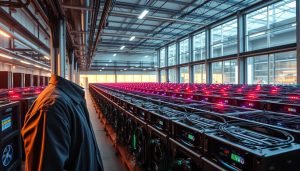
Bitcoin Mining Business for Sale: New Market Options
Here’s something that caught me off guard: the number of available bitcoin mining business for
XDC Price Shows Strong Momentum in Crypto Market Today
XDC cryptocurrency is making waves in the digital asset world. Its impressive market performance is catching investors’ eyes. The XDC price shows remarkable strength in
Etherscan: Your Gateway to the Ethereum Blockchain
Tracking over 700,000 active Ethereum addresses is now a breeze with Etherscan. This blockchain explorer has transformed our understanding of digital transactions1. With crypto trading
VWAP Trading Strategy Gains Traction on Wall Street
Wall Street is buzzing with a new trading strategy. The Volume Weighted Average Price (VWAP) indicator is changing the game for big investors. This sophisticated
 Bitcoin (BTC) $ 68,892.00
- Ethereum (ETH) $ 2,117.57
- Tether (USDT) $ 0.999684
- BNB (BNB) $ 601.16
- XRP (XRP) $ 1.33
- USDC (USDC) $ 0.999949
- Solana (SOL) $ 81.84
- TRON (TRX) $ 0.319199
- Lido Staked Ether (STETH) $ 2,265.05
- Figure Heloc (FIGR_HELOC) $ 1.03
 Bitcoin
  Ethereum
  Tether
  BNB
BNB  XRP
XRP  USDC
USDC  Solana
  TRON
TRON  Lido Staked Ether
  Figure Heloc