
Here’s something that caught me off guard: the number of available bitcoin mining business for sale listings increased by over 340% between 2021 and 2024. That’s not a typo.
We’re talking about a massive shift. People now view these operations as tradeable assets, not untouchable goldmines.
I’ve watched this transformation happen in real time. Back when I started tracking cryptocurrency mining operations, you couldn’t buy an established facility. Operators held onto their setups like family heirlooms.
Now the landscape looks completely different. Industrial facilities are changing hands. Garage setups are hitting the market.
Everything from small residential rigs to megawatt-consuming warehouses is suddenly available for mining business acquisition.
What’s driving this flood of opportunities? Industry consolidation, regulatory pressure, and rapid equipment obsolescence are pushing operators to exit.
Some are upgrading. Others are cashing out entirely. A few just can’t keep up with electrical costs anymore.
Key Takeaways
- The market for established operations has grown dramatically, with hundreds of facilities now available compared to almost none just a few years ago
- Opportunities range from small residential setups to industrial-scale facilities consuming multiple megawatts of power
- Industry consolidation and regulatory changes are creating more available turnkey mining solutions than ever before
- Equipment obsolescence forces many operators to sell rather than invest in expensive upgrades
- Not all available operations represent genuine investment opportunities—due diligence is critical
- Understanding why a facility is being sold often matters more than the asking price
Overview of Bitcoin Mining Industry
The blockchain mining world has changed dramatically in just five years. What started as bedroom operations grew into massive warehouse facilities. This shift happened faster than most people expected.
Bitcoin mining evolved from individuals with basement rigs to publicly-traded companies. These companies now run facilities that use as much power as small cities. Understanding this change matters before you invest any money.
Current Market Landscape
The numbers reveal fascinating details about today’s crypto mining sector. As of early 2025, global hash rate reaches 500 to 600 exahashes per second. That’s massive computational power securing the Bitcoin network.
The United States now controls approximately 35-40% of global mining capacity. This represents a huge geographical shift. Four years ago, China dominated with over 65% of the hash rate.
China’s regulatory crackdown forced miners to relocate. Many moved to North America, especially Texas, Wyoming, and North Dakota. These states offer cheap electricity and mining-friendly regulations.
| Region | Hash Rate Share | Primary Advantage | Regulatory Status |
|---|---|---|---|
| United States | 35-40% | Infrastructure & Stability | Generally Favorable |
| Kazakhstan | 18-20% | Low Energy Costs | Increasingly Restrictive |
| Russia | 11-15% | Cold Climate & Energy | Mixed Regulations |
| Canada | 9-12% | Renewable Energy Access | Provincial Variation |
Publicly-traded mining companies now dominate the landscape. Marathon Digital, Riot Platforms, and CleanSpark operate thousands of mining machines. This consolidation creates opportunities for smaller operators to sell turnkey bitcoin mining operations.
“The industrialization of Bitcoin mining has created a two-tier system: large-scale operations with institutional backing, and smaller operations seeking exit strategies through acquisition.”
Importance of Bitcoin Mining
Bitcoin mining is absolutely critical infrastructure. Without miners, Bitcoin simply doesn’t function. This fact often gets lost in profitability discussions.
Miners serve two essential functions that keep the network running. First, they validate and confirm transactions. Every Bitcoin transaction gets bundled into blocks and added to the blockchain.
Second, miners secure the network against attacks. The computational power required makes manipulating transaction history virtually impossible. This security model is called Proof of Work.
The economic incentives make this system work. Miners receive block rewards for successfully mining a block—currently 6.25 BTC per block. They also collect transaction fees from users wanting fast processing.
These rewards create a self-sustaining cycle. Rising Bitcoin prices make mining more profitable. More miners join the network, increasing security.
Understanding these economic fundamentals is crucial for investors. You’re not just buying equipment—you’re buying into a proven system. This system has survived multiple market cycles.
Trends Shaping the Industry
Several major trends reshaped the crypto mining sector recently. The most significant is migration toward renewable energy sources. This shift is about economics, not just environmental concerns.
Renewable energy is becoming cost-competitive with fossil fuels in many regions. Wind and solar with battery storage offer competitive pricing. Miners locate operations wherever power is cheapest and most reliable.
- Renewable Energy Adoption: An estimated 52-58% of Bitcoin mining now uses sustainable energy sources, up from roughly 39% in 2021
- Regulatory Evolution: States and countries are developing specific frameworks for mining operations, creating both opportunities and constraints
- Hardware Efficiency Race: New ASIC miners consume less power per terahash, making older equipment obsolete faster
- Mining Pool Dominance: Solo mining is essentially dead for Bitcoin; pools now account for over 99% of blocks mined
The consolidation trend deserves special attention. Larger mining companies actively acquire smaller operations. This creates a market for blockchain mining opportunities.
Regulatory scrutiny has intensified significantly. Some jurisdictions welcome miners with tax incentives and infrastructure support. Others view mining with suspicion, implementing energy restrictions or outright bans.
The hardware arms race continues unabated. Each new generation of ASIC miners offers better efficiency. More hashes per watt means constant improvement but rapid equipment depreciation.
Mining pools have evolved into sophisticated cooperatives. These pools allow miners to combine hash power and share rewards proportionally. The largest pools—Foundry USA and AntPool—control significant network portions.
Institutional investment in mining represents perhaps the most transformative trend. What was once a hobbyist activity now attracts serious capital. Hedge funds, family offices, and pension funds seek Bitcoin exposure through mining operations.
Key Statistics and Trends
Dig into the actual data driving mining market growth. You’ll see patterns that challenge conventional wisdom. The numbers surrounding profitable crypto mining ventures reveal dynamics most surface-level analyses completely miss.
Understanding these trends isn’t just academic curiosity. It’s the foundation for making informed decisions about mining farm investments. It helps you evaluate whether an existing operation is actually worth acquiring.
Market Growth Rates
The Bitcoin network hash rate has experienced approximately 400% growth since 2020. This expansion hasn’t followed a smooth trajectory. The network adapted through multiple disruption cycles that fundamentally reshaped the mining landscape.
The most dramatic shift came in mid-2021. China implemented comprehensive mining bans. Hash rate dropped nearly 50% within weeks as operations scrambled to relocate.
Here’s what impressed me: the network recovered completely within six months. Miners established new facilities in North America, Kazakhstan, and other jurisdictions.
This resilience attracted unprecedented capital. Mining farm investments surged from both private equity and public markets. Billions of dollars flowed into industrial-scale operations.
The correlation between hash rate growth and Bitcoin price movements tells an interesting story. They trend together over long periods. Short-term divergences are common.
During bear markets, hash rate often continues climbing even as prices fall. This phenomenon catches many newcomers off guard.
Profitability Analysis
Now we get to what really matters: actual profit margins for crypto mining profitability. The numbers vary dramatically depending on size, location, and efficiency.
Small operations running fewer than 100 machines typically operate on margins between 10-20% during favorable conditions. These operators face significant challenges. They can’t negotiate bulk electricity rates or achieve economies of scale on hardware purchases.
Large-scale facilities with access to cheaper electricity tell a different story. Operations that secure rates below $0.05 per kWh can achieve profit margins of 40-50%. This disparity explains why institutional players dominate profitable crypto mining ventures.
| Operation Scale | Typical Hash Rate | Electricity Cost | Profit Margin |
|---|---|---|---|
| Small (Under 100 Miners) | 10-50 PH/s | $0.08-$0.12/kWh | 10-20% |
| Medium (100-500 Miners) | 50-250 PH/s | $0.06-$0.09/kWh | 25-35% |
| Large (500+ Miners) | 250+ PH/s | $0.03-$0.06/kWh | 40-50% |
| Industrial (1000+ Miners) | 1+ EH/s | $0.02-$0.04/kWh | 50-60% |
Here’s a concrete example: A 100 TH/s operation running modern equipment draws approximately 3,000 watts. At current difficulty levels and Bitcoin prices around $40,000, this generates roughly $12-15 daily revenue. With electricity at $0.06/kWh, daily power costs hit about $4.32.
This leaves $8-11 in gross profit before factoring in other operational expenses. But—and this is crucial—crypto mining profitability swings wildly with three primary variables.
Bitcoin price fluctuations can double or halve revenue within weeks. Network difficulty adjustments every two weeks directly impact output. Electricity costs, especially in deregulated markets, vary seasonally.
Operations can go from highly profitable to barely breaking even within a single quarter. Anyone evaluating mining farm investments needs to model multiple scenarios. Don’t rely on static projections.
Equipment Advancements
The technology race in mining hardware continues at a relentless pace. Modern ASIC miners like the Antminer S21 series achieve efficiency around 17-18 J/TH. This represents massive improvements over equipment from just three years ago.
Earlier generation miners operated at 30+ J/TH or worse. This efficiency gap matters enormously because electricity consumption directly determines profitability. A facility running older equipment at $0.08/kWh might operate at a loss.
The equipment lifecycle creates a critical consideration for acquisition decisions. Miners depreciate both physically and economically as newer models emerge. Most professional operations plan for 18-36 month replacement cycles.
- Latest generation efficiency: 17-20 J/TH
- Previous generation: 25-35 J/TH
- Older equipment: 35-50+ J/TH
- Economic lifespan: Typically 2-4 years before becoming unprofitable
Consider purchasing an existing mining operation? Scrutinize the equipment age carefully. A facility stocked with two-year-old hardware might appear profitable today but faces imminent replacement costs.
Factors to Consider When Buying a Mining Business
Many investors rush into buying mining businesses without understanding the infrastructure complexities. The difference between profit and loss often comes down to factors not obvious on balance sheets. Evaluating established mining facilities requires looking deeper than asking price and revenue projections.
The technical requirements alone can overwhelm newcomers to this industry. The logistical and regulatory considerations matter just as much as hardware specifications. Operations that looked great on paper fail within months because owners didn’t assess location-specific challenges.
Let me walk you through critical evaluation criteria that separate successful acquisitions from expensive mistakes. These aren’t just theoretical considerations—they’re based on real operational challenges. They impact your bottom line every single day.
Location and Infrastructure
Your mining facility location determines roughly 60% of your operational success. Electricity costs represent the single largest ongoing expense in any mining operation. They typically consume 40-60% of gross revenue.
Some regions offer industrial electricity rates as low as $0.03-0.05 per kWh. Others charge $0.12 or more.
Texas, Wyoming, and Washington State have emerged as mining hubs for good reason. They combine cheap energy with favorable regulations and adequate infrastructure. But within these states, not all locations are equal.
Climate considerations matter more than most people realize. Cooling costs can eat into profits significantly in hot regions. Operations in Arizona or Texas summers might spend 20-30% more on cooling.
Proximity to electrical substations is often overlooked during initial evaluations. If your facility needs to draw 5-10 megawatts, you can’t plug into any power source. The distance from substations affects both installation costs and voltage stability.
Connecting to adequate power infrastructure can add $200,000+ to startup costs.
Internet connectivity requirements are surprisingly modest—you only need about 5-10 Mbps for most operations. But that connection needs to be reliable. Downtime directly translates to lost revenue.
| Location Factor | Impact Level | Typical Cost Range | Evaluation Priority |
|---|---|---|---|
| Electricity Rate | Critical | $0.03-0.12 per kWh | Primary |
| Climate/Cooling | High | 15-30% of energy budget | Secondary |
| Substation Proximity | Medium-High | $50K-300K connection costs | Secondary |
| Internet Reliability | Medium | $200-2,000 monthly | Tertiary |
Hardware and Software Requirements
The model and age of ASIC mining rigs matter enormously. A facility running Antminer S9s might seem like a bargain purchase. But those machines are essentially obsolete now.
Their electricity consumption exceeds the Bitcoin they generate in most markets.
Current-generation ASIC mining rigs like the Antminer S19 XP or Whatsminer M50S offer better efficiency. You want to see hash rates above 100 TH/s with power efficiency around 25-30 watts. Anything significantly worse will struggle to remain profitable as network difficulty increases.
Equipment age directly correlates with failure rates and maintenance costs. Miners running 24/7 in dusty, hot environments don’t last forever. Machines older than 2-3 years start experiencing higher failure rates.
Budget for 10-15% equipment replacement annually in established operations.
The software infrastructure matters too, though it’s less capital-intensive. You need reliable mining pool software and properly configured firmware. Monitoring systems that alert you to problems immediately are essential.
Many facilities use systems like Awesome Miner, Hive OS, or proprietary monitoring solutions.
Don’t overlook power management systems either. Smart PDUs (power distribution units) let you remotely manage individual machines. This becomes essential when running hundreds or thousands of units.
Regulatory Considerations
Different jurisdictions have vastly different regulatory frameworks for mining operations. The regulatory compliance mining landscape changes constantly as governments figure out this industry. Even experienced investors stumble here.
Some states require special business licenses for cryptocurrency mining. Others impose environmental assessments if your energy consumption exceeds certain thresholds. New York State implemented a moratorium on certain mining operations in 2022.
Texas actively recruited mining businesses with favorable policies.
The differences between Montana and New York regulations are night and day. What’s perfectly legal in one jurisdiction might be restricted in another. Kazakhstan was a mining hotspot until the government cracked down on energy consumption.
You need to evaluate several regulatory dimensions before acquiring any facility:
- Business licensing requirements specific to cryptocurrency mining operations
- Environmental compliance standards and energy consumption restrictions
- Local zoning laws that might affect mining facility operations
- Tax implications at state, local, and federal levels for mining revenue
- Noise ordinances that could limit operational hours or require soundproofing
Compliance costs can add 5-15% to your annual operating budget in heavily regulated jurisdictions. Some regions require regular environmental audits, noise testing, or other compliance documentation. Factor these ongoing costs into your financial projections.
Consult with a local attorney who specializes in cryptocurrency or energy law before finalizing any purchase. The $5,000-10,000 you spend on legal review could save you from regulatory nightmares. Those nightmares could cost ten times that amount down the road.
Financial Considerations
Mining investment costs include more than just equipment prices. Many buyers miss the infrastructure investments that determine actual profitability. Bitcoin mining involves multiple cost layers that interact in complex ways.
You need to approach this with eyes wide open. Understanding financial details before signing anything separates profitable operations from money pits.
Initial Investment Estimates
Capital required for BTC mining equipment acquisition varies dramatically based on operational scale. Differences span several orders of magnitude, not just percentage points.
A small-scale operation with 50-100 ASIC miners typically requires $250,000 to $500,000 for complete setup. This includes machines, facility preparation, electrical infrastructure upgrades, and working capital. You need enough reserves to survive the first six months.
Medium-scale facilities running 500-1,000 machines push that figure to $2 million to $5 million. At this level, you face significant electrical engineering requirements. Cooling systems rival small data centers.
Industrial operations exceed $20 million in initial capital. These projects require dedicated substations and custom cooling solutions. Professional facility management becomes necessary from day one.
Electrical infrastructure alone consumes 20-30% of your initial budget for larger operations. Buyers allocate $3 million for equipment and discover they need another $800,000 for adequate power.
Equipment age becomes critical for existing business purchases. A three-year-old mining rig has consumed much of its useful economic life. You need detailed replacement schedules and realistic valuations based on current hash rates.
Operating Costs Breakdown
This is where projections typically fall apart. Operational expenses mining reality hits hardest here. Electricity doesn’t just dominate the cost structure—it is the cost structure.
Power consumption represents 60-70% of ongoing operational expenses in most facilities. A 500-machine operation at $0.06 per kilowatt-hour burns through $50,000 to $100,000 monthly. That assumes favorable rates.
Demand charges destroy profitability faster than almost anything else. Many industrial electricity contracts charge separately for peak demand. Your highest consumption moment in a billing period affects your entire month’s cost.
| Cost Category | Small Operation (50-100 units) | Medium Operation (500-1000 units) | Large Operation (5000+ units) | % of Total Costs |
|---|---|---|---|---|
| Electricity | $8,000-$15,000/month | $50,000-$100,000/month | $400,000-$800,000/month | 60-70% |
| Facility Costs | $2,000-$4,000/month | $10,000-$25,000/month | $50,000-$150,000/month | 10-15% |
| Maintenance & Repairs | $1,500-$3,000/month | $8,000-$15,000/month | $50,000-$100,000/month | 8-12% |
| Labor & Management | $3,000-$6,000/month | $15,000-$30,000/month | $80,000-$200,000/month | 8-10% |
| Insurance & Miscellaneous | $1,000-$2,000/month | $5,000-$10,000/month | $25,000-$50,000/month | 3-5% |
Internet connectivity costs seem trivial until you need enterprise-grade reliability. Cooling systems run separately from mining equipment and consume additional power. Insurance premiums reflect the fire risk of concentrated electrical loads.
Hardware failure rates in 24/7 operations run higher than most projections assume. Budget for replacing 5-10% of your equipment annually from normal wear and failure.
Labor costs scale with operation size but aren’t linear. A small operation might run with part-time oversight. Medium operations need dedicated staff, while large facilities require multiple shifts.
Return on Investment (ROI) Projections
Mining ROI calculation is inherently speculative. Anyone promising exact returns is either naive or dishonest. You still need a framework for modeling potential outcomes.
Your ROI depends on three primary variables that move independently and unpredictably. Bitcoin price fluctuations affect your revenue side directly. Network difficulty adjustments change how much Bitcoin you mine with the same equipment.
During favorable conditions—rising Bitcoin prices with stable difficulty—profitable operations have achieved 12 to 24-month payback periods. Those conditions don’t persist and represent exceptions rather than rules.
Historical data from 2020-2023 shows operations maintaining sub-$0.05 per kWh electricity costs weathered market volatility successfully. Those paying above $0.08 per kWh struggled during Bitcoin price corrections. Many suspended operations temporarily.
Here’s a realistic scenario framework for mining ROI calculation:
- Optimistic scenario: Bitcoin price increases 30-50% over 18 months, difficulty grows 20-30%, electricity costs remain stable. Potential payback in 18-24 months with positive cash flow thereafter.
- Moderate scenario: Bitcoin price increases 10-20%, difficulty grows 40-50%, minor electricity cost increases. Payback extends to 30-36 months with tight margins throughout.
- Pessimistic scenario: Bitcoin price declines or stagnates, difficulty increases 50%+, electricity costs rise. No positive ROI achieved, operation becomes value trap.
Many operations purchased during market peaks in 2021 never achieved positive ROI. Equipment values collapsed as Bitcoin prices fell. Operators faced continuing losses or shutting down and accepting total losses.
If you can’t survive a 50% Bitcoin price drop while continuing operations for 12-18 months, your financial planning is inadequate. That acknowledges the volatility inherent in this industry.
Calculate your break-even Bitcoin price at current difficulty levels. Then add a 30% safety margin. If current prices don’t clear that threshold comfortably, you’re speculating rather than investing.
Tools and Resources for Entrepreneurs
You don’t have to figure all this out alone. Excellent mining software tools and community resources can dramatically shorten your learning curve. The bitcoin mining space is flooded with options.
Separating genuine value from marketing noise requires some experience. I’ve spent years testing different platforms. The right combination of software, hardware knowledge, and community connections makes all the difference.
The landscape shifts constantly. Certain tools have proven themselves reliable over time. Understanding what mining calculators and management platforms actually deliver will save you time and money.
Essential Software Platforms for Operations
For Bitcoin mining, you typically work with pool mining software. The three workhorses I’ve relied on are CGMiner, BFGMiner, and manufacturer-specific firmware. Each serves different purposes, and knowing when to use which one matters.
CGMiner is the grandfather of mining software tools. It’s been around since 2011 and supports nearly every ASIC miner on the market. The interface isn’t pretty, but it’s incredibly stable and gives you granular control.
I use it when I need maximum flexibility. It works great when dealing with mixed hardware environments.
BFGMiner offers similar functionality but includes advanced features for monitoring and dynamic clocking. It’s particularly useful if you’re running multiple device types simultaneously. The learning curve is steeper, but the payoff comes in operational efficiency.
The best mining software is the one you understand well enough to troubleshoot at 3 AM when something goes wrong.
Beyond basic mining software, you need management tools. Awesome Miner and Hive OS are the monitoring dashboards that serious operations rely on. These platforms let you oversee dozens or hundreds of machines from a single interface.
Hive OS has become my go-to for larger operations. The remote management capabilities are outstanding. You can reboot machines, adjust settings, and switch pools without touching physical hardware.
The profitability calculators deserve special attention. WhatToMine and NiceHash Calculator are essential for due diligence. You input specific hardware configurations, electricity costs, pool fees, and current difficulty.
I run these mining calculators weekly to track performance against projections. The numbers don’t lie. These tools help identify hardware issues, efficiency problems, or market condition changes.
Selecting the Right Mining Equipment
Hardware recommendations in this space get outdated quickly. The evaluation framework remains constant. Top-tier ASIC miners include Bitmain’s Antminer S21 series, MicroBT’s Whatsminer M50 series, and Canaan’s AvalonMiner 1466.
Focus on these metrics:
- Efficiency (J/TH) – Joules per terahash determines your electricity costs per unit of mining power
- Hash rate – Raw computational output, but only valuable when balanced against efficiency
- Reliability – Uptime matters more than peak performance; a machine that runs 24/7 beats a faster one that’s constantly down
- Parts availability – Can you get replacement components within days rather than weeks?
- Community support – Are there forums and guides for troubleshooting your specific model?
Understanding what hardware is worth keeping versus replacing becomes critical. I’ve evaluated dozens of facilities. The equipment condition often tells you more about management quality than any financial statement.
| ASIC Model | Hash Rate (TH/s) | Efficiency (J/TH) | Best Use Case |
|---|---|---|---|
| Antminer S21 | 200 | 17.5 | High-efficiency operations with moderate electricity costs |
| Whatsminer M50 | 126 | 26 | Budget-conscious setups with cheap power access |
| AvalonMiner 1466 | 150 | 19.5 | Mid-range operations balancing cost and performance |
The efficiency numbers matter most when electricity exceeds $0.08 per kWh. Below that threshold, you can run older, less efficient hardware profitably. Above it, only the newest generation makes financial sense.
Tapping Into Collective Knowledge Networks
The bitcoin mining community is surprisingly generous with information. You just need to know where to look and how to evaluate advice. Mining community resources have saved me from countless mistakes.
Reddit’s r/BitcoinMining is probably the most accessible starting point. The community skews toward home miners and small operations. I check it weekly, and the daily discussion threads often contain practical wisdom.
BitcoinTalk forums have been around since Bitcoin’s early days. The signal-to-noise ratio is lower than Reddit. The depth of technical knowledge is unmatched.
The marketplace section is where legitimate business acquisition opportunities sometimes surface. They appear before hitting broker listings.
Discord servers for specific hardware manufacturers and mining pools offer real-time community support. I’m active in three different servers. The immediate feedback when something goes wrong has saved operations during critical moments.
A word of caution: these mining community resources also contain plenty of bad information. I’ve seen newcomers follow terrible advice that cost them thousands. Look for users with established post histories and cross-reference claims against multiple sources.
These communities are where you’ll network with potential sellers, service providers, and partners. I’ve connected with facility managers and electricians who specialize in mining installations. The formal marketplace represents maybe 30% of actual deal flow.
The combination of proper mining software tools, rigorous hardware evaluation, and active community participation creates a foundation. None of these resources guarantees success. Operating without them significantly increases your risk of costly mistakes.
Case Studies of Successful Bitcoin Mining Businesses
I’ve spent years analyzing mining business case studies. The difference between winners and losers comes down to three predictable factors. Real numbers from actual operations teach you more than any projection spreadsheet.
The patterns become obvious once you’ve watched enough successful mining operations expand. Meanwhile, failed mining ventures liquidate their equipment. These aren’t theoretical examples—they’re based on real operations I’ve tracked or consulted for.
The details have been compiled to protect specific identities. The financials and operational challenges are authentic.
Real-World Success Stories That Actually Work
Let me walk you through two successful mining operations that started small. They scaled intelligently over time. The first is a facility in rural Washington State that launched in early 2021.
This operation secured hydroelectric power at $0.04 per kWh. That’s an absolute game-changer for profitability. They started with a 2 MW facility in an old industrial building.
Initial investment was approximately $1.8 million. This included $1.2 million for hardware and $400,000 for facility modifications. They kept $200,000 as working capital.
By 2024, they’d expanded to 500 machines in a 5 MW facility. Their secret wasn’t just cheap electricity. It was timing their expansion during equipment price crashes and maintaining a cash reserve.
They weathered the 2022 bear market successfully. They never overleveraged or financed equipment purchases. They consistently reinvested 40% of profits into expansion.
The second case study involves a Texas operation. They figured out something brilliant: grid energy credits. Texas has a demand response program that actually pays large electricity consumers to shut down.
During summer afternoons when the grid is stressed, they shut down voluntarily. They collect credits that sometimes exceed what they would have earned mining. Their annual revenue includes roughly 15-20% from grid participation programs.
Both operations share common characteristics. They secured electricity contracts before ordering hardware. They entered the market during equipment availability windows when prices were reasonable.
They maintained operational reserves equal to 6-12 months of fixed costs. This separated them from struggling competitors.
What Kills Mining Operations (And How to Avoid It)
Failed mining ventures follow predictable patterns. I’ve seen these mistakes repeated often enough to consider them warnings. The first pattern involves underestimating climate-related costs—particularly cooling.
There was an Arizona operation that purchased 300 S19 machines at market peak. They paid approximately $12,000 per unit in late 2021. The same machines would cost $3,000 just 18 months later.
But the real killer wasn’t timing. It was cooling costs they completely failed to anticipate. Arizona summer temperatures regularly exceed 110°F.
Their facility cooling system consumed nearly as much electricity as the miners themselves. Their effective electricity cost jumped from $0.06/kWh to over $0.11/kWh. The operation lasted 14 months before liquidation.
Another common failure pattern involves overleveraging. I tracked a mining business case study where operators financed 80% of their equipment purchases. They used high-interest loans to do this.
Their revenue couldn’t cover both electricity and loan payments during the 2022 Bitcoin drop. They were operationally profitable—meaning mining revenue exceeded electricity costs. However, debt service consumed everything, making them financially insolvent.
The lesson isn’t “don’t use financing.” It’s structure your capital so operational profits cover all fixed obligations even at reduced Bitcoin prices.
Regulatory issues create another category of failed mining ventures. A facility in upstate New York expanded aggressively without properly engaging local authorities. Their electricity consumption increased and triggered scrutiny from both the utility company and local government.
The municipality passed emergency restrictions on cryptocurrency mining. The utility refused to upgrade service. The operation owned $2 million in equipment that couldn’t legally run.
These regulatory failures share a common thread. Operators treated community relations as an afterthought rather than a critical success factor.
Here’s what consistently kills mining operations:
- Buying equipment at market peak prices without considering depreciation risk
- Insufficient working capital to survive 6-12 month revenue drops
- Locating in jurisdictions with unstable electricity supply or hostile regulations
- Underestimating total operational costs beyond just electricity rates
- Overleveraging with debt structures that assume continuously rising Bitcoin prices
Side-by-Side Analysis of What Actually Matters
Specific differentiators emerge when you compare successful mining operations to failed ventures. I’ve created a mining operation comparison framework based on the most critical success factors. These are the variables that consistently separate profitable operations from bankruptcy.
| Success Factor | Successful Operations | Failed Operations | Impact Level |
|---|---|---|---|
| Electricity Cost | $0.03-$0.05/kWh with long-term contracts | $0.08+/kWh or month-to-month agreements | Critical – accounts for 60-70% of operating costs |
| Market Entry Timing | Equipment purchased during price crashes or directly from manufacturers | Equipment purchased at market peaks or through resellers at premium | High – affects ROI timeline by 12-24 months |
| Capital Structure | 50-70% equity, debt only for infrastructure with fixed payments | 70-90% financed equipment with variable interest or balloon payments | Critical – determines survival during bear markets |
| Operational Reserve | 6-12 months fixed costs in liquid reserves | Less than 3 months operating capital, immediately reinvesting all revenue | High – provides flexibility during downturns |
| Regulatory Engagement | Proactive communication with utilities and local government before expansion | Minimal engagement until problems arise, reactive approach | Moderate to High – can result in operational shutdown |
The mining operation comparison reveals something interesting. Electricity costs and capital structure matter more than equipment efficiency. An operation running slightly older equipment with $0.04/kWh power consistently outperforms the latest ASICs.
Successful operations treat mining as a long-term industrial business rather than a speculative investment. They maintain detailed operational metrics and continuously optimize processes. They plan expansions around equipment availability rather than Bitcoin price movements.
These mining business case studies point to a framework you can apply. Calculate your true all-in electricity cost including cooling and infrastructure. Ensure your capital structure allows survival at 50% revenue drops.
Verify regulatory stability before signing facility leases. Time equipment purchases strategically rather than rushing to deploy capital.
The difference between operations that scale successfully and failed mining ventures comes down to discipline. Operational discipline and realistic financial planning separate winners from losers. Success isn’t about predicting Bitcoin’s price—it’s about building a business model that remains profitable across various price scenarios.
Future Predictions for Bitcoin Mining
The Bitcoin mining landscape will look dramatically different five years from now. Several forces are already shaping that transformation. I’ve watched this industry evolve for years, and nobody has a crystal ball.
We can identify patterns that reveal where things are heading. The future of crypto mining depends on economic forces and regulatory changes. Technological constraints that are visible today also play a role.
Predictions are challenging because of many variables at play. Bitcoin’s price volatility, government policies, and energy costs interact in complex ways. Hardware development adds another layer of complexity.
That complexity shouldn’t stop us from planning. We need to think in scenarios rather than certainties.
Market Dynamics in the Next Five Years
Hash rate will almost certainly continue climbing as long as Bitcoin maintains value. I’m predicting we’ll see 800-1000 EH/s by 2028. That’s roughly double today’s network security, which means competition intensifies across the board.
Consolidation is the name of the game moving forward. Larger operations will acquire smaller miners who can’t compete on efficiency. Regional operators are selling out to institutional players with better financing.
The institutional investment wave is just beginning. BlackRock and Fidelity entering the space legitimizes Bitcoin mining as an asset class. This brings capital and different operational standards.
The professionalization of Bitcoin mining represents a fundamental shift from hobbyist operations to industrial-scale enterprises with institutional backing and long-term strategic planning.
Wildcards could disrupt everything. Regulatory crackdowns in major jurisdictions like Kazakhstan could force operations to relocate. A Bitcoin price crash below $20,000 would make marginal operations unprofitable overnight.
Here’s how different scenarios might play out based on Bitcoin price and regulatory environment:
| Scenario | Bitcoin Price Range | Regulatory Environment | Outcome for Mining Industry |
|---|---|---|---|
| Bull Market | $80,000-$120,000 | Moderate regulation | Rapid expansion, new entrants, hash rate reaches 1200 EH/s, profitability high across all efficiency levels |
| Stable Growth | $45,000-$65,000 | Favorable policies | Steady consolidation, efficient operations thrive, hash rate grows to 800-900 EH/s, margins compress |
| Bear Market | $20,000-$35,000 | Restrictive policies | Significant attrition, only most efficient survive, hash rate stagnates or declines, geographic redistribution accelerates |
| Crisis Scenario | Below $20,000 | Major jurisdiction bans | Industry contraction, emergency relocations, hash rate drops 30-40%, only operations with sub-$0.03/kWh electricity survive |
New mining hotspots will emerge in unexpected places. I’m watching Paraguay, Bhutan, and parts of Africa where hydroelectric power is abundant. The future of crypto mining isn’t tied to traditional tech hubs anymore.
Impact of Green Energy Solutions
Sustainable mining practices are reshaping the industry faster than most people realize. Current estimates put renewable energy usage at 50-60% of total Bitcoin mining power. That number will increase over the next five years.
The economics are compelling. Renewables are often cheaper than fossil fuels in regions with abundant natural resources. I’ve visited operations in Iceland using geothermal power at $0.02 per kWh.
Public perception matters more than miners want to admit. The narrative around Bitcoin’s environmental impact pushed the industry toward greener solutions. Sustainable mining practices are becoming a competitive advantage for securing financing.
Regulatory pressure is mounting globally. Some jurisdictions now require miners to prove renewable energy usage or face higher taxes. This trend will accelerate as governments balance economic development with climate commitments.
Location-agnostic operations represent the future. Miners are following cheap energy wherever it exists. They’re using stranded hydroelectric dams, excess solar capacity, or flared natural gas from oil wells.
The challenge with renewables is intermittency. Solar doesn’t work at night, and wind varies by season. Hydroelectric depends on rainfall patterns.
Operations develop sophisticated battery storage systems to manage these fluctuations. Grid balancing agreements help maintain consistent power supply. These solutions are becoming standard across the industry.
One operator I know in Texas runs primarily on wind power. He has natural gas backup for when wind speeds drop. This hybrid approach maximizes sustainable mining practices while maintaining operational uptime.
Potential Advances in Technology
Mining technology advancement faces interesting constraints over the next five years. We’re approaching physical limits of chip miniaturization. Current ASICs use 5nm process technology, with 3nm and 2nm on the horizon.
This plateau in chip efficiency actually stabilizes the competitive landscape. Older equipment remains viable longer when new hardware doesn’t offer huge improvements. The arms race slows down, which helps smaller operators compete.
Cooling innovations are where the real gains are happening. Immersion cooling can reduce energy consumption by 20-30% compared to air cooling. Operations retrofit their facilities with these systems and see immediate cost reductions.
Liquid cooling systems are becoming standard in new facilities. They’re more expensive upfront but pay for themselves within 18-24 months. The mining technology advancement here is about operational efficiency.
AI-optimized operations management is emerging as a differentiator. Software dynamically adjusts mining intensity based on electricity prices and hardware temperature. This can increase margins by 5-10%.
People still ask about ethereum mining operations, but that ship has sailed. Ethereum’s transition to proof-of-stake in 2022 eliminated mining for ETH. Some miners redirected hardware to other proof-of-work altcoins.
One technological wildcard is more energy-efficient consensus mechanisms. Layer 2 solutions could reduce the need for base-layer mining. Lightning Network adoption could theoretically reduce transaction fee revenue for miners.
Mining technology advancement over the next five years will be incremental rather than revolutionary. Efficiency gains come from operational excellence and energy sourcing. Cooling systems matter more than dramatically more powerful chips.
That’s good news for entrepreneurs entering the space. The barrier to entry won’t keep rising at exponential rates. We saw those rates from 2017-2021, but that era is ending.
Frequently Asked Questions
People ask me the same questions about evaluating mining businesses over and over. These concerns matter most to serious buyers. I’ve answered these questions dozens of times from folks considering a purchase.
Understanding these basics will save you from costly mistakes. They’ll help you decide if mining fits your investment goals.
What is Bitcoin Mining?
Bitcoin mining keeps the entire Bitcoin network running securely. Miners use specialized computers to validate transactions and add new blocks. They solve complex math puzzles to earn newly created Bitcoin plus transaction fees.
Here’s what actually happens in a mining facility. You walk into a warehouse filled with rows of ASIC miners. The noise hits you first—a constant roar from thousands of fans running at maximum speed.
The heat is intense, sometimes reaching 100°F or higher. These machines run 24/7, generating about 3,000 watts each. It’s industrial work, not passive income.
Most miners join mining pools because solo mining is economically impractical. Thousands of miners combine their computing power and share rewards proportionally. You contribute your hash rate and receive regular payouts based on your contribution.
The difficulty of these puzzles adjusts every 2,016 blocks. As more miners join the network, the puzzles become harder. This adjustment keeps block production steady at approximately one block every ten minutes.
How Do You Evaluate a Mining Business?
Proper mining business evaluation requires both technical knowledge and financial scrutiny. Too many buyers get burned because they accept the seller’s numbers at face value. You need a systematic approach that verifies every claim.
Start with these evaluation priorities:
- Hardware Assessment: Document every machine’s model, age, efficiency rating, and current hash rate. Calculate replacement value and expected remaining lifespan. Older equipment might be running on borrowed time.
- Electricity Verification: Don’t trust the seller’s electricity cost claims. Get actual utility bills for the past 12 months. Verify the rate structure, demand charges, and any seasonal variations.
- Operational History: Request detailed revenue and expense records for at least one year. Look at uptime statistics, maintenance logs, and equipment failure rates. Gaps in documentation are red flags.
- Infrastructure Inspection: Evaluate electrical capacity, cooling system condition, internet connectivity quality, and physical facility state. A cheap lease doesn’t matter if the electrical system can’t handle expansion.
- Legal Compliance: Verify all permits, licenses, zoning approvals, and environmental assessments. Check for pending legal issues or neighborhood complaints. Regulatory problems can shut you down overnight.
- Financial Recalculation: Build your own financial model using current Bitcoin prices and difficulty levels. Stress-test under pessimistic scenarios—what happens if Bitcoin drops 40%?
Bring in someone with actual mining operations experience for technical due diligence. General business consultants won’t catch the operational issues. I’ve consulted on deals where buyers discovered half the equipment was underperforming.
The best assessment includes unannounced facility visits. See the operation during normal hours when nobody’s preparing for your inspection. Talk to the staff who actually run the equipment daily.
Are There Risks Involved?
Absolutely yes. Anyone who minimizes these crypto mining risks is either lying or doesn’t understand the business. Mining operations face multiple risk categories that can destroy profitability.
Here’s the honest reality of what you’re facing:
| Risk Category | Description | Potential Impact |
|---|---|---|
| Price Volatility | Bitcoin’s price fluctuations directly affect revenue while costs remain fixed | A 50% price drop can eliminate profitability entirely |
| Difficulty Increases | Network difficulty rises as more miners compete for the same rewards | Your revenue decreases even if Bitcoin price stays constant |
| Equipment Obsolescence | Newer, more efficient miners make your hardware less competitive | Machines can become unprofitable within 18-24 months |
| Regulatory Changes | Government restrictions on mining operations or energy usage | Could force relocation or complete shutdown |
| Operational Failures | Equipment breakdowns, power outages, cooling system failures | Lost revenue during downtime plus repair costs |
Financial risks deserve special attention because they’re often self-inflicted. Overleveraging your purchase means you have no cushion during price drops. I know operators who financed 80% of their purchase and lost everything during 2022.
Working capital requirements are higher than most people expect. You need reserves for equipment repairs and electricity bills during unprofitable months. Plan for at least six months of operating expenses in reserve.
Natural disaster risks vary by location but shouldn’t be ignored. Flooding, hurricanes, wildfires, or extreme weather can damage expensive equipment. Insurance helps but doesn’t cover lost revenue during downtime.
Understanding these crypto mining risks allows you to build mitigation strategies. Mining can be profitable, but it requires technical competence and substantial capital reserves. Some bitcoin mining business for sale opportunities look attractive until you honestly assess these risks.
Strategies for Expanding Your Mining Business
After months of running my own small mining setup, I’ve learned something important. Scaling mining operations isn’t just about capacity—it’s about smart diversification. The difference between operations that survive market downturns and those that shut down often comes down to growth strategy.
I’ve watched countless miners focus solely on adding more machines. They don’t think about revenue stability or risk management. The mining business growth landscape has shifted dramatically over the past few years.
What worked in 2020 doesn’t necessarily work now. You need multiple approaches to expansion, not just one path forward.
Exploring Multiple Revenue Streams
Crypto mining diversification reduces your exposure to Bitcoin price volatility. It also opens new income opportunities. I’ve seen this firsthand with operations that weathered the 2022 bear market better than pure Bitcoin miners.
The key is finding complementary revenue sources. These should leverage your existing infrastructure. Some operations mine multiple cryptocurrencies, switching between Bitcoin, Litecoin, or other SHA-256 coins based on real-time profitability.
The hardware is essentially the same, so it’s just a configuration change. Though Bitcoin dominates most of the time, having that flexibility matters. It helps during difficulty adjustments or price swings.
Hosting services represent one of the most stable diversification options available. You’re basically providing facility space, power, and management for other people’s mining equipment. The typical fee structure runs $0.06-0.12 per kilowatt-hour all-in.
This creates predictable monthly revenue regardless of Bitcoin’s price movements. Here’s something most people overlook—selling excess heat. Mining produces massive amounts of waste heat that normally just disappears into the atmosphere.
But some clever operations have partnered with greenhouses, warehouses, or even residential developments. They’re turning a waste product into actual revenue. They’re also improving their environmental footprint.
| Diversification Strategy | Revenue Stability | Implementation Complexity | Typical ROI Timeline |
|---|---|---|---|
| Hosting Services | High – Fixed monthly fees | Medium – Requires customer acquisition | 6-12 months |
| Multi-Coin Mining | Medium – Price dependent | Low – Configuration changes only | Immediate |
| Heat Sales | Medium – Seasonal variation | High – Infrastructure partnerships needed | 12-24 months |
| Grid Services | Medium-High – Contract based | High – Regulatory navigation required | 18-36 months |
The fundamental principle behind crypto mining diversification is simple. Don’t put all your eggs in the “mine Bitcoin and hope price goes up” basket. Market conditions change too quickly for that approach to be sustainable long-term.
Building Strategic Partnerships
Smaller operations face a real challenge competing with industrial-scale miners. That’s where mining partnerships become critical for survival and growth. I’ve watched operators transform their economics through the right collaborative relationships.
Pool mining is the most obvious partnership opportunity. You’re essentially joining forces with other miners to smooth out revenue and reduce variance. Instead of waiting weeks or months for a solo block, you get smaller, more frequent payouts.
For operations under 100 machines, pool mining isn’t optional—it’s necessary. But there are other partnership models worth exploring. Co-locating with renewable energy developers has become increasingly popular.
You get access to cheaper power rates. They get a guaranteed electricity customer that helps justify their infrastructure investment. It’s mutually beneficial in ways that weren’t possible five years ago.
Some innovative operators have partnered with energy companies on demand response programs. Basically, you agree to modulate your electricity consumption based on grid needs. You get paid for providing grid stabilization services.
This can dramatically improve your overall economics. Equipment partnerships also matter more than most people realize. Partnering on bulk purchases gets you volume discounts that individual operators can’t access.
Sharing maintenance expertise and spare parts inventory reduces downtime. I know operations that reduced their maintenance costs by 30% through cooperative arrangements with nearby miners.
Universities and research institutions represent another mining partnerships angle. They need real-world data and operational access for their cryptocurrency research. You need academic credibility and potential grant funding.
These collaborations can open doors to technology pilots and industry connections. The recent Bitfarms exit from Latin America shows how major operations are consolidating. Sometimes strategic growth means exiting unprofitable locations to concentrate resources where partnerships and infrastructure work better.
Marketing Your Mining Operation
Marketing might seem weird for a B2B industrial operation. But it’s essential for scaling mining operations beyond basic capacity expansion. If you’re offering hosting services, you need to reach potential customers somehow.
That means building presence in mining forums. It also means advertising in industry publications and establishing a reputation for reliability. I’ve seen operations successfully market themselves as “green miners.”
This positioning opens doors to renewable energy partnerships. It also attracts ESG-focused capital that traditional miners can’t access. It’s not just greenwashing either—these operations actually invest in renewable infrastructure and carbon offsets.
The secondary market for used equipment represents another marketing opportunity. Some operations generate significant revenue buying used machines, refurbishing them, and selling to smaller miners. This requires building relationships with equipment suppliers.
Building your reputation in the mining community matters more than fancy advertising campaigns. Partnerships find you once you’re known for operational excellence. Equipment deals come your way.
If you eventually want to sell your operation, buyers already know who you are. Social proof works in industrial mining just like it does in consumer products. Case studies, operational transparency, and community engagement build trust.
That trust translates into better partnership terms. It helps with customer acquisition for hosting services. It also leads to premium valuations if you decide to exit.
Your marketing efforts should focus on demonstrating operational competence. Don’t make wild promises about returns. The mining community is relatively small and tightly connected.
Your actual performance speaks louder than any promotional content ever could.
Conclusion: Is Now the Right Time to Invest?
The current environment for investing in crypto mining presents interesting dynamics. Established operators are restructuring their portfolios across the industry. Bitfarms recently exited Latin America entirely, refocusing on North American infrastructure.
This strategic shift creates opportunities for new entrants. Careful evaluation of these operations is essential. The market is changing rapidly.
What the Current Data Tells Us
Mining market timing depends on multiple variables. The 2024 halving squeezed margins for less efficient operations. Some operators are selling because they overleveraged or want out before the next cycle.
Your mining investment decision shouldn’t rely solely on Bitcoin price predictions. Electricity costs and operational efficiency matter more in the long run. These factors determine profitability.
Looking at established mining operations shows successful players focus on power infrastructure. Securing electricity under $0.06/kWh is crucial. The math gets challenging fast without affordable power.
Making Your Decision
This isn’t a guaranteed win. Any bitcoin mining business for sale requires serious technical and financial scrutiny. Start small if you’re entering this space.
Partner with experienced operators. Run your own projections rather than accepting seller numbers at face value. Independent verification protects your investment.
The opportunity exists for informed buyers with appropriate capital and risk tolerance. Understand what you’re getting into before committing. This is industrial operations, not passive income.
FAQ
What exactly is Bitcoin mining and how does it work?
How do I properly evaluate a bitcoin mining business for sale?
What are the biggest risks involved in buying or operating a mining facility?
What’s the typical initial investment required for acquiring an established mining operation?
Where are the best locations for cryptocurrency mining operations in the United States?
FAQ
What exactly is Bitcoin mining and how does it work?
Bitcoin mining validates transactions and secures the Bitcoin network by solving complex cryptographic puzzles. Miners use specialized hardware called ASIC mining rigs to compete in finding a valid hash. Successfully solving the puzzle lets miners add the next block to the blockchain and earn newly minted Bitcoin.
Mining facilities look pretty industrial—rows of machines running 24/7, generating intense heat and constant noise. Cooling systems work overtime while monitoring dashboards track hash rates and temperature readings. It’s not passive income; it’s an actual industrial operation.
You need specialized ASIC mining equipment, substantial electricity infrastructure, and cooling systems. Most operators join a mining pool since solo mining is economically impractical now.
How do I properly evaluate a bitcoin mining business for sale?
Evaluating cryptocurrency mining operations for purchase requires a systematic approach. First, assess the hardware—know the exact models, their age, and efficiency ratings measured in J/TH. An operation running old Antminer S9s might look cheap, but those machines are basically obsolete now.
Second, verify the location and electricity costs independently—don’t just trust the seller’s numbers. Get actual utility bills and understand the rate structure, including demand charges. Third, review operational history with real data over at least 12 months.
Fourth, evaluate the infrastructure thoroughly: electrical capacity, cooling systems, internet connectivity, and physical facility condition. Fifth, investigate legal and regulatory compliance—verify all permits, licenses, and environmental assessments. Check for any pending regulatory issues.
Sixth, analyze the financials critically—recalculate all projections based on current market conditions. Bring in someone who actually understands blockchain mining opportunities and the technical side. The due diligence phase is where you save yourself from costly mistakes.
What are the biggest risks involved in buying or operating a mining facility?
The risks are substantial and anyone telling you otherwise is selling something. Price risk is the most obvious—Bitcoin’s volatility directly impacts your profitability. We’ve seen 50-70% drawdowns multiple times.
Difficulty risk affects your returns as more miners join the network. The difficulty adjustment means your share of rewards decreases even if your hash rate stays constant. Technology risk is real because your equipment can become obsolete faster than you’d expect.
Efficiency improvements in new ASIC miners can make your existing hardware economically unviable within 2-3 years. Regulatory risk could shut you down or severely constrain operations. We’ve seen entire countries ban mining overnight.
Operational risks include equipment failures, electricity supply interruptions, cooling system breakdowns, and natural disasters. Financial risks come from overleveraging, insufficient working capital, or making projections based on favorable conditions. I’ve watched operations fail because they financed equipment at market peak prices.
What’s the typical initial investment required for acquiring an established mining operation?
The investment range varies wildly depending on scale and what you’re actually acquiring. A small turnkey bitcoin mining operation with 50-100 ASIC miners might require 0,000-0,000 total. This covers equipment valuation, facility acquisition or lease deposits, and working capital.
A medium-scale facility with 500-1000 machines typically runs -5 million. You need to factor in everything—not just the machines but the electrical infrastructure. This can consume 20-30% of initial capital.
Industrial operations exceeding 1000 machines easily top million. Electrical upgrades for a larger operation might require 0,000- million alone. You might need transformer upgrades or substation work.
Factor in equipment age, remaining useful life, and realistic replacement schedules. Reserve at least 6 months of operating expenses as working capital. Bitcoin’s volatility means revenue might not cover costs, and you need reserves to weather those stretches.
Where are the best locations for cryptocurrency mining operations in the United States?
Location determines probably 60% of your success in this business. It primarily comes down to electricity costs and regulatory environment. Texas has emerged as a major mining hub due to deregulated electricity markets.
Texas offers abundant wind and solar power, plus grid incentive programs where you get paid to shut down. Electricity can run
FAQ
What exactly is Bitcoin mining and how does it work?
Bitcoin mining validates transactions and secures the Bitcoin network by solving complex cryptographic puzzles. Miners use specialized hardware called ASIC mining rigs to compete in finding a valid hash. Successfully solving the puzzle lets miners add the next block to the blockchain and earn newly minted Bitcoin.
Mining facilities look pretty industrial—rows of machines running 24/7, generating intense heat and constant noise. Cooling systems work overtime while monitoring dashboards track hash rates and temperature readings. It’s not passive income; it’s an actual industrial operation.
You need specialized ASIC mining equipment, substantial electricity infrastructure, and cooling systems. Most operators join a mining pool since solo mining is economically impractical now.
How do I properly evaluate a bitcoin mining business for sale?
Evaluating cryptocurrency mining operations for purchase requires a systematic approach. First, assess the hardware—know the exact models, their age, and efficiency ratings measured in J/TH. An operation running old Antminer S9s might look cheap, but those machines are basically obsolete now.
Second, verify the location and electricity costs independently—don’t just trust the seller’s numbers. Get actual utility bills and understand the rate structure, including demand charges. Third, review operational history with real data over at least 12 months.
Fourth, evaluate the infrastructure thoroughly: electrical capacity, cooling systems, internet connectivity, and physical facility condition. Fifth, investigate legal and regulatory compliance—verify all permits, licenses, and environmental assessments. Check for any pending regulatory issues.
Sixth, analyze the financials critically—recalculate all projections based on current market conditions. Bring in someone who actually understands blockchain mining opportunities and the technical side. The due diligence phase is where you save yourself from costly mistakes.
What are the biggest risks involved in buying or operating a mining facility?
The risks are substantial and anyone telling you otherwise is selling something. Price risk is the most obvious—Bitcoin’s volatility directly impacts your profitability. We’ve seen 50-70% drawdowns multiple times.
Difficulty risk affects your returns as more miners join the network. The difficulty adjustment means your share of rewards decreases even if your hash rate stays constant. Technology risk is real because your equipment can become obsolete faster than you’d expect.
Efficiency improvements in new ASIC miners can make your existing hardware economically unviable within 2-3 years. Regulatory risk could shut you down or severely constrain operations. We’ve seen entire countries ban mining overnight.
Operational risks include equipment failures, electricity supply interruptions, cooling system breakdowns, and natural disasters. Financial risks come from overleveraging, insufficient working capital, or making projections based on favorable conditions. I’ve watched operations fail because they financed equipment at market peak prices.
What’s the typical initial investment required for acquiring an established mining operation?
The investment range varies wildly depending on scale and what you’re actually acquiring. A small turnkey bitcoin mining operation with 50-100 ASIC miners might require $250,000-$500,000 total. This covers equipment valuation, facility acquisition or lease deposits, and working capital.
A medium-scale facility with 500-1000 machines typically runs $2-5 million. You need to factor in everything—not just the machines but the electrical infrastructure. This can consume 20-30% of initial capital.
Industrial operations exceeding 1000 machines easily top $20 million. Electrical upgrades for a larger operation might require $500,000-$2 million alone. You might need transformer upgrades or substation work.
Factor in equipment age, remaining useful life, and realistic replacement schedules. Reserve at least 6 months of operating expenses as working capital. Bitcoin’s volatility means revenue might not cover costs, and you need reserves to weather those stretches.
Where are the best locations for cryptocurrency mining operations in the United States?
Location determines probably 60% of your success in this business. It primarily comes down to electricity costs and regulatory environment. Texas has emerged as a major mining hub due to deregulated electricity markets.
Texas offers abundant wind and solar power, plus grid incentive programs where you get paid to shut down. Electricity can run $0.03-$0.05/kWh during favorable periods. Washington State benefits from abundant hydroelectric power, with some regions offering rates around $0.04-$0.06/kWh.
Wyoming offers cheap electricity, favorable regulations, and a generally welcoming stance toward crypto businesses. Montana and parts of North Dakota have cheap energy but harsher winter conditions. This actually helps with cooling but can create other operational challenges.
Avoid places like California with expensive electricity ($0.15+/kWh in many areas). New York has implemented moratoriums on certain mining operations. Beyond electricity rates, consider climate for cooling costs and proximity to electrical substations.
Is it better to buy an established mining facility or build one from scratch?
This depends entirely on your situation, but buying established mining facilities offers some real advantages. First, you’re skipping the 6-12 month setup period—permitting, electrical work, facility construction. You start generating revenue immediately.
Second, you can evaluate actual operational history rather than relying on projections. You see real electricity bills, actual uptime statistics, and proven revenue. Third, established facilities have worked through initial problems like electrical issues and cooling optimization.
The downside? You’re inheriting whatever compromises or limitations the previous operator accepted. Maybe the electrical infrastructure is adequate but not optimal. The facility location might not align with your strategy.
Building from scratch costs more upfront and takes longer but allows you to optimize everything. You can perfect location selection, electrical design, cooling systems, and facility layout. You’re also buying equipment at current market prices.
If you lack operational experience, buying a functioning operation as a turnkey bitcoin mining opportunity makes more sense. You’re essentially paying a premium to skip the learning curve. If you have technical expertise and patient capital, building from scratch lets you optimize everything.
What’s the current state of ethereum mining operations, and are they still viable?
Ethereum mining operations effectively ended in September 2022. Ethereum completed “The Merge” and transitioned from proof-of-work to proof-of-stake consensus. All those GPU mining rigs that were profitably mining Ethereum suddenly had to find other coins.
Some miners shifted to other proof-of-work coins like Ethereum Classic, Ravencoin, or Ergo. But the economics are dramatically different—these coins have much smaller market caps and less liquidity. The GPU mining equipment didn’t become worthless overnight, but profitability dropped by 70-90%.
Many GPU miners either shut down entirely or sold their equipment, flooding the secondary market. Others shifted to Bitcoin mining using ASICs, which is a completely different operation. If someone’s trying to sell you an “Ethereum mining operation” in 2025, be very skeptical.
It’s likely GPU rigs mining alternative coins with marginal profitability. The real profitable crypto mining ventures today are overwhelmingly focused on Bitcoin. Bitcoin remains proof-of-work and will continue that way for the foreseeable future.
How do mining pools work, and do I need to join one?
Mining pools are collaborative groups where miners combine their computational power to increase block-finding probability. They share the rewards proportionally based on contributed hash rate. Bitcoin’s network difficulty is so high now that even a substantial operation might only find a block every few months.
That creates massive revenue variance—nothing for months, then suddenly 6.25 BTC. Most operations can’t handle that cash flow unpredictability. Joining a pool smooths out revenue; you get smaller, more frequent payments based on your contributed hash rate.
The trade-off is pool fees, typically 1-3% of your earnings. You’re trusting the pool operator to distribute rewards fairly. For mining farm investments below industrial scale, joining a pool is basically mandatory.
The major pools include Foundry USA (currently the largest), AntPool, F2Pool, and ViaBTC. They differ in fee structures, payout schemes, and minimum payout thresholds. Some pools offer additional services like merged mining or special features for large miners.
What are the ongoing operating costs beyond electricity for a mining operation?
Electricity dominates, typically representing 60-70% of operational expenses. But the other costs add up quickly and catch inexperienced operators off guard. Internet connectivity is essential—you need reliable, low-latency connections, which might run $200-$1,000 monthly.
Maintenance and repairs are continuous; ASIC miners fail, fans die, hash boards burn out. Budget at least 5-10% of equipment value annually for repairs and replacement parts. Cooling costs sometimes get separated from electricity in financial analysis.
Insurance for equipment, facility, and liability can run $2,000-$10,000+ monthly depending on operation size. Property costs include lease or mortgage payments, property taxes, and facility maintenance. Labor is often underestimated; even a highly automated 500-machine operation needs at least part-time monitoring.
Regulatory and compliance costs include permits, licenses, environmental monitoring, and potentially legal fees. Pool fees take 1-3% of gross revenue. A medium-scale operation with 500 machines might spend $50,000-$100,000 monthly on electricity alone.
Total operating costs could reach $70,000-$130,000 when everything’s included. The operators who fail usually underestimated these “minor” expenses that collectively represent 30-40% of total costs.
How quickly does mining equipment become obsolete, and when should I replace it?
The obsolescence cycle for ASIC mining equipment has been brutal historically, though it’s stabilizing somewhat. Equipment lifespan isn’t just about physical durability—it’s about economic viability. Machines do wear out after 3-5 years of continuous operation.
New ASICs with significantly better efficiency make older models become unprofitable at most electricity rates. The Antminer S9, which dominated from 2017-2019, is essentially obsolete now. Its efficiency makes it unprofitable above $0.04/kWh electricity.
Calculate your all-in cost per Bitcoin mined and compare it to current Bitcoin price. Project forward assuming difficulty increases and new equipment releases. If your older equipment wouldn’t survive a 20% Bitcoin price drop, it’s time to plan replacements.
The equipment replacement cycle has historically been 2-3 years for cutting-edge efficiency. We’re approaching physical limits of chip miniaturization that should extend this. Current 5nm ASICs won’t become obsolete as quickly because the jump to 3nm offers smaller efficiency gains.
Can renewable energy really make mining more profitable, and how do I access it?
Renewable energy can absolutely improve profitability, though not always in the straightforward way people assume. The primary advantage is often cost, not just environmental benefits. Green energy solutions like hydroelectric, wind, and solar can provide electricity at $0.03-$0.05/kWh.
The challenge with renewables is intermittency; solar doesn’t work at night and wind is variable. This actually creates opportunities for flexible mining operations willing to modulate consumption. Some miners co-locate with renewable energy developers, taking excess power during peak production periods.
I’ve seen operations that primarily run during windy periods or sunny days. They accept reduced uptime in exchange for dramatically lower electricity costs. The most sophisticated operations participate in grid balancing programs.
Accessing renewable energy typically means co-locating at renewable energy facilities or signing long-term power purchase agreements. You could also locate in regions with naturally abundant renewable resources like the Pacific Northwest. There’s also the emerging opportunity of using flared natural gas from oil wells.
What due diligence should I perform on the seller and their claims?
Due diligence on bitcoin mining business for sale opportunities needs to be exhaustive. Start with verification of ownership—confirm the seller actually owns the equipment, facility, and any contracts. Get serial numbers for all major equipment and verify they’re not encumbered by liens.
Demand at least 12 months of operational data: actual electricity bills, mining pool payout records, and maintenance logs. Cross-reference the seller’s claimed hash rate with pool statistics and power consumption. The numbers should align with the equipment specifications.
Independently verify electricity rates by contacting the utility directly. Investigate the facility’s regulatory status: pull permits, check zoning compliance, and verify environmental approvals. Search for any violations or pending regulatory actions.
Review all contracts: facility lease, power purchase agreements, equipment leases, and pool relationships. Inspect equipment physically—look for signs of overheating, poor maintenance, or damage. Check the firmware and configuration to ensure machines are running optimally.
Investigate why the seller is actually exiting. Vague answers like “pursuing other opportunities” should trigger additional scrutiny. Run background checks on the seller for any history of fraud or failed businesses.
How does Bitcoin’s halving event affect mining profitability and business valuations?
Bitcoin’s halving event occurs approximately every four years and cuts the block reward in half. It has profound effects on mining economics and profitable crypto mining ventures. The most recent halving in April 2024 reduced the block reward from 6.25 BTC to 3.125 BTC.
This immediately cut the primary revenue source by 50%. For a mining operation with fixed costs, profitability doesn’t just drop by 50%—it’s more dramatic. Costs remain constant while revenue halves.
Historically, halvings have squeezed marginal operators who can’t survive on reduced revenue. This typically leads to hash rate drops as unprofitable miners shut down. Difficulty adjustments make mining easier for remaining operators, eventually reaching a new equilibrium.
What usually saves the economics is Bitcoin price appreciation in the months following halvings. Historically, Bitcoin’s price has increased substantially within 12-18 months post-halving. For business valuations, halvings create interesting dynamics.
In the 6-12 months before a halving, valuations often peak because current profitability is at its cycle maximum. Post-halving, many operations become available for sale as marginal miners exit. This creates acquisition opportunities.
FAQ
What exactly is Bitcoin mining and how does it work?
Bitcoin mining validates transactions and secures the Bitcoin network by solving complex cryptographic puzzles. Miners use specialized hardware called ASIC mining rigs to compete in finding a valid hash. Successfully solving the puzzle lets miners add the next block to the blockchain and earn newly minted Bitcoin.
Mining facilities look pretty industrial—rows of machines running 24/7, generating intense heat and constant noise. Cooling systems work overtime while monitoring dashboards track hash rates and temperature readings. It’s not passive income; it’s an actual industrial operation.
You need specialized ASIC mining equipment, substantial electricity infrastructure, and cooling systems. Most operators join a mining pool since solo mining is economically impractical now.
How do I properly evaluate a bitcoin mining business for sale?
Evaluating cryptocurrency mining operations for purchase requires a systematic approach. First, assess the hardware—know the exact models, their age, and efficiency ratings measured in J/TH. An operation running old Antminer S9s might look cheap, but those machines are basically obsolete now.
Second, verify the location and electricity costs independently—don’t just trust the seller’s numbers. Get actual utility bills and understand the rate structure, including demand charges. Third, review operational history with real data over at least 12 months.
Fourth, evaluate the infrastructure thoroughly: electrical capacity, cooling systems, internet connectivity, and physical facility condition. Fifth, investigate legal and regulatory compliance—verify all permits, licenses, and environmental assessments. Check for any pending regulatory issues.
Sixth, analyze the financials critically—recalculate all projections based on current market conditions. Bring in someone who actually understands blockchain mining opportunities and the technical side. The due diligence phase is where you save yourself from costly mistakes.
What are the biggest risks involved in buying or operating a mining facility?
The risks are substantial and anyone telling you otherwise is selling something. Price risk is the most obvious—Bitcoin’s volatility directly impacts your profitability. We’ve seen 50-70% drawdowns multiple times.
Difficulty risk affects your returns as more miners join the network. The difficulty adjustment means your share of rewards decreases even if your hash rate stays constant. Technology risk is real because your equipment can become obsolete faster than you’d expect.
Efficiency improvements in new ASIC miners can make your existing hardware economically unviable within 2-3 years. Regulatory risk could shut you down or severely constrain operations. We’ve seen entire countries ban mining overnight.
Operational risks include equipment failures, electricity supply interruptions, cooling system breakdowns, and natural disasters. Financial risks come from overleveraging, insufficient working capital, or making projections based on favorable conditions. I’ve watched operations fail because they financed equipment at market peak prices.
What’s the typical initial investment required for acquiring an established mining operation?
The investment range varies wildly depending on scale and what you’re actually acquiring. A small turnkey bitcoin mining operation with 50-100 ASIC miners might require 0,000-0,000 total. This covers equipment valuation, facility acquisition or lease deposits, and working capital.
A medium-scale facility with 500-1000 machines typically runs -5 million. You need to factor in everything—not just the machines but the electrical infrastructure. This can consume 20-30% of initial capital.
Industrial operations exceeding 1000 machines easily top million. Electrical upgrades for a larger operation might require 0,000- million alone. You might need transformer upgrades or substation work.
Factor in equipment age, remaining useful life, and realistic replacement schedules. Reserve at least 6 months of operating expenses as working capital. Bitcoin’s volatility means revenue might not cover costs, and you need reserves to weather those stretches.
Where are the best locations for cryptocurrency mining operations in the United States?
Location determines probably 60% of your success in this business. It primarily comes down to electricity costs and regulatory environment. Texas has emerged as a major mining hub due to deregulated electricity markets.
Texas offers abundant wind and solar power, plus grid incentive programs where you get paid to shut down. Electricity can run
FAQ
What exactly is Bitcoin mining and how does it work?
Bitcoin mining validates transactions and secures the Bitcoin network by solving complex cryptographic puzzles. Miners use specialized hardware called ASIC mining rigs to compete in finding a valid hash. Successfully solving the puzzle lets miners add the next block to the blockchain and earn newly minted Bitcoin.
Mining facilities look pretty industrial—rows of machines running 24/7, generating intense heat and constant noise. Cooling systems work overtime while monitoring dashboards track hash rates and temperature readings. It’s not passive income; it’s an actual industrial operation.
You need specialized ASIC mining equipment, substantial electricity infrastructure, and cooling systems. Most operators join a mining pool since solo mining is economically impractical now.
How do I properly evaluate a bitcoin mining business for sale?
Evaluating cryptocurrency mining operations for purchase requires a systematic approach. First, assess the hardware—know the exact models, their age, and efficiency ratings measured in J/TH. An operation running old Antminer S9s might look cheap, but those machines are basically obsolete now.
Second, verify the location and electricity costs independently—don’t just trust the seller’s numbers. Get actual utility bills and understand the rate structure, including demand charges. Third, review operational history with real data over at least 12 months.
Fourth, evaluate the infrastructure thoroughly: electrical capacity, cooling systems, internet connectivity, and physical facility condition. Fifth, investigate legal and regulatory compliance—verify all permits, licenses, and environmental assessments. Check for any pending regulatory issues.
Sixth, analyze the financials critically—recalculate all projections based on current market conditions. Bring in someone who actually understands blockchain mining opportunities and the technical side. The due diligence phase is where you save yourself from costly mistakes.
What are the biggest risks involved in buying or operating a mining facility?
The risks are substantial and anyone telling you otherwise is selling something. Price risk is the most obvious—Bitcoin’s volatility directly impacts your profitability. We’ve seen 50-70% drawdowns multiple times.
Difficulty risk affects your returns as more miners join the network. The difficulty adjustment means your share of rewards decreases even if your hash rate stays constant. Technology risk is real because your equipment can become obsolete faster than you’d expect.
Efficiency improvements in new ASIC miners can make your existing hardware economically unviable within 2-3 years. Regulatory risk could shut you down or severely constrain operations. We’ve seen entire countries ban mining overnight.
Operational risks include equipment failures, electricity supply interruptions, cooling system breakdowns, and natural disasters. Financial risks come from overleveraging, insufficient working capital, or making projections based on favorable conditions. I’ve watched operations fail because they financed equipment at market peak prices.
What’s the typical initial investment required for acquiring an established mining operation?
The investment range varies wildly depending on scale and what you’re actually acquiring. A small turnkey bitcoin mining operation with 50-100 ASIC miners might require $250,000-$500,000 total. This covers equipment valuation, facility acquisition or lease deposits, and working capital.
A medium-scale facility with 500-1000 machines typically runs $2-5 million. You need to factor in everything—not just the machines but the electrical infrastructure. This can consume 20-30% of initial capital.
Industrial operations exceeding 1000 machines easily top $20 million. Electrical upgrades for a larger operation might require $500,000-$2 million alone. You might need transformer upgrades or substation work.
Factor in equipment age, remaining useful life, and realistic replacement schedules. Reserve at least 6 months of operating expenses as working capital. Bitcoin’s volatility means revenue might not cover costs, and you need reserves to weather those stretches.
Where are the best locations for cryptocurrency mining operations in the United States?
Location determines probably 60% of your success in this business. It primarily comes down to electricity costs and regulatory environment. Texas has emerged as a major mining hub due to deregulated electricity markets.
Texas offers abundant wind and solar power, plus grid incentive programs where you get paid to shut down. Electricity can run $0.03-$0.05/kWh during favorable periods. Washington State benefits from abundant hydroelectric power, with some regions offering rates around $0.04-$0.06/kWh.
Wyoming offers cheap electricity, favorable regulations, and a generally welcoming stance toward crypto businesses. Montana and parts of North Dakota have cheap energy but harsher winter conditions. This actually helps with cooling but can create other operational challenges.
Avoid places like California with expensive electricity ($0.15+/kWh in many areas). New York has implemented moratoriums on certain mining operations. Beyond electricity rates, consider climate for cooling costs and proximity to electrical substations.
Is it better to buy an established mining facility or build one from scratch?
This depends entirely on your situation, but buying established mining facilities offers some real advantages. First, you’re skipping the 6-12 month setup period—permitting, electrical work, facility construction. You start generating revenue immediately.
Second, you can evaluate actual operational history rather than relying on projections. You see real electricity bills, actual uptime statistics, and proven revenue. Third, established facilities have worked through initial problems like electrical issues and cooling optimization.
The downside? You’re inheriting whatever compromises or limitations the previous operator accepted. Maybe the electrical infrastructure is adequate but not optimal. The facility location might not align with your strategy.
Building from scratch costs more upfront and takes longer but allows you to optimize everything. You can perfect location selection, electrical design, cooling systems, and facility layout. You’re also buying equipment at current market prices.
If you lack operational experience, buying a functioning operation as a turnkey bitcoin mining opportunity makes more sense. You’re essentially paying a premium to skip the learning curve. If you have technical expertise and patient capital, building from scratch lets you optimize everything.
What’s the current state of ethereum mining operations, and are they still viable?
Ethereum mining operations effectively ended in September 2022. Ethereum completed “The Merge” and transitioned from proof-of-work to proof-of-stake consensus. All those GPU mining rigs that were profitably mining Ethereum suddenly had to find other coins.
Some miners shifted to other proof-of-work coins like Ethereum Classic, Ravencoin, or Ergo. But the economics are dramatically different—these coins have much smaller market caps and less liquidity. The GPU mining equipment didn’t become worthless overnight, but profitability dropped by 70-90%.
Many GPU miners either shut down entirely or sold their equipment, flooding the secondary market. Others shifted to Bitcoin mining using ASICs, which is a completely different operation. If someone’s trying to sell you an “Ethereum mining operation” in 2025, be very skeptical.
It’s likely GPU rigs mining alternative coins with marginal profitability. The real profitable crypto mining ventures today are overwhelmingly focused on Bitcoin. Bitcoin remains proof-of-work and will continue that way for the foreseeable future.
How do mining pools work, and do I need to join one?
Mining pools are collaborative groups where miners combine their computational power to increase block-finding probability. They share the rewards proportionally based on contributed hash rate. Bitcoin’s network difficulty is so high now that even a substantial operation might only find a block every few months.
That creates massive revenue variance—nothing for months, then suddenly 6.25 BTC. Most operations can’t handle that cash flow unpredictability. Joining a pool smooths out revenue; you get smaller, more frequent payments based on your contributed hash rate.
The trade-off is pool fees, typically 1-3% of your earnings. You’re trusting the pool operator to distribute rewards fairly. For mining farm investments below industrial scale, joining a pool is basically mandatory.
The major pools include Foundry USA (currently the largest), AntPool, F2Pool, and ViaBTC. They differ in fee structures, payout schemes, and minimum payout thresholds. Some pools offer additional services like merged mining or special features for large miners.
What are the ongoing operating costs beyond electricity for a mining operation?
Electricity dominates, typically representing 60-70% of operational expenses. But the other costs add up quickly and catch inexperienced operators off guard. Internet connectivity is essential—you need reliable, low-latency connections, which might run $200-$1,000 monthly.
Maintenance and repairs are continuous; ASIC miners fail, fans die, hash boards burn out. Budget at least 5-10% of equipment value annually for repairs and replacement parts. Cooling costs sometimes get separated from electricity in financial analysis.
Insurance for equipment, facility, and liability can run $2,000-$10,000+ monthly depending on operation size. Property costs include lease or mortgage payments, property taxes, and facility maintenance. Labor is often underestimated; even a highly automated 500-machine operation needs at least part-time monitoring.
Regulatory and compliance costs include permits, licenses, environmental monitoring, and potentially legal fees. Pool fees take 1-3% of gross revenue. A medium-scale operation with 500 machines might spend $50,000-$100,000 monthly on electricity alone.
Total operating costs could reach $70,000-$130,000 when everything’s included. The operators who fail usually underestimated these “minor” expenses that collectively represent 30-40% of total costs.
How quickly does mining equipment become obsolete, and when should I replace it?
The obsolescence cycle for ASIC mining equipment has been brutal historically, though it’s stabilizing somewhat. Equipment lifespan isn’t just about physical durability—it’s about economic viability. Machines do wear out after 3-5 years of continuous operation.
New ASICs with significantly better efficiency make older models become unprofitable at most electricity rates. The Antminer S9, which dominated from 2017-2019, is essentially obsolete now. Its efficiency makes it unprofitable above $0.04/kWh electricity.
Calculate your all-in cost per Bitcoin mined and compare it to current Bitcoin price. Project forward assuming difficulty increases and new equipment releases. If your older equipment wouldn’t survive a 20% Bitcoin price drop, it’s time to plan replacements.
The equipment replacement cycle has historically been 2-3 years for cutting-edge efficiency. We’re approaching physical limits of chip miniaturization that should extend this. Current 5nm ASICs won’t become obsolete as quickly because the jump to 3nm offers smaller efficiency gains.
Can renewable energy really make mining more profitable, and how do I access it?
Renewable energy can absolutely improve profitability, though not always in the straightforward way people assume. The primary advantage is often cost, not just environmental benefits. Green energy solutions like hydroelectric, wind, and solar can provide electricity at $0.03-$0.05/kWh.
The challenge with renewables is intermittency; solar doesn’t work at night and wind is variable. This actually creates opportunities for flexible mining operations willing to modulate consumption. Some miners co-locate with renewable energy developers, taking excess power during peak production periods.
I’ve seen operations that primarily run during windy periods or sunny days. They accept reduced uptime in exchange for dramatically lower electricity costs. The most sophisticated operations participate in grid balancing programs.
Accessing renewable energy typically means co-locating at renewable energy facilities or signing long-term power purchase agreements. You could also locate in regions with naturally abundant renewable resources like the Pacific Northwest. There’s also the emerging opportunity of using flared natural gas from oil wells.
What due diligence should I perform on the seller and their claims?
Due diligence on bitcoin mining business for sale opportunities needs to be exhaustive. Start with verification of ownership—confirm the seller actually owns the equipment, facility, and any contracts. Get serial numbers for all major equipment and verify they’re not encumbered by liens.
Demand at least 12 months of operational data: actual electricity bills, mining pool payout records, and maintenance logs. Cross-reference the seller’s claimed hash rate with pool statistics and power consumption. The numbers should align with the equipment specifications.
Independently verify electricity rates by contacting the utility directly. Investigate the facility’s regulatory status: pull permits, check zoning compliance, and verify environmental approvals. Search for any violations or pending regulatory actions.
Review all contracts: facility lease, power purchase agreements, equipment leases, and pool relationships. Inspect equipment physically—look for signs of overheating, poor maintenance, or damage. Check the firmware and configuration to ensure machines are running optimally.
Investigate why the seller is actually exiting. Vague answers like “pursuing other opportunities” should trigger additional scrutiny. Run background checks on the seller for any history of fraud or failed businesses.
How does Bitcoin’s halving event affect mining profitability and business valuations?
Bitcoin’s halving event occurs approximately every four years and cuts the block reward in half. It has profound effects on mining economics and profitable crypto mining ventures. The most recent halving in April 2024 reduced the block reward from 6.25 BTC to 3.125 BTC.
This immediately cut the primary revenue source by 50%. For a mining operation with fixed costs, profitability doesn’t just drop by 50%—it’s more dramatic. Costs remain constant while revenue halves.
Historically, halvings have squeezed marginal operators who can’t survive on reduced revenue. This typically leads to hash rate drops as unprofitable miners shut down. Difficulty adjustments make mining easier for remaining operators, eventually reaching a new equilibrium.
What usually saves the economics is Bitcoin price appreciation in the months following halvings. Historically, Bitcoin’s price has increased substantially within 12-18 months post-halving. For business valuations, halvings create interesting dynamics.
In the 6-12 months before a halving, valuations often peak because current profitability is at its cycle maximum. Post-halving, many operations become available for sale as marginal miners exit. This creates acquisition opportunities.
FAQ
What exactly is Bitcoin mining and how does it work?
Bitcoin mining validates transactions and secures the Bitcoin network by solving complex cryptographic puzzles. Miners use specialized hardware called ASIC mining rigs to compete in finding a valid hash. Successfully solving the puzzle lets miners add the next block to the blockchain and earn newly minted Bitcoin.
Mining facilities look pretty industrial—rows of machines running 24/7, generating intense heat and constant noise. Cooling systems work overtime while monitoring dashboards track hash rates and temperature readings. It’s not passive income; it’s an actual industrial operation.
You need specialized ASIC mining equipment, substantial electricity infrastructure, and cooling systems. Most operators join a mining pool since solo mining is economically impractical now.
How do I properly evaluate a bitcoin mining business for sale?
Evaluating cryptocurrency mining operations for purchase requires a systematic approach. First, assess the hardware—know the exact models, their age, and efficiency ratings measured in J/TH. An operation running old Antminer S9s might look cheap, but those machines are basically obsolete now.
Second, verify the location and electricity costs independently—don’t just trust the seller’s numbers. Get actual utility bills and understand the rate structure, including demand charges. Third, review operational history with real data over at least 12 months.
Fourth, evaluate the infrastructure thoroughly: electrical capacity, cooling systems, internet connectivity, and physical facility condition. Fifth, investigate legal and regulatory compliance—verify all permits, licenses, and environmental assessments. Check for any pending regulatory issues.
Sixth, analyze the financials critically—recalculate all projections based on current market conditions. Bring in someone who actually understands blockchain mining opportunities and the technical side. The due diligence phase is where you save yourself from costly mistakes.
What are the biggest risks involved in buying or operating a mining facility?
The risks are substantial and anyone telling you otherwise is selling something. Price risk is the most obvious—Bitcoin’s volatility directly impacts your profitability. We’ve seen 50-70% drawdowns multiple times.
Difficulty risk affects your returns as more miners join the network. The difficulty adjustment means your share of rewards decreases even if your hash rate stays constant. Technology risk is real because your equipment can become obsolete faster than you’d expect.
Efficiency improvements in new ASIC miners can make your existing hardware economically unviable within 2-3 years. Regulatory risk could shut you down or severely constrain operations. We’ve seen entire countries ban mining overnight.
Operational risks include equipment failures, electricity supply interruptions, cooling system breakdowns, and natural disasters. Financial risks come from overleveraging, insufficient working capital, or making projections based on favorable conditions. I’ve watched operations fail because they financed equipment at market peak prices.
What’s the typical initial investment required for acquiring an established mining operation?
The investment range varies wildly depending on scale and what you’re actually acquiring. A small turnkey bitcoin mining operation with 50-100 ASIC miners might require 0,000-0,000 total. This covers equipment valuation, facility acquisition or lease deposits, and working capital.
A medium-scale facility with 500-1000 machines typically runs -5 million. You need to factor in everything—not just the machines but the electrical infrastructure. This can consume 20-30% of initial capital.
Industrial operations exceeding 1000 machines easily top million. Electrical upgrades for a larger operation might require 0,000- million alone. You might need transformer upgrades or substation work.
Factor in equipment age, remaining useful life, and realistic replacement schedules. Reserve at least 6 months of operating expenses as working capital. Bitcoin’s volatility means revenue might not cover costs, and you need reserves to weather those stretches.
Where are the best locations for cryptocurrency mining operations in the United States?
Location determines probably 60% of your success in this business. It primarily comes down to electricity costs and regulatory environment. Texas has emerged as a major mining hub due to deregulated electricity markets.
Texas offers abundant wind and solar power, plus grid incentive programs where you get paid to shut down. Electricity can run
FAQ
What exactly is Bitcoin mining and how does it work?
Bitcoin mining validates transactions and secures the Bitcoin network by solving complex cryptographic puzzles. Miners use specialized hardware called ASIC mining rigs to compete in finding a valid hash. Successfully solving the puzzle lets miners add the next block to the blockchain and earn newly minted Bitcoin.
Mining facilities look pretty industrial—rows of machines running 24/7, generating intense heat and constant noise. Cooling systems work overtime while monitoring dashboards track hash rates and temperature readings. It’s not passive income; it’s an actual industrial operation.
You need specialized ASIC mining equipment, substantial electricity infrastructure, and cooling systems. Most operators join a mining pool since solo mining is economically impractical now.
How do I properly evaluate a bitcoin mining business for sale?
Evaluating cryptocurrency mining operations for purchase requires a systematic approach. First, assess the hardware—know the exact models, their age, and efficiency ratings measured in J/TH. An operation running old Antminer S9s might look cheap, but those machines are basically obsolete now.
Second, verify the location and electricity costs independently—don’t just trust the seller’s numbers. Get actual utility bills and understand the rate structure, including demand charges. Third, review operational history with real data over at least 12 months.
Fourth, evaluate the infrastructure thoroughly: electrical capacity, cooling systems, internet connectivity, and physical facility condition. Fifth, investigate legal and regulatory compliance—verify all permits, licenses, and environmental assessments. Check for any pending regulatory issues.
Sixth, analyze the financials critically—recalculate all projections based on current market conditions. Bring in someone who actually understands blockchain mining opportunities and the technical side. The due diligence phase is where you save yourself from costly mistakes.
What are the biggest risks involved in buying or operating a mining facility?
The risks are substantial and anyone telling you otherwise is selling something. Price risk is the most obvious—Bitcoin’s volatility directly impacts your profitability. We’ve seen 50-70% drawdowns multiple times.
Difficulty risk affects your returns as more miners join the network. The difficulty adjustment means your share of rewards decreases even if your hash rate stays constant. Technology risk is real because your equipment can become obsolete faster than you’d expect.
Efficiency improvements in new ASIC miners can make your existing hardware economically unviable within 2-3 years. Regulatory risk could shut you down or severely constrain operations. We’ve seen entire countries ban mining overnight.
Operational risks include equipment failures, electricity supply interruptions, cooling system breakdowns, and natural disasters. Financial risks come from overleveraging, insufficient working capital, or making projections based on favorable conditions. I’ve watched operations fail because they financed equipment at market peak prices.
What’s the typical initial investment required for acquiring an established mining operation?
The investment range varies wildly depending on scale and what you’re actually acquiring. A small turnkey bitcoin mining operation with 50-100 ASIC miners might require $250,000-$500,000 total. This covers equipment valuation, facility acquisition or lease deposits, and working capital.
A medium-scale facility with 500-1000 machines typically runs $2-5 million. You need to factor in everything—not just the machines but the electrical infrastructure. This can consume 20-30% of initial capital.
Industrial operations exceeding 1000 machines easily top $20 million. Electrical upgrades for a larger operation might require $500,000-$2 million alone. You might need transformer upgrades or substation work.
Factor in equipment age, remaining useful life, and realistic replacement schedules. Reserve at least 6 months of operating expenses as working capital. Bitcoin’s volatility means revenue might not cover costs, and you need reserves to weather those stretches.
Where are the best locations for cryptocurrency mining operations in the United States?
Location determines probably 60% of your success in this business. It primarily comes down to electricity costs and regulatory environment. Texas has emerged as a major mining hub due to deregulated electricity markets.
Texas offers abundant wind and solar power, plus grid incentive programs where you get paid to shut down. Electricity can run $0.03-$0.05/kWh during favorable periods. Washington State benefits from abundant hydroelectric power, with some regions offering rates around $0.04-$0.06/kWh.
Wyoming offers cheap electricity, favorable regulations, and a generally welcoming stance toward crypto businesses. Montana and parts of North Dakota have cheap energy but harsher winter conditions. This actually helps with cooling but can create other operational challenges.
Avoid places like California with expensive electricity ($0.15+/kWh in many areas). New York has implemented moratoriums on certain mining operations. Beyond electricity rates, consider climate for cooling costs and proximity to electrical substations.
Is it better to buy an established mining facility or build one from scratch?
This depends entirely on your situation, but buying established mining facilities offers some real advantages. First, you’re skipping the 6-12 month setup period—permitting, electrical work, facility construction. You start generating revenue immediately.
Second, you can evaluate actual operational history rather than relying on projections. You see real electricity bills, actual uptime statistics, and proven revenue. Third, established facilities have worked through initial problems like electrical issues and cooling optimization.
The downside? You’re inheriting whatever compromises or limitations the previous operator accepted. Maybe the electrical infrastructure is adequate but not optimal. The facility location might not align with your strategy.
Building from scratch costs more upfront and takes longer but allows you to optimize everything. You can perfect location selection, electrical design, cooling systems, and facility layout. You’re also buying equipment at current market prices.
If you lack operational experience, buying a functioning operation as a turnkey bitcoin mining opportunity makes more sense. You’re essentially paying a premium to skip the learning curve. If you have technical expertise and patient capital, building from scratch lets you optimize everything.
What’s the current state of ethereum mining operations, and are they still viable?
Ethereum mining operations effectively ended in September 2022. Ethereum completed “The Merge” and transitioned from proof-of-work to proof-of-stake consensus. All those GPU mining rigs that were profitably mining Ethereum suddenly had to find other coins.
Some miners shifted to other proof-of-work coins like Ethereum Classic, Ravencoin, or Ergo. But the economics are dramatically different—these coins have much smaller market caps and less liquidity. The GPU mining equipment didn’t become worthless overnight, but profitability dropped by 70-90%.
Many GPU miners either shut down entirely or sold their equipment, flooding the secondary market. Others shifted to Bitcoin mining using ASICs, which is a completely different operation. If someone’s trying to sell you an “Ethereum mining operation” in 2025, be very skeptical.
It’s likely GPU rigs mining alternative coins with marginal profitability. The real profitable crypto mining ventures today are overwhelmingly focused on Bitcoin. Bitcoin remains proof-of-work and will continue that way for the foreseeable future.
How do mining pools work, and do I need to join one?
Mining pools are collaborative groups where miners combine their computational power to increase block-finding probability. They share the rewards proportionally based on contributed hash rate. Bitcoin’s network difficulty is so high now that even a substantial operation might only find a block every few months.
That creates massive revenue variance—nothing for months, then suddenly 6.25 BTC. Most operations can’t handle that cash flow unpredictability. Joining a pool smooths out revenue; you get smaller, more frequent payments based on your contributed hash rate.
The trade-off is pool fees, typically 1-3% of your earnings. You’re trusting the pool operator to distribute rewards fairly. For mining farm investments below industrial scale, joining a pool is basically mandatory.
The major pools include Foundry USA (currently the largest), AntPool, F2Pool, and ViaBTC. They differ in fee structures, payout schemes, and minimum payout thresholds. Some pools offer additional services like merged mining or special features for large miners.
What are the ongoing operating costs beyond electricity for a mining operation?
Electricity dominates, typically representing 60-70% of operational expenses. But the other costs add up quickly and catch inexperienced operators off guard. Internet connectivity is essential—you need reliable, low-latency connections, which might run $200-$1,000 monthly.
Maintenance and repairs are continuous; ASIC miners fail, fans die, hash boards burn out. Budget at least 5-10% of equipment value annually for repairs and replacement parts. Cooling costs sometimes get separated from electricity in financial analysis.
Insurance for equipment, facility, and liability can run $2,000-$10,000+ monthly depending on operation size. Property costs include lease or mortgage payments, property taxes, and facility maintenance. Labor is often underestimated; even a highly automated 500-machine operation needs at least part-time monitoring.
Regulatory and compliance costs include permits, licenses, environmental monitoring, and potentially legal fees. Pool fees take 1-3% of gross revenue. A medium-scale operation with 500 machines might spend $50,000-$100,000 monthly on electricity alone.
Total operating costs could reach $70,000-$130,000 when everything’s included. The operators who fail usually underestimated these “minor” expenses that collectively represent 30-40% of total costs.
How quickly does mining equipment become obsolete, and when should I replace it?
The obsolescence cycle for ASIC mining equipment has been brutal historically, though it’s stabilizing somewhat. Equipment lifespan isn’t just about physical durability—it’s about economic viability. Machines do wear out after 3-5 years of continuous operation.
New ASICs with significantly better efficiency make older models become unprofitable at most electricity rates. The Antminer S9, which dominated from 2017-2019, is essentially obsolete now. Its efficiency makes it unprofitable above $0.04/kWh electricity.
Calculate your all-in cost per Bitcoin mined and compare it to current Bitcoin price. Project forward assuming difficulty increases and new equipment releases. If your older equipment wouldn’t survive a 20% Bitcoin price drop, it’s time to plan replacements.
The equipment replacement cycle has historically been 2-3 years for cutting-edge efficiency. We’re approaching physical limits of chip miniaturization that should extend this. Current 5nm ASICs won’t become obsolete as quickly because the jump to 3nm offers smaller efficiency gains.
Can renewable energy really make mining more profitable, and how do I access it?
Renewable energy can absolutely improve profitability, though not always in the straightforward way people assume. The primary advantage is often cost, not just environmental benefits. Green energy solutions like hydroelectric, wind, and solar can provide electricity at $0.03-$0.05/kWh.
The challenge with renewables is intermittency; solar doesn’t work at night and wind is variable. This actually creates opportunities for flexible mining operations willing to modulate consumption. Some miners co-locate with renewable energy developers, taking excess power during peak production periods.
I’ve seen operations that primarily run during windy periods or sunny days. They accept reduced uptime in exchange for dramatically lower electricity costs. The most sophisticated operations participate in grid balancing programs.
Accessing renewable energy typically means co-locating at renewable energy facilities or signing long-term power purchase agreements. You could also locate in regions with naturally abundant renewable resources like the Pacific Northwest. There’s also the emerging opportunity of using flared natural gas from oil wells.
What due diligence should I perform on the seller and their claims?
Due diligence on bitcoin mining business for sale opportunities needs to be exhaustive. Start with verification of ownership—confirm the seller actually owns the equipment, facility, and any contracts. Get serial numbers for all major equipment and verify they’re not encumbered by liens.
Demand at least 12 months of operational data: actual electricity bills, mining pool payout records, and maintenance logs. Cross-reference the seller’s claimed hash rate with pool statistics and power consumption. The numbers should align with the equipment specifications.
Independently verify electricity rates by contacting the utility directly. Investigate the facility’s regulatory status: pull permits, check zoning compliance, and verify environmental approvals. Search for any violations or pending regulatory actions.
Review all contracts: facility lease, power purchase agreements, equipment leases, and pool relationships. Inspect equipment physically—look for signs of overheating, poor maintenance, or damage. Check the firmware and configuration to ensure machines are running optimally.
Investigate why the seller is actually exiting. Vague answers like “pursuing other opportunities” should trigger additional scrutiny. Run background checks on the seller for any history of fraud or failed businesses.
How does Bitcoin’s halving event affect mining profitability and business valuations?
Bitcoin’s halving event occurs approximately every four years and cuts the block reward in half. It has profound effects on mining economics and profitable crypto mining ventures. The most recent halving in April 2024 reduced the block reward from 6.25 BTC to 3.125 BTC.
This immediately cut the primary revenue source by 50%. For a mining operation with fixed costs, profitability doesn’t just drop by 50%—it’s more dramatic. Costs remain constant while revenue halves.
Historically, halvings have squeezed marginal operators who can’t survive on reduced revenue. This typically leads to hash rate drops as unprofitable miners shut down. Difficulty adjustments make mining easier for remaining operators, eventually reaching a new equilibrium.
What usually saves the economics is Bitcoin price appreciation in the months following halvings. Historically, Bitcoin’s price has increased substantially within 12-18 months post-halving. For business valuations, halvings create interesting dynamics.
In the 6-12 months before a halving, valuations often peak because current profitability is at its cycle maximum. Post-halving, many operations become available for sale as marginal miners exit. This creates acquisition opportunities.
FAQ
What exactly is Bitcoin mining and how does it work?
Bitcoin mining validates transactions and secures the Bitcoin network by solving complex cryptographic puzzles. Miners use specialized hardware called ASIC mining rigs to compete in finding a valid hash. Successfully solving the puzzle lets miners add the next block to the blockchain and earn newly minted Bitcoin.
Mining facilities look pretty industrial—rows of machines running 24/7, generating intense heat and constant noise. Cooling systems work overtime while monitoring dashboards track hash rates and temperature readings. It’s not passive income; it’s an actual industrial operation.
You need specialized ASIC mining equipment, substantial electricity infrastructure, and cooling systems. Most operators join a mining pool since solo mining is economically impractical now.
How do I properly evaluate a bitcoin mining business for sale?
Evaluating cryptocurrency mining operations for purchase requires a systematic approach. First, assess the hardware—know the exact models, their age, and efficiency ratings measured in J/TH. An operation running old Antminer S9s might look cheap, but those machines are basically obsolete now.
Second, verify the location and electricity costs independently—don’t just trust the seller’s numbers. Get actual utility bills and understand the rate structure, including demand charges. Third, review operational history with real data over at least 12 months.
Fourth, evaluate the infrastructure thoroughly: electrical capacity, cooling systems, internet connectivity, and physical facility condition. Fifth, investigate legal and regulatory compliance—verify all permits, licenses, and environmental assessments. Check for any pending regulatory issues.
Sixth, analyze the financials critically—recalculate all projections based on current market conditions. Bring in someone who actually understands blockchain mining opportunities and the technical side. The due diligence phase is where you save yourself from costly mistakes.
What are the biggest risks involved in buying or operating a mining facility?
The risks are substantial and anyone telling you otherwise is selling something. Price risk is the most obvious—Bitcoin’s volatility directly impacts your profitability. We’ve seen 50-70% drawdowns multiple times.
Difficulty risk affects your returns as more miners join the network. The difficulty adjustment means your share of rewards decreases even if your hash rate stays constant. Technology risk is real because your equipment can become obsolete faster than you’d expect.
Efficiency improvements in new ASIC miners can make your existing hardware economically unviable within 2-3 years. Regulatory risk could shut you down or severely constrain operations. We’ve seen entire countries ban mining overnight.
Operational risks include equipment failures, electricity supply interruptions, cooling system breakdowns, and natural disasters. Financial risks come from overleveraging, insufficient working capital, or making projections based on favorable conditions. I’ve watched operations fail because they financed equipment at market peak prices.
What’s the typical initial investment required for acquiring an established mining operation?
The investment range varies wildly depending on scale and what you’re actually acquiring. A small turnkey bitcoin mining operation with 50-100 ASIC miners might require 0,000-0,000 total. This covers equipment valuation, facility acquisition or lease deposits, and working capital.
A medium-scale facility with 500-1000 machines typically runs -5 million. You need to factor in everything—not just the machines but the electrical infrastructure. This can consume 20-30% of initial capital.
Industrial operations exceeding 1000 machines easily top million. Electrical upgrades for a larger operation might require 0,000- million alone. You might need transformer upgrades or substation work.
Factor in equipment age, remaining useful life, and realistic replacement schedules. Reserve at least 6 months of operating expenses as working capital. Bitcoin’s volatility means revenue might not cover costs, and you need reserves to weather those stretches.
Where are the best locations for cryptocurrency mining operations in the United States?
Location determines probably 60% of your success in this business. It primarily comes down to electricity costs and regulatory environment. Texas has emerged as a major mining hub due to deregulated electricity markets.
Texas offers abundant wind and solar power, plus grid incentive programs where you get paid to shut down. Electricity can run
FAQ
What exactly is Bitcoin mining and how does it work?
Bitcoin mining validates transactions and secures the Bitcoin network by solving complex cryptographic puzzles. Miners use specialized hardware called ASIC mining rigs to compete in finding a valid hash. Successfully solving the puzzle lets miners add the next block to the blockchain and earn newly minted Bitcoin.
Mining facilities look pretty industrial—rows of machines running 24/7, generating intense heat and constant noise. Cooling systems work overtime while monitoring dashboards track hash rates and temperature readings. It’s not passive income; it’s an actual industrial operation.
You need specialized ASIC mining equipment, substantial electricity infrastructure, and cooling systems. Most operators join a mining pool since solo mining is economically impractical now.
How do I properly evaluate a bitcoin mining business for sale?
Evaluating cryptocurrency mining operations for purchase requires a systematic approach. First, assess the hardware—know the exact models, their age, and efficiency ratings measured in J/TH. An operation running old Antminer S9s might look cheap, but those machines are basically obsolete now.
Second, verify the location and electricity costs independently—don’t just trust the seller’s numbers. Get actual utility bills and understand the rate structure, including demand charges. Third, review operational history with real data over at least 12 months.
Fourth, evaluate the infrastructure thoroughly: electrical capacity, cooling systems, internet connectivity, and physical facility condition. Fifth, investigate legal and regulatory compliance—verify all permits, licenses, and environmental assessments. Check for any pending regulatory issues.
Sixth, analyze the financials critically—recalculate all projections based on current market conditions. Bring in someone who actually understands blockchain mining opportunities and the technical side. The due diligence phase is where you save yourself from costly mistakes.
What are the biggest risks involved in buying or operating a mining facility?
The risks are substantial and anyone telling you otherwise is selling something. Price risk is the most obvious—Bitcoin’s volatility directly impacts your profitability. We’ve seen 50-70% drawdowns multiple times.
Difficulty risk affects your returns as more miners join the network. The difficulty adjustment means your share of rewards decreases even if your hash rate stays constant. Technology risk is real because your equipment can become obsolete faster than you’d expect.
Efficiency improvements in new ASIC miners can make your existing hardware economically unviable within 2-3 years. Regulatory risk could shut you down or severely constrain operations. We’ve seen entire countries ban mining overnight.
Operational risks include equipment failures, electricity supply interruptions, cooling system breakdowns, and natural disasters. Financial risks come from overleveraging, insufficient working capital, or making projections based on favorable conditions. I’ve watched operations fail because they financed equipment at market peak prices.
What’s the typical initial investment required for acquiring an established mining operation?
The investment range varies wildly depending on scale and what you’re actually acquiring. A small turnkey bitcoin mining operation with 50-100 ASIC miners might require $250,000-$500,000 total. This covers equipment valuation, facility acquisition or lease deposits, and working capital.
A medium-scale facility with 500-1000 machines typically runs $2-5 million. You need to factor in everything—not just the machines but the electrical infrastructure. This can consume 20-30% of initial capital.
Industrial operations exceeding 1000 machines easily top $20 million. Electrical upgrades for a larger operation might require $500,000-$2 million alone. You might need transformer upgrades or substation work.
Factor in equipment age, remaining useful life, and realistic replacement schedules. Reserve at least 6 months of operating expenses as working capital. Bitcoin’s volatility means revenue might not cover costs, and you need reserves to weather those stretches.
Where are the best locations for cryptocurrency mining operations in the United States?
Location determines probably 60% of your success in this business. It primarily comes down to electricity costs and regulatory environment. Texas has emerged as a major mining hub due to deregulated electricity markets.
Texas offers abundant wind and solar power, plus grid incentive programs where you get paid to shut down. Electricity can run $0.03-$0.05/kWh during favorable periods. Washington State benefits from abundant hydroelectric power, with some regions offering rates around $0.04-$0.06/kWh.
Wyoming offers cheap electricity, favorable regulations, and a generally welcoming stance toward crypto businesses. Montana and parts of North Dakota have cheap energy but harsher winter conditions. This actually helps with cooling but can create other operational challenges.
Avoid places like California with expensive electricity ($0.15+/kWh in many areas). New York has implemented moratoriums on certain mining operations. Beyond electricity rates, consider climate for cooling costs and proximity to electrical substations.
Is it better to buy an established mining facility or build one from scratch?
This depends entirely on your situation, but buying established mining facilities offers some real advantages. First, you’re skipping the 6-12 month setup period—permitting, electrical work, facility construction. You start generating revenue immediately.
Second, you can evaluate actual operational history rather than relying on projections. You see real electricity bills, actual uptime statistics, and proven revenue. Third, established facilities have worked through initial problems like electrical issues and cooling optimization.
The downside? You’re inheriting whatever compromises or limitations the previous operator accepted. Maybe the electrical infrastructure is adequate but not optimal. The facility location might not align with your strategy.
Building from scratch costs more upfront and takes longer but allows you to optimize everything. You can perfect location selection, electrical design, cooling systems, and facility layout. You’re also buying equipment at current market prices.
If you lack operational experience, buying a functioning operation as a turnkey bitcoin mining opportunity makes more sense. You’re essentially paying a premium to skip the learning curve. If you have technical expertise and patient capital, building from scratch lets you optimize everything.
What’s the current state of ethereum mining operations, and are they still viable?
Ethereum mining operations effectively ended in September 2022. Ethereum completed “The Merge” and transitioned from proof-of-work to proof-of-stake consensus. All those GPU mining rigs that were profitably mining Ethereum suddenly had to find other coins.
Some miners shifted to other proof-of-work coins like Ethereum Classic, Ravencoin, or Ergo. But the economics are dramatically different—these coins have much smaller market caps and less liquidity. The GPU mining equipment didn’t become worthless overnight, but profitability dropped by 70-90%.
Many GPU miners either shut down entirely or sold their equipment, flooding the secondary market. Others shifted to Bitcoin mining using ASICs, which is a completely different operation. If someone’s trying to sell you an “Ethereum mining operation” in 2025, be very skeptical.
It’s likely GPU rigs mining alternative coins with marginal profitability. The real profitable crypto mining ventures today are overwhelmingly focused on Bitcoin. Bitcoin remains proof-of-work and will continue that way for the foreseeable future.
How do mining pools work, and do I need to join one?
Mining pools are collaborative groups where miners combine their computational power to increase block-finding probability. They share the rewards proportionally based on contributed hash rate. Bitcoin’s network difficulty is so high now that even a substantial operation might only find a block every few months.
That creates massive revenue variance—nothing for months, then suddenly 6.25 BTC. Most operations can’t handle that cash flow unpredictability. Joining a pool smooths out revenue; you get smaller, more frequent payments based on your contributed hash rate.
The trade-off is pool fees, typically 1-3% of your earnings. You’re trusting the pool operator to distribute rewards fairly. For mining farm investments below industrial scale, joining a pool is basically mandatory.
The major pools include Foundry USA (currently the largest), AntPool, F2Pool, and ViaBTC. They differ in fee structures, payout schemes, and minimum payout thresholds. Some pools offer additional services like merged mining or special features for large miners.
What are the ongoing operating costs beyond electricity for a mining operation?
Electricity dominates, typically representing 60-70% of operational expenses. But the other costs add up quickly and catch inexperienced operators off guard. Internet connectivity is essential—you need reliable, low-latency connections, which might run $200-$1,000 monthly.
Maintenance and repairs are continuous; ASIC miners fail, fans die, hash boards burn out. Budget at least 5-10% of equipment value annually for repairs and replacement parts. Cooling costs sometimes get separated from electricity in financial analysis.
Insurance for equipment, facility, and liability can run $2,000-$10,000+ monthly depending on operation size. Property costs include lease or mortgage payments, property taxes, and facility maintenance. Labor is often underestimated; even a highly automated 500-machine operation needs at least part-time monitoring.
Regulatory and compliance costs include permits, licenses, environmental monitoring, and potentially legal fees. Pool fees take 1-3% of gross revenue. A medium-scale operation with 500 machines might spend $50,000-$100,000 monthly on electricity alone.
Total operating costs could reach $70,000-$130,000 when everything’s included. The operators who fail usually underestimated these “minor” expenses that collectively represent 30-40% of total costs.
How quickly does mining equipment become obsolete, and when should I replace it?
The obsolescence cycle for ASIC mining equipment has been brutal historically, though it’s stabilizing somewhat. Equipment lifespan isn’t just about physical durability—it’s about economic viability. Machines do wear out after 3-5 years of continuous operation.
New ASICs with significantly better efficiency make older models become unprofitable at most electricity rates. The Antminer S9, which dominated from 2017-2019, is essentially obsolete now. Its efficiency makes it unprofitable above $0.04/kWh electricity.
Calculate your all-in cost per Bitcoin mined and compare it to current Bitcoin price. Project forward assuming difficulty increases and new equipment releases. If your older equipment wouldn’t survive a 20% Bitcoin price drop, it’s time to plan replacements.
The equipment replacement cycle has historically been 2-3 years for cutting-edge efficiency. We’re approaching physical limits of chip miniaturization that should extend this. Current 5nm ASICs won’t become obsolete as quickly because the jump to 3nm offers smaller efficiency gains.
Can renewable energy really make mining more profitable, and how do I access it?
Renewable energy can absolutely improve profitability, though not always in the straightforward way people assume. The primary advantage is often cost, not just environmental benefits. Green energy solutions like hydroelectric, wind, and solar can provide electricity at $0.03-$0.05/kWh.
The challenge with renewables is intermittency; solar doesn’t work at night and wind is variable. This actually creates opportunities for flexible mining operations willing to modulate consumption. Some miners co-locate with renewable energy developers, taking excess power during peak production periods.
I’ve seen operations that primarily run during windy periods or sunny days. They accept reduced uptime in exchange for dramatically lower electricity costs. The most sophisticated operations participate in grid balancing programs.
Accessing renewable energy typically means co-locating at renewable energy facilities or signing long-term power purchase agreements. You could also locate in regions with naturally abundant renewable resources like the Pacific Northwest. There’s also the emerging opportunity of using flared natural gas from oil wells.
What due diligence should I perform on the seller and their claims?
Due diligence on bitcoin mining business for sale opportunities needs to be exhaustive. Start with verification of ownership—confirm the seller actually owns the equipment, facility, and any contracts. Get serial numbers for all major equipment and verify they’re not encumbered by liens.
Demand at least 12 months of operational data: actual electricity bills, mining pool payout records, and maintenance logs. Cross-reference the seller’s claimed hash rate with pool statistics and power consumption. The numbers should align with the equipment specifications.
Independently verify electricity rates by contacting the utility directly. Investigate the facility’s regulatory status: pull permits, check zoning compliance, and verify environmental approvals. Search for any violations or pending regulatory actions.
Review all contracts: facility lease, power purchase agreements, equipment leases, and pool relationships. Inspect equipment physically—look for signs of overheating, poor maintenance, or damage. Check the firmware and configuration to ensure machines are running optimally.
Investigate why the seller is actually exiting. Vague answers like “pursuing other opportunities” should trigger additional scrutiny. Run background checks on the seller for any history of fraud or failed businesses.
How does Bitcoin’s halving event affect mining profitability and business valuations?
Bitcoin’s halving event occurs approximately every four years and cuts the block reward in half. It has profound effects on mining economics and profitable crypto mining ventures. The most recent halving in April 2024 reduced the block reward from 6.25 BTC to 3.125 BTC.
This immediately cut the primary revenue source by 50%. For a mining operation with fixed costs, profitability doesn’t just drop by 50%—it’s more dramatic. Costs remain constant while revenue halves.
Historically, halvings have squeezed marginal operators who can’t survive on reduced revenue. This typically leads to hash rate drops as unprofitable miners shut down. Difficulty adjustments make mining easier for remaining operators, eventually reaching a new equilibrium.
What usually saves the economics is Bitcoin price appreciation in the months following halvings. Historically, Bitcoin’s price has increased substantially within 12-18 months post-halving. For business valuations, halvings create interesting dynamics.
In the 6-12 months before a halving, valuations often peak because current profitability is at its cycle maximum. Post-halving, many operations become available for sale as marginal miners exit. This creates acquisition opportunities.
FAQ
What exactly is Bitcoin mining and how does it work?
Bitcoin mining validates transactions and secures the Bitcoin network by solving complex cryptographic puzzles. Miners use specialized hardware called ASIC mining rigs to compete in finding a valid hash. Successfully solving the puzzle lets miners add the next block to the blockchain and earn newly minted Bitcoin.
Mining facilities look pretty industrial—rows of machines running 24/7, generating intense heat and constant noise. Cooling systems work overtime while monitoring dashboards track hash rates and temperature readings. It’s not passive income; it’s an actual industrial operation.
You need specialized ASIC mining equipment, substantial electricity infrastructure, and cooling systems. Most operators join a mining pool since solo mining is economically impractical now.
How do I properly evaluate a bitcoin mining business for sale?
Evaluating cryptocurrency mining operations for purchase requires a systematic approach. First, assess the hardware—know the exact models, their age, and efficiency ratings measured in J/TH. An operation running old Antminer S9s might look cheap, but those machines are basically obsolete now.
Second, verify the location and electricity costs independently—don’t just trust the seller’s numbers. Get actual utility bills and understand the rate structure, including demand charges. Third, review operational history with real data over at least 12 months.
Fourth, evaluate the infrastructure thoroughly: electrical capacity, cooling systems, internet connectivity, and physical facility condition. Fifth, investigate legal and regulatory compliance—verify all permits, licenses, and environmental assessments. Check for any pending regulatory issues.
Sixth, analyze the financials critically—recalculate all projections based on current market conditions. Bring in someone who actually understands blockchain mining opportunities and the technical side. The due diligence phase is where you save yourself from costly mistakes.
What are the biggest risks involved in buying or operating a mining facility?
The risks are substantial and anyone telling you otherwise is selling something. Price risk is the most obvious—Bitcoin’s volatility directly impacts your profitability. We’ve seen 50-70% drawdowns multiple times.
Difficulty risk affects your returns as more miners join the network. The difficulty adjustment means your share of rewards decreases even if your hash rate stays constant. Technology risk is real because your equipment can become obsolete faster than you’d expect.
Efficiency improvements in new ASIC miners can make your existing hardware economically unviable within 2-3 years. Regulatory risk could shut you down or severely constrain operations. We’ve seen entire countries ban mining overnight.
Operational risks include equipment failures, electricity supply interruptions, cooling system breakdowns, and natural disasters. Financial risks come from overleveraging, insufficient working capital, or making projections based on favorable conditions. I’ve watched operations fail because they financed equipment at market peak prices.
What’s the typical initial investment required for acquiring an established mining operation?
The investment range varies wildly depending on scale and what you’re actually acquiring. A small turnkey bitcoin mining operation with 50-100 ASIC miners might require 0,000-0,000 total. This covers equipment valuation, facility acquisition or lease deposits, and working capital.
A medium-scale facility with 500-1000 machines typically runs -5 million. You need to factor in everything—not just the machines but the electrical infrastructure. This can consume 20-30% of initial capital.
Industrial operations exceeding 1000 machines easily top million. Electrical upgrades for a larger operation might require 0,000- million alone. You might need transformer upgrades or substation work.
Factor in equipment age, remaining useful life, and realistic replacement schedules. Reserve at least 6 months of operating expenses as working capital. Bitcoin’s volatility means revenue might not cover costs, and you need reserves to weather those stretches.
Where are the best locations for cryptocurrency mining operations in the United States?
Location determines probably 60% of your success in this business. It primarily comes down to electricity costs and regulatory environment. Texas has emerged as a major mining hub due to deregulated electricity markets.
Texas offers abundant wind and solar power, plus grid incentive programs where you get paid to shut down. Electricity can run
FAQ
What exactly is Bitcoin mining and how does it work?
Bitcoin mining validates transactions and secures the Bitcoin network by solving complex cryptographic puzzles. Miners use specialized hardware called ASIC mining rigs to compete in finding a valid hash. Successfully solving the puzzle lets miners add the next block to the blockchain and earn newly minted Bitcoin.
Mining facilities look pretty industrial—rows of machines running 24/7, generating intense heat and constant noise. Cooling systems work overtime while monitoring dashboards track hash rates and temperature readings. It’s not passive income; it’s an actual industrial operation.
You need specialized ASIC mining equipment, substantial electricity infrastructure, and cooling systems. Most operators join a mining pool since solo mining is economically impractical now.
How do I properly evaluate a bitcoin mining business for sale?
Evaluating cryptocurrency mining operations for purchase requires a systematic approach. First, assess the hardware—know the exact models, their age, and efficiency ratings measured in J/TH. An operation running old Antminer S9s might look cheap, but those machines are basically obsolete now.
Second, verify the location and electricity costs independently—don’t just trust the seller’s numbers. Get actual utility bills and understand the rate structure, including demand charges. Third, review operational history with real data over at least 12 months.
Fourth, evaluate the infrastructure thoroughly: electrical capacity, cooling systems, internet connectivity, and physical facility condition. Fifth, investigate legal and regulatory compliance—verify all permits, licenses, and environmental assessments. Check for any pending regulatory issues.
Sixth, analyze the financials critically—recalculate all projections based on current market conditions. Bring in someone who actually understands blockchain mining opportunities and the technical side. The due diligence phase is where you save yourself from costly mistakes.
What are the biggest risks involved in buying or operating a mining facility?
The risks are substantial and anyone telling you otherwise is selling something. Price risk is the most obvious—Bitcoin’s volatility directly impacts your profitability. We’ve seen 50-70% drawdowns multiple times.
Difficulty risk affects your returns as more miners join the network. The difficulty adjustment means your share of rewards decreases even if your hash rate stays constant. Technology risk is real because your equipment can become obsolete faster than you’d expect.
Efficiency improvements in new ASIC miners can make your existing hardware economically unviable within 2-3 years. Regulatory risk could shut you down or severely constrain operations. We’ve seen entire countries ban mining overnight.
Operational risks include equipment failures, electricity supply interruptions, cooling system breakdowns, and natural disasters. Financial risks come from overleveraging, insufficient working capital, or making projections based on favorable conditions. I’ve watched operations fail because they financed equipment at market peak prices.
What’s the typical initial investment required for acquiring an established mining operation?
The investment range varies wildly depending on scale and what you’re actually acquiring. A small turnkey bitcoin mining operation with 50-100 ASIC miners might require $250,000-$500,000 total. This covers equipment valuation, facility acquisition or lease deposits, and working capital.
A medium-scale facility with 500-1000 machines typically runs $2-5 million. You need to factor in everything—not just the machines but the electrical infrastructure. This can consume 20-30% of initial capital.
Industrial operations exceeding 1000 machines easily top $20 million. Electrical upgrades for a larger operation might require $500,000-$2 million alone. You might need transformer upgrades or substation work.
Factor in equipment age, remaining useful life, and realistic replacement schedules. Reserve at least 6 months of operating expenses as working capital. Bitcoin’s volatility means revenue might not cover costs, and you need reserves to weather those stretches.
Where are the best locations for cryptocurrency mining operations in the United States?
Location determines probably 60% of your success in this business. It primarily comes down to electricity costs and regulatory environment. Texas has emerged as a major mining hub due to deregulated electricity markets.
Texas offers abundant wind and solar power, plus grid incentive programs where you get paid to shut down. Electricity can run $0.03-$0.05/kWh during favorable periods. Washington State benefits from abundant hydroelectric power, with some regions offering rates around $0.04-$0.06/kWh.
Wyoming offers cheap electricity, favorable regulations, and a generally welcoming stance toward crypto businesses. Montana and parts of North Dakota have cheap energy but harsher winter conditions. This actually helps with cooling but can create other operational challenges.
Avoid places like California with expensive electricity ($0.15+/kWh in many areas). New York has implemented moratoriums on certain mining operations. Beyond electricity rates, consider climate for cooling costs and proximity to electrical substations.
Is it better to buy an established mining facility or build one from scratch?
This depends entirely on your situation, but buying established mining facilities offers some real advantages. First, you’re skipping the 6-12 month setup period—permitting, electrical work, facility construction. You start generating revenue immediately.
Second, you can evaluate actual operational history rather than relying on projections. You see real electricity bills, actual uptime statistics, and proven revenue. Third, established facilities have worked through initial problems like electrical issues and cooling optimization.
The downside? You’re inheriting whatever compromises or limitations the previous operator accepted. Maybe the electrical infrastructure is adequate but not optimal. The facility location might not align with your strategy.
Building from scratch costs more upfront and takes longer but allows you to optimize everything. You can perfect location selection, electrical design, cooling systems, and facility layout. You’re also buying equipment at current market prices.
If you lack operational experience, buying a functioning operation as a turnkey bitcoin mining opportunity makes more sense. You’re essentially paying a premium to skip the learning curve. If you have technical expertise and patient capital, building from scratch lets you optimize everything.
What’s the current state of ethereum mining operations, and are they still viable?
Ethereum mining operations effectively ended in September 2022. Ethereum completed “The Merge” and transitioned from proof-of-work to proof-of-stake consensus. All those GPU mining rigs that were profitably mining Ethereum suddenly had to find other coins.
Some miners shifted to other proof-of-work coins like Ethereum Classic, Ravencoin, or Ergo. But the economics are dramatically different—these coins have much smaller market caps and less liquidity. The GPU mining equipment didn’t become worthless overnight, but profitability dropped by 70-90%.
Many GPU miners either shut down entirely or sold their equipment, flooding the secondary market. Others shifted to Bitcoin mining using ASICs, which is a completely different operation. If someone’s trying to sell you an “Ethereum mining operation” in 2025, be very skeptical.
It’s likely GPU rigs mining alternative coins with marginal profitability. The real profitable crypto mining ventures today are overwhelmingly focused on Bitcoin. Bitcoin remains proof-of-work and will continue that way for the foreseeable future.
How do mining pools work, and do I need to join one?
Mining pools are collaborative groups where miners combine their computational power to increase block-finding probability. They share the rewards proportionally based on contributed hash rate. Bitcoin’s network difficulty is so high now that even a substantial operation might only find a block every few months.
That creates massive revenue variance—nothing for months, then suddenly 6.25 BTC. Most operations can’t handle that cash flow unpredictability. Joining a pool smooths out revenue; you get smaller, more frequent payments based on your contributed hash rate.
The trade-off is pool fees, typically 1-3% of your earnings. You’re trusting the pool operator to distribute rewards fairly. For mining farm investments below industrial scale, joining a pool is basically mandatory.
The major pools include Foundry USA (currently the largest), AntPool, F2Pool, and ViaBTC. They differ in fee structures, payout schemes, and minimum payout thresholds. Some pools offer additional services like merged mining or special features for large miners.
What are the ongoing operating costs beyond electricity for a mining operation?
Electricity dominates, typically representing 60-70% of operational expenses. But the other costs add up quickly and catch inexperienced operators off guard. Internet connectivity is essential—you need reliable, low-latency connections, which might run $200-$1,000 monthly.
Maintenance and repairs are continuous; ASIC miners fail, fans die, hash boards burn out. Budget at least 5-10% of equipment value annually for repairs and replacement parts. Cooling costs sometimes get separated from electricity in financial analysis.
Insurance for equipment, facility, and liability can run $2,000-$10,000+ monthly depending on operation size. Property costs include lease or mortgage payments, property taxes, and facility maintenance. Labor is often underestimated; even a highly automated 500-machine operation needs at least part-time monitoring.
Regulatory and compliance costs include permits, licenses, environmental monitoring, and potentially legal fees. Pool fees take 1-3% of gross revenue. A medium-scale operation with 500 machines might spend $50,000-$100,000 monthly on electricity alone.
Total operating costs could reach $70,000-$130,000 when everything’s included. The operators who fail usually underestimated these “minor” expenses that collectively represent 30-40% of total costs.
How quickly does mining equipment become obsolete, and when should I replace it?
The obsolescence cycle for ASIC mining equipment has been brutal historically, though it’s stabilizing somewhat. Equipment lifespan isn’t just about physical durability—it’s about economic viability. Machines do wear out after 3-5 years of continuous operation.
New ASICs with significantly better efficiency make older models become unprofitable at most electricity rates. The Antminer S9, which dominated from 2017-2019, is essentially obsolete now. Its efficiency makes it unprofitable above $0.04/kWh electricity.
Calculate your all-in cost per Bitcoin mined and compare it to current Bitcoin price. Project forward assuming difficulty increases and new equipment releases. If your older equipment wouldn’t survive a 20% Bitcoin price drop, it’s time to plan replacements.
The equipment replacement cycle has historically been 2-3 years for cutting-edge efficiency. We’re approaching physical limits of chip miniaturization that should extend this. Current 5nm ASICs won’t become obsolete as quickly because the jump to 3nm offers smaller efficiency gains.
Can renewable energy really make mining more profitable, and how do I access it?
Renewable energy can absolutely improve profitability, though not always in the straightforward way people assume. The primary advantage is often cost, not just environmental benefits. Green energy solutions like hydroelectric, wind, and solar can provide electricity at $0.03-$0.05/kWh.
The challenge with renewables is intermittency; solar doesn’t work at night and wind is variable. This actually creates opportunities for flexible mining operations willing to modulate consumption. Some miners co-locate with renewable energy developers, taking excess power during peak production periods.
I’ve seen operations that primarily run during windy periods or sunny days. They accept reduced uptime in exchange for dramatically lower electricity costs. The most sophisticated operations participate in grid balancing programs.
Accessing renewable energy typically means co-locating at renewable energy facilities or signing long-term power purchase agreements. You could also locate in regions with naturally abundant renewable resources like the Pacific Northwest. There’s also the emerging opportunity of using flared natural gas from oil wells.
What due diligence should I perform on the seller and their claims?
Due diligence on bitcoin mining business for sale opportunities needs to be exhaustive. Start with verification of ownership—confirm the seller actually owns the equipment, facility, and any contracts. Get serial numbers for all major equipment and verify they’re not encumbered by liens.
Demand at least 12 months of operational data: actual electricity bills, mining pool payout records, and maintenance logs. Cross-reference the seller’s claimed hash rate with pool statistics and power consumption. The numbers should align with the equipment specifications.
Independently verify electricity rates by contacting the utility directly. Investigate the facility’s regulatory status: pull permits, check zoning compliance, and verify environmental approvals. Search for any violations or pending regulatory actions.
Review all contracts: facility lease, power purchase agreements, equipment leases, and pool relationships. Inspect equipment physically—look for signs of overheating, poor maintenance, or damage. Check the firmware and configuration to ensure machines are running optimally.
Investigate why the seller is actually exiting. Vague answers like “pursuing other opportunities” should trigger additional scrutiny. Run background checks on the seller for any history of fraud or failed businesses.
How does Bitcoin’s halving event affect mining profitability and business valuations?
Bitcoin’s halving event occurs approximately every four years and cuts the block reward in half. It has profound effects on mining economics and profitable crypto mining ventures. The most recent halving in April 2024 reduced the block reward from 6.25 BTC to 3.125 BTC.
This immediately cut the primary revenue source by 50%. For a mining operation with fixed costs, profitability doesn’t just drop by 50%—it’s more dramatic. Costs remain constant while revenue halves.
Historically, halvings have squeezed marginal operators who can’t survive on reduced revenue. This typically leads to hash rate drops as unprofitable miners shut down. Difficulty adjustments make mining easier for remaining operators, eventually reaching a new equilibrium.
What usually saves the economics is Bitcoin price appreciation in the months following halvings. Historically, Bitcoin’s price has increased substantially within 12-18 months post-halving. For business valuations, halvings create interesting dynamics.
In the 6-12 months before a halving, valuations often peak because current profitability is at its cycle maximum. Post-halving, many operations become available for sale as marginal miners exit. This creates acquisition opportunities.
FAQ
What exactly is Bitcoin mining and how does it work?
Bitcoin mining validates transactions and secures the Bitcoin network by solving complex cryptographic puzzles. Miners use specialized hardware called ASIC mining rigs to compete in finding a valid hash. Successfully solving the puzzle lets miners add the next block to the blockchain and earn newly minted Bitcoin.
Mining facilities look pretty industrial—rows of machines running 24/7, generating intense heat and constant noise. Cooling systems work overtime while monitoring dashboards track hash rates and temperature readings. It’s not passive income; it’s an actual industrial operation.
You need specialized ASIC mining equipment, substantial electricity infrastructure, and cooling systems. Most operators join a mining pool since solo mining is economically impractical now.
How do I properly evaluate a bitcoin mining business for sale?
Evaluating cryptocurrency mining operations for purchase requires a systematic approach. First, assess the hardware—know the exact models, their age, and efficiency ratings measured in J/TH. An operation running old Antminer S9s might look cheap, but those machines are basically obsolete now.
Second, verify the location and electricity costs independently—don’t just trust the seller’s numbers. Get actual utility bills and understand the rate structure, including demand charges. Third, review operational history with real data over at least 12 months.
Fourth, evaluate the infrastructure thoroughly: electrical capacity, cooling systems, internet connectivity, and physical facility condition. Fifth, investigate legal and regulatory compliance—verify all permits, licenses, and environmental assessments. Check for any pending regulatory issues.
Sixth, analyze the financials critically—recalculate all projections based on current market conditions. Bring in someone who actually understands blockchain mining opportunities and the technical side. The due diligence phase is where you save yourself from costly mistakes.
What are the biggest risks involved in buying or operating a mining facility?
The risks are substantial and anyone telling you otherwise is selling something. Price risk is the most obvious—Bitcoin’s volatility directly impacts your profitability. We’ve seen 50-70% drawdowns multiple times.
Difficulty risk affects your returns as more miners join the network. The difficulty adjustment means your share of rewards decreases even if your hash rate stays constant. Technology risk is real because your equipment can become obsolete faster than you’d expect.
Efficiency improvements in new ASIC miners can make your existing hardware economically unviable within 2-3 years. Regulatory risk could shut you down or severely constrain operations. We’ve seen entire countries ban mining overnight.
Operational risks include equipment failures, electricity supply interruptions, cooling system breakdowns, and natural disasters. Financial risks come from overleveraging, insufficient working capital, or making projections based on favorable conditions. I’ve watched operations fail because they financed equipment at market peak prices.
What’s the typical initial investment required for acquiring an established mining operation?
The investment range varies wildly depending on scale and what you’re actually acquiring. A small turnkey bitcoin mining operation with 50-100 ASIC miners might require 0,000-0,000 total. This covers equipment valuation, facility acquisition or lease deposits, and working capital.
A medium-scale facility with 500-1000 machines typically runs -5 million. You need to factor in everything—not just the machines but the electrical infrastructure. This can consume 20-30% of initial capital.
Industrial operations exceeding 1000 machines easily top million. Electrical upgrades for a larger operation might require 0,000- million alone. You might need transformer upgrades or substation work.
Factor in equipment age, remaining useful life, and realistic replacement schedules. Reserve at least 6 months of operating expenses as working capital. Bitcoin’s volatility means revenue might not cover costs, and you need reserves to weather those stretches.
Where are the best locations for cryptocurrency mining operations in the United States?
Location determines probably 60% of your success in this business. It primarily comes down to electricity costs and regulatory environment. Texas has emerged as a major mining hub due to deregulated electricity markets.
Texas offers abundant wind and solar power, plus grid incentive programs where you get paid to shut down. Electricity can run
FAQ
What exactly is Bitcoin mining and how does it work?
Bitcoin mining validates transactions and secures the Bitcoin network by solving complex cryptographic puzzles. Miners use specialized hardware called ASIC mining rigs to compete in finding a valid hash. Successfully solving the puzzle lets miners add the next block to the blockchain and earn newly minted Bitcoin.
Mining facilities look pretty industrial—rows of machines running 24/7, generating intense heat and constant noise. Cooling systems work overtime while monitoring dashboards track hash rates and temperature readings. It’s not passive income; it’s an actual industrial operation.
You need specialized ASIC mining equipment, substantial electricity infrastructure, and cooling systems. Most operators join a mining pool since solo mining is economically impractical now.
How do I properly evaluate a bitcoin mining business for sale?
Evaluating cryptocurrency mining operations for purchase requires a systematic approach. First, assess the hardware—know the exact models, their age, and efficiency ratings measured in J/TH. An operation running old Antminer S9s might look cheap, but those machines are basically obsolete now.
Second, verify the location and electricity costs independently—don’t just trust the seller’s numbers. Get actual utility bills and understand the rate structure, including demand charges. Third, review operational history with real data over at least 12 months.
Fourth, evaluate the infrastructure thoroughly: electrical capacity, cooling systems, internet connectivity, and physical facility condition. Fifth, investigate legal and regulatory compliance—verify all permits, licenses, and environmental assessments. Check for any pending regulatory issues.
Sixth, analyze the financials critically—recalculate all projections based on current market conditions. Bring in someone who actually understands blockchain mining opportunities and the technical side. The due diligence phase is where you save yourself from costly mistakes.
What are the biggest risks involved in buying or operating a mining facility?
The risks are substantial and anyone telling you otherwise is selling something. Price risk is the most obvious—Bitcoin’s volatility directly impacts your profitability. We’ve seen 50-70% drawdowns multiple times.
Difficulty risk affects your returns as more miners join the network. The difficulty adjustment means your share of rewards decreases even if your hash rate stays constant. Technology risk is real because your equipment can become obsolete faster than you’d expect.
Efficiency improvements in new ASIC miners can make your existing hardware economically unviable within 2-3 years. Regulatory risk could shut you down or severely constrain operations. We’ve seen entire countries ban mining overnight.
Operational risks include equipment failures, electricity supply interruptions, cooling system breakdowns, and natural disasters. Financial risks come from overleveraging, insufficient working capital, or making projections based on favorable conditions. I’ve watched operations fail because they financed equipment at market peak prices.
What’s the typical initial investment required for acquiring an established mining operation?
The investment range varies wildly depending on scale and what you’re actually acquiring. A small turnkey bitcoin mining operation with 50-100 ASIC miners might require $250,000-$500,000 total. This covers equipment valuation, facility acquisition or lease deposits, and working capital.
A medium-scale facility with 500-1000 machines typically runs $2-5 million. You need to factor in everything—not just the machines but the electrical infrastructure. This can consume 20-30% of initial capital.
Industrial operations exceeding 1000 machines easily top $20 million. Electrical upgrades for a larger operation might require $500,000-$2 million alone. You might need transformer upgrades or substation work.
Factor in equipment age, remaining useful life, and realistic replacement schedules. Reserve at least 6 months of operating expenses as working capital. Bitcoin’s volatility means revenue might not cover costs, and you need reserves to weather those stretches.
Where are the best locations for cryptocurrency mining operations in the United States?
Location determines probably 60% of your success in this business. It primarily comes down to electricity costs and regulatory environment. Texas has emerged as a major mining hub due to deregulated electricity markets.
Texas offers abundant wind and solar power, plus grid incentive programs where you get paid to shut down. Electricity can run $0.03-$0.05/kWh during favorable periods. Washington State benefits from abundant hydroelectric power, with some regions offering rates around $0.04-$0.06/kWh.
Wyoming offers cheap electricity, favorable regulations, and a generally welcoming stance toward crypto businesses. Montana and parts of North Dakota have cheap energy but harsher winter conditions. This actually helps with cooling but can create other operational challenges.
Avoid places like California with expensive electricity ($0.15+/kWh in many areas). New York has implemented moratoriums on certain mining operations. Beyond electricity rates, consider climate for cooling costs and proximity to electrical substations.
Is it better to buy an established mining facility or build one from scratch?
This depends entirely on your situation, but buying established mining facilities offers some real advantages. First, you’re skipping the 6-12 month setup period—permitting, electrical work, facility construction. You start generating revenue immediately.
Second, you can evaluate actual operational history rather than relying on projections. You see real electricity bills, actual uptime statistics, and proven revenue. Third, established facilities have worked through initial problems like electrical issues and cooling optimization.
The downside? You’re inheriting whatever compromises or limitations the previous operator accepted. Maybe the electrical infrastructure is adequate but not optimal. The facility location might not align with your strategy.
Building from scratch costs more upfront and takes longer but allows you to optimize everything. You can perfect location selection, electrical design, cooling systems, and facility layout. You’re also buying equipment at current market prices.
If you lack operational experience, buying a functioning operation as a turnkey bitcoin mining opportunity makes more sense. You’re essentially paying a premium to skip the learning curve. If you have technical expertise and patient capital, building from scratch lets you optimize everything.
What’s the current state of ethereum mining operations, and are they still viable?
Ethereum mining operations effectively ended in September 2022. Ethereum completed “The Merge” and transitioned from proof-of-work to proof-of-stake consensus. All those GPU mining rigs that were profitably mining Ethereum suddenly had to find other coins.
Some miners shifted to other proof-of-work coins like Ethereum Classic, Ravencoin, or Ergo. But the economics are dramatically different—these coins have much smaller market caps and less liquidity. The GPU mining equipment didn’t become worthless overnight, but profitability dropped by 70-90%.
Many GPU miners either shut down entirely or sold their equipment, flooding the secondary market. Others shifted to Bitcoin mining using ASICs, which is a completely different operation. If someone’s trying to sell you an “Ethereum mining operation” in 2025, be very skeptical.
It’s likely GPU rigs mining alternative coins with marginal profitability. The real profitable crypto mining ventures today are overwhelmingly focused on Bitcoin. Bitcoin remains proof-of-work and will continue that way for the foreseeable future.
How do mining pools work, and do I need to join one?
Mining pools are collaborative groups where miners combine their computational power to increase block-finding probability. They share the rewards proportionally based on contributed hash rate. Bitcoin’s network difficulty is so high now that even a substantial operation might only find a block every few months.
That creates massive revenue variance—nothing for months, then suddenly 6.25 BTC. Most operations can’t handle that cash flow unpredictability. Joining a pool smooths out revenue; you get smaller, more frequent payments based on your contributed hash rate.
The trade-off is pool fees, typically 1-3% of your earnings. You’re trusting the pool operator to distribute rewards fairly. For mining farm investments below industrial scale, joining a pool is basically mandatory.
The major pools include Foundry USA (currently the largest), AntPool, F2Pool, and ViaBTC. They differ in fee structures, payout schemes, and minimum payout thresholds. Some pools offer additional services like merged mining or special features for large miners.
What are the ongoing operating costs beyond electricity for a mining operation?
Electricity dominates, typically representing 60-70% of operational expenses. But the other costs add up quickly and catch inexperienced operators off guard. Internet connectivity is essential—you need reliable, low-latency connections, which might run $200-$1,000 monthly.
Maintenance and repairs are continuous; ASIC miners fail, fans die, hash boards burn out. Budget at least 5-10% of equipment value annually for repairs and replacement parts. Cooling costs sometimes get separated from electricity in financial analysis.
Insurance for equipment, facility, and liability can run $2,000-$10,000+ monthly depending on operation size. Property costs include lease or mortgage payments, property taxes, and facility maintenance. Labor is often underestimated; even a highly automated 500-machine operation needs at least part-time monitoring.
Regulatory and compliance costs include permits, licenses, environmental monitoring, and potentially legal fees. Pool fees take 1-3% of gross revenue. A medium-scale operation with 500 machines might spend $50,000-$100,000 monthly on electricity alone.
Total operating costs could reach $70,000-$130,000 when everything’s included. The operators who fail usually underestimated these “minor” expenses that collectively represent 30-40% of total costs.
How quickly does mining equipment become obsolete, and when should I replace it?
The obsolescence cycle for ASIC mining equipment has been brutal historically, though it’s stabilizing somewhat. Equipment lifespan isn’t just about physical durability—it’s about economic viability. Machines do wear out after 3-5 years of continuous operation.
New ASICs with significantly better efficiency make older models become unprofitable at most electricity rates. The Antminer S9, which dominated from 2017-2019, is essentially obsolete now. Its efficiency makes it unprofitable above $0.04/kWh electricity.
Calculate your all-in cost per Bitcoin mined and compare it to current Bitcoin price. Project forward assuming difficulty increases and new equipment releases. If your older equipment wouldn’t survive a 20% Bitcoin price drop, it’s time to plan replacements.
The equipment replacement cycle has historically been 2-3 years for cutting-edge efficiency. We’re approaching physical limits of chip miniaturization that should extend this. Current 5nm ASICs won’t become obsolete as quickly because the jump to 3nm offers smaller efficiency gains.
Can renewable energy really make mining more profitable, and how do I access it?
Renewable energy can absolutely improve profitability, though not always in the straightforward way people assume. The primary advantage is often cost, not just environmental benefits. Green energy solutions like hydroelectric, wind, and solar can provide electricity at $0.03-$0.05/kWh.
The challenge with renewables is intermittency; solar doesn’t work at night and wind is variable. This actually creates opportunities for flexible mining operations willing to modulate consumption. Some miners co-locate with renewable energy developers, taking excess power during peak production periods.
I’ve seen operations that primarily run during windy periods or sunny days. They accept reduced uptime in exchange for dramatically lower electricity costs. The most sophisticated operations participate in grid balancing programs.
Accessing renewable energy typically means co-locating at renewable energy facilities or signing long-term power purchase agreements. You could also locate in regions with naturally abundant renewable resources like the Pacific Northwest. There’s also the emerging opportunity of using flared natural gas from oil wells.
What due diligence should I perform on the seller and their claims?
Due diligence on bitcoin mining business for sale opportunities needs to be exhaustive. Start with verification of ownership—confirm the seller actually owns the equipment, facility, and any contracts. Get serial numbers for all major equipment and verify they’re not encumbered by liens.
Demand at least 12 months of operational data: actual electricity bills, mining pool payout records, and maintenance logs. Cross-reference the seller’s claimed hash rate with pool statistics and power consumption. The numbers should align with the equipment specifications.
Independently verify electricity rates by contacting the utility directly. Investigate the facility’s regulatory status: pull permits, check zoning compliance, and verify environmental approvals. Search for any violations or pending regulatory actions.
Review all contracts: facility lease, power purchase agreements, equipment leases, and pool relationships. Inspect equipment physically—look for signs of overheating, poor maintenance, or damage. Check the firmware and configuration to ensure machines are running optimally.
Investigate why the seller is actually exiting. Vague answers like “pursuing other opportunities” should trigger additional scrutiny. Run background checks on the seller for any history of fraud or failed businesses.
How does Bitcoin’s halving event affect mining profitability and business valuations?
Bitcoin’s halving event occurs approximately every four years and cuts the block reward in half. It has profound effects on mining economics and profitable crypto mining ventures. The most recent halving in April 2024 reduced the block reward from 6.25 BTC to 3.125 BTC.
This immediately cut the primary revenue source by 50%. For a mining operation with fixed costs, profitability doesn’t just drop by 50%—it’s more dramatic. Costs remain constant while revenue halves.
Historically, halvings have squeezed marginal operators who can’t survive on reduced revenue. This typically leads to hash rate drops as unprofitable miners shut down. Difficulty adjustments make mining easier for remaining operators, eventually reaching a new equilibrium.
What usually saves the economics is Bitcoin price appreciation in the months following halvings. Historically, Bitcoin’s price has increased substantially within 12-18 months post-halving. For business valuations, halvings create interesting dynamics.
In the 6-12 months before a halving, valuations often peak because current profitability is at its cycle maximum. Post-halving, many operations become available for sale as marginal miners exit. This creates acquisition opportunities.
FAQ
What exactly is Bitcoin mining and how does it work?
Bitcoin mining validates transactions and secures the Bitcoin network by solving complex cryptographic puzzles. Miners use specialized hardware called ASIC mining rigs to compete in finding a valid hash. Successfully solving the puzzle lets miners add the next block to the blockchain and earn newly minted Bitcoin.
Mining facilities look pretty industrial—rows of machines running 24/7, generating intense heat and constant noise. Cooling systems work overtime while monitoring dashboards track hash rates and temperature readings. It’s not passive income; it’s an actual industrial operation.
You need specialized ASIC mining equipment, substantial electricity infrastructure, and cooling systems. Most operators join a mining pool since solo mining is economically impractical now.
How do I properly evaluate a bitcoin mining business for sale?
Evaluating cryptocurrency mining operations for purchase requires a systematic approach. First, assess the hardware—know the exact models, their age, and efficiency ratings measured in J/TH. An operation running old Antminer S9s might look cheap, but those machines are basically obsolete now.
Second, verify the location and electricity costs independently—don’t just trust the seller’s numbers. Get actual utility bills and understand the rate structure, including demand charges. Third, review operational history with real data over at least 12 months.
Fourth, evaluate the infrastructure thoroughly: electrical capacity, cooling systems, internet connectivity, and physical facility condition. Fifth, investigate legal and regulatory compliance—verify all permits, licenses, and environmental assessments. Check for any pending regulatory issues.
Sixth, analyze the financials critically—recalculate all projections based on current market conditions. Bring in someone who actually understands blockchain mining opportunities and the technical side. The due diligence phase is where you save yourself from costly mistakes.
What are the biggest risks involved in buying or operating a mining facility?
The risks are substantial and anyone telling you otherwise is selling something. Price risk is the most obvious—Bitcoin’s volatility directly impacts your profitability. We’ve seen 50-70% drawdowns multiple times.
Difficulty risk affects your returns as more miners join the network. The difficulty adjustment means your share of rewards decreases even if your hash rate stays constant. Technology risk is real because your equipment can become obsolete faster than you’d expect.
Efficiency improvements in new ASIC miners can make your existing hardware economically unviable within 2-3 years. Regulatory risk could shut you down or severely constrain operations. We’ve seen entire countries ban mining overnight.
Operational risks include equipment failures, electricity supply interruptions, cooling system breakdowns, and natural disasters. Financial risks come from overleveraging, insufficient working capital, or making projections based on favorable conditions. I’ve watched operations fail because they financed equipment at market peak prices.
What’s the typical initial investment required for acquiring an established mining operation?
The investment range varies wildly depending on scale and what you’re actually acquiring. A small turnkey bitcoin mining operation with 50-100 ASIC miners might require 0,000-0,000 total. This covers equipment valuation, facility acquisition or lease deposits, and working capital.
A medium-scale facility with 500-1000 machines typically runs -5 million. You need to factor in everything—not just the machines but the electrical infrastructure. This can consume 20-30% of initial capital.
Industrial operations exceeding 1000 machines easily top million. Electrical upgrades for a larger operation might require 0,000- million alone. You might need transformer upgrades or substation work.
Factor in equipment age, remaining useful life, and realistic replacement schedules. Reserve at least 6 months of operating expenses as working capital. Bitcoin’s volatility means revenue might not cover costs, and you need reserves to weather those stretches.
Where are the best locations for cryptocurrency mining operations in the United States?
Location determines probably 60% of your success in this business. It primarily comes down to electricity costs and regulatory environment. Texas has emerged as a major mining hub due to deregulated electricity markets.
Texas offers abundant wind and solar power, plus grid incentive programs where you get paid to shut down. Electricity can run
FAQ
What exactly is Bitcoin mining and how does it work?
Bitcoin mining validates transactions and secures the Bitcoin network by solving complex cryptographic puzzles. Miners use specialized hardware called ASIC mining rigs to compete in finding a valid hash. Successfully solving the puzzle lets miners add the next block to the blockchain and earn newly minted Bitcoin.
Mining facilities look pretty industrial—rows of machines running 24/7, generating intense heat and constant noise. Cooling systems work overtime while monitoring dashboards track hash rates and temperature readings. It’s not passive income; it’s an actual industrial operation.
You need specialized ASIC mining equipment, substantial electricity infrastructure, and cooling systems. Most operators join a mining pool since solo mining is economically impractical now.
How do I properly evaluate a bitcoin mining business for sale?
Evaluating cryptocurrency mining operations for purchase requires a systematic approach. First, assess the hardware—know the exact models, their age, and efficiency ratings measured in J/TH. An operation running old Antminer S9s might look cheap, but those machines are basically obsolete now.
Second, verify the location and electricity costs independently—don’t just trust the seller’s numbers. Get actual utility bills and understand the rate structure, including demand charges. Third, review operational history with real data over at least 12 months.
Fourth, evaluate the infrastructure thoroughly: electrical capacity, cooling systems, internet connectivity, and physical facility condition. Fifth, investigate legal and regulatory compliance—verify all permits, licenses, and environmental assessments. Check for any pending regulatory issues.
Sixth, analyze the financials critically—recalculate all projections based on current market conditions. Bring in someone who actually understands blockchain mining opportunities and the technical side. The due diligence phase is where you save yourself from costly mistakes.
What are the biggest risks involved in buying or operating a mining facility?
The risks are substantial and anyone telling you otherwise is selling something. Price risk is the most obvious—Bitcoin’s volatility directly impacts your profitability. We’ve seen 50-70% drawdowns multiple times.
Difficulty risk affects your returns as more miners join the network. The difficulty adjustment means your share of rewards decreases even if your hash rate stays constant. Technology risk is real because your equipment can become obsolete faster than you’d expect.
Efficiency improvements in new ASIC miners can make your existing hardware economically unviable within 2-3 years. Regulatory risk could shut you down or severely constrain operations. We’ve seen entire countries ban mining overnight.
Operational risks include equipment failures, electricity supply interruptions, cooling system breakdowns, and natural disasters. Financial risks come from overleveraging, insufficient working capital, or making projections based on favorable conditions. I’ve watched operations fail because they financed equipment at market peak prices.
What’s the typical initial investment required for acquiring an established mining operation?
The investment range varies wildly depending on scale and what you’re actually acquiring. A small turnkey bitcoin mining operation with 50-100 ASIC miners might require $250,000-$500,000 total. This covers equipment valuation, facility acquisition or lease deposits, and working capital.
A medium-scale facility with 500-1000 machines typically runs $2-5 million. You need to factor in everything—not just the machines but the electrical infrastructure. This can consume 20-30% of initial capital.
Industrial operations exceeding 1000 machines easily top $20 million. Electrical upgrades for a larger operation might require $500,000-$2 million alone. You might need transformer upgrades or substation work.
Factor in equipment age, remaining useful life, and realistic replacement schedules. Reserve at least 6 months of operating expenses as working capital. Bitcoin’s volatility means revenue might not cover costs, and you need reserves to weather those stretches.
Where are the best locations for cryptocurrency mining operations in the United States?
Location determines probably 60% of your success in this business. It primarily comes down to electricity costs and regulatory environment. Texas has emerged as a major mining hub due to deregulated electricity markets.
Texas offers abundant wind and solar power, plus grid incentive programs where you get paid to shut down. Electricity can run $0.03-$0.05/kWh during favorable periods. Washington State benefits from abundant hydroelectric power, with some regions offering rates around $0.04-$0.06/kWh.
Wyoming offers cheap electricity, favorable regulations, and a generally welcoming stance toward crypto businesses. Montana and parts of North Dakota have cheap energy but harsher winter conditions. This actually helps with cooling but can create other operational challenges.
Avoid places like California with expensive electricity ($0.15+/kWh in many areas). New York has implemented moratoriums on certain mining operations. Beyond electricity rates, consider climate for cooling costs and proximity to electrical substations.
Is it better to buy an established mining facility or build one from scratch?
This depends entirely on your situation, but buying established mining facilities offers some real advantages. First, you’re skipping the 6-12 month setup period—permitting, electrical work, facility construction. You start generating revenue immediately.
Second, you can evaluate actual operational history rather than relying on projections. You see real electricity bills, actual uptime statistics, and proven revenue. Third, established facilities have worked through initial problems like electrical issues and cooling optimization.
The downside? You’re inheriting whatever compromises or limitations the previous operator accepted. Maybe the electrical infrastructure is adequate but not optimal. The facility location might not align with your strategy.
Building from scratch costs more upfront and takes longer but allows you to optimize everything. You can perfect location selection, electrical design, cooling systems, and facility layout. You’re also buying equipment at current market prices.
If you lack operational experience, buying a functioning operation as a turnkey bitcoin mining opportunity makes more sense. You’re essentially paying a premium to skip the learning curve. If you have technical expertise and patient capital, building from scratch lets you optimize everything.
What’s the current state of ethereum mining operations, and are they still viable?
Ethereum mining operations effectively ended in September 2022. Ethereum completed “The Merge” and transitioned from proof-of-work to proof-of-stake consensus. All those GPU mining rigs that were profitably mining Ethereum suddenly had to find other coins.
Some miners shifted to other proof-of-work coins like Ethereum Classic, Ravencoin, or Ergo. But the economics are dramatically different—these coins have much smaller market caps and less liquidity. The GPU mining equipment didn’t become worthless overnight, but profitability dropped by 70-90%.
Many GPU miners either shut down entirely or sold their equipment, flooding the secondary market. Others shifted to Bitcoin mining using ASICs, which is a completely different operation. If someone’s trying to sell you an “Ethereum mining operation” in 2025, be very skeptical.
It’s likely GPU rigs mining alternative coins with marginal profitability. The real profitable crypto mining ventures today are overwhelmingly focused on Bitcoin. Bitcoin remains proof-of-work and will continue that way for the foreseeable future.
How do mining pools work, and do I need to join one?
Mining pools are collaborative groups where miners combine their computational power to increase block-finding probability. They share the rewards proportionally based on contributed hash rate. Bitcoin’s network difficulty is so high now that even a substantial operation might only find a block every few months.
That creates massive revenue variance—nothing for months, then suddenly 6.25 BTC. Most operations can’t handle that cash flow unpredictability. Joining a pool smooths out revenue; you get smaller, more frequent payments based on your contributed hash rate.
The trade-off is pool fees, typically 1-3% of your earnings. You’re trusting the pool operator to distribute rewards fairly. For mining farm investments below industrial scale, joining a pool is basically mandatory.
The major pools include Foundry USA (currently the largest), AntPool, F2Pool, and ViaBTC. They differ in fee structures, payout schemes, and minimum payout thresholds. Some pools offer additional services like merged mining or special features for large miners.
What are the ongoing operating costs beyond electricity for a mining operation?
Electricity dominates, typically representing 60-70% of operational expenses. But the other costs add up quickly and catch inexperienced operators off guard. Internet connectivity is essential—you need reliable, low-latency connections, which might run $200-$1,000 monthly.
Maintenance and repairs are continuous; ASIC miners fail, fans die, hash boards burn out. Budget at least 5-10% of equipment value annually for repairs and replacement parts. Cooling costs sometimes get separated from electricity in financial analysis.
Insurance for equipment, facility, and liability can run $2,000-$10,000+ monthly depending on operation size. Property costs include lease or mortgage payments, property taxes, and facility maintenance. Labor is often underestimated; even a highly automated 500-machine operation needs at least part-time monitoring.
Regulatory and compliance costs include permits, licenses, environmental monitoring, and potentially legal fees. Pool fees take 1-3% of gross revenue. A medium-scale operation with 500 machines might spend $50,000-$100,000 monthly on electricity alone.
Total operating costs could reach $70,000-$130,000 when everything’s included. The operators who fail usually underestimated these “minor” expenses that collectively represent 30-40% of total costs.
How quickly does mining equipment become obsolete, and when should I replace it?
The obsolescence cycle for ASIC mining equipment has been brutal historically, though it’s stabilizing somewhat. Equipment lifespan isn’t just about physical durability—it’s about economic viability. Machines do wear out after 3-5 years of continuous operation.
New ASICs with significantly better efficiency make older models become unprofitable at most electricity rates. The Antminer S9, which dominated from 2017-2019, is essentially obsolete now. Its efficiency makes it unprofitable above $0.04/kWh electricity.
Calculate your all-in cost per Bitcoin mined and compare it to current Bitcoin price. Project forward assuming difficulty increases and new equipment releases. If your older equipment wouldn’t survive a 20% Bitcoin price drop, it’s time to plan replacements.
The equipment replacement cycle has historically been 2-3 years for cutting-edge efficiency. We’re approaching physical limits of chip miniaturization that should extend this. Current 5nm ASICs won’t become obsolete as quickly because the jump to 3nm offers smaller efficiency gains.
Can renewable energy really make mining more profitable, and how do I access it?
Renewable energy can absolutely improve profitability, though not always in the straightforward way people assume. The primary advantage is often cost, not just environmental benefits. Green energy solutions like hydroelectric, wind, and solar can provide electricity at $0.03-$0.05/kWh.
The challenge with renewables is intermittency; solar doesn’t work at night and wind is variable. This actually creates opportunities for flexible mining operations willing to modulate consumption. Some miners co-locate with renewable energy developers, taking excess power during peak production periods.
I’ve seen operations that primarily run during windy periods or sunny days. They accept reduced uptime in exchange for dramatically lower electricity costs. The most sophisticated operations participate in grid balancing programs.
Accessing renewable energy typically means co-locating at renewable energy facilities or signing long-term power purchase agreements. You could also locate in regions with naturally abundant renewable resources like the Pacific Northwest. There’s also the emerging opportunity of using flared natural gas from oil wells.
What due diligence should I perform on the seller and their claims?
Due diligence on bitcoin mining business for sale opportunities needs to be exhaustive. Start with verification of ownership—confirm the seller actually owns the equipment, facility, and any contracts. Get serial numbers for all major equipment and verify they’re not encumbered by liens.
Demand at least 12 months of operational data: actual electricity bills, mining pool payout records, and maintenance logs. Cross-reference the seller’s claimed hash rate with pool statistics and power consumption. The numbers should align with the equipment specifications.
Independently verify electricity rates by contacting the utility directly. Investigate the facility’s regulatory status: pull permits, check zoning compliance, and verify environmental approvals. Search for any violations or pending regulatory actions.
Review all contracts: facility lease, power purchase agreements, equipment leases, and pool relationships. Inspect equipment physically—look for signs of overheating, poor maintenance, or damage. Check the firmware and configuration to ensure machines are running optimally.
Investigate why the seller is actually exiting. Vague answers like “pursuing other opportunities” should trigger additional scrutiny. Run background checks on the seller for any history of fraud or failed businesses.
How does Bitcoin’s halving event affect mining profitability and business valuations?
Bitcoin’s halving event occurs approximately every four years and cuts the block reward in half. It has profound effects on mining economics and profitable crypto mining ventures. The most recent halving in April 2024 reduced the block reward from 6.25 BTC to 3.125 BTC.
This immediately cut the primary revenue source by 50%. For a mining operation with fixed costs, profitability doesn’t just drop by 50%—it’s more dramatic. Costs remain constant while revenue halves.
Historically, halvings have squeezed marginal operators who can’t survive on reduced revenue. This typically leads to hash rate drops as unprofitable miners shut down. Difficulty adjustments make mining easier for remaining operators, eventually reaching a new equilibrium.
What usually saves the economics is Bitcoin price appreciation in the months following halvings. Historically, Bitcoin’s price has increased substantially within 12-18 months post-halving. For business valuations, halvings create interesting dynamics.
In the 6-12 months before a halving, valuations often peak because current profitability is at its cycle maximum. Post-halving, many operations become available for sale as marginal miners exit. This creates acquisition opportunities.
FAQ
What exactly is Bitcoin mining and how does it work?
Bitcoin mining validates transactions and secures the Bitcoin network by solving complex cryptographic puzzles. Miners use specialized hardware called ASIC mining rigs to compete in finding a valid hash. Successfully solving the puzzle lets miners add the next block to the blockchain and earn newly minted Bitcoin.
Mining facilities look pretty industrial—rows of machines running 24/7, generating intense heat and constant noise. Cooling systems work overtime while monitoring dashboards track hash rates and temperature readings. It’s not passive income; it’s an actual industrial operation.
You need specialized ASIC mining equipment, substantial electricity infrastructure, and cooling systems. Most operators join a mining pool since solo mining is economically impractical now.
How do I properly evaluate a bitcoin mining business for sale?
Evaluating cryptocurrency mining operations for purchase requires a systematic approach. First, assess the hardware—know the exact models, their age, and efficiency ratings measured in J/TH. An operation running old Antminer S9s might look cheap, but those machines are basically obsolete now.
Second, verify the location and electricity costs independently—don’t just trust the seller’s numbers. Get actual utility bills and understand the rate structure, including demand charges. Third, review operational history with real data over at least 12 months.
Fourth, evaluate the infrastructure thoroughly: electrical capacity, cooling systems, internet connectivity, and physical facility condition. Fifth, investigate legal and regulatory compliance—verify all permits, licenses, and environmental assessments. Check for any pending regulatory issues.
Sixth, analyze the financials critically—recalculate all projections based on current market conditions. Bring in someone who actually understands blockchain mining opportunities and the technical side. The due diligence phase is where you save yourself from costly mistakes.
What are the biggest risks involved in buying or operating a mining facility?
The risks are substantial and anyone telling you otherwise is selling something. Price risk is the most obvious—Bitcoin’s volatility directly impacts your profitability. We’ve seen 50-70% drawdowns multiple times.
Difficulty risk affects your returns as more miners join the network. The difficulty adjustment means your share of rewards decreases even if your hash rate stays constant. Technology risk is real because your equipment can become obsolete faster than you’d expect.
Efficiency improvements in new ASIC miners can make your existing hardware economically unviable within 2-3 years. Regulatory risk could shut you down or severely constrain operations. We’ve seen entire countries ban mining overnight.
Operational risks include equipment failures, electricity supply interruptions, cooling system breakdowns, and natural disasters. Financial risks come from overleveraging, insufficient working capital, or making projections based on favorable conditions. I’ve watched operations fail because they financed equipment at market peak prices.
What’s the typical initial investment required for acquiring an established mining operation?
The investment range varies wildly depending on scale and what you’re actually acquiring. A small turnkey bitcoin mining operation with 50-100 ASIC miners might require 0,000-0,000 total. This covers equipment valuation, facility acquisition or lease deposits, and working capital.
A medium-scale facility with 500-1000 machines typically runs -5 million. You need to factor in everything—not just the machines but the electrical infrastructure. This can consume 20-30% of initial capital.
Industrial operations exceeding 1000 machines easily top million. Electrical upgrades for a larger operation might require 0,000- million alone. You might need transformer upgrades or substation work.
Factor in equipment age, remaining useful life, and realistic replacement schedules. Reserve at least 6 months of operating expenses as working capital. Bitcoin’s volatility means revenue might not cover costs, and you need reserves to weather those stretches.
Where are the best locations for cryptocurrency mining operations in the United States?
Location determines probably 60% of your success in this business. It primarily comes down to electricity costs and regulatory environment. Texas has emerged as a major mining hub due to deregulated electricity markets.
Texas offers abundant wind and solar power, plus grid incentive programs where you get paid to shut down. Electricity can run
FAQ
What exactly is Bitcoin mining and how does it work?
Bitcoin mining validates transactions and secures the Bitcoin network by solving complex cryptographic puzzles. Miners use specialized hardware called ASIC mining rigs to compete in finding a valid hash. Successfully solving the puzzle lets miners add the next block to the blockchain and earn newly minted Bitcoin.
Mining facilities look pretty industrial—rows of machines running 24/7, generating intense heat and constant noise. Cooling systems work overtime while monitoring dashboards track hash rates and temperature readings. It’s not passive income; it’s an actual industrial operation.
You need specialized ASIC mining equipment, substantial electricity infrastructure, and cooling systems. Most operators join a mining pool since solo mining is economically impractical now.
How do I properly evaluate a bitcoin mining business for sale?
Evaluating cryptocurrency mining operations for purchase requires a systematic approach. First, assess the hardware—know the exact models, their age, and efficiency ratings measured in J/TH. An operation running old Antminer S9s might look cheap, but those machines are basically obsolete now.
Second, verify the location and electricity costs independently—don’t just trust the seller’s numbers. Get actual utility bills and understand the rate structure, including demand charges. Third, review operational history with real data over at least 12 months.
Fourth, evaluate the infrastructure thoroughly: electrical capacity, cooling systems, internet connectivity, and physical facility condition. Fifth, investigate legal and regulatory compliance—verify all permits, licenses, and environmental assessments. Check for any pending regulatory issues.
Sixth, analyze the financials critically—recalculate all projections based on current market conditions. Bring in someone who actually understands blockchain mining opportunities and the technical side. The due diligence phase is where you save yourself from costly mistakes.
What are the biggest risks involved in buying or operating a mining facility?
The risks are substantial and anyone telling you otherwise is selling something. Price risk is the most obvious—Bitcoin’s volatility directly impacts your profitability. We’ve seen 50-70% drawdowns multiple times.
Difficulty risk affects your returns as more miners join the network. The difficulty adjustment means your share of rewards decreases even if your hash rate stays constant. Technology risk is real because your equipment can become obsolete faster than you’d expect.
Efficiency improvements in new ASIC miners can make your existing hardware economically unviable within 2-3 years. Regulatory risk could shut you down or severely constrain operations. We’ve seen entire countries ban mining overnight.
Operational risks include equipment failures, electricity supply interruptions, cooling system breakdowns, and natural disasters. Financial risks come from overleveraging, insufficient working capital, or making projections based on favorable conditions. I’ve watched operations fail because they financed equipment at market peak prices.
What’s the typical initial investment required for acquiring an established mining operation?
The investment range varies wildly depending on scale and what you’re actually acquiring. A small turnkey bitcoin mining operation with 50-100 ASIC miners might require $250,000-$500,000 total. This covers equipment valuation, facility acquisition or lease deposits, and working capital.
A medium-scale facility with 500-1000 machines typically runs $2-5 million. You need to factor in everything—not just the machines but the electrical infrastructure. This can consume 20-30% of initial capital.
Industrial operations exceeding 1000 machines easily top $20 million. Electrical upgrades for a larger operation might require $500,000-$2 million alone. You might need transformer upgrades or substation work.
Factor in equipment age, remaining useful life, and realistic replacement schedules. Reserve at least 6 months of operating expenses as working capital. Bitcoin’s volatility means revenue might not cover costs, and you need reserves to weather those stretches.
Where are the best locations for cryptocurrency mining operations in the United States?
Location determines probably 60% of your success in this business. It primarily comes down to electricity costs and regulatory environment. Texas has emerged as a major mining hub due to deregulated electricity markets.
Texas offers abundant wind and solar power, plus grid incentive programs where you get paid to shut down. Electricity can run $0.03-$0.05/kWh during favorable periods. Washington State benefits from abundant hydroelectric power, with some regions offering rates around $0.04-$0.06/kWh.
Wyoming offers cheap electricity, favorable regulations, and a generally welcoming stance toward crypto businesses. Montana and parts of North Dakota have cheap energy but harsher winter conditions. This actually helps with cooling but can create other operational challenges.
Avoid places like California with expensive electricity ($0.15+/kWh in many areas). New York has implemented moratoriums on certain mining operations. Beyond electricity rates, consider climate for cooling costs and proximity to electrical substations.
Is it better to buy an established mining facility or build one from scratch?
This depends entirely on your situation, but buying established mining facilities offers some real advantages. First, you’re skipping the 6-12 month setup period—permitting, electrical work, facility construction. You start generating revenue immediately.
Second, you can evaluate actual operational history rather than relying on projections. You see real electricity bills, actual uptime statistics, and proven revenue. Third, established facilities have worked through initial problems like electrical issues and cooling optimization.
The downside? You’re inheriting whatever compromises or limitations the previous operator accepted. Maybe the electrical infrastructure is adequate but not optimal. The facility location might not align with your strategy.
Building from scratch costs more upfront and takes longer but allows you to optimize everything. You can perfect location selection, electrical design, cooling systems, and facility layout. You’re also buying equipment at current market prices.
If you lack operational experience, buying a functioning operation as a turnkey bitcoin mining opportunity makes more sense. You’re essentially paying a premium to skip the learning curve. If you have technical expertise and patient capital, building from scratch lets you optimize everything.
What’s the current state of ethereum mining operations, and are they still viable?
Ethereum mining operations effectively ended in September 2022. Ethereum completed “The Merge” and transitioned from proof-of-work to proof-of-stake consensus. All those GPU mining rigs that were profitably mining Ethereum suddenly had to find other coins.
Some miners shifted to other proof-of-work coins like Ethereum Classic, Ravencoin, or Ergo. But the economics are dramatically different—these coins have much smaller market caps and less liquidity. The GPU mining equipment didn’t become worthless overnight, but profitability dropped by 70-90%.
Many GPU miners either shut down entirely or sold their equipment, flooding the secondary market. Others shifted to Bitcoin mining using ASICs, which is a completely different operation. If someone’s trying to sell you an “Ethereum mining operation” in 2025, be very skeptical.
It’s likely GPU rigs mining alternative coins with marginal profitability. The real profitable crypto mining ventures today are overwhelmingly focused on Bitcoin. Bitcoin remains proof-of-work and will continue that way for the foreseeable future.
How do mining pools work, and do I need to join one?
Mining pools are collaborative groups where miners combine their computational power to increase block-finding probability. They share the rewards proportionally based on contributed hash rate. Bitcoin’s network difficulty is so high now that even a substantial operation might only find a block every few months.
That creates massive revenue variance—nothing for months, then suddenly 6.25 BTC. Most operations can’t handle that cash flow unpredictability. Joining a pool smooths out revenue; you get smaller, more frequent payments based on your contributed hash rate.
The trade-off is pool fees, typically 1-3% of your earnings. You’re trusting the pool operator to distribute rewards fairly. For mining farm investments below industrial scale, joining a pool is basically mandatory.
The major pools include Foundry USA (currently the largest), AntPool, F2Pool, and ViaBTC. They differ in fee structures, payout schemes, and minimum payout thresholds. Some pools offer additional services like merged mining or special features for large miners.
What are the ongoing operating costs beyond electricity for a mining operation?
Electricity dominates, typically representing 60-70% of operational expenses. But the other costs add up quickly and catch inexperienced operators off guard. Internet connectivity is essential—you need reliable, low-latency connections, which might run $200-$1,000 monthly.
Maintenance and repairs are continuous; ASIC miners fail, fans die, hash boards burn out. Budget at least 5-10% of equipment value annually for repairs and replacement parts. Cooling costs sometimes get separated from electricity in financial analysis.
Insurance for equipment, facility, and liability can run $2,000-$10,000+ monthly depending on operation size. Property costs include lease or mortgage payments, property taxes, and facility maintenance. Labor is often underestimated; even a highly automated 500-machine operation needs at least part-time monitoring.
Regulatory and compliance costs include permits, licenses, environmental monitoring, and potentially legal fees. Pool fees take 1-3% of gross revenue. A medium-scale operation with 500 machines might spend $50,000-$100,000 monthly on electricity alone.
Total operating costs could reach $70,000-$130,000 when everything’s included. The operators who fail usually underestimated these “minor” expenses that collectively represent 30-40% of total costs.
How quickly does mining equipment become obsolete, and when should I replace it?
The obsolescence cycle for ASIC mining equipment has been brutal historically, though it’s stabilizing somewhat. Equipment lifespan isn’t just about physical durability—it’s about economic viability. Machines do wear out after 3-5 years of continuous operation.
New ASICs with significantly better efficiency make older models become unprofitable at most electricity rates. The Antminer S9, which dominated from 2017-2019, is essentially obsolete now. Its efficiency makes it unprofitable above $0.04/kWh electricity.
Calculate your all-in cost per Bitcoin mined and compare it to current Bitcoin price. Project forward assuming difficulty increases and new equipment releases. If your older equipment wouldn’t survive a 20% Bitcoin price drop, it’s time to plan replacements.
The equipment replacement cycle has historically been 2-3 years for cutting-edge efficiency. We’re approaching physical limits of chip miniaturization that should extend this. Current 5nm ASICs won’t become obsolete as quickly because the jump to 3nm offers smaller efficiency gains.
Can renewable energy really make mining more profitable, and how do I access it?
Renewable energy can absolutely improve profitability, though not always in the straightforward way people assume. The primary advantage is often cost, not just environmental benefits. Green energy solutions like hydroelectric, wind, and solar can provide electricity at $0.03-$0.05/kWh.
The challenge with renewables is intermittency; solar doesn’t work at night and wind is variable. This actually creates opportunities for flexible mining operations willing to modulate consumption. Some miners co-locate with renewable energy developers, taking excess power during peak production periods.
I’ve seen operations that primarily run during windy periods or sunny days. They accept reduced uptime in exchange for dramatically lower electricity costs. The most sophisticated operations participate in grid balancing programs.
Accessing renewable energy typically means co-locating at renewable energy facilities or signing long-term power purchase agreements. You could also locate in regions with naturally abundant renewable resources like the Pacific Northwest. There’s also the emerging opportunity of using flared natural gas from oil wells.
What due diligence should I perform on the seller and their claims?
Due diligence on bitcoin mining business for sale opportunities needs to be exhaustive. Start with verification of ownership—confirm the seller actually owns the equipment, facility, and any contracts. Get serial numbers for all major equipment and verify they’re not encumbered by liens.
Demand at least 12 months of operational data: actual electricity bills, mining pool payout records, and maintenance logs. Cross-reference the seller’s claimed hash rate with pool statistics and power consumption. The numbers should align with the equipment specifications.
Independently verify electricity rates by contacting the utility directly. Investigate the facility’s regulatory status: pull permits, check zoning compliance, and verify environmental approvals. Search for any violations or pending regulatory actions.
Review all contracts: facility lease, power purchase agreements, equipment leases, and pool relationships. Inspect equipment physically—look for signs of overheating, poor maintenance, or damage. Check the firmware and configuration to ensure machines are running optimally.
Investigate why the seller is actually exiting. Vague answers like “pursuing other opportunities” should trigger additional scrutiny. Run background checks on the seller for any history of fraud or failed businesses.
How does Bitcoin’s halving event affect mining profitability and business valuations?
Bitcoin’s halving event occurs approximately every four years and cuts the block reward in half. It has profound effects on mining economics and profitable crypto mining ventures. The most recent halving in April 2024 reduced the block reward from 6.25 BTC to 3.125 BTC.
This immediately cut the primary revenue source by 50%. For a mining operation with fixed costs, profitability doesn’t just drop by 50%—it’s more dramatic. Costs remain constant while revenue halves.
Historically, halvings have squeezed marginal operators who can’t survive on reduced revenue. This typically leads to hash rate drops as unprofitable miners shut down. Difficulty adjustments make mining easier for remaining operators, eventually reaching a new equilibrium.
What usually saves the economics is Bitcoin price appreciation in the months following halvings. Historically, Bitcoin’s price has increased substantially within 12-18 months post-halving. For business valuations, halvings create interesting dynamics.
In the 6-12 months before a halving, valuations often peak because current profitability is at its cycle maximum. Post-halving, many operations become available for sale as marginal miners exit. This creates acquisition opportunities.
FAQ
What exactly is Bitcoin mining and how does it work?
Bitcoin mining validates transactions and secures the Bitcoin network by solving complex cryptographic puzzles. Miners use specialized hardware called ASIC mining rigs to compete in finding a valid hash. Successfully solving the puzzle lets miners add the next block to the blockchain and earn newly minted Bitcoin.
Mining facilities look pretty industrial—rows of machines running 24/7, generating intense heat and constant noise. Cooling systems work overtime while monitoring dashboards track hash rates and temperature readings. It’s not passive income; it’s an actual industrial operation.
You need specialized ASIC mining equipment, substantial electricity infrastructure, and cooling systems. Most operators join a mining pool since solo mining is economically impractical now.
How do I properly evaluate a bitcoin mining business for sale?
Evaluating cryptocurrency mining operations for purchase requires a systematic approach. First, assess the hardware—know the exact models, their age, and efficiency ratings measured in J/TH. An operation running old Antminer S9s might look cheap, but those machines are basically obsolete now.
Second, verify the location and electricity costs independently—don’t just trust the seller’s numbers. Get actual utility bills and understand the rate structure, including demand charges. Third, review operational history with real data over at least 12 months.
Fourth, evaluate the infrastructure thoroughly: electrical capacity, cooling systems, internet connectivity, and physical facility condition. Fifth, investigate legal and regulatory compliance—verify all permits, licenses, and environmental assessments. Check for any pending regulatory issues.
Sixth, analyze the financials critically—recalculate all projections based on current market conditions. Bring in someone who actually understands blockchain mining opportunities and the technical side. The due diligence phase is where you save yourself from costly mistakes.
What are the biggest risks involved in buying or operating a mining facility?
The risks are substantial and anyone telling you otherwise is selling something. Price risk is the most obvious—Bitcoin’s volatility directly impacts your profitability. We’ve seen 50-70% drawdowns multiple times.
Difficulty risk affects your returns as more miners join the network. The difficulty adjustment means your share of rewards decreases even if your hash rate stays constant. Technology risk is real because your equipment can become obsolete faster than you’d expect.
Efficiency improvements in new ASIC miners can make your existing hardware economically unviable within 2-3 years. Regulatory risk could shut you down or severely constrain operations. We’ve seen entire countries ban mining overnight.
Operational risks include equipment failures, electricity supply interruptions, cooling system breakdowns, and natural disasters. Financial risks come from overleveraging, insufficient working capital, or making projections based on favorable conditions. I’ve watched operations fail because they financed equipment at market peak prices.
What’s the typical initial investment required for acquiring an established mining operation?
The investment range varies wildly depending on scale and what you’re actually acquiring. A small turnkey bitcoin mining operation with 50-100 ASIC miners might require 0,000-0,000 total. This covers equipment valuation, facility acquisition or lease deposits, and working capital.
A medium-scale facility with 500-1000 machines typically runs -5 million. You need to factor in everything—not just the machines but the electrical infrastructure. This can consume 20-30% of initial capital.
Industrial operations exceeding 1000 machines easily top million. Electrical upgrades for a larger operation might require 0,000- million alone. You might need transformer upgrades or substation work.
Factor in equipment age, remaining useful life, and realistic replacement schedules. Reserve at least 6 months of operating expenses as working capital. Bitcoin’s volatility means revenue might not cover costs, and you need reserves to weather those stretches.
Where are the best locations for cryptocurrency mining operations in the United States?
Location determines probably 60% of your success in this business. It primarily comes down to electricity costs and regulatory environment. Texas has emerged as a major mining hub due to deregulated electricity markets.
Texas offers abundant wind and solar power, plus grid incentive programs where you get paid to shut down. Electricity can run
FAQ
What exactly is Bitcoin mining and how does it work?
Bitcoin mining validates transactions and secures the Bitcoin network by solving complex cryptographic puzzles. Miners use specialized hardware called ASIC mining rigs to compete in finding a valid hash. Successfully solving the puzzle lets miners add the next block to the blockchain and earn newly minted Bitcoin.
Mining facilities look pretty industrial—rows of machines running 24/7, generating intense heat and constant noise. Cooling systems work overtime while monitoring dashboards track hash rates and temperature readings. It’s not passive income; it’s an actual industrial operation.
You need specialized ASIC mining equipment, substantial electricity infrastructure, and cooling systems. Most operators join a mining pool since solo mining is economically impractical now.
How do I properly evaluate a bitcoin mining business for sale?
Evaluating cryptocurrency mining operations for purchase requires a systematic approach. First, assess the hardware—know the exact models, their age, and efficiency ratings measured in J/TH. An operation running old Antminer S9s might look cheap, but those machines are basically obsolete now.
Second, verify the location and electricity costs independently—don’t just trust the seller’s numbers. Get actual utility bills and understand the rate structure, including demand charges. Third, review operational history with real data over at least 12 months.
Fourth, evaluate the infrastructure thoroughly: electrical capacity, cooling systems, internet connectivity, and physical facility condition. Fifth, investigate legal and regulatory compliance—verify all permits, licenses, and environmental assessments. Check for any pending regulatory issues.
Sixth, analyze the financials critically—recalculate all projections based on current market conditions. Bring in someone who actually understands blockchain mining opportunities and the technical side. The due diligence phase is where you save yourself from costly mistakes.
What are the biggest risks involved in buying or operating a mining facility?
The risks are substantial and anyone telling you otherwise is selling something. Price risk is the most obvious—Bitcoin’s volatility directly impacts your profitability. We’ve seen 50-70% drawdowns multiple times.
Difficulty risk affects your returns as more miners join the network. The difficulty adjustment means your share of rewards decreases even if your hash rate stays constant. Technology risk is real because your equipment can become obsolete faster than you’d expect.
Efficiency improvements in new ASIC miners can make your existing hardware economically unviable within 2-3 years. Regulatory risk could shut you down or severely constrain operations. We’ve seen entire countries ban mining overnight.
Operational risks include equipment failures, electricity supply interruptions, cooling system breakdowns, and natural disasters. Financial risks come from overleveraging, insufficient working capital, or making projections based on favorable conditions. I’ve watched operations fail because they financed equipment at market peak prices.
What’s the typical initial investment required for acquiring an established mining operation?
The investment range varies wildly depending on scale and what you’re actually acquiring. A small turnkey bitcoin mining operation with 50-100 ASIC miners might require $250,000-$500,000 total. This covers equipment valuation, facility acquisition or lease deposits, and working capital.
A medium-scale facility with 500-1000 machines typically runs $2-5 million. You need to factor in everything—not just the machines but the electrical infrastructure. This can consume 20-30% of initial capital.
Industrial operations exceeding 1000 machines easily top $20 million. Electrical upgrades for a larger operation might require $500,000-$2 million alone. You might need transformer upgrades or substation work.
Factor in equipment age, remaining useful life, and realistic replacement schedules. Reserve at least 6 months of operating expenses as working capital. Bitcoin’s volatility means revenue might not cover costs, and you need reserves to weather those stretches.
Where are the best locations for cryptocurrency mining operations in the United States?
Location determines probably 60% of your success in this business. It primarily comes down to electricity costs and regulatory environment. Texas has emerged as a major mining hub due to deregulated electricity markets.
Texas offers abundant wind and solar power, plus grid incentive programs where you get paid to shut down. Electricity can run $0.03-$0.05/kWh during favorable periods. Washington State benefits from abundant hydroelectric power, with some regions offering rates around $0.04-$0.06/kWh.
Wyoming offers cheap electricity, favorable regulations, and a generally welcoming stance toward crypto businesses. Montana and parts of North Dakota have cheap energy but harsher winter conditions. This actually helps with cooling but can create other operational challenges.
Avoid places like California with expensive electricity ($0.15+/kWh in many areas). New York has implemented moratoriums on certain mining operations. Beyond electricity rates, consider climate for cooling costs and proximity to electrical substations.
Is it better to buy an established mining facility or build one from scratch?
This depends entirely on your situation, but buying established mining facilities offers some real advantages. First, you’re skipping the 6-12 month setup period—permitting, electrical work, facility construction. You start generating revenue immediately.
Second, you can evaluate actual operational history rather than relying on projections. You see real electricity bills, actual uptime statistics, and proven revenue. Third, established facilities have worked through initial problems like electrical issues and cooling optimization.
The downside? You’re inheriting whatever compromises or limitations the previous operator accepted. Maybe the electrical infrastructure is adequate but not optimal. The facility location might not align with your strategy.
Building from scratch costs more upfront and takes longer but allows you to optimize everything. You can perfect location selection, electrical design, cooling systems, and facility layout. You’re also buying equipment at current market prices.
If you lack operational experience, buying a functioning operation as a turnkey bitcoin mining opportunity makes more sense. You’re essentially paying a premium to skip the learning curve. If you have technical expertise and patient capital, building from scratch lets you optimize everything.
What’s the current state of ethereum mining operations, and are they still viable?
Ethereum mining operations effectively ended in September 2022. Ethereum completed “The Merge” and transitioned from proof-of-work to proof-of-stake consensus. All those GPU mining rigs that were profitably mining Ethereum suddenly had to find other coins.
Some miners shifted to other proof-of-work coins like Ethereum Classic, Ravencoin, or Ergo. But the economics are dramatically different—these coins have much smaller market caps and less liquidity. The GPU mining equipment didn’t become worthless overnight, but profitability dropped by 70-90%.
Many GPU miners either shut down entirely or sold their equipment, flooding the secondary market. Others shifted to Bitcoin mining using ASICs, which is a completely different operation. If someone’s trying to sell you an “Ethereum mining operation” in 2025, be very skeptical.
It’s likely GPU rigs mining alternative coins with marginal profitability. The real profitable crypto mining ventures today are overwhelmingly focused on Bitcoin. Bitcoin remains proof-of-work and will continue that way for the foreseeable future.
How do mining pools work, and do I need to join one?
Mining pools are collaborative groups where miners combine their computational power to increase block-finding probability. They share the rewards proportionally based on contributed hash rate. Bitcoin’s network difficulty is so high now that even a substantial operation might only find a block every few months.
That creates massive revenue variance—nothing for months, then suddenly 6.25 BTC. Most operations can’t handle that cash flow unpredictability. Joining a pool smooths out revenue; you get smaller, more frequent payments based on your contributed hash rate.
The trade-off is pool fees, typically 1-3% of your earnings. You’re trusting the pool operator to distribute rewards fairly. For mining farm investments below industrial scale, joining a pool is basically mandatory.
The major pools include Foundry USA (currently the largest), AntPool, F2Pool, and ViaBTC. They differ in fee structures, payout schemes, and minimum payout thresholds. Some pools offer additional services like merged mining or special features for large miners.
What are the ongoing operating costs beyond electricity for a mining operation?
Electricity dominates, typically representing 60-70% of operational expenses. But the other costs add up quickly and catch inexperienced operators off guard. Internet connectivity is essential—you need reliable, low-latency connections, which might run $200-$1,000 monthly.
Maintenance and repairs are continuous; ASIC miners fail, fans die, hash boards burn out. Budget at least 5-10% of equipment value annually for repairs and replacement parts. Cooling costs sometimes get separated from electricity in financial analysis.
Insurance for equipment, facility, and liability can run $2,000-$10,000+ monthly depending on operation size. Property costs include lease or mortgage payments, property taxes, and facility maintenance. Labor is often underestimated; even a highly automated 500-machine operation needs at least part-time monitoring.
Regulatory and compliance costs include permits, licenses, environmental monitoring, and potentially legal fees. Pool fees take 1-3% of gross revenue. A medium-scale operation with 500 machines might spend $50,000-$100,000 monthly on electricity alone.
Total operating costs could reach $70,000-$130,000 when everything’s included. The operators who fail usually underestimated these “minor” expenses that collectively represent 30-40% of total costs.
How quickly does mining equipment become obsolete, and when should I replace it?
The obsolescence cycle for ASIC mining equipment has been brutal historically, though it’s stabilizing somewhat. Equipment lifespan isn’t just about physical durability—it’s about economic viability. Machines do wear out after 3-5 years of continuous operation.
New ASICs with significantly better efficiency make older models become unprofitable at most electricity rates. The Antminer S9, which dominated from 2017-2019, is essentially obsolete now. Its efficiency makes it unprofitable above $0.04/kWh electricity.
Calculate your all-in cost per Bitcoin mined and compare it to current Bitcoin price. Project forward assuming difficulty increases and new equipment releases. If your older equipment wouldn’t survive a 20% Bitcoin price drop, it’s time to plan replacements.
The equipment replacement cycle has historically been 2-3 years for cutting-edge efficiency. We’re approaching physical limits of chip miniaturization that should extend this. Current 5nm ASICs won’t become obsolete as quickly because the jump to 3nm offers smaller efficiency gains.
Can renewable energy really make mining more profitable, and how do I access it?
Renewable energy can absolutely improve profitability, though not always in the straightforward way people assume. The primary advantage is often cost, not just environmental benefits. Green energy solutions like hydroelectric, wind, and solar can provide electricity at $0.03-$0.05/kWh.
The challenge with renewables is intermittency; solar doesn’t work at night and wind is variable. This actually creates opportunities for flexible mining operations willing to modulate consumption. Some miners co-locate with renewable energy developers, taking excess power during peak production periods.
I’ve seen operations that primarily run during windy periods or sunny days. They accept reduced uptime in exchange for dramatically lower electricity costs. The most sophisticated operations participate in grid balancing programs.
Accessing renewable energy typically means co-locating at renewable energy facilities or signing long-term power purchase agreements. You could also locate in regions with naturally abundant renewable resources like the Pacific Northwest. There’s also the emerging opportunity of using flared natural gas from oil wells.
What due diligence should I perform on the seller and their claims?
Due diligence on bitcoin mining business for sale opportunities needs to be exhaustive. Start with verification of ownership—confirm the seller actually owns the equipment, facility, and any contracts. Get serial numbers for all major equipment and verify they’re not encumbered by liens.
Demand at least 12 months of operational data: actual electricity bills, mining pool payout records, and maintenance logs. Cross-reference the seller’s claimed hash rate with pool statistics and power consumption. The numbers should align with the equipment specifications.
Independently verify electricity rates by contacting the utility directly. Investigate the facility’s regulatory status: pull permits, check zoning compliance, and verify environmental approvals. Search for any violations or pending regulatory actions.
Review all contracts: facility lease, power purchase agreements, equipment leases, and pool relationships. Inspect equipment physically—look for signs of overheating, poor maintenance, or damage. Check the firmware and configuration to ensure machines are running optimally.
Investigate why the seller is actually exiting. Vague answers like “pursuing other opportunities” should trigger additional scrutiny. Run background checks on the seller for any history of fraud or failed businesses.
How does Bitcoin’s halving event affect mining profitability and business valuations?
Bitcoin’s halving event occurs approximately every four years and cuts the block reward in half. It has profound effects on mining economics and profitable crypto mining ventures. The most recent halving in April 2024 reduced the block reward from 6.25 BTC to 3.125 BTC.
This immediately cut the primary revenue source by 50%. For a mining operation with fixed costs, profitability doesn’t just drop by 50%—it’s more dramatic. Costs remain constant while revenue halves.
Historically, halvings have squeezed marginal operators who can’t survive on reduced revenue. This typically leads to hash rate drops as unprofitable miners shut down. Difficulty adjustments make mining easier for remaining operators, eventually reaching a new equilibrium.
What usually saves the economics is Bitcoin price appreciation in the months following halvings. Historically, Bitcoin’s price has increased substantially within 12-18 months post-halving. For business valuations, halvings create interesting dynamics.
In the 6-12 months before a halving, valuations often peak because current profitability is at its cycle maximum. Post-halving, many operations become available for sale as marginal miners exit. This creates acquisition opportunities.
.03-
FAQ
What exactly is Bitcoin mining and how does it work?
Bitcoin mining validates transactions and secures the Bitcoin network by solving complex cryptographic puzzles. Miners use specialized hardware called ASIC mining rigs to compete in finding a valid hash. Successfully solving the puzzle lets miners add the next block to the blockchain and earn newly minted Bitcoin.
Mining facilities look pretty industrial—rows of machines running 24/7, generating intense heat and constant noise. Cooling systems work overtime while monitoring dashboards track hash rates and temperature readings. It’s not passive income; it’s an actual industrial operation.
You need specialized ASIC mining equipment, substantial electricity infrastructure, and cooling systems. Most operators join a mining pool since solo mining is economically impractical now.
How do I properly evaluate a bitcoin mining business for sale?
Evaluating cryptocurrency mining operations for purchase requires a systematic approach. First, assess the hardware—know the exact models, their age, and efficiency ratings measured in J/TH. An operation running old Antminer S9s might look cheap, but those machines are basically obsolete now.
Second, verify the location and electricity costs independently—don’t just trust the seller’s numbers. Get actual utility bills and understand the rate structure, including demand charges. Third, review operational history with real data over at least 12 months.
Fourth, evaluate the infrastructure thoroughly: electrical capacity, cooling systems, internet connectivity, and physical facility condition. Fifth, investigate legal and regulatory compliance—verify all permits, licenses, and environmental assessments. Check for any pending regulatory issues.
Sixth, analyze the financials critically—recalculate all projections based on current market conditions. Bring in someone who actually understands blockchain mining opportunities and the technical side. The due diligence phase is where you save yourself from costly mistakes.
What are the biggest risks involved in buying or operating a mining facility?
The risks are substantial and anyone telling you otherwise is selling something. Price risk is the most obvious—Bitcoin’s volatility directly impacts your profitability. We’ve seen 50-70% drawdowns multiple times.
Difficulty risk affects your returns as more miners join the network. The difficulty adjustment means your share of rewards decreases even if your hash rate stays constant. Technology risk is real because your equipment can become obsolete faster than you’d expect.
Efficiency improvements in new ASIC miners can make your existing hardware economically unviable within 2-3 years. Regulatory risk could shut you down or severely constrain operations. We’ve seen entire countries ban mining overnight.
Operational risks include equipment failures, electricity supply interruptions, cooling system breakdowns, and natural disasters. Financial risks come from overleveraging, insufficient working capital, or making projections based on favorable conditions. I’ve watched operations fail because they financed equipment at market peak prices.
What’s the typical initial investment required for acquiring an established mining operation?
The investment range varies wildly depending on scale and what you’re actually acquiring. A small turnkey bitcoin mining operation with 50-100 ASIC miners might require $250,000-$500,000 total. This covers equipment valuation, facility acquisition or lease deposits, and working capital.
A medium-scale facility with 500-1000 machines typically runs $2-5 million. You need to factor in everything—not just the machines but the electrical infrastructure. This can consume 20-30% of initial capital.
Industrial operations exceeding 1000 machines easily top $20 million. Electrical upgrades for a larger operation might require $500,000-$2 million alone. You might need transformer upgrades or substation work.
Factor in equipment age, remaining useful life, and realistic replacement schedules. Reserve at least 6 months of operating expenses as working capital. Bitcoin’s volatility means revenue might not cover costs, and you need reserves to weather those stretches.
Where are the best locations for cryptocurrency mining operations in the United States?
Location determines probably 60% of your success in this business. It primarily comes down to electricity costs and regulatory environment. Texas has emerged as a major mining hub due to deregulated electricity markets.
Texas offers abundant wind and solar power, plus grid incentive programs where you get paid to shut down. Electricity can run $0.03-$0.05/kWh during favorable periods. Washington State benefits from abundant hydroelectric power, with some regions offering rates around $0.04-$0.06/kWh.
Wyoming offers cheap electricity, favorable regulations, and a generally welcoming stance toward crypto businesses. Montana and parts of North Dakota have cheap energy but harsher winter conditions. This actually helps with cooling but can create other operational challenges.
Avoid places like California with expensive electricity ($0.15+/kWh in many areas). New York has implemented moratoriums on certain mining operations. Beyond electricity rates, consider climate for cooling costs and proximity to electrical substations.
Is it better to buy an established mining facility or build one from scratch?
This depends entirely on your situation, but buying established mining facilities offers some real advantages. First, you’re skipping the 6-12 month setup period—permitting, electrical work, facility construction. You start generating revenue immediately.
Second, you can evaluate actual operational history rather than relying on projections. You see real electricity bills, actual uptime statistics, and proven revenue. Third, established facilities have worked through initial problems like electrical issues and cooling optimization.
The downside? You’re inheriting whatever compromises or limitations the previous operator accepted. Maybe the electrical infrastructure is adequate but not optimal. The facility location might not align with your strategy.
Building from scratch costs more upfront and takes longer but allows you to optimize everything. You can perfect location selection, electrical design, cooling systems, and facility layout. You’re also buying equipment at current market prices.
If you lack operational experience, buying a functioning operation as a turnkey bitcoin mining opportunity makes more sense. You’re essentially paying a premium to skip the learning curve. If you have technical expertise and patient capital, building from scratch lets you optimize everything.
What’s the current state of ethereum mining operations, and are they still viable?
Ethereum mining operations effectively ended in September 2022. Ethereum completed “The Merge” and transitioned from proof-of-work to proof-of-stake consensus. All those GPU mining rigs that were profitably mining Ethereum suddenly had to find other coins.
Some miners shifted to other proof-of-work coins like Ethereum Classic, Ravencoin, or Ergo. But the economics are dramatically different—these coins have much smaller market caps and less liquidity. The GPU mining equipment didn’t become worthless overnight, but profitability dropped by 70-90%.
Many GPU miners either shut down entirely or sold their equipment, flooding the secondary market. Others shifted to Bitcoin mining using ASICs, which is a completely different operation. If someone’s trying to sell you an “Ethereum mining operation” in 2025, be very skeptical.
It’s likely GPU rigs mining alternative coins with marginal profitability. The real profitable crypto mining ventures today are overwhelmingly focused on Bitcoin. Bitcoin remains proof-of-work and will continue that way for the foreseeable future.
How do mining pools work, and do I need to join one?
Mining pools are collaborative groups where miners combine their computational power to increase block-finding probability. They share the rewards proportionally based on contributed hash rate. Bitcoin’s network difficulty is so high now that even a substantial operation might only find a block every few months.
That creates massive revenue variance—nothing for months, then suddenly 6.25 BTC. Most operations can’t handle that cash flow unpredictability. Joining a pool smooths out revenue; you get smaller, more frequent payments based on your contributed hash rate.
The trade-off is pool fees, typically 1-3% of your earnings. You’re trusting the pool operator to distribute rewards fairly. For mining farm investments below industrial scale, joining a pool is basically mandatory.
The major pools include Foundry USA (currently the largest), AntPool, F2Pool, and ViaBTC. They differ in fee structures, payout schemes, and minimum payout thresholds. Some pools offer additional services like merged mining or special features for large miners.
What are the ongoing operating costs beyond electricity for a mining operation?
Electricity dominates, typically representing 60-70% of operational expenses. But the other costs add up quickly and catch inexperienced operators off guard. Internet connectivity is essential—you need reliable, low-latency connections, which might run $200-$1,000 monthly.
Maintenance and repairs are continuous; ASIC miners fail, fans die, hash boards burn out. Budget at least 5-10% of equipment value annually for repairs and replacement parts. Cooling costs sometimes get separated from electricity in financial analysis.
Insurance for equipment, facility, and liability can run $2,000-$10,000+ monthly depending on operation size. Property costs include lease or mortgage payments, property taxes, and facility maintenance. Labor is often underestimated; even a highly automated 500-machine operation needs at least part-time monitoring.
Regulatory and compliance costs include permits, licenses, environmental monitoring, and potentially legal fees. Pool fees take 1-3% of gross revenue. A medium-scale operation with 500 machines might spend $50,000-$100,000 monthly on electricity alone.
Total operating costs could reach $70,000-$130,000 when everything’s included. The operators who fail usually underestimated these “minor” expenses that collectively represent 30-40% of total costs.
How quickly does mining equipment become obsolete, and when should I replace it?
The obsolescence cycle for ASIC mining equipment has been brutal historically, though it’s stabilizing somewhat. Equipment lifespan isn’t just about physical durability—it’s about economic viability. Machines do wear out after 3-5 years of continuous operation.
New ASICs with significantly better efficiency make older models become unprofitable at most electricity rates. The Antminer S9, which dominated from 2017-2019, is essentially obsolete now. Its efficiency makes it unprofitable above $0.04/kWh electricity.
Calculate your all-in cost per Bitcoin mined and compare it to current Bitcoin price. Project forward assuming difficulty increases and new equipment releases. If your older equipment wouldn’t survive a 20% Bitcoin price drop, it’s time to plan replacements.
The equipment replacement cycle has historically been 2-3 years for cutting-edge efficiency. We’re approaching physical limits of chip miniaturization that should extend this. Current 5nm ASICs won’t become obsolete as quickly because the jump to 3nm offers smaller efficiency gains.
Can renewable energy really make mining more profitable, and how do I access it?
Renewable energy can absolutely improve profitability, though not always in the straightforward way people assume. The primary advantage is often cost, not just environmental benefits. Green energy solutions like hydroelectric, wind, and solar can provide electricity at $0.03-$0.05/kWh.
The challenge with renewables is intermittency; solar doesn’t work at night and wind is variable. This actually creates opportunities for flexible mining operations willing to modulate consumption. Some miners co-locate with renewable energy developers, taking excess power during peak production periods.
I’ve seen operations that primarily run during windy periods or sunny days. They accept reduced uptime in exchange for dramatically lower electricity costs. The most sophisticated operations participate in grid balancing programs.
Accessing renewable energy typically means co-locating at renewable energy facilities or signing long-term power purchase agreements. You could also locate in regions with naturally abundant renewable resources like the Pacific Northwest. There’s also the emerging opportunity of using flared natural gas from oil wells.
What due diligence should I perform on the seller and their claims?
Due diligence on bitcoin mining business for sale opportunities needs to be exhaustive. Start with verification of ownership—confirm the seller actually owns the equipment, facility, and any contracts. Get serial numbers for all major equipment and verify they’re not encumbered by liens.
Demand at least 12 months of operational data: actual electricity bills, mining pool payout records, and maintenance logs. Cross-reference the seller’s claimed hash rate with pool statistics and power consumption. The numbers should align with the equipment specifications.
Independently verify electricity rates by contacting the utility directly. Investigate the facility’s regulatory status: pull permits, check zoning compliance, and verify environmental approvals. Search for any violations or pending regulatory actions.
Review all contracts: facility lease, power purchase agreements, equipment leases, and pool relationships. Inspect equipment physically—look for signs of overheating, poor maintenance, or damage. Check the firmware and configuration to ensure machines are running optimally.
Investigate why the seller is actually exiting. Vague answers like “pursuing other opportunities” should trigger additional scrutiny. Run background checks on the seller for any history of fraud or failed businesses.
How does Bitcoin’s halving event affect mining profitability and business valuations?
Bitcoin’s halving event occurs approximately every four years and cuts the block reward in half. It has profound effects on mining economics and profitable crypto mining ventures. The most recent halving in April 2024 reduced the block reward from 6.25 BTC to 3.125 BTC.
This immediately cut the primary revenue source by 50%. For a mining operation with fixed costs, profitability doesn’t just drop by 50%—it’s more dramatic. Costs remain constant while revenue halves.
Historically, halvings have squeezed marginal operators who can’t survive on reduced revenue. This typically leads to hash rate drops as unprofitable miners shut down. Difficulty adjustments make mining easier for remaining operators, eventually reaching a new equilibrium.
What usually saves the economics is Bitcoin price appreciation in the months following halvings. Historically, Bitcoin’s price has increased substantially within 12-18 months post-halving. For business valuations, halvings create interesting dynamics.
In the 6-12 months before a halving, valuations often peak because current profitability is at its cycle maximum. Post-halving, many operations become available for sale as marginal miners exit. This creates acquisition opportunities.
.05/kWh during favorable periods. Washington State benefits from abundant hydroelectric power, with some regions offering rates around
FAQ
What exactly is Bitcoin mining and how does it work?
Bitcoin mining validates transactions and secures the Bitcoin network by solving complex cryptographic puzzles. Miners use specialized hardware called ASIC mining rigs to compete in finding a valid hash. Successfully solving the puzzle lets miners add the next block to the blockchain and earn newly minted Bitcoin.
Mining facilities look pretty industrial—rows of machines running 24/7, generating intense heat and constant noise. Cooling systems work overtime while monitoring dashboards track hash rates and temperature readings. It’s not passive income; it’s an actual industrial operation.
You need specialized ASIC mining equipment, substantial electricity infrastructure, and cooling systems. Most operators join a mining pool since solo mining is economically impractical now.
How do I properly evaluate a bitcoin mining business for sale?
Evaluating cryptocurrency mining operations for purchase requires a systematic approach. First, assess the hardware—know the exact models, their age, and efficiency ratings measured in J/TH. An operation running old Antminer S9s might look cheap, but those machines are basically obsolete now.
Second, verify the location and electricity costs independently—don’t just trust the seller’s numbers. Get actual utility bills and understand the rate structure, including demand charges. Third, review operational history with real data over at least 12 months.
Fourth, evaluate the infrastructure thoroughly: electrical capacity, cooling systems, internet connectivity, and physical facility condition. Fifth, investigate legal and regulatory compliance—verify all permits, licenses, and environmental assessments. Check for any pending regulatory issues.
Sixth, analyze the financials critically—recalculate all projections based on current market conditions. Bring in someone who actually understands blockchain mining opportunities and the technical side. The due diligence phase is where you save yourself from costly mistakes.
What are the biggest risks involved in buying or operating a mining facility?
The risks are substantial and anyone telling you otherwise is selling something. Price risk is the most obvious—Bitcoin’s volatility directly impacts your profitability. We’ve seen 50-70% drawdowns multiple times.
Difficulty risk affects your returns as more miners join the network. The difficulty adjustment means your share of rewards decreases even if your hash rate stays constant. Technology risk is real because your equipment can become obsolete faster than you’d expect.
Efficiency improvements in new ASIC miners can make your existing hardware economically unviable within 2-3 years. Regulatory risk could shut you down or severely constrain operations. We’ve seen entire countries ban mining overnight.
Operational risks include equipment failures, electricity supply interruptions, cooling system breakdowns, and natural disasters. Financial risks come from overleveraging, insufficient working capital, or making projections based on favorable conditions. I’ve watched operations fail because they financed equipment at market peak prices.
What’s the typical initial investment required for acquiring an established mining operation?
The investment range varies wildly depending on scale and what you’re actually acquiring. A small turnkey bitcoin mining operation with 50-100 ASIC miners might require $250,000-$500,000 total. This covers equipment valuation, facility acquisition or lease deposits, and working capital.
A medium-scale facility with 500-1000 machines typically runs $2-5 million. You need to factor in everything—not just the machines but the electrical infrastructure. This can consume 20-30% of initial capital.
Industrial operations exceeding 1000 machines easily top $20 million. Electrical upgrades for a larger operation might require $500,000-$2 million alone. You might need transformer upgrades or substation work.
Factor in equipment age, remaining useful life, and realistic replacement schedules. Reserve at least 6 months of operating expenses as working capital. Bitcoin’s volatility means revenue might not cover costs, and you need reserves to weather those stretches.
Where are the best locations for cryptocurrency mining operations in the United States?
Location determines probably 60% of your success in this business. It primarily comes down to electricity costs and regulatory environment. Texas has emerged as a major mining hub due to deregulated electricity markets.
Texas offers abundant wind and solar power, plus grid incentive programs where you get paid to shut down. Electricity can run $0.03-$0.05/kWh during favorable periods. Washington State benefits from abundant hydroelectric power, with some regions offering rates around $0.04-$0.06/kWh.
Wyoming offers cheap electricity, favorable regulations, and a generally welcoming stance toward crypto businesses. Montana and parts of North Dakota have cheap energy but harsher winter conditions. This actually helps with cooling but can create other operational challenges.
Avoid places like California with expensive electricity ($0.15+/kWh in many areas). New York has implemented moratoriums on certain mining operations. Beyond electricity rates, consider climate for cooling costs and proximity to electrical substations.
Is it better to buy an established mining facility or build one from scratch?
This depends entirely on your situation, but buying established mining facilities offers some real advantages. First, you’re skipping the 6-12 month setup period—permitting, electrical work, facility construction. You start generating revenue immediately.
Second, you can evaluate actual operational history rather than relying on projections. You see real electricity bills, actual uptime statistics, and proven revenue. Third, established facilities have worked through initial problems like electrical issues and cooling optimization.
The downside? You’re inheriting whatever compromises or limitations the previous operator accepted. Maybe the electrical infrastructure is adequate but not optimal. The facility location might not align with your strategy.
Building from scratch costs more upfront and takes longer but allows you to optimize everything. You can perfect location selection, electrical design, cooling systems, and facility layout. You’re also buying equipment at current market prices.
If you lack operational experience, buying a functioning operation as a turnkey bitcoin mining opportunity makes more sense. You’re essentially paying a premium to skip the learning curve. If you have technical expertise and patient capital, building from scratch lets you optimize everything.
What’s the current state of ethereum mining operations, and are they still viable?
Ethereum mining operations effectively ended in September 2022. Ethereum completed “The Merge” and transitioned from proof-of-work to proof-of-stake consensus. All those GPU mining rigs that were profitably mining Ethereum suddenly had to find other coins.
Some miners shifted to other proof-of-work coins like Ethereum Classic, Ravencoin, or Ergo. But the economics are dramatically different—these coins have much smaller market caps and less liquidity. The GPU mining equipment didn’t become worthless overnight, but profitability dropped by 70-90%.
Many GPU miners either shut down entirely or sold their equipment, flooding the secondary market. Others shifted to Bitcoin mining using ASICs, which is a completely different operation. If someone’s trying to sell you an “Ethereum mining operation” in 2025, be very skeptical.
It’s likely GPU rigs mining alternative coins with marginal profitability. The real profitable crypto mining ventures today are overwhelmingly focused on Bitcoin. Bitcoin remains proof-of-work and will continue that way for the foreseeable future.
How do mining pools work, and do I need to join one?
Mining pools are collaborative groups where miners combine their computational power to increase block-finding probability. They share the rewards proportionally based on contributed hash rate. Bitcoin’s network difficulty is so high now that even a substantial operation might only find a block every few months.
That creates massive revenue variance—nothing for months, then suddenly 6.25 BTC. Most operations can’t handle that cash flow unpredictability. Joining a pool smooths out revenue; you get smaller, more frequent payments based on your contributed hash rate.
The trade-off is pool fees, typically 1-3% of your earnings. You’re trusting the pool operator to distribute rewards fairly. For mining farm investments below industrial scale, joining a pool is basically mandatory.
The major pools include Foundry USA (currently the largest), AntPool, F2Pool, and ViaBTC. They differ in fee structures, payout schemes, and minimum payout thresholds. Some pools offer additional services like merged mining or special features for large miners.
What are the ongoing operating costs beyond electricity for a mining operation?
Electricity dominates, typically representing 60-70% of operational expenses. But the other costs add up quickly and catch inexperienced operators off guard. Internet connectivity is essential—you need reliable, low-latency connections, which might run $200-$1,000 monthly.
Maintenance and repairs are continuous; ASIC miners fail, fans die, hash boards burn out. Budget at least 5-10% of equipment value annually for repairs and replacement parts. Cooling costs sometimes get separated from electricity in financial analysis.
Insurance for equipment, facility, and liability can run $2,000-$10,000+ monthly depending on operation size. Property costs include lease or mortgage payments, property taxes, and facility maintenance. Labor is often underestimated; even a highly automated 500-machine operation needs at least part-time monitoring.
Regulatory and compliance costs include permits, licenses, environmental monitoring, and potentially legal fees. Pool fees take 1-3% of gross revenue. A medium-scale operation with 500 machines might spend $50,000-$100,000 monthly on electricity alone.
Total operating costs could reach $70,000-$130,000 when everything’s included. The operators who fail usually underestimated these “minor” expenses that collectively represent 30-40% of total costs.
How quickly does mining equipment become obsolete, and when should I replace it?
The obsolescence cycle for ASIC mining equipment has been brutal historically, though it’s stabilizing somewhat. Equipment lifespan isn’t just about physical durability—it’s about economic viability. Machines do wear out after 3-5 years of continuous operation.
New ASICs with significantly better efficiency make older models become unprofitable at most electricity rates. The Antminer S9, which dominated from 2017-2019, is essentially obsolete now. Its efficiency makes it unprofitable above $0.04/kWh electricity.
Calculate your all-in cost per Bitcoin mined and compare it to current Bitcoin price. Project forward assuming difficulty increases and new equipment releases. If your older equipment wouldn’t survive a 20% Bitcoin price drop, it’s time to plan replacements.
The equipment replacement cycle has historically been 2-3 years for cutting-edge efficiency. We’re approaching physical limits of chip miniaturization that should extend this. Current 5nm ASICs won’t become obsolete as quickly because the jump to 3nm offers smaller efficiency gains.
Can renewable energy really make mining more profitable, and how do I access it?
Renewable energy can absolutely improve profitability, though not always in the straightforward way people assume. The primary advantage is often cost, not just environmental benefits. Green energy solutions like hydroelectric, wind, and solar can provide electricity at $0.03-$0.05/kWh.
The challenge with renewables is intermittency; solar doesn’t work at night and wind is variable. This actually creates opportunities for flexible mining operations willing to modulate consumption. Some miners co-locate with renewable energy developers, taking excess power during peak production periods.
I’ve seen operations that primarily run during windy periods or sunny days. They accept reduced uptime in exchange for dramatically lower electricity costs. The most sophisticated operations participate in grid balancing programs.
Accessing renewable energy typically means co-locating at renewable energy facilities or signing long-term power purchase agreements. You could also locate in regions with naturally abundant renewable resources like the Pacific Northwest. There’s also the emerging opportunity of using flared natural gas from oil wells.
What due diligence should I perform on the seller and their claims?
Due diligence on bitcoin mining business for sale opportunities needs to be exhaustive. Start with verification of ownership—confirm the seller actually owns the equipment, facility, and any contracts. Get serial numbers for all major equipment and verify they’re not encumbered by liens.
Demand at least 12 months of operational data: actual electricity bills, mining pool payout records, and maintenance logs. Cross-reference the seller’s claimed hash rate with pool statistics and power consumption. The numbers should align with the equipment specifications.
Independently verify electricity rates by contacting the utility directly. Investigate the facility’s regulatory status: pull permits, check zoning compliance, and verify environmental approvals. Search for any violations or pending regulatory actions.
Review all contracts: facility lease, power purchase agreements, equipment leases, and pool relationships. Inspect equipment physically—look for signs of overheating, poor maintenance, or damage. Check the firmware and configuration to ensure machines are running optimally.
Investigate why the seller is actually exiting. Vague answers like “pursuing other opportunities” should trigger additional scrutiny. Run background checks on the seller for any history of fraud or failed businesses.
How does Bitcoin’s halving event affect mining profitability and business valuations?
Bitcoin’s halving event occurs approximately every four years and cuts the block reward in half. It has profound effects on mining economics and profitable crypto mining ventures. The most recent halving in April 2024 reduced the block reward from 6.25 BTC to 3.125 BTC.
This immediately cut the primary revenue source by 50%. For a mining operation with fixed costs, profitability doesn’t just drop by 50%—it’s more dramatic. Costs remain constant while revenue halves.
Historically, halvings have squeezed marginal operators who can’t survive on reduced revenue. This typically leads to hash rate drops as unprofitable miners shut down. Difficulty adjustments make mining easier for remaining operators, eventually reaching a new equilibrium.
What usually saves the economics is Bitcoin price appreciation in the months following halvings. Historically, Bitcoin’s price has increased substantially within 12-18 months post-halving. For business valuations, halvings create interesting dynamics.
In the 6-12 months before a halving, valuations often peak because current profitability is at its cycle maximum. Post-halving, many operations become available for sale as marginal miners exit. This creates acquisition opportunities.
.04-
FAQ
What exactly is Bitcoin mining and how does it work?
Bitcoin mining validates transactions and secures the Bitcoin network by solving complex cryptographic puzzles. Miners use specialized hardware called ASIC mining rigs to compete in finding a valid hash. Successfully solving the puzzle lets miners add the next block to the blockchain and earn newly minted Bitcoin.
Mining facilities look pretty industrial—rows of machines running 24/7, generating intense heat and constant noise. Cooling systems work overtime while monitoring dashboards track hash rates and temperature readings. It’s not passive income; it’s an actual industrial operation.
You need specialized ASIC mining equipment, substantial electricity infrastructure, and cooling systems. Most operators join a mining pool since solo mining is economically impractical now.
How do I properly evaluate a bitcoin mining business for sale?
Evaluating cryptocurrency mining operations for purchase requires a systematic approach. First, assess the hardware—know the exact models, their age, and efficiency ratings measured in J/TH. An operation running old Antminer S9s might look cheap, but those machines are basically obsolete now.
Second, verify the location and electricity costs independently—don’t just trust the seller’s numbers. Get actual utility bills and understand the rate structure, including demand charges. Third, review operational history with real data over at least 12 months.
Fourth, evaluate the infrastructure thoroughly: electrical capacity, cooling systems, internet connectivity, and physical facility condition. Fifth, investigate legal and regulatory compliance—verify all permits, licenses, and environmental assessments. Check for any pending regulatory issues.
Sixth, analyze the financials critically—recalculate all projections based on current market conditions. Bring in someone who actually understands blockchain mining opportunities and the technical side. The due diligence phase is where you save yourself from costly mistakes.
What are the biggest risks involved in buying or operating a mining facility?
The risks are substantial and anyone telling you otherwise is selling something. Price risk is the most obvious—Bitcoin’s volatility directly impacts your profitability. We’ve seen 50-70% drawdowns multiple times.
Difficulty risk affects your returns as more miners join the network. The difficulty adjustment means your share of rewards decreases even if your hash rate stays constant. Technology risk is real because your equipment can become obsolete faster than you’d expect.
Efficiency improvements in new ASIC miners can make your existing hardware economically unviable within 2-3 years. Regulatory risk could shut you down or severely constrain operations. We’ve seen entire countries ban mining overnight.
Operational risks include equipment failures, electricity supply interruptions, cooling system breakdowns, and natural disasters. Financial risks come from overleveraging, insufficient working capital, or making projections based on favorable conditions. I’ve watched operations fail because they financed equipment at market peak prices.
What’s the typical initial investment required for acquiring an established mining operation?
The investment range varies wildly depending on scale and what you’re actually acquiring. A small turnkey bitcoin mining operation with 50-100 ASIC miners might require $250,000-$500,000 total. This covers equipment valuation, facility acquisition or lease deposits, and working capital.
A medium-scale facility with 500-1000 machines typically runs $2-5 million. You need to factor in everything—not just the machines but the electrical infrastructure. This can consume 20-30% of initial capital.
Industrial operations exceeding 1000 machines easily top $20 million. Electrical upgrades for a larger operation might require $500,000-$2 million alone. You might need transformer upgrades or substation work.
Factor in equipment age, remaining useful life, and realistic replacement schedules. Reserve at least 6 months of operating expenses as working capital. Bitcoin’s volatility means revenue might not cover costs, and you need reserves to weather those stretches.
Where are the best locations for cryptocurrency mining operations in the United States?
Location determines probably 60% of your success in this business. It primarily comes down to electricity costs and regulatory environment. Texas has emerged as a major mining hub due to deregulated electricity markets.
Texas offers abundant wind and solar power, plus grid incentive programs where you get paid to shut down. Electricity can run $0.03-$0.05/kWh during favorable periods. Washington State benefits from abundant hydroelectric power, with some regions offering rates around $0.04-$0.06/kWh.
Wyoming offers cheap electricity, favorable regulations, and a generally welcoming stance toward crypto businesses. Montana and parts of North Dakota have cheap energy but harsher winter conditions. This actually helps with cooling but can create other operational challenges.
Avoid places like California with expensive electricity ($0.15+/kWh in many areas). New York has implemented moratoriums on certain mining operations. Beyond electricity rates, consider climate for cooling costs and proximity to electrical substations.
Is it better to buy an established mining facility or build one from scratch?
This depends entirely on your situation, but buying established mining facilities offers some real advantages. First, you’re skipping the 6-12 month setup period—permitting, electrical work, facility construction. You start generating revenue immediately.
Second, you can evaluate actual operational history rather than relying on projections. You see real electricity bills, actual uptime statistics, and proven revenue. Third, established facilities have worked through initial problems like electrical issues and cooling optimization.
The downside? You’re inheriting whatever compromises or limitations the previous operator accepted. Maybe the electrical infrastructure is adequate but not optimal. The facility location might not align with your strategy.
Building from scratch costs more upfront and takes longer but allows you to optimize everything. You can perfect location selection, electrical design, cooling systems, and facility layout. You’re also buying equipment at current market prices.
If you lack operational experience, buying a functioning operation as a turnkey bitcoin mining opportunity makes more sense. You’re essentially paying a premium to skip the learning curve. If you have technical expertise and patient capital, building from scratch lets you optimize everything.
What’s the current state of ethereum mining operations, and are they still viable?
Ethereum mining operations effectively ended in September 2022. Ethereum completed “The Merge” and transitioned from proof-of-work to proof-of-stake consensus. All those GPU mining rigs that were profitably mining Ethereum suddenly had to find other coins.
Some miners shifted to other proof-of-work coins like Ethereum Classic, Ravencoin, or Ergo. But the economics are dramatically different—these coins have much smaller market caps and less liquidity. The GPU mining equipment didn’t become worthless overnight, but profitability dropped by 70-90%.
Many GPU miners either shut down entirely or sold their equipment, flooding the secondary market. Others shifted to Bitcoin mining using ASICs, which is a completely different operation. If someone’s trying to sell you an “Ethereum mining operation” in 2025, be very skeptical.
It’s likely GPU rigs mining alternative coins with marginal profitability. The real profitable crypto mining ventures today are overwhelmingly focused on Bitcoin. Bitcoin remains proof-of-work and will continue that way for the foreseeable future.
How do mining pools work, and do I need to join one?
Mining pools are collaborative groups where miners combine their computational power to increase block-finding probability. They share the rewards proportionally based on contributed hash rate. Bitcoin’s network difficulty is so high now that even a substantial operation might only find a block every few months.
That creates massive revenue variance—nothing for months, then suddenly 6.25 BTC. Most operations can’t handle that cash flow unpredictability. Joining a pool smooths out revenue; you get smaller, more frequent payments based on your contributed hash rate.
The trade-off is pool fees, typically 1-3% of your earnings. You’re trusting the pool operator to distribute rewards fairly. For mining farm investments below industrial scale, joining a pool is basically mandatory.
The major pools include Foundry USA (currently the largest), AntPool, F2Pool, and ViaBTC. They differ in fee structures, payout schemes, and minimum payout thresholds. Some pools offer additional services like merged mining or special features for large miners.
What are the ongoing operating costs beyond electricity for a mining operation?
Electricity dominates, typically representing 60-70% of operational expenses. But the other costs add up quickly and catch inexperienced operators off guard. Internet connectivity is essential—you need reliable, low-latency connections, which might run $200-$1,000 monthly.
Maintenance and repairs are continuous; ASIC miners fail, fans die, hash boards burn out. Budget at least 5-10% of equipment value annually for repairs and replacement parts. Cooling costs sometimes get separated from electricity in financial analysis.
Insurance for equipment, facility, and liability can run $2,000-$10,000+ monthly depending on operation size. Property costs include lease or mortgage payments, property taxes, and facility maintenance. Labor is often underestimated; even a highly automated 500-machine operation needs at least part-time monitoring.
Regulatory and compliance costs include permits, licenses, environmental monitoring, and potentially legal fees. Pool fees take 1-3% of gross revenue. A medium-scale operation with 500 machines might spend $50,000-$100,000 monthly on electricity alone.
Total operating costs could reach $70,000-$130,000 when everything’s included. The operators who fail usually underestimated these “minor” expenses that collectively represent 30-40% of total costs.
How quickly does mining equipment become obsolete, and when should I replace it?
The obsolescence cycle for ASIC mining equipment has been brutal historically, though it’s stabilizing somewhat. Equipment lifespan isn’t just about physical durability—it’s about economic viability. Machines do wear out after 3-5 years of continuous operation.
New ASICs with significantly better efficiency make older models become unprofitable at most electricity rates. The Antminer S9, which dominated from 2017-2019, is essentially obsolete now. Its efficiency makes it unprofitable above $0.04/kWh electricity.
Calculate your all-in cost per Bitcoin mined and compare it to current Bitcoin price. Project forward assuming difficulty increases and new equipment releases. If your older equipment wouldn’t survive a 20% Bitcoin price drop, it’s time to plan replacements.
The equipment replacement cycle has historically been 2-3 years for cutting-edge efficiency. We’re approaching physical limits of chip miniaturization that should extend this. Current 5nm ASICs won’t become obsolete as quickly because the jump to 3nm offers smaller efficiency gains.
Can renewable energy really make mining more profitable, and how do I access it?
Renewable energy can absolutely improve profitability, though not always in the straightforward way people assume. The primary advantage is often cost, not just environmental benefits. Green energy solutions like hydroelectric, wind, and solar can provide electricity at $0.03-$0.05/kWh.
The challenge with renewables is intermittency; solar doesn’t work at night and wind is variable. This actually creates opportunities for flexible mining operations willing to modulate consumption. Some miners co-locate with renewable energy developers, taking excess power during peak production periods.
I’ve seen operations that primarily run during windy periods or sunny days. They accept reduced uptime in exchange for dramatically lower electricity costs. The most sophisticated operations participate in grid balancing programs.
Accessing renewable energy typically means co-locating at renewable energy facilities or signing long-term power purchase agreements. You could also locate in regions with naturally abundant renewable resources like the Pacific Northwest. There’s also the emerging opportunity of using flared natural gas from oil wells.
What due diligence should I perform on the seller and their claims?
Due diligence on bitcoin mining business for sale opportunities needs to be exhaustive. Start with verification of ownership—confirm the seller actually owns the equipment, facility, and any contracts. Get serial numbers for all major equipment and verify they’re not encumbered by liens.
Demand at least 12 months of operational data: actual electricity bills, mining pool payout records, and maintenance logs. Cross-reference the seller’s claimed hash rate with pool statistics and power consumption. The numbers should align with the equipment specifications.
Independently verify electricity rates by contacting the utility directly. Investigate the facility’s regulatory status: pull permits, check zoning compliance, and verify environmental approvals. Search for any violations or pending regulatory actions.
Review all contracts: facility lease, power purchase agreements, equipment leases, and pool relationships. Inspect equipment physically—look for signs of overheating, poor maintenance, or damage. Check the firmware and configuration to ensure machines are running optimally.
Investigate why the seller is actually exiting. Vague answers like “pursuing other opportunities” should trigger additional scrutiny. Run background checks on the seller for any history of fraud or failed businesses.
How does Bitcoin’s halving event affect mining profitability and business valuations?
Bitcoin’s halving event occurs approximately every four years and cuts the block reward in half. It has profound effects on mining economics and profitable crypto mining ventures. The most recent halving in April 2024 reduced the block reward from 6.25 BTC to 3.125 BTC.
This immediately cut the primary revenue source by 50%. For a mining operation with fixed costs, profitability doesn’t just drop by 50%—it’s more dramatic. Costs remain constant while revenue halves.
Historically, halvings have squeezed marginal operators who can’t survive on reduced revenue. This typically leads to hash rate drops as unprofitable miners shut down. Difficulty adjustments make mining easier for remaining operators, eventually reaching a new equilibrium.
What usually saves the economics is Bitcoin price appreciation in the months following halvings. Historically, Bitcoin’s price has increased substantially within 12-18 months post-halving. For business valuations, halvings create interesting dynamics.
In the 6-12 months before a halving, valuations often peak because current profitability is at its cycle maximum. Post-halving, many operations become available for sale as marginal miners exit. This creates acquisition opportunities.
.06/kWh.
Wyoming offers cheap electricity, favorable regulations, and a generally welcoming stance toward crypto businesses. Montana and parts of North Dakota have cheap energy but harsher winter conditions. This actually helps with cooling but can create other operational challenges.
Avoid places like California with expensive electricity (
FAQ
What exactly is Bitcoin mining and how does it work?
Bitcoin mining validates transactions and secures the Bitcoin network by solving complex cryptographic puzzles. Miners use specialized hardware called ASIC mining rigs to compete in finding a valid hash. Successfully solving the puzzle lets miners add the next block to the blockchain and earn newly minted Bitcoin.
Mining facilities look pretty industrial—rows of machines running 24/7, generating intense heat and constant noise. Cooling systems work overtime while monitoring dashboards track hash rates and temperature readings. It’s not passive income; it’s an actual industrial operation.
You need specialized ASIC mining equipment, substantial electricity infrastructure, and cooling systems. Most operators join a mining pool since solo mining is economically impractical now.
How do I properly evaluate a bitcoin mining business for sale?
Evaluating cryptocurrency mining operations for purchase requires a systematic approach. First, assess the hardware—know the exact models, their age, and efficiency ratings measured in J/TH. An operation running old Antminer S9s might look cheap, but those machines are basically obsolete now.
Second, verify the location and electricity costs independently—don’t just trust the seller’s numbers. Get actual utility bills and understand the rate structure, including demand charges. Third, review operational history with real data over at least 12 months.
Fourth, evaluate the infrastructure thoroughly: electrical capacity, cooling systems, internet connectivity, and physical facility condition. Fifth, investigate legal and regulatory compliance—verify all permits, licenses, and environmental assessments. Check for any pending regulatory issues.
Sixth, analyze the financials critically—recalculate all projections based on current market conditions. Bring in someone who actually understands blockchain mining opportunities and the technical side. The due diligence phase is where you save yourself from costly mistakes.
What are the biggest risks involved in buying or operating a mining facility?
The risks are substantial and anyone telling you otherwise is selling something. Price risk is the most obvious—Bitcoin’s volatility directly impacts your profitability. We’ve seen 50-70% drawdowns multiple times.
Difficulty risk affects your returns as more miners join the network. The difficulty adjustment means your share of rewards decreases even if your hash rate stays constant. Technology risk is real because your equipment can become obsolete faster than you’d expect.
Efficiency improvements in new ASIC miners can make your existing hardware economically unviable within 2-3 years. Regulatory risk could shut you down or severely constrain operations. We’ve seen entire countries ban mining overnight.
Operational risks include equipment failures, electricity supply interruptions, cooling system breakdowns, and natural disasters. Financial risks come from overleveraging, insufficient working capital, or making projections based on favorable conditions. I’ve watched operations fail because they financed equipment at market peak prices.
What’s the typical initial investment required for acquiring an established mining operation?
The investment range varies wildly depending on scale and what you’re actually acquiring. A small turnkey bitcoin mining operation with 50-100 ASIC miners might require $250,000-$500,000 total. This covers equipment valuation, facility acquisition or lease deposits, and working capital.
A medium-scale facility with 500-1000 machines typically runs $2-5 million. You need to factor in everything—not just the machines but the electrical infrastructure. This can consume 20-30% of initial capital.
Industrial operations exceeding 1000 machines easily top $20 million. Electrical upgrades for a larger operation might require $500,000-$2 million alone. You might need transformer upgrades or substation work.
Factor in equipment age, remaining useful life, and realistic replacement schedules. Reserve at least 6 months of operating expenses as working capital. Bitcoin’s volatility means revenue might not cover costs, and you need reserves to weather those stretches.
Where are the best locations for cryptocurrency mining operations in the United States?
Location determines probably 60% of your success in this business. It primarily comes down to electricity costs and regulatory environment. Texas has emerged as a major mining hub due to deregulated electricity markets.
Texas offers abundant wind and solar power, plus grid incentive programs where you get paid to shut down. Electricity can run $0.03-$0.05/kWh during favorable periods. Washington State benefits from abundant hydroelectric power, with some regions offering rates around $0.04-$0.06/kWh.
Wyoming offers cheap electricity, favorable regulations, and a generally welcoming stance toward crypto businesses. Montana and parts of North Dakota have cheap energy but harsher winter conditions. This actually helps with cooling but can create other operational challenges.
Avoid places like California with expensive electricity ($0.15+/kWh in many areas). New York has implemented moratoriums on certain mining operations. Beyond electricity rates, consider climate for cooling costs and proximity to electrical substations.
Is it better to buy an established mining facility or build one from scratch?
This depends entirely on your situation, but buying established mining facilities offers some real advantages. First, you’re skipping the 6-12 month setup period—permitting, electrical work, facility construction. You start generating revenue immediately.
Second, you can evaluate actual operational history rather than relying on projections. You see real electricity bills, actual uptime statistics, and proven revenue. Third, established facilities have worked through initial problems like electrical issues and cooling optimization.
The downside? You’re inheriting whatever compromises or limitations the previous operator accepted. Maybe the electrical infrastructure is adequate but not optimal. The facility location might not align with your strategy.
Building from scratch costs more upfront and takes longer but allows you to optimize everything. You can perfect location selection, electrical design, cooling systems, and facility layout. You’re also buying equipment at current market prices.
If you lack operational experience, buying a functioning operation as a turnkey bitcoin mining opportunity makes more sense. You’re essentially paying a premium to skip the learning curve. If you have technical expertise and patient capital, building from scratch lets you optimize everything.
What’s the current state of ethereum mining operations, and are they still viable?
Ethereum mining operations effectively ended in September 2022. Ethereum completed “The Merge” and transitioned from proof-of-work to proof-of-stake consensus. All those GPU mining rigs that were profitably mining Ethereum suddenly had to find other coins.
Some miners shifted to other proof-of-work coins like Ethereum Classic, Ravencoin, or Ergo. But the economics are dramatically different—these coins have much smaller market caps and less liquidity. The GPU mining equipment didn’t become worthless overnight, but profitability dropped by 70-90%.
Many GPU miners either shut down entirely or sold their equipment, flooding the secondary market. Others shifted to Bitcoin mining using ASICs, which is a completely different operation. If someone’s trying to sell you an “Ethereum mining operation” in 2025, be very skeptical.
It’s likely GPU rigs mining alternative coins with marginal profitability. The real profitable crypto mining ventures today are overwhelmingly focused on Bitcoin. Bitcoin remains proof-of-work and will continue that way for the foreseeable future.
How do mining pools work, and do I need to join one?
Mining pools are collaborative groups where miners combine their computational power to increase block-finding probability. They share the rewards proportionally based on contributed hash rate. Bitcoin’s network difficulty is so high now that even a substantial operation might only find a block every few months.
That creates massive revenue variance—nothing for months, then suddenly 6.25 BTC. Most operations can’t handle that cash flow unpredictability. Joining a pool smooths out revenue; you get smaller, more frequent payments based on your contributed hash rate.
The trade-off is pool fees, typically 1-3% of your earnings. You’re trusting the pool operator to distribute rewards fairly. For mining farm investments below industrial scale, joining a pool is basically mandatory.
The major pools include Foundry USA (currently the largest), AntPool, F2Pool, and ViaBTC. They differ in fee structures, payout schemes, and minimum payout thresholds. Some pools offer additional services like merged mining or special features for large miners.
What are the ongoing operating costs beyond electricity for a mining operation?
Electricity dominates, typically representing 60-70% of operational expenses. But the other costs add up quickly and catch inexperienced operators off guard. Internet connectivity is essential—you need reliable, low-latency connections, which might run $200-$1,000 monthly.
Maintenance and repairs are continuous; ASIC miners fail, fans die, hash boards burn out. Budget at least 5-10% of equipment value annually for repairs and replacement parts. Cooling costs sometimes get separated from electricity in financial analysis.
Insurance for equipment, facility, and liability can run $2,000-$10,000+ monthly depending on operation size. Property costs include lease or mortgage payments, property taxes, and facility maintenance. Labor is often underestimated; even a highly automated 500-machine operation needs at least part-time monitoring.
Regulatory and compliance costs include permits, licenses, environmental monitoring, and potentially legal fees. Pool fees take 1-3% of gross revenue. A medium-scale operation with 500 machines might spend $50,000-$100,000 monthly on electricity alone.
Total operating costs could reach $70,000-$130,000 when everything’s included. The operators who fail usually underestimated these “minor” expenses that collectively represent 30-40% of total costs.
How quickly does mining equipment become obsolete, and when should I replace it?
The obsolescence cycle for ASIC mining equipment has been brutal historically, though it’s stabilizing somewhat. Equipment lifespan isn’t just about physical durability—it’s about economic viability. Machines do wear out after 3-5 years of continuous operation.
New ASICs with significantly better efficiency make older models become unprofitable at most electricity rates. The Antminer S9, which dominated from 2017-2019, is essentially obsolete now. Its efficiency makes it unprofitable above $0.04/kWh electricity.
Calculate your all-in cost per Bitcoin mined and compare it to current Bitcoin price. Project forward assuming difficulty increases and new equipment releases. If your older equipment wouldn’t survive a 20% Bitcoin price drop, it’s time to plan replacements.
The equipment replacement cycle has historically been 2-3 years for cutting-edge efficiency. We’re approaching physical limits of chip miniaturization that should extend this. Current 5nm ASICs won’t become obsolete as quickly because the jump to 3nm offers smaller efficiency gains.
Can renewable energy really make mining more profitable, and how do I access it?
Renewable energy can absolutely improve profitability, though not always in the straightforward way people assume. The primary advantage is often cost, not just environmental benefits. Green energy solutions like hydroelectric, wind, and solar can provide electricity at $0.03-$0.05/kWh.
The challenge with renewables is intermittency; solar doesn’t work at night and wind is variable. This actually creates opportunities for flexible mining operations willing to modulate consumption. Some miners co-locate with renewable energy developers, taking excess power during peak production periods.
I’ve seen operations that primarily run during windy periods or sunny days. They accept reduced uptime in exchange for dramatically lower electricity costs. The most sophisticated operations participate in grid balancing programs.
Accessing renewable energy typically means co-locating at renewable energy facilities or signing long-term power purchase agreements. You could also locate in regions with naturally abundant renewable resources like the Pacific Northwest. There’s also the emerging opportunity of using flared natural gas from oil wells.
What due diligence should I perform on the seller and their claims?
Due diligence on bitcoin mining business for sale opportunities needs to be exhaustive. Start with verification of ownership—confirm the seller actually owns the equipment, facility, and any contracts. Get serial numbers for all major equipment and verify they’re not encumbered by liens.
Demand at least 12 months of operational data: actual electricity bills, mining pool payout records, and maintenance logs. Cross-reference the seller’s claimed hash rate with pool statistics and power consumption. The numbers should align with the equipment specifications.
Independently verify electricity rates by contacting the utility directly. Investigate the facility’s regulatory status: pull permits, check zoning compliance, and verify environmental approvals. Search for any violations or pending regulatory actions.
Review all contracts: facility lease, power purchase agreements, equipment leases, and pool relationships. Inspect equipment physically—look for signs of overheating, poor maintenance, or damage. Check the firmware and configuration to ensure machines are running optimally.
Investigate why the seller is actually exiting. Vague answers like “pursuing other opportunities” should trigger additional scrutiny. Run background checks on the seller for any history of fraud or failed businesses.
How does Bitcoin’s halving event affect mining profitability and business valuations?
Bitcoin’s halving event occurs approximately every four years and cuts the block reward in half. It has profound effects on mining economics and profitable crypto mining ventures. The most recent halving in April 2024 reduced the block reward from 6.25 BTC to 3.125 BTC.
This immediately cut the primary revenue source by 50%. For a mining operation with fixed costs, profitability doesn’t just drop by 50%—it’s more dramatic. Costs remain constant while revenue halves.
Historically, halvings have squeezed marginal operators who can’t survive on reduced revenue. This typically leads to hash rate drops as unprofitable miners shut down. Difficulty adjustments make mining easier for remaining operators, eventually reaching a new equilibrium.
What usually saves the economics is Bitcoin price appreciation in the months following halvings. Historically, Bitcoin’s price has increased substantially within 12-18 months post-halving. For business valuations, halvings create interesting dynamics.
In the 6-12 months before a halving, valuations often peak because current profitability is at its cycle maximum. Post-halving, many operations become available for sale as marginal miners exit. This creates acquisition opportunities.
.15+/kWh in many areas). New York has implemented moratoriums on certain mining operations. Beyond electricity rates, consider climate for cooling costs and proximity to electrical substations.
Is it better to buy an established mining facility or build one from scratch?
This depends entirely on your situation, but buying established mining facilities offers some real advantages. First, you’re skipping the 6-12 month setup period—permitting, electrical work, facility construction. You start generating revenue immediately.
Second, you can evaluate actual operational history rather than relying on projections. You see real electricity bills, actual uptime statistics, and proven revenue. Third, established facilities have worked through initial problems like electrical issues and cooling optimization.
The downside? You’re inheriting whatever compromises or limitations the previous operator accepted. Maybe the electrical infrastructure is adequate but not optimal. The facility location might not align with your strategy.
Building from scratch costs more upfront and takes longer but allows you to optimize everything. You can perfect location selection, electrical design, cooling systems, and facility layout. You’re also buying equipment at current market prices.
If you lack operational experience, buying a functioning operation as a turnkey bitcoin mining opportunity makes more sense. You’re essentially paying a premium to skip the learning curve. If you have technical expertise and patient capital, building from scratch lets you optimize everything.
What’s the current state of ethereum mining operations, and are they still viable?
Ethereum mining operations effectively ended in September 2022. Ethereum completed “The Merge” and transitioned from proof-of-work to proof-of-stake consensus. All those GPU mining rigs that were profitably mining Ethereum suddenly had to find other coins.
Some miners shifted to other proof-of-work coins like Ethereum Classic, Ravencoin, or Ergo. But the economics are dramatically different—these coins have much smaller market caps and less liquidity. The GPU mining equipment didn’t become worthless overnight, but profitability dropped by 70-90%.
Many GPU miners either shut down entirely or sold their equipment, flooding the secondary market. Others shifted to Bitcoin mining using ASICs, which is a completely different operation. If someone’s trying to sell you an “Ethereum mining operation” in 2025, be very skeptical.
It’s likely GPU rigs mining alternative coins with marginal profitability. The real profitable crypto mining ventures today are overwhelmingly focused on Bitcoin. Bitcoin remains proof-of-work and will continue that way for the foreseeable future.
How do mining pools work, and do I need to join one?
Mining pools are collaborative groups where miners combine their computational power to increase block-finding probability. They share the rewards proportionally based on contributed hash rate. Bitcoin’s network difficulty is so high now that even a substantial operation might only find a block every few months.
That creates massive revenue variance—nothing for months, then suddenly 6.25 BTC. Most operations can’t handle that cash flow unpredictability. Joining a pool smooths out revenue; you get smaller, more frequent payments based on your contributed hash rate.
The trade-off is pool fees, typically 1-3% of your earnings. You’re trusting the pool operator to distribute rewards fairly. For mining farm investments below industrial scale, joining a pool is basically mandatory.
The major pools include Foundry USA (currently the largest), AntPool, F2Pool, and ViaBTC. They differ in fee structures, payout schemes, and minimum payout thresholds. Some pools offer additional services like merged mining or special features for large miners.
What are the ongoing operating costs beyond electricity for a mining operation?
Electricity dominates, typically representing 60-70% of operational expenses. But the other costs add up quickly and catch inexperienced operators off guard. Internet connectivity is essential—you need reliable, low-latency connections, which might run 0-
FAQ
What exactly is Bitcoin mining and how does it work?
Bitcoin mining validates transactions and secures the Bitcoin network by solving complex cryptographic puzzles. Miners use specialized hardware called ASIC mining rigs to compete in finding a valid hash. Successfully solving the puzzle lets miners add the next block to the blockchain and earn newly minted Bitcoin.
Mining facilities look pretty industrial—rows of machines running 24/7, generating intense heat and constant noise. Cooling systems work overtime while monitoring dashboards track hash rates and temperature readings. It’s not passive income; it’s an actual industrial operation.
You need specialized ASIC mining equipment, substantial electricity infrastructure, and cooling systems. Most operators join a mining pool since solo mining is economically impractical now.
How do I properly evaluate a bitcoin mining business for sale?
Evaluating cryptocurrency mining operations for purchase requires a systematic approach. First, assess the hardware—know the exact models, their age, and efficiency ratings measured in J/TH. An operation running old Antminer S9s might look cheap, but those machines are basically obsolete now.
Second, verify the location and electricity costs independently—don’t just trust the seller’s numbers. Get actual utility bills and understand the rate structure, including demand charges. Third, review operational history with real data over at least 12 months.
Fourth, evaluate the infrastructure thoroughly: electrical capacity, cooling systems, internet connectivity, and physical facility condition. Fifth, investigate legal and regulatory compliance—verify all permits, licenses, and environmental assessments. Check for any pending regulatory issues.
Sixth, analyze the financials critically—recalculate all projections based on current market conditions. Bring in someone who actually understands blockchain mining opportunities and the technical side. The due diligence phase is where you save yourself from costly mistakes.
What are the biggest risks involved in buying or operating a mining facility?
The risks are substantial and anyone telling you otherwise is selling something. Price risk is the most obvious—Bitcoin’s volatility directly impacts your profitability. We’ve seen 50-70% drawdowns multiple times.
Difficulty risk affects your returns as more miners join the network. The difficulty adjustment means your share of rewards decreases even if your hash rate stays constant. Technology risk is real because your equipment can become obsolete faster than you’d expect.
Efficiency improvements in new ASIC miners can make your existing hardware economically unviable within 2-3 years. Regulatory risk could shut you down or severely constrain operations. We’ve seen entire countries ban mining overnight.
Operational risks include equipment failures, electricity supply interruptions, cooling system breakdowns, and natural disasters. Financial risks come from overleveraging, insufficient working capital, or making projections based on favorable conditions. I’ve watched operations fail because they financed equipment at market peak prices.
What’s the typical initial investment required for acquiring an established mining operation?
The investment range varies wildly depending on scale and what you’re actually acquiring. A small turnkey bitcoin mining operation with 50-100 ASIC miners might require $250,000-$500,000 total. This covers equipment valuation, facility acquisition or lease deposits, and working capital.
A medium-scale facility with 500-1000 machines typically runs $2-5 million. You need to factor in everything—not just the machines but the electrical infrastructure. This can consume 20-30% of initial capital.
Industrial operations exceeding 1000 machines easily top $20 million. Electrical upgrades for a larger operation might require $500,000-$2 million alone. You might need transformer upgrades or substation work.
Factor in equipment age, remaining useful life, and realistic replacement schedules. Reserve at least 6 months of operating expenses as working capital. Bitcoin’s volatility means revenue might not cover costs, and you need reserves to weather those stretches.
Where are the best locations for cryptocurrency mining operations in the United States?
Location determines probably 60% of your success in this business. It primarily comes down to electricity costs and regulatory environment. Texas has emerged as a major mining hub due to deregulated electricity markets.
Texas offers abundant wind and solar power, plus grid incentive programs where you get paid to shut down. Electricity can run $0.03-$0.05/kWh during favorable periods. Washington State benefits from abundant hydroelectric power, with some regions offering rates around $0.04-$0.06/kWh.
Wyoming offers cheap electricity, favorable regulations, and a generally welcoming stance toward crypto businesses. Montana and parts of North Dakota have cheap energy but harsher winter conditions. This actually helps with cooling but can create other operational challenges.
Avoid places like California with expensive electricity ($0.15+/kWh in many areas). New York has implemented moratoriums on certain mining operations. Beyond electricity rates, consider climate for cooling costs and proximity to electrical substations.
Is it better to buy an established mining facility or build one from scratch?
This depends entirely on your situation, but buying established mining facilities offers some real advantages. First, you’re skipping the 6-12 month setup period—permitting, electrical work, facility construction. You start generating revenue immediately.
Second, you can evaluate actual operational history rather than relying on projections. You see real electricity bills, actual uptime statistics, and proven revenue. Third, established facilities have worked through initial problems like electrical issues and cooling optimization.
The downside? You’re inheriting whatever compromises or limitations the previous operator accepted. Maybe the electrical infrastructure is adequate but not optimal. The facility location might not align with your strategy.
Building from scratch costs more upfront and takes longer but allows you to optimize everything. You can perfect location selection, electrical design, cooling systems, and facility layout. You’re also buying equipment at current market prices.
If you lack operational experience, buying a functioning operation as a turnkey bitcoin mining opportunity makes more sense. You’re essentially paying a premium to skip the learning curve. If you have technical expertise and patient capital, building from scratch lets you optimize everything.
What’s the current state of ethereum mining operations, and are they still viable?
Ethereum mining operations effectively ended in September 2022. Ethereum completed “The Merge” and transitioned from proof-of-work to proof-of-stake consensus. All those GPU mining rigs that were profitably mining Ethereum suddenly had to find other coins.
Some miners shifted to other proof-of-work coins like Ethereum Classic, Ravencoin, or Ergo. But the economics are dramatically different—these coins have much smaller market caps and less liquidity. The GPU mining equipment didn’t become worthless overnight, but profitability dropped by 70-90%.
Many GPU miners either shut down entirely or sold their equipment, flooding the secondary market. Others shifted to Bitcoin mining using ASICs, which is a completely different operation. If someone’s trying to sell you an “Ethereum mining operation” in 2025, be very skeptical.
It’s likely GPU rigs mining alternative coins with marginal profitability. The real profitable crypto mining ventures today are overwhelmingly focused on Bitcoin. Bitcoin remains proof-of-work and will continue that way for the foreseeable future.
How do mining pools work, and do I need to join one?
Mining pools are collaborative groups where miners combine their computational power to increase block-finding probability. They share the rewards proportionally based on contributed hash rate. Bitcoin’s network difficulty is so high now that even a substantial operation might only find a block every few months.
That creates massive revenue variance—nothing for months, then suddenly 6.25 BTC. Most operations can’t handle that cash flow unpredictability. Joining a pool smooths out revenue; you get smaller, more frequent payments based on your contributed hash rate.
The trade-off is pool fees, typically 1-3% of your earnings. You’re trusting the pool operator to distribute rewards fairly. For mining farm investments below industrial scale, joining a pool is basically mandatory.
The major pools include Foundry USA (currently the largest), AntPool, F2Pool, and ViaBTC. They differ in fee structures, payout schemes, and minimum payout thresholds. Some pools offer additional services like merged mining or special features for large miners.
What are the ongoing operating costs beyond electricity for a mining operation?
Electricity dominates, typically representing 60-70% of operational expenses. But the other costs add up quickly and catch inexperienced operators off guard. Internet connectivity is essential—you need reliable, low-latency connections, which might run $200-$1,000 monthly.
Maintenance and repairs are continuous; ASIC miners fail, fans die, hash boards burn out. Budget at least 5-10% of equipment value annually for repairs and replacement parts. Cooling costs sometimes get separated from electricity in financial analysis.
Insurance for equipment, facility, and liability can run $2,000-$10,000+ monthly depending on operation size. Property costs include lease or mortgage payments, property taxes, and facility maintenance. Labor is often underestimated; even a highly automated 500-machine operation needs at least part-time monitoring.
Regulatory and compliance costs include permits, licenses, environmental monitoring, and potentially legal fees. Pool fees take 1-3% of gross revenue. A medium-scale operation with 500 machines might spend $50,000-$100,000 monthly on electricity alone.
Total operating costs could reach $70,000-$130,000 when everything’s included. The operators who fail usually underestimated these “minor” expenses that collectively represent 30-40% of total costs.
How quickly does mining equipment become obsolete, and when should I replace it?
The obsolescence cycle for ASIC mining equipment has been brutal historically, though it’s stabilizing somewhat. Equipment lifespan isn’t just about physical durability—it’s about economic viability. Machines do wear out after 3-5 years of continuous operation.
New ASICs with significantly better efficiency make older models become unprofitable at most electricity rates. The Antminer S9, which dominated from 2017-2019, is essentially obsolete now. Its efficiency makes it unprofitable above $0.04/kWh electricity.
Calculate your all-in cost per Bitcoin mined and compare it to current Bitcoin price. Project forward assuming difficulty increases and new equipment releases. If your older equipment wouldn’t survive a 20% Bitcoin price drop, it’s time to plan replacements.
The equipment replacement cycle has historically been 2-3 years for cutting-edge efficiency. We’re approaching physical limits of chip miniaturization that should extend this. Current 5nm ASICs won’t become obsolete as quickly because the jump to 3nm offers smaller efficiency gains.
Can renewable energy really make mining more profitable, and how do I access it?
Renewable energy can absolutely improve profitability, though not always in the straightforward way people assume. The primary advantage is often cost, not just environmental benefits. Green energy solutions like hydroelectric, wind, and solar can provide electricity at $0.03-$0.05/kWh.
The challenge with renewables is intermittency; solar doesn’t work at night and wind is variable. This actually creates opportunities for flexible mining operations willing to modulate consumption. Some miners co-locate with renewable energy developers, taking excess power during peak production periods.
I’ve seen operations that primarily run during windy periods or sunny days. They accept reduced uptime in exchange for dramatically lower electricity costs. The most sophisticated operations participate in grid balancing programs.
Accessing renewable energy typically means co-locating at renewable energy facilities or signing long-term power purchase agreements. You could also locate in regions with naturally abundant renewable resources like the Pacific Northwest. There’s also the emerging opportunity of using flared natural gas from oil wells.
What due diligence should I perform on the seller and their claims?
Due diligence on bitcoin mining business for sale opportunities needs to be exhaustive. Start with verification of ownership—confirm the seller actually owns the equipment, facility, and any contracts. Get serial numbers for all major equipment and verify they’re not encumbered by liens.
Demand at least 12 months of operational data: actual electricity bills, mining pool payout records, and maintenance logs. Cross-reference the seller’s claimed hash rate with pool statistics and power consumption. The numbers should align with the equipment specifications.
Independently verify electricity rates by contacting the utility directly. Investigate the facility’s regulatory status: pull permits, check zoning compliance, and verify environmental approvals. Search for any violations or pending regulatory actions.
Review all contracts: facility lease, power purchase agreements, equipment leases, and pool relationships. Inspect equipment physically—look for signs of overheating, poor maintenance, or damage. Check the firmware and configuration to ensure machines are running optimally.
Investigate why the seller is actually exiting. Vague answers like “pursuing other opportunities” should trigger additional scrutiny. Run background checks on the seller for any history of fraud or failed businesses.
How does Bitcoin’s halving event affect mining profitability and business valuations?
Bitcoin’s halving event occurs approximately every four years and cuts the block reward in half. It has profound effects on mining economics and profitable crypto mining ventures. The most recent halving in April 2024 reduced the block reward from 6.25 BTC to 3.125 BTC.
This immediately cut the primary revenue source by 50%. For a mining operation with fixed costs, profitability doesn’t just drop by 50%—it’s more dramatic. Costs remain constant while revenue halves.
Historically, halvings have squeezed marginal operators who can’t survive on reduced revenue. This typically leads to hash rate drops as unprofitable miners shut down. Difficulty adjustments make mining easier for remaining operators, eventually reaching a new equilibrium.
What usually saves the economics is Bitcoin price appreciation in the months following halvings. Historically, Bitcoin’s price has increased substantially within 12-18 months post-halving. For business valuations, halvings create interesting dynamics.
In the 6-12 months before a halving, valuations often peak because current profitability is at its cycle maximum. Post-halving, many operations become available for sale as marginal miners exit. This creates acquisition opportunities.
,000 monthly.
Maintenance and repairs are continuous; ASIC miners fail, fans die, hash boards burn out. Budget at least 5-10% of equipment value annually for repairs and replacement parts. Cooling costs sometimes get separated from electricity in financial analysis.
Insurance for equipment, facility, and liability can run ,000-,000+ monthly depending on operation size. Property costs include lease or mortgage payments, property taxes, and facility maintenance. Labor is often underestimated; even a highly automated 500-machine operation needs at least part-time monitoring.
Regulatory and compliance costs include permits, licenses, environmental monitoring, and potentially legal fees. Pool fees take 1-3% of gross revenue. A medium-scale operation with 500 machines might spend ,000-0,000 monthly on electricity alone.
Total operating costs could reach ,000-0,000 when everything’s included. The operators who fail usually underestimated these “minor” expenses that collectively represent 30-40% of total costs.
How quickly does mining equipment become obsolete, and when should I replace it?
The obsolescence cycle for ASIC mining equipment has been brutal historically, though it’s stabilizing somewhat. Equipment lifespan isn’t just about physical durability—it’s about economic viability. Machines do wear out after 3-5 years of continuous operation.
New ASICs with significantly better efficiency make older models become unprofitable at most electricity rates. The Antminer S9, which dominated from 2017-2019, is essentially obsolete now. Its efficiency makes it unprofitable above
FAQ
What exactly is Bitcoin mining and how does it work?
Bitcoin mining validates transactions and secures the Bitcoin network by solving complex cryptographic puzzles. Miners use specialized hardware called ASIC mining rigs to compete in finding a valid hash. Successfully solving the puzzle lets miners add the next block to the blockchain and earn newly minted Bitcoin.
Mining facilities look pretty industrial—rows of machines running 24/7, generating intense heat and constant noise. Cooling systems work overtime while monitoring dashboards track hash rates and temperature readings. It’s not passive income; it’s an actual industrial operation.
You need specialized ASIC mining equipment, substantial electricity infrastructure, and cooling systems. Most operators join a mining pool since solo mining is economically impractical now.
How do I properly evaluate a bitcoin mining business for sale?
Evaluating cryptocurrency mining operations for purchase requires a systematic approach. First, assess the hardware—know the exact models, their age, and efficiency ratings measured in J/TH. An operation running old Antminer S9s might look cheap, but those machines are basically obsolete now.
Second, verify the location and electricity costs independently—don’t just trust the seller’s numbers. Get actual utility bills and understand the rate structure, including demand charges. Third, review operational history with real data over at least 12 months.
Fourth, evaluate the infrastructure thoroughly: electrical capacity, cooling systems, internet connectivity, and physical facility condition. Fifth, investigate legal and regulatory compliance—verify all permits, licenses, and environmental assessments. Check for any pending regulatory issues.
Sixth, analyze the financials critically—recalculate all projections based on current market conditions. Bring in someone who actually understands blockchain mining opportunities and the technical side. The due diligence phase is where you save yourself from costly mistakes.
What are the biggest risks involved in buying or operating a mining facility?
The risks are substantial and anyone telling you otherwise is selling something. Price risk is the most obvious—Bitcoin’s volatility directly impacts your profitability. We’ve seen 50-70% drawdowns multiple times.
Difficulty risk affects your returns as more miners join the network. The difficulty adjustment means your share of rewards decreases even if your hash rate stays constant. Technology risk is real because your equipment can become obsolete faster than you’d expect.
Efficiency improvements in new ASIC miners can make your existing hardware economically unviable within 2-3 years. Regulatory risk could shut you down or severely constrain operations. We’ve seen entire countries ban mining overnight.
Operational risks include equipment failures, electricity supply interruptions, cooling system breakdowns, and natural disasters. Financial risks come from overleveraging, insufficient working capital, or making projections based on favorable conditions. I’ve watched operations fail because they financed equipment at market peak prices.
What’s the typical initial investment required for acquiring an established mining operation?
The investment range varies wildly depending on scale and what you’re actually acquiring. A small turnkey bitcoin mining operation with 50-100 ASIC miners might require $250,000-$500,000 total. This covers equipment valuation, facility acquisition or lease deposits, and working capital.
A medium-scale facility with 500-1000 machines typically runs $2-5 million. You need to factor in everything—not just the machines but the electrical infrastructure. This can consume 20-30% of initial capital.
Industrial operations exceeding 1000 machines easily top $20 million. Electrical upgrades for a larger operation might require $500,000-$2 million alone. You might need transformer upgrades or substation work.
Factor in equipment age, remaining useful life, and realistic replacement schedules. Reserve at least 6 months of operating expenses as working capital. Bitcoin’s volatility means revenue might not cover costs, and you need reserves to weather those stretches.
Where are the best locations for cryptocurrency mining operations in the United States?
Location determines probably 60% of your success in this business. It primarily comes down to electricity costs and regulatory environment. Texas has emerged as a major mining hub due to deregulated electricity markets.
Texas offers abundant wind and solar power, plus grid incentive programs where you get paid to shut down. Electricity can run $0.03-$0.05/kWh during favorable periods. Washington State benefits from abundant hydroelectric power, with some regions offering rates around $0.04-$0.06/kWh.
Wyoming offers cheap electricity, favorable regulations, and a generally welcoming stance toward crypto businesses. Montana and parts of North Dakota have cheap energy but harsher winter conditions. This actually helps with cooling but can create other operational challenges.
Avoid places like California with expensive electricity ($0.15+/kWh in many areas). New York has implemented moratoriums on certain mining operations. Beyond electricity rates, consider climate for cooling costs and proximity to electrical substations.
Is it better to buy an established mining facility or build one from scratch?
This depends entirely on your situation, but buying established mining facilities offers some real advantages. First, you’re skipping the 6-12 month setup period—permitting, electrical work, facility construction. You start generating revenue immediately.
Second, you can evaluate actual operational history rather than relying on projections. You see real electricity bills, actual uptime statistics, and proven revenue. Third, established facilities have worked through initial problems like electrical issues and cooling optimization.
The downside? You’re inheriting whatever compromises or limitations the previous operator accepted. Maybe the electrical infrastructure is adequate but not optimal. The facility location might not align with your strategy.
Building from scratch costs more upfront and takes longer but allows you to optimize everything. You can perfect location selection, electrical design, cooling systems, and facility layout. You’re also buying equipment at current market prices.
If you lack operational experience, buying a functioning operation as a turnkey bitcoin mining opportunity makes more sense. You’re essentially paying a premium to skip the learning curve. If you have technical expertise and patient capital, building from scratch lets you optimize everything.
What’s the current state of ethereum mining operations, and are they still viable?
Ethereum mining operations effectively ended in September 2022. Ethereum completed “The Merge” and transitioned from proof-of-work to proof-of-stake consensus. All those GPU mining rigs that were profitably mining Ethereum suddenly had to find other coins.
Some miners shifted to other proof-of-work coins like Ethereum Classic, Ravencoin, or Ergo. But the economics are dramatically different—these coins have much smaller market caps and less liquidity. The GPU mining equipment didn’t become worthless overnight, but profitability dropped by 70-90%.
Many GPU miners either shut down entirely or sold their equipment, flooding the secondary market. Others shifted to Bitcoin mining using ASICs, which is a completely different operation. If someone’s trying to sell you an “Ethereum mining operation” in 2025, be very skeptical.
It’s likely GPU rigs mining alternative coins with marginal profitability. The real profitable crypto mining ventures today are overwhelmingly focused on Bitcoin. Bitcoin remains proof-of-work and will continue that way for the foreseeable future.
How do mining pools work, and do I need to join one?
Mining pools are collaborative groups where miners combine their computational power to increase block-finding probability. They share the rewards proportionally based on contributed hash rate. Bitcoin’s network difficulty is so high now that even a substantial operation might only find a block every few months.
That creates massive revenue variance—nothing for months, then suddenly 6.25 BTC. Most operations can’t handle that cash flow unpredictability. Joining a pool smooths out revenue; you get smaller, more frequent payments based on your contributed hash rate.
The trade-off is pool fees, typically 1-3% of your earnings. You’re trusting the pool operator to distribute rewards fairly. For mining farm investments below industrial scale, joining a pool is basically mandatory.
The major pools include Foundry USA (currently the largest), AntPool, F2Pool, and ViaBTC. They differ in fee structures, payout schemes, and minimum payout thresholds. Some pools offer additional services like merged mining or special features for large miners.
What are the ongoing operating costs beyond electricity for a mining operation?
Electricity dominates, typically representing 60-70% of operational expenses. But the other costs add up quickly and catch inexperienced operators off guard. Internet connectivity is essential—you need reliable, low-latency connections, which might run $200-$1,000 monthly.
Maintenance and repairs are continuous; ASIC miners fail, fans die, hash boards burn out. Budget at least 5-10% of equipment value annually for repairs and replacement parts. Cooling costs sometimes get separated from electricity in financial analysis.
Insurance for equipment, facility, and liability can run $2,000-$10,000+ monthly depending on operation size. Property costs include lease or mortgage payments, property taxes, and facility maintenance. Labor is often underestimated; even a highly automated 500-machine operation needs at least part-time monitoring.
Regulatory and compliance costs include permits, licenses, environmental monitoring, and potentially legal fees. Pool fees take 1-3% of gross revenue. A medium-scale operation with 500 machines might spend $50,000-$100,000 monthly on electricity alone.
Total operating costs could reach $70,000-$130,000 when everything’s included. The operators who fail usually underestimated these “minor” expenses that collectively represent 30-40% of total costs.
How quickly does mining equipment become obsolete, and when should I replace it?
The obsolescence cycle for ASIC mining equipment has been brutal historically, though it’s stabilizing somewhat. Equipment lifespan isn’t just about physical durability—it’s about economic viability. Machines do wear out after 3-5 years of continuous operation.
New ASICs with significantly better efficiency make older models become unprofitable at most electricity rates. The Antminer S9, which dominated from 2017-2019, is essentially obsolete now. Its efficiency makes it unprofitable above $0.04/kWh electricity.
Calculate your all-in cost per Bitcoin mined and compare it to current Bitcoin price. Project forward assuming difficulty increases and new equipment releases. If your older equipment wouldn’t survive a 20% Bitcoin price drop, it’s time to plan replacements.
The equipment replacement cycle has historically been 2-3 years for cutting-edge efficiency. We’re approaching physical limits of chip miniaturization that should extend this. Current 5nm ASICs won’t become obsolete as quickly because the jump to 3nm offers smaller efficiency gains.
Can renewable energy really make mining more profitable, and how do I access it?
Renewable energy can absolutely improve profitability, though not always in the straightforward way people assume. The primary advantage is often cost, not just environmental benefits. Green energy solutions like hydroelectric, wind, and solar can provide electricity at $0.03-$0.05/kWh.
The challenge with renewables is intermittency; solar doesn’t work at night and wind is variable. This actually creates opportunities for flexible mining operations willing to modulate consumption. Some miners co-locate with renewable energy developers, taking excess power during peak production periods.
I’ve seen operations that primarily run during windy periods or sunny days. They accept reduced uptime in exchange for dramatically lower electricity costs. The most sophisticated operations participate in grid balancing programs.
Accessing renewable energy typically means co-locating at renewable energy facilities or signing long-term power purchase agreements. You could also locate in regions with naturally abundant renewable resources like the Pacific Northwest. There’s also the emerging opportunity of using flared natural gas from oil wells.
What due diligence should I perform on the seller and their claims?
Due diligence on bitcoin mining business for sale opportunities needs to be exhaustive. Start with verification of ownership—confirm the seller actually owns the equipment, facility, and any contracts. Get serial numbers for all major equipment and verify they’re not encumbered by liens.
Demand at least 12 months of operational data: actual electricity bills, mining pool payout records, and maintenance logs. Cross-reference the seller’s claimed hash rate with pool statistics and power consumption. The numbers should align with the equipment specifications.
Independently verify electricity rates by contacting the utility directly. Investigate the facility’s regulatory status: pull permits, check zoning compliance, and verify environmental approvals. Search for any violations or pending regulatory actions.
Review all contracts: facility lease, power purchase agreements, equipment leases, and pool relationships. Inspect equipment physically—look for signs of overheating, poor maintenance, or damage. Check the firmware and configuration to ensure machines are running optimally.
Investigate why the seller is actually exiting. Vague answers like “pursuing other opportunities” should trigger additional scrutiny. Run background checks on the seller for any history of fraud or failed businesses.
How does Bitcoin’s halving event affect mining profitability and business valuations?
Bitcoin’s halving event occurs approximately every four years and cuts the block reward in half. It has profound effects on mining economics and profitable crypto mining ventures. The most recent halving in April 2024 reduced the block reward from 6.25 BTC to 3.125 BTC.
This immediately cut the primary revenue source by 50%. For a mining operation with fixed costs, profitability doesn’t just drop by 50%—it’s more dramatic. Costs remain constant while revenue halves.
Historically, halvings have squeezed marginal operators who can’t survive on reduced revenue. This typically leads to hash rate drops as unprofitable miners shut down. Difficulty adjustments make mining easier for remaining operators, eventually reaching a new equilibrium.
What usually saves the economics is Bitcoin price appreciation in the months following halvings. Historically, Bitcoin’s price has increased substantially within 12-18 months post-halving. For business valuations, halvings create interesting dynamics.
In the 6-12 months before a halving, valuations often peak because current profitability is at its cycle maximum. Post-halving, many operations become available for sale as marginal miners exit. This creates acquisition opportunities.
.04/kWh electricity.
Calculate your all-in cost per Bitcoin mined and compare it to current Bitcoin price. Project forward assuming difficulty increases and new equipment releases. If your older equipment wouldn’t survive a 20% Bitcoin price drop, it’s time to plan replacements.
The equipment replacement cycle has historically been 2-3 years for cutting-edge efficiency. We’re approaching physical limits of chip miniaturization that should extend this. Current 5nm ASICs won’t become obsolete as quickly because the jump to 3nm offers smaller efficiency gains.
Can renewable energy really make mining more profitable, and how do I access it?
Renewable energy can absolutely improve profitability, though not always in the straightforward way people assume. The primary advantage is often cost, not just environmental benefits. Green energy solutions like hydroelectric, wind, and solar can provide electricity at
FAQ
What exactly is Bitcoin mining and how does it work?
Bitcoin mining validates transactions and secures the Bitcoin network by solving complex cryptographic puzzles. Miners use specialized hardware called ASIC mining rigs to compete in finding a valid hash. Successfully solving the puzzle lets miners add the next block to the blockchain and earn newly minted Bitcoin.
Mining facilities look pretty industrial—rows of machines running 24/7, generating intense heat and constant noise. Cooling systems work overtime while monitoring dashboards track hash rates and temperature readings. It’s not passive income; it’s an actual industrial operation.
You need specialized ASIC mining equipment, substantial electricity infrastructure, and cooling systems. Most operators join a mining pool since solo mining is economically impractical now.
How do I properly evaluate a bitcoin mining business for sale?
Evaluating cryptocurrency mining operations for purchase requires a systematic approach. First, assess the hardware—know the exact models, their age, and efficiency ratings measured in J/TH. An operation running old Antminer S9s might look cheap, but those machines are basically obsolete now.
Second, verify the location and electricity costs independently—don’t just trust the seller’s numbers. Get actual utility bills and understand the rate structure, including demand charges. Third, review operational history with real data over at least 12 months.
Fourth, evaluate the infrastructure thoroughly: electrical capacity, cooling systems, internet connectivity, and physical facility condition. Fifth, investigate legal and regulatory compliance—verify all permits, licenses, and environmental assessments. Check for any pending regulatory issues.
Sixth, analyze the financials critically—recalculate all projections based on current market conditions. Bring in someone who actually understands blockchain mining opportunities and the technical side. The due diligence phase is where you save yourself from costly mistakes.
What are the biggest risks involved in buying or operating a mining facility?
The risks are substantial and anyone telling you otherwise is selling something. Price risk is the most obvious—Bitcoin’s volatility directly impacts your profitability. We’ve seen 50-70% drawdowns multiple times.
Difficulty risk affects your returns as more miners join the network. The difficulty adjustment means your share of rewards decreases even if your hash rate stays constant. Technology risk is real because your equipment can become obsolete faster than you’d expect.
Efficiency improvements in new ASIC miners can make your existing hardware economically unviable within 2-3 years. Regulatory risk could shut you down or severely constrain operations. We’ve seen entire countries ban mining overnight.
Operational risks include equipment failures, electricity supply interruptions, cooling system breakdowns, and natural disasters. Financial risks come from overleveraging, insufficient working capital, or making projections based on favorable conditions. I’ve watched operations fail because they financed equipment at market peak prices.
What’s the typical initial investment required for acquiring an established mining operation?
The investment range varies wildly depending on scale and what you’re actually acquiring. A small turnkey bitcoin mining operation with 50-100 ASIC miners might require $250,000-$500,000 total. This covers equipment valuation, facility acquisition or lease deposits, and working capital.
A medium-scale facility with 500-1000 machines typically runs $2-5 million. You need to factor in everything—not just the machines but the electrical infrastructure. This can consume 20-30% of initial capital.
Industrial operations exceeding 1000 machines easily top $20 million. Electrical upgrades for a larger operation might require $500,000-$2 million alone. You might need transformer upgrades or substation work.
Factor in equipment age, remaining useful life, and realistic replacement schedules. Reserve at least 6 months of operating expenses as working capital. Bitcoin’s volatility means revenue might not cover costs, and you need reserves to weather those stretches.
Where are the best locations for cryptocurrency mining operations in the United States?
Location determines probably 60% of your success in this business. It primarily comes down to electricity costs and regulatory environment. Texas has emerged as a major mining hub due to deregulated electricity markets.
Texas offers abundant wind and solar power, plus grid incentive programs where you get paid to shut down. Electricity can run $0.03-$0.05/kWh during favorable periods. Washington State benefits from abundant hydroelectric power, with some regions offering rates around $0.04-$0.06/kWh.
Wyoming offers cheap electricity, favorable regulations, and a generally welcoming stance toward crypto businesses. Montana and parts of North Dakota have cheap energy but harsher winter conditions. This actually helps with cooling but can create other operational challenges.
Avoid places like California with expensive electricity ($0.15+/kWh in many areas). New York has implemented moratoriums on certain mining operations. Beyond electricity rates, consider climate for cooling costs and proximity to electrical substations.
Is it better to buy an established mining facility or build one from scratch?
This depends entirely on your situation, but buying established mining facilities offers some real advantages. First, you’re skipping the 6-12 month setup period—permitting, electrical work, facility construction. You start generating revenue immediately.
Second, you can evaluate actual operational history rather than relying on projections. You see real electricity bills, actual uptime statistics, and proven revenue. Third, established facilities have worked through initial problems like electrical issues and cooling optimization.
The downside? You’re inheriting whatever compromises or limitations the previous operator accepted. Maybe the electrical infrastructure is adequate but not optimal. The facility location might not align with your strategy.
Building from scratch costs more upfront and takes longer but allows you to optimize everything. You can perfect location selection, electrical design, cooling systems, and facility layout. You’re also buying equipment at current market prices.
If you lack operational experience, buying a functioning operation as a turnkey bitcoin mining opportunity makes more sense. You’re essentially paying a premium to skip the learning curve. If you have technical expertise and patient capital, building from scratch lets you optimize everything.
What’s the current state of ethereum mining operations, and are they still viable?
Ethereum mining operations effectively ended in September 2022. Ethereum completed “The Merge” and transitioned from proof-of-work to proof-of-stake consensus. All those GPU mining rigs that were profitably mining Ethereum suddenly had to find other coins.
Some miners shifted to other proof-of-work coins like Ethereum Classic, Ravencoin, or Ergo. But the economics are dramatically different—these coins have much smaller market caps and less liquidity. The GPU mining equipment didn’t become worthless overnight, but profitability dropped by 70-90%.
Many GPU miners either shut down entirely or sold their equipment, flooding the secondary market. Others shifted to Bitcoin mining using ASICs, which is a completely different operation. If someone’s trying to sell you an “Ethereum mining operation” in 2025, be very skeptical.
It’s likely GPU rigs mining alternative coins with marginal profitability. The real profitable crypto mining ventures today are overwhelmingly focused on Bitcoin. Bitcoin remains proof-of-work and will continue that way for the foreseeable future.
How do mining pools work, and do I need to join one?
Mining pools are collaborative groups where miners combine their computational power to increase block-finding probability. They share the rewards proportionally based on contributed hash rate. Bitcoin’s network difficulty is so high now that even a substantial operation might only find a block every few months.
That creates massive revenue variance—nothing for months, then suddenly 6.25 BTC. Most operations can’t handle that cash flow unpredictability. Joining a pool smooths out revenue; you get smaller, more frequent payments based on your contributed hash rate.
The trade-off is pool fees, typically 1-3% of your earnings. You’re trusting the pool operator to distribute rewards fairly. For mining farm investments below industrial scale, joining a pool is basically mandatory.
The major pools include Foundry USA (currently the largest), AntPool, F2Pool, and ViaBTC. They differ in fee structures, payout schemes, and minimum payout thresholds. Some pools offer additional services like merged mining or special features for large miners.
What are the ongoing operating costs beyond electricity for a mining operation?
Electricity dominates, typically representing 60-70% of operational expenses. But the other costs add up quickly and catch inexperienced operators off guard. Internet connectivity is essential—you need reliable, low-latency connections, which might run $200-$1,000 monthly.
Maintenance and repairs are continuous; ASIC miners fail, fans die, hash boards burn out. Budget at least 5-10% of equipment value annually for repairs and replacement parts. Cooling costs sometimes get separated from electricity in financial analysis.
Insurance for equipment, facility, and liability can run $2,000-$10,000+ monthly depending on operation size. Property costs include lease or mortgage payments, property taxes, and facility maintenance. Labor is often underestimated; even a highly automated 500-machine operation needs at least part-time monitoring.
Regulatory and compliance costs include permits, licenses, environmental monitoring, and potentially legal fees. Pool fees take 1-3% of gross revenue. A medium-scale operation with 500 machines might spend $50,000-$100,000 monthly on electricity alone.
Total operating costs could reach $70,000-$130,000 when everything’s included. The operators who fail usually underestimated these “minor” expenses that collectively represent 30-40% of total costs.
How quickly does mining equipment become obsolete, and when should I replace it?
The obsolescence cycle for ASIC mining equipment has been brutal historically, though it’s stabilizing somewhat. Equipment lifespan isn’t just about physical durability—it’s about economic viability. Machines do wear out after 3-5 years of continuous operation.
New ASICs with significantly better efficiency make older models become unprofitable at most electricity rates. The Antminer S9, which dominated from 2017-2019, is essentially obsolete now. Its efficiency makes it unprofitable above $0.04/kWh electricity.
Calculate your all-in cost per Bitcoin mined and compare it to current Bitcoin price. Project forward assuming difficulty increases and new equipment releases. If your older equipment wouldn’t survive a 20% Bitcoin price drop, it’s time to plan replacements.
The equipment replacement cycle has historically been 2-3 years for cutting-edge efficiency. We’re approaching physical limits of chip miniaturization that should extend this. Current 5nm ASICs won’t become obsolete as quickly because the jump to 3nm offers smaller efficiency gains.
Can renewable energy really make mining more profitable, and how do I access it?
Renewable energy can absolutely improve profitability, though not always in the straightforward way people assume. The primary advantage is often cost, not just environmental benefits. Green energy solutions like hydroelectric, wind, and solar can provide electricity at $0.03-$0.05/kWh.
The challenge with renewables is intermittency; solar doesn’t work at night and wind is variable. This actually creates opportunities for flexible mining operations willing to modulate consumption. Some miners co-locate with renewable energy developers, taking excess power during peak production periods.
I’ve seen operations that primarily run during windy periods or sunny days. They accept reduced uptime in exchange for dramatically lower electricity costs. The most sophisticated operations participate in grid balancing programs.
Accessing renewable energy typically means co-locating at renewable energy facilities or signing long-term power purchase agreements. You could also locate in regions with naturally abundant renewable resources like the Pacific Northwest. There’s also the emerging opportunity of using flared natural gas from oil wells.
What due diligence should I perform on the seller and their claims?
Due diligence on bitcoin mining business for sale opportunities needs to be exhaustive. Start with verification of ownership—confirm the seller actually owns the equipment, facility, and any contracts. Get serial numbers for all major equipment and verify they’re not encumbered by liens.
Demand at least 12 months of operational data: actual electricity bills, mining pool payout records, and maintenance logs. Cross-reference the seller’s claimed hash rate with pool statistics and power consumption. The numbers should align with the equipment specifications.
Independently verify electricity rates by contacting the utility directly. Investigate the facility’s regulatory status: pull permits, check zoning compliance, and verify environmental approvals. Search for any violations or pending regulatory actions.
Review all contracts: facility lease, power purchase agreements, equipment leases, and pool relationships. Inspect equipment physically—look for signs of overheating, poor maintenance, or damage. Check the firmware and configuration to ensure machines are running optimally.
Investigate why the seller is actually exiting. Vague answers like “pursuing other opportunities” should trigger additional scrutiny. Run background checks on the seller for any history of fraud or failed businesses.
How does Bitcoin’s halving event affect mining profitability and business valuations?
Bitcoin’s halving event occurs approximately every four years and cuts the block reward in half. It has profound effects on mining economics and profitable crypto mining ventures. The most recent halving in April 2024 reduced the block reward from 6.25 BTC to 3.125 BTC.
This immediately cut the primary revenue source by 50%. For a mining operation with fixed costs, profitability doesn’t just drop by 50%—it’s more dramatic. Costs remain constant while revenue halves.
Historically, halvings have squeezed marginal operators who can’t survive on reduced revenue. This typically leads to hash rate drops as unprofitable miners shut down. Difficulty adjustments make mining easier for remaining operators, eventually reaching a new equilibrium.
What usually saves the economics is Bitcoin price appreciation in the months following halvings. Historically, Bitcoin’s price has increased substantially within 12-18 months post-halving. For business valuations, halvings create interesting dynamics.
In the 6-12 months before a halving, valuations often peak because current profitability is at its cycle maximum. Post-halving, many operations become available for sale as marginal miners exit. This creates acquisition opportunities.
.03-
FAQ
What exactly is Bitcoin mining and how does it work?
Bitcoin mining validates transactions and secures the Bitcoin network by solving complex cryptographic puzzles. Miners use specialized hardware called ASIC mining rigs to compete in finding a valid hash. Successfully solving the puzzle lets miners add the next block to the blockchain and earn newly minted Bitcoin.
Mining facilities look pretty industrial—rows of machines running 24/7, generating intense heat and constant noise. Cooling systems work overtime while monitoring dashboards track hash rates and temperature readings. It’s not passive income; it’s an actual industrial operation.
You need specialized ASIC mining equipment, substantial electricity infrastructure, and cooling systems. Most operators join a mining pool since solo mining is economically impractical now.
How do I properly evaluate a bitcoin mining business for sale?
Evaluating cryptocurrency mining operations for purchase requires a systematic approach. First, assess the hardware—know the exact models, their age, and efficiency ratings measured in J/TH. An operation running old Antminer S9s might look cheap, but those machines are basically obsolete now.
Second, verify the location and electricity costs independently—don’t just trust the seller’s numbers. Get actual utility bills and understand the rate structure, including demand charges. Third, review operational history with real data over at least 12 months.
Fourth, evaluate the infrastructure thoroughly: electrical capacity, cooling systems, internet connectivity, and physical facility condition. Fifth, investigate legal and regulatory compliance—verify all permits, licenses, and environmental assessments. Check for any pending regulatory issues.
Sixth, analyze the financials critically—recalculate all projections based on current market conditions. Bring in someone who actually understands blockchain mining opportunities and the technical side. The due diligence phase is where you save yourself from costly mistakes.
What are the biggest risks involved in buying or operating a mining facility?
The risks are substantial and anyone telling you otherwise is selling something. Price risk is the most obvious—Bitcoin’s volatility directly impacts your profitability. We’ve seen 50-70% drawdowns multiple times.
Difficulty risk affects your returns as more miners join the network. The difficulty adjustment means your share of rewards decreases even if your hash rate stays constant. Technology risk is real because your equipment can become obsolete faster than you’d expect.
Efficiency improvements in new ASIC miners can make your existing hardware economically unviable within 2-3 years. Regulatory risk could shut you down or severely constrain operations. We’ve seen entire countries ban mining overnight.
Operational risks include equipment failures, electricity supply interruptions, cooling system breakdowns, and natural disasters. Financial risks come from overleveraging, insufficient working capital, or making projections based on favorable conditions. I’ve watched operations fail because they financed equipment at market peak prices.
What’s the typical initial investment required for acquiring an established mining operation?
The investment range varies wildly depending on scale and what you’re actually acquiring. A small turnkey bitcoin mining operation with 50-100 ASIC miners might require $250,000-$500,000 total. This covers equipment valuation, facility acquisition or lease deposits, and working capital.
A medium-scale facility with 500-1000 machines typically runs $2-5 million. You need to factor in everything—not just the machines but the electrical infrastructure. This can consume 20-30% of initial capital.
Industrial operations exceeding 1000 machines easily top $20 million. Electrical upgrades for a larger operation might require $500,000-$2 million alone. You might need transformer upgrades or substation work.
Factor in equipment age, remaining useful life, and realistic replacement schedules. Reserve at least 6 months of operating expenses as working capital. Bitcoin’s volatility means revenue might not cover costs, and you need reserves to weather those stretches.
Where are the best locations for cryptocurrency mining operations in the United States?
Location determines probably 60% of your success in this business. It primarily comes down to electricity costs and regulatory environment. Texas has emerged as a major mining hub due to deregulated electricity markets.
Texas offers abundant wind and solar power, plus grid incentive programs where you get paid to shut down. Electricity can run $0.03-$0.05/kWh during favorable periods. Washington State benefits from abundant hydroelectric power, with some regions offering rates around $0.04-$0.06/kWh.
Wyoming offers cheap electricity, favorable regulations, and a generally welcoming stance toward crypto businesses. Montana and parts of North Dakota have cheap energy but harsher winter conditions. This actually helps with cooling but can create other operational challenges.
Avoid places like California with expensive electricity ($0.15+/kWh in many areas). New York has implemented moratoriums on certain mining operations. Beyond electricity rates, consider climate for cooling costs and proximity to electrical substations.
Is it better to buy an established mining facility or build one from scratch?
This depends entirely on your situation, but buying established mining facilities offers some real advantages. First, you’re skipping the 6-12 month setup period—permitting, electrical work, facility construction. You start generating revenue immediately.
Second, you can evaluate actual operational history rather than relying on projections. You see real electricity bills, actual uptime statistics, and proven revenue. Third, established facilities have worked through initial problems like electrical issues and cooling optimization.
The downside? You’re inheriting whatever compromises or limitations the previous operator accepted. Maybe the electrical infrastructure is adequate but not optimal. The facility location might not align with your strategy.
Building from scratch costs more upfront and takes longer but allows you to optimize everything. You can perfect location selection, electrical design, cooling systems, and facility layout. You’re also buying equipment at current market prices.
If you lack operational experience, buying a functioning operation as a turnkey bitcoin mining opportunity makes more sense. You’re essentially paying a premium to skip the learning curve. If you have technical expertise and patient capital, building from scratch lets you optimize everything.
What’s the current state of ethereum mining operations, and are they still viable?
Ethereum mining operations effectively ended in September 2022. Ethereum completed “The Merge” and transitioned from proof-of-work to proof-of-stake consensus. All those GPU mining rigs that were profitably mining Ethereum suddenly had to find other coins.
Some miners shifted to other proof-of-work coins like Ethereum Classic, Ravencoin, or Ergo. But the economics are dramatically different—these coins have much smaller market caps and less liquidity. The GPU mining equipment didn’t become worthless overnight, but profitability dropped by 70-90%.
Many GPU miners either shut down entirely or sold their equipment, flooding the secondary market. Others shifted to Bitcoin mining using ASICs, which is a completely different operation. If someone’s trying to sell you an “Ethereum mining operation” in 2025, be very skeptical.
It’s likely GPU rigs mining alternative coins with marginal profitability. The real profitable crypto mining ventures today are overwhelmingly focused on Bitcoin. Bitcoin remains proof-of-work and will continue that way for the foreseeable future.
How do mining pools work, and do I need to join one?
Mining pools are collaborative groups where miners combine their computational power to increase block-finding probability. They share the rewards proportionally based on contributed hash rate. Bitcoin’s network difficulty is so high now that even a substantial operation might only find a block every few months.
That creates massive revenue variance—nothing for months, then suddenly 6.25 BTC. Most operations can’t handle that cash flow unpredictability. Joining a pool smooths out revenue; you get smaller, more frequent payments based on your contributed hash rate.
The trade-off is pool fees, typically 1-3% of your earnings. You’re trusting the pool operator to distribute rewards fairly. For mining farm investments below industrial scale, joining a pool is basically mandatory.
The major pools include Foundry USA (currently the largest), AntPool, F2Pool, and ViaBTC. They differ in fee structures, payout schemes, and minimum payout thresholds. Some pools offer additional services like merged mining or special features for large miners.
What are the ongoing operating costs beyond electricity for a mining operation?
Electricity dominates, typically representing 60-70% of operational expenses. But the other costs add up quickly and catch inexperienced operators off guard. Internet connectivity is essential—you need reliable, low-latency connections, which might run $200-$1,000 monthly.
Maintenance and repairs are continuous; ASIC miners fail, fans die, hash boards burn out. Budget at least 5-10% of equipment value annually for repairs and replacement parts. Cooling costs sometimes get separated from electricity in financial analysis.
Insurance for equipment, facility, and liability can run $2,000-$10,000+ monthly depending on operation size. Property costs include lease or mortgage payments, property taxes, and facility maintenance. Labor is often underestimated; even a highly automated 500-machine operation needs at least part-time monitoring.
Regulatory and compliance costs include permits, licenses, environmental monitoring, and potentially legal fees. Pool fees take 1-3% of gross revenue. A medium-scale operation with 500 machines might spend $50,000-$100,000 monthly on electricity alone.
Total operating costs could reach $70,000-$130,000 when everything’s included. The operators who fail usually underestimated these “minor” expenses that collectively represent 30-40% of total costs.
How quickly does mining equipment become obsolete, and when should I replace it?
The obsolescence cycle for ASIC mining equipment has been brutal historically, though it’s stabilizing somewhat. Equipment lifespan isn’t just about physical durability—it’s about economic viability. Machines do wear out after 3-5 years of continuous operation.
New ASICs with significantly better efficiency make older models become unprofitable at most electricity rates. The Antminer S9, which dominated from 2017-2019, is essentially obsolete now. Its efficiency makes it unprofitable above $0.04/kWh electricity.
Calculate your all-in cost per Bitcoin mined and compare it to current Bitcoin price. Project forward assuming difficulty increases and new equipment releases. If your older equipment wouldn’t survive a 20% Bitcoin price drop, it’s time to plan replacements.
The equipment replacement cycle has historically been 2-3 years for cutting-edge efficiency. We’re approaching physical limits of chip miniaturization that should extend this. Current 5nm ASICs won’t become obsolete as quickly because the jump to 3nm offers smaller efficiency gains.
Can renewable energy really make mining more profitable, and how do I access it?
Renewable energy can absolutely improve profitability, though not always in the straightforward way people assume. The primary advantage is often cost, not just environmental benefits. Green energy solutions like hydroelectric, wind, and solar can provide electricity at $0.03-$0.05/kWh.
The challenge with renewables is intermittency; solar doesn’t work at night and wind is variable. This actually creates opportunities for flexible mining operations willing to modulate consumption. Some miners co-locate with renewable energy developers, taking excess power during peak production periods.
I’ve seen operations that primarily run during windy periods or sunny days. They accept reduced uptime in exchange for dramatically lower electricity costs. The most sophisticated operations participate in grid balancing programs.
Accessing renewable energy typically means co-locating at renewable energy facilities or signing long-term power purchase agreements. You could also locate in regions with naturally abundant renewable resources like the Pacific Northwest. There’s also the emerging opportunity of using flared natural gas from oil wells.
What due diligence should I perform on the seller and their claims?
Due diligence on bitcoin mining business for sale opportunities needs to be exhaustive. Start with verification of ownership—confirm the seller actually owns the equipment, facility, and any contracts. Get serial numbers for all major equipment and verify they’re not encumbered by liens.
Demand at least 12 months of operational data: actual electricity bills, mining pool payout records, and maintenance logs. Cross-reference the seller’s claimed hash rate with pool statistics and power consumption. The numbers should align with the equipment specifications.
Independently verify electricity rates by contacting the utility directly. Investigate the facility’s regulatory status: pull permits, check zoning compliance, and verify environmental approvals. Search for any violations or pending regulatory actions.
Review all contracts: facility lease, power purchase agreements, equipment leases, and pool relationships. Inspect equipment physically—look for signs of overheating, poor maintenance, or damage. Check the firmware and configuration to ensure machines are running optimally.
Investigate why the seller is actually exiting. Vague answers like “pursuing other opportunities” should trigger additional scrutiny. Run background checks on the seller for any history of fraud or failed businesses.
How does Bitcoin’s halving event affect mining profitability and business valuations?
Bitcoin’s halving event occurs approximately every four years and cuts the block reward in half. It has profound effects on mining economics and profitable crypto mining ventures. The most recent halving in April 2024 reduced the block reward from 6.25 BTC to 3.125 BTC.
This immediately cut the primary revenue source by 50%. For a mining operation with fixed costs, profitability doesn’t just drop by 50%—it’s more dramatic. Costs remain constant while revenue halves.
Historically, halvings have squeezed marginal operators who can’t survive on reduced revenue. This typically leads to hash rate drops as unprofitable miners shut down. Difficulty adjustments make mining easier for remaining operators, eventually reaching a new equilibrium.
What usually saves the economics is Bitcoin price appreciation in the months following halvings. Historically, Bitcoin’s price has increased substantially within 12-18 months post-halving. For business valuations, halvings create interesting dynamics.
In the 6-12 months before a halving, valuations often peak because current profitability is at its cycle maximum. Post-halving, many operations become available for sale as marginal miners exit. This creates acquisition opportunities.
.05/kWh.
The challenge with renewables is intermittency; solar doesn’t work at night and wind is variable. This actually creates opportunities for flexible mining operations willing to modulate consumption. Some miners co-locate with renewable energy developers, taking excess power during peak production periods.
I’ve seen operations that primarily run during windy periods or sunny days. They accept reduced uptime in exchange for dramatically lower electricity costs. The most sophisticated operations participate in grid balancing programs.
Accessing renewable energy typically means co-locating at renewable energy facilities or signing long-term power purchase agreements. You could also locate in regions with naturally abundant renewable resources like the Pacific Northwest. There’s also the emerging opportunity of using flared natural gas from oil wells.
What due diligence should I perform on the seller and their claims?
Due diligence on bitcoin mining business for sale opportunities needs to be exhaustive. Start with verification of ownership—confirm the seller actually owns the equipment, facility, and any contracts. Get serial numbers for all major equipment and verify they’re not encumbered by liens.
Demand at least 12 months of operational data: actual electricity bills, mining pool payout records, and maintenance logs. Cross-reference the seller’s claimed hash rate with pool statistics and power consumption. The numbers should align with the equipment specifications.
Independently verify electricity rates by contacting the utility directly. Investigate the facility’s regulatory status: pull permits, check zoning compliance, and verify environmental approvals. Search for any violations or pending regulatory actions.
Review all contracts: facility lease, power purchase agreements, equipment leases, and pool relationships. Inspect equipment physically—look for signs of overheating, poor maintenance, or damage. Check the firmware and configuration to ensure machines are running optimally.
Investigate why the seller is actually exiting. Vague answers like “pursuing other opportunities” should trigger additional scrutiny. Run background checks on the seller for any history of fraud or failed businesses.
How does Bitcoin’s halving event affect mining profitability and business valuations?
Bitcoin’s halving event occurs approximately every four years and cuts the block reward in half. It has profound effects on mining economics and profitable crypto mining ventures. The most recent halving in April 2024 reduced the block reward from 6.25 BTC to 3.125 BTC.
This immediately cut the primary revenue source by 50%. For a mining operation with fixed costs, profitability doesn’t just drop by 50%—it’s more dramatic. Costs remain constant while revenue halves.
Historically, halvings have squeezed marginal operators who can’t survive on reduced revenue. This typically leads to hash rate drops as unprofitable miners shut down. Difficulty adjustments make mining easier for remaining operators, eventually reaching a new equilibrium.
What usually saves the economics is Bitcoin price appreciation in the months following halvings. Historically, Bitcoin’s price has increased substantially within 12-18 months post-halving. For business valuations, halvings create interesting dynamics.
In the 6-12 months before a halving, valuations often peak because current profitability is at its cycle maximum. Post-halving, many operations become available for sale as marginal miners exit. This creates acquisition opportunities.

Bitcoin ETFs Shed $1.7B in a Week, Ethereum Stumbles Yet Again
Bitcoin ETFs lost $1.7B in a week amid Ethereum’s struggles. Discover the impact of market sentiment and future prospects for crypto investors.

How to Remove Bitcoin Mining Malware Safely
Here’s something that caught me off guard: cryptojacking malware now affects over 23% of organizations

What Is Bitcoin Lottery Miner: Complete Guide
Only 0.000001% of solo miners successfully find a block in any given year. That number

Bitcoin Mining Setup for Sale: Market Heats Up
The digital currency industry now consumes between 175 and 240 terawatt-hours of electricity every year.
Bitcoin Mining: ASIC vs GPU – Which is Better?
Here’s something that shocked me: a single dedicated machine can outperform 50 graphics cards while
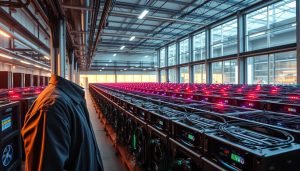
Bitcoin Mining Business for Sale: New Market Options
Here’s something that caught me off guard: the number of available bitcoin mining business for
XDC Price Shows Strong Momentum in Crypto Market Today
XDC cryptocurrency is making waves in the digital asset world. Its impressive market performance is catching investors’ eyes. The XDC price shows remarkable strength in
Etherscan: Your Gateway to the Ethereum Blockchain
Tracking over 700,000 active Ethereum addresses is now a breeze with Etherscan. This blockchain explorer has transformed our understanding of digital transactions1. With crypto trading

VWAP Trading Strategy Gains Traction on Wall Street
Wall Street is buzzing with a new trading strategy. The Volume Weighted Average Price (VWAP) indicator is changing the game for big investors. This sophisticated
 Bitcoin (BTC) $ 68,892.00
- Ethereum (ETH) $ 2,117.57
- Tether (USDT) $ 0.999684
- BNB (BNB) $ 601.16
- XRP (XRP) $ 1.33
- USDC (USDC) $ 0.999949
- Solana (SOL) $ 81.84
- TRON (TRX) $ 0.319199
- Lido Staked Ether (STETH) $ 2,265.05
- Figure Heloc (FIGR_HELOC) $ 1.03
 Bitcoin
  Ethereum
  Tether
  BNB
BNB  XRP
XRP  USDC
USDC  Solana
  TRON
TRON  Lido Staked Ether
  Figure Heloc