
The digital currency industry now consumes between 175 and 240 terawatt-hours of electricity every year. That’s roughly half a percent of all power used on the planet. We’re talking about serious industrial-scale energy consumption.
A significant wave of crypto mining equipment liquidation is happening right now. This creates opportunities for buyers who understand the economics. Operators who jumped in during the 2021 bull run are reassessing their rigs.
Used bitcoin mining hardware is flooding secondary markets. Sellers are making room for newer, more efficient equipment. Smart buyers are taking advantage of these market conditions.
Energy costs are driving this shift. Small changes in power prices matter tremendously for industrial-scale operations. Miners in high-cost electricity regions are selling off equipment.
Those with access to cheap power are actually expanding. Renewable energy sources are especially attractive. The Cambridge Centre for Alternative Finance reports that 52.4% of operations now use sustainable energy.
This fundamental change is reshaping who’s buying bitcoin mining setup for sale listings. I’ll show you exactly what’s happening in the market. You’ll discover where the real opportunities exist.
Key Takeaways
- The industry consumes 175-240 terawatt-hours annually, equivalent to 0.5% of global electricity demand
- Over 52% of operations now utilize sustainable energy sources, reshaping equipment markets
- Significant equipment liquidation is occurring as operators reassess profitability margins
- Energy costs are the primary driver determining which operations expand or liquidate
- Secondary markets are seeing increased availability of industrial-grade hardware
- Miners in low-cost electricity regions are actively acquiring equipment from high-cost areas
Overview of Bitcoin Mining
Bitcoin mining is the computational backbone keeping the entire cryptocurrency network functioning. Understanding why this matters is crucial. Once you grasp the fundamentals, everything else makes sense.
The mining process creates new Bitcoin while performing multiple critical functions. Miners validate transactions, secure the network against attacks, and maintain the blockchain. Without this computational work, Bitcoin couldn’t exist as a decentralized currency.
Miners act as accountants and security guards of the Bitcoin network combined. They check every transaction and prevent double-spending. They create an immutable record everyone can trust.
This responsibility requires serious cryptocurrency mining hardware to accomplish successfully.
What is Bitcoin Mining?
Bitcoin mining validates transactions and adds them to the blockchain through computational work. This description doesn’t capture what happens behind the scenes. Let me break it down in practical terms.
Someone sends Bitcoin, and that transaction gets broadcast to the network. It sits in the mempool—a waiting room for unconfirmed transactions. Miners collect these pending transactions and bundle them into a candidate block.
Bitcoin uses a proof-of-work consensus mechanism requiring miners to solve complex cryptographic puzzles. They guess a random number called a nonce. This number combines with block data through a hash function.
The result must produce a value below a certain target. The only way to find it is brute force. Miners try billions of combinations per second.
The first miner finding a valid solution broadcasts it to the network. Other miners verify it’s correct within milliseconds. The block gets added to the blockchain.
The winning miner receives the block reward—currently 3.125 BTC after April 2024. They also collect all transaction fees from that block.
Mining difficulty adjustment keeps the system balanced. Every 2,016 blocks, the Bitcoin network automatically adjusts puzzle difficulty. This happens roughly every two weeks.
More computational power joining the network increases difficulty. Less power decreases it. This mechanism ensures blocks are found approximately every 10 minutes.
Importance of Mining in the Bitcoin Network
Mining serves as Bitcoin’s immune system and regulatory framework combined. Without miners constantly working, the network would face attacks and manipulation. This matters tremendously for network security.
The proof-of-work consensus creates Byzantine Fault Tolerance. The network can reach agreement on valid transaction history. This works even if some participants are malicious or malfunctioning.
Honest miners controlling the majority of hash rate keep Bitcoin secure. Attackers would need to control more than 50% of total network hash rate. They could then reverse recent transactions or prevent new confirmations.
As of 2024, Bitcoin operates at over 600 exahashes per second. That’s 600,000,000,000,000,000,000 calculations every single second.
The computational power required for such an attack is staggering. You’d need hundreds of thousands of the latest ASIC miners. You’d need electricity to power a small country.
The mining difficulty adjustment would respond to massive hash rate increases. This makes attacks exponentially more expensive to maintain.
Mining also enforces Bitcoin’s monetary policy. The block reward halves approximately every four years. This creates a predictable supply schedule capping at 21 million BTC.
No central authority controls this process. It’s enforced through code and incentive structures keeping miners honest.
Evolution of Bitcoin Mining Technologies
Mining technology progression over 15 years tells a fascinating story. Innovation, competition, and market forces drove these changes. Satoshi Nakamoto mined the first Bitcoin block in January 2009 using a standard desktop computer.
Today, that same equipment couldn’t mine a single satoshi in a lifetime. In early days, CPU mining was the only option. Regular computer processors calculated hashes, and anyone with a laptop could participate.
Hash rate was measured in kilohashes per second—thousands of calculations per second. This sounds impressive until you compare it to today’s standards.
By 2010, miners discovered graphics cards were far more efficient. A decent GPU could achieve 50-100 megahashes per second. GPU mining dominated from 2010 to 2013.
Mining became more competitive quickly. You needed specialized rigs with multiple graphics cards to stay profitable.
| Technology Era | Hash Rate Range | Power Efficiency | Years Active |
|---|---|---|---|
| CPU Mining | 1-10 MH/s | ~1000 W per MH/s | 2009-2010 |
| GPU Mining | 50-800 MH/s | ~10 W per MH/s | 2010-2013 |
| Early ASIC (S1-S5) | 180 GH/s – 1.15 TH/s | ~2 W per GH/s | 2013-2015 |
| Mid-Gen ASIC (S9-S17) | 14-56 TH/s | ~0.05 W per GH/s | 2016-2020 |
| Modern ASIC (S19-S21) | 90-200+ TH/s | ~0.02 W per GH/s | 2020-Present |
The real revolution came in 2013 with Application-Specific Integrated Circuits. ASIC miners were designed exclusively for Bitcoin mining. The first generation delivered 60-80 gigahashes per second.
That’s billions of calculations per second, making GPU mining instantly obsolete for Bitcoin. Each subsequent generation of cryptocurrency mining hardware brought exponential improvements.
The Antminer S9 released in 2016 became the industry workhorse. It delivered 14 terahashes per second—14 trillion calculations per second. These machines dominated operations until around 2020.
You’ll still find them in the used equipment market today. Modern equipment pushes into territory that seemed impossible just years ago.
The Antminer S21 released in late 2023 delivers over 200 TH/s. It features dramatically improved power efficiency. As hardware becomes more powerful, network difficulty increases proportionally.
That brand new S21 faces roughly 14 times more difficulty than an S9 faced in 2017. This partially offsets the hash rate advantage.
This technological arms race explains why the secondary market for mining equipment exists. Older generation hardware becomes unprofitable in high-cost electricity regions. It might still work in areas with cheap power.
Understanding this evolution helps you evaluate used mining rigs for sale. You can determine if it’s actually a bargain or just expensive e-waste.
Current Market Demand for Mining Equipment
Mining equipment demand trends show an unexpected shift in buyers and their motivations. The mining rig marketplace has changed dramatically in recent years. What was once simple supply and demand has become much more complex.
Bitcoin ETFs approved in early 2024 changed everything. Institutional money began flowing into cryptocurrency like never before. This legitimacy brought capital, infrastructure, and serious investment that fundamentally altered market dynamics.
Increasing Interest in Cryptocurrency
Institutional acceptance of cryptocurrency created ripples throughout the mining ecosystem. Major financial players who once dismissed Bitcoin now allocate significant resources to mining. This shift represents infrastructure development, not just speculation.
Regulatory clarity in the United States played a massive role. Clear government frameworks allow businesses to plan long-term investments. More capital now flows into professional mining operations with resources to buy equipment at scale.
Institutional interest drives demand upward while individual miners face different challenges. The barrier to entry has grown substantially. Equipment costs stay high, and technical knowledge for profitable operations has increased exponentially.
“The Bitcoin mining industry is undergoing the most significant transformation in its history, with energy efficiency and regulatory compliance becoming as important as hash rate performance.”
Trends in Bitcoin Mining Sales
Data shows clear market division. Large operations with cheap electricity expand aggressively. Smaller players list their bitcoin mining setup for sale and exit entirely.
Geographic shifts tell a compelling story. The United States now dominates global mining operations, especially in Texas. Deregulated energy markets allow miners to negotiate favorable rates unavailable elsewhere.
Here’s how mining energy sources have shifted:
| Energy Source | 2022 Usage | 2025 Usage | Change |
|---|---|---|---|
| Natural Gas | 22.4% | 38.2% | +15.8% |
| Coal | 36.6% | 8.9% | -27.7% |
| Renewable Energy | 28.3% | 41.7% | +13.4% |
| Nuclear | 8.2% | 7.4% | -0.8% |
That shift from coal to natural gas and renewables happened in three years. Economics and environmental factors drove this change, mostly economics. Natural gas became cheaper while coal faced regulatory pressure and cost disadvantages.
Consolidation will likely accelerate through 2026. Larger operations weather Bitcoin price volatility better. They’re absorbing equipment from smaller miners who can’t compete, creating a robust secondary market.
Economic Factors Influencing Demand
Bitcoin’s price volatility affects mining equipment demand in unexpected ways. Higher BTC prices make mining more profitable, which should increase equipment demand. Manufacturing lead times and setup delays mean the market doesn’t respond instantly.
Energy costs matter more than most newcomers realize. A mining operation profitable at $0.05 per kilowatt-hour might lose money at $0.08. That three-cent difference determines whether you build wealth or burn capital.
Network difficulty influences demand in complex ways. More miners joining increases difficulty, reducing profitability for everyone. This creates a natural limit where equipment demand stabilizes based on profitability thresholds.
The bitcoin mining setup for sale market will stay active as reshuffling continues. Equipment will change hands frequently as operations optimize or exit. Key economic indicators to watch include:
- Bitcoin price stability above the $40,000 threshold
- Regional electricity rate fluctuations, especially in major mining states
- Regulatory developments affecting operational costs
- Manufacturing capacity for next-generation ASIC miners
The demand landscape has changed from early days when anyone could mine profitably. Today’s market rewards scale, efficiency, and cheap energy access. That reality shapes every transaction in the mining rig marketplace.
Types of Bitcoin Mining Setups Available
I started researching crypto mining rigs for sale and felt overwhelmed by countless options. Most of them were terrible investments. The mining equipment market has three main categories.
Understanding the differences can mean the difference between profit and loss. Each type serves a specific purpose with unique advantages and limitations.
Your choice depends on your budget and electricity costs. I’ve seen people waste money on wrong equipment because they didn’t understand their needs.
ASIC Miners: The Preferred Choice
ASIC miner equipment dominates Bitcoin mining for one simple reason: nothing else comes close to their efficiency. These purpose-built machines mine Bitcoin using the SHA-256 algorithm exclusively. They do one thing extraordinarily well.
The current market leaders are Bitmain’s Antminer series, with the S21 as their flagship model. MicroBT’s Whatsminer lineup, particularly the M60 and M50 models, gives Bitmain serious competition. Canaan’s AvalonMiner series rounds out the top three manufacturers.
I learned this the hard way: efficiency matters more than raw hash rate in most scenarios. A newer BTC mining machine producing 150 TH/s at 20 J/TH might be more profitable. An older unit doing 180 TH/s at 35 J/TH might cost more to run.
Let me break down what you’re actually looking at with specialized mining hardware:
| Manufacturer & Model | Hash Rate (TH/s) | Power Consumption (W) | Efficiency (J/TH) | Typical Price Range |
|---|---|---|---|---|
| Bitmain Antminer S21 | 200 | 3,500 | 17.5 | $5,000-$7,000 |
| MicroBT Whatsminer M60 | 172 | 3,344 | 19.4 | $4,500-$6,500 |
| Canaan AvalonMiner 1466 | 150 | 3,400 | 22.7 | $3,800-$5,200 |
| Bitmain Antminer S19 XP | 140 | 3,010 | 21.5 | $3,200-$4,800 |
The numbers tell the real story. If you pay $0.10 per kWh for electricity, that efficiency rating directly impacts daily profit margins. I’ve watched miners switch from older units to newer ASIC miner equipment.
Their electricity costs dropped by 40% while maintaining comparable output.
GPU Mining Rigs: An Alternative Option
Let me be completely honest: GPU mining rigs are essentially irrelevant for Bitcoin mining in 2025. The computational requirements have grown so high that graphics cards simply can’t compete anymore. You’ll still see them listed in crypto mining rigs marketplaces for alternative cryptocurrencies.
Some miners maintain GPU setups for coins like Ethereum Classic, Ravencoin, or newer proof-of-work cryptocurrencies. It’s a diversification strategy more than anything else. Having GPU equipment lets you pivot to other coins if Bitcoin mining becomes unprofitable temporarily.
The advantage of specialized mining hardware like ASICs is clear in the math. A high-end GPU might produce 100 MH/s for Ethereum-based algorithms while consuming 300W. For Bitcoin’s SHA-256, you’d need thousands of GPUs to match a single modern ASIC unit.
GPU rigs offer flexibility though. You can resell graphics cards individually and switch between different algorithms. You can even repurpose them for other computing tasks.
ASICs become paperweights if they’re no longer profitable for their intended purpose.
Complete Mining Farms for Enthusiasts
This is where things get really interesting if you’re serious about scaling up. Complete mining farms are turnkey operations that include everything you need. They have dozens or hundreds of BTC mining machines with cooling infrastructure and power distribution systems.
Monitoring equipment all comes integrated into one package.
I’ve been following partnerships like the one between Canaan Inc. and Soluna Holdings. They deployed 20 MW of Bitcoin miners at wind-powered data centers in Texas. These aren’t just collections of individual units—they’re engineered systems designed to work together efficiently.
Containerized solutions have become the standard for large-scale operations. You get specialized mining hardware pre-installed in 40-foot shipping containers with built-in cooling systems. Some manufacturers offer these as plug-and-play solutions where you just connect power and internet.
The economics work differently at this scale. A single ASIC might cost $5,000. A complete crypto mining rig setup with 100 units might run $400,000—but your per-unit cost drops significantly.
You’re also negotiating better electricity rates at industrial scale.
For someone looking to enter at this level, you need three things. You need substantial capital, typically six figures minimum. You need access to industrial-scale power infrastructure and preferably cheap electricity.
The payback period on these investments typically runs 12-24 months under current market conditions. That calculation changes constantly with Bitcoin’s price and mining difficulty.
What surprised me most was learning that complete farms can actually be more economical than piecing together individual components. The integrated cooling, power management, and monitoring systems eliminate trial-and-error problems. These issues kill profitability for smaller operations.
Essential Tools for a Successful Mining Operation
Many mining operations fail because operators underestimate the infrastructure complexity required. Your professional mining equipment represents just one component of a much larger ecosystem. Without the right supporting tools, even advanced ASIC miners will underperform or become unprofitable.
This section breaks down exactly what you need beyond the miners themselves. These often-overlooked elements separate successful operations from expensive disappointments.
Hardware Requirements Beyond the Miners
Most people focus on ASIC units and forget about supporting hardware infrastructure. The supporting infrastructure determines whether your operation runs smoothly or becomes a constant problem source.
Power distribution units are your first critical investment. A single Antminer S21 pulls roughly 3,500 watts of power. That’s equivalent to running 35 standard 100-watt light bulbs at once.
Standard home electrical circuits won’t work for multiple units. You need dedicated 240V circuits with appropriate breakers. Most professional setups use 30A or 40A circuits per mining unit.
Electrical infrastructure investment can exceed the cost of miners themselves. This happens especially when starting from scratch in a residential location.
Here’s what your electrical setup should include:
- Industrial-grade PDUs capable of handling high amperage loads
- Dedicated circuit breakers rated for continuous operation
- Proper wire gauging to prevent voltage drops and fire hazards
- Surge protection to safeguard expensive equipment
- Monitoring systems to track power consumption in real-time
Your miners need reliable internet connections to communicate with mining pools. Downtime means lost revenue, and every second literally counts in mining.
Industrial-grade network switches work better than consumer routers. Redundant internet connections through different providers prevent costly downtime. If one connection fails, the backup takes over automatically.
Proper racking and mounting systems are often forgotten. Professional mining operation infrastructure includes sturdy shelving that supports multiple units. It also allows adequate airflow between equipment.
Software Solutions for Mining
Software represents the intelligence layer of your operation. Getting this right dramatically impacts your profitability.
Three software categories matter most: firmware, pool management, and monitoring tools. Each serves a distinct purpose in optimizing your operation.
Firmware runs directly on your mining hardware. Custom options like BraiinsOS+ or VNish offer performance optimizations. These alternatives can increase hash rates by 5-15% while reducing power consumption.
Custom firmware runs on about 60% of professional mining units. The remaining 40% stay on manufacturer firmware for stability reasons. It’s a balance between optimization and reliability.
Pool software determines where you direct your computational power. Most miners join pools for consistent payouts. Research pool fees, payout structures, and reputation before committing your hash rate.
Monitoring software is essential for operations with multiple units. Tools like Awesome Miner or Hive OS provide centralized dashboards. You want to know immediately when a unit develops problems.
Setting up a bitcoin mining farm requires integrating all these software components into a cohesive management system.
Electricity and Cooling Considerations
This is where operations succeed or fail. Inadequate power planning or cooling will destroy profitability faster than any other factor.
Texas miners participating in the ERCOT program demonstrated smart power management recently. They returned up to 1,500 MW of energy to the grid during critical shortages. This wasn’t just good citizenship; it was profitable business strategy.
Flexible power consumption creates revenue opportunities beyond mining itself. Temporarily shutting down during high electricity prices can be more profitable than continuing to mine.
| Cooling Method | Efficiency Level | Initial Cost | Best Application |
|---|---|---|---|
| Air Cooling (Industrial Fans) | Moderate | Low to Moderate | Small to medium operations |
| Immersion Cooling | Very High | High | Large-scale professional setups |
| Heat Reuse Systems | High (with added value) | Moderate to High | Operations with heating applications |
| Hydrocooling | High | Moderate | Medium to large operations |
Traditional air cooling with industrial fans remains common. It’s straightforward and relatively inexpensive. You create controlled airflow that exhausts heat outside your facility.
Immersion cooling represents the future for serious operations. Miners are submerged in dielectric fluid that doesn’t conduct electricity. The temperature management is superior, and units can be overclocked safely.
Some innovative operations capture waste heat for practical applications. Setups include heating greenhouses, providing warmth for aquaculture systems, and supplying residential heating. This heat reuse reduces overall operational costs.
Your location determines which cooling approach makes sense. Hot climates require more aggressive cooling solutions. Cold climates can leverage natural cooling during winter months.
Infrastructure considerations determine profitability regardless of hardware power. A top-tier ASIC in poor conditions will underperform a mid-tier unit in optimized infrastructure.
Setting Up Your Bitcoin Mining Operation
Planning my first serious mining setup taught me one thing. Where you place your equipment matters more than almost anything else. The mining facility setup process involves dozens of decisions.
Getting the foundation right determines whether you’ll be profitable or constantly fighting uphill battles. I’ve seen people invest tens of thousands in top-tier bitcoin mining farm equipment only to fail. They chose the wrong location or skipped essential preparation steps.
With proper planning and attention to detail, you can avoid most pitfalls that trip up new miners. This isn’t rocket science, but it does require methodical thinking. You need honest assessment of your resources.
Location Considerations
Location is everything in mining. Your site selection criteria should be comprehensive because this single decision impacts multiple factors. It affects your electricity costs, cooling efficiency, regulatory headaches, and ultimately your bottom line.
Electricity rates come first. You need to be under $0.06 per kilowatt-hour to maintain competitive profitability with current network difficulty. I’ve found that some of the best rates exist in areas with abundant hydroelectric power.
Think Washington State, parts of Canada, or Iceland. But you also need to consider whether those rates are stable or subject to seasonal fluctuations.
Climate matters more than most beginners realize. A mining operation in Montana will spend significantly less on cooling than one in Arizona. The miners essentially act as space heaters year-round.
Cold regions give you a natural advantage since you’re fighting against heat generation constantly.
The regulatory environment deserves serious research. Some jurisdictions actively welcome mining operations with clear rules and tax incentives. Others have banned mining entirely or created regulatory uncertainty that makes long-term planning impossible.
Check local zoning laws, noise ordinances, and any cryptocurrency-specific regulations before committing to a location.
Here’s a comparison table I use for evaluating potential sites for mining facility setup:
| Location Factor | Ideal Condition | Impact on Profitability | Priority Level |
|---|---|---|---|
| Electricity Cost | Under $0.06/kWh | Direct 30-50% of operational costs | Critical |
| Climate Temperature | Average below 70°F year-round | Reduces cooling costs 15-25% | High |
| Regulatory Environment | Clear, mining-friendly policies | Prevents shutdowns, enables planning | Critical |
| Internet Connectivity | Reliable 10+ Mbps connection | Prevents downtime and lost revenue | High |
| Physical Security | Controlled access, monitoring available | Protects capital investment | Medium |
Innovative miners are finding creative solutions to location challenges. Canaan’s pilot project in Manitoba, Canada demonstrates how waste heat from mining can be repurposed for agricultural greenhouses. This approach reduces direct heating costs while generating bitcoin, essentially creating two revenue streams from one operation.
Step-by-Step Guide to Setting Up
Once you’ve secured your location, the actual setup follows a logical sequence. I’ve refined this process through trial and error. Following these steps in order prevents costly mistakes.
- Secure adequate electrical service before anything else arrives. For serious operations, you need 3-phase power at 208V or 480V. Work with a licensed electrician to install appropriate circuits, breakers, and power distribution units. Don’t try to DIY this—electrical fires are expensive and dangerous.
- Prepare cooling infrastructure before your bitcoin mining farm equipment shows up. Calculate thermal output using a simple rule: miners produce approximately 1 watt of heat for every watt consumed. A 3,500W miner generates 3,500W of heat that must be removed. Ensure you have adequate ventilation or HVAC capacity to handle continuous operation.
- Set up network infrastructure with redundant internet connections if your budget allows. Mining doesn’t require massive bandwidth, but connection reliability is essential. Even brief outages mean lost revenue, so having a backup connection through a different ISP pays off.
- Configure your equipment with appropriate pool settings, wallet addresses, and firmware updates. Take time to understand your miner’s interface and optimization options. Most modern ASICs offer different power modes that balance hash rate against efficiency.
- Implement monitoring systems that alert you to problems immediately. Temperature spikes, hash rate drops, or connectivity issues can snowball quickly if undetected. I use monitoring software that sends push notifications to my phone whenever metrics fall outside normal ranges.
- Establish a maintenance schedule and stock spare parts. Power supplies, fans, and control boards are the most common failure points. Having spares on hand means you can swap components quickly instead of waiting days for shipping.
The entire mining facility setup process typically takes 2-4 weeks if you’re doing it properly. Rushing leads to mistakes that cost more time and money to fix later.
Common Mistakes to Avoid
I’ve watched countless people make predictable, avoidable mistakes during their initial setup. Learning from others’ errors is cheaper than making them yourself.
Underestimating power requirements tops the list. People see that a miner draws 3,500W and assume a standard household circuit can handle it. But residential circuits typically only support 15-20 amps at 120V—that’s 1,800-2,400 watts maximum.
You shouldn’t run them at full capacity continuously. You need dedicated circuits sized appropriately for your specific equipment.
Inadequate cooling kills profitability faster than almost anything else. Miners automatically throttle performance when they overheat, and they’ll shut down entirely if temperatures get critical. Summer heat waves can transform a profitable operation into a losing one.
Not accounting for noise surprises many new miners. These machines frequently exceed 75 decibels—about as loud as a vacuum cleaner running constantly. That makes them completely unsuitable for residential areas without substantial sound dampening measures.
Your neighbors will hate you, and you might face code enforcement actions.
The biggest mistake is not running the numbers thoroughly before investing. Calculate your total costs: equipment purchase, electrical infrastructure, ongoing electricity, maintenance, and contingencies. Then calculate realistic revenue based on current network difficulty and Bitcoin prices.
Finally, stress-test those assumptions with unfavorable scenarios—what happens if Bitcoin drops 30%? What if network difficulty increases 20%?
Mining can be profitable, but only if you approach it with clear eyes and realistic expectations. The site selection criteria and setup process matter enormously. Take your time, do it right, and you’ll build an operation that can weather inevitable market fluctuations.
Costs Involved in Bitcoin Mining
Before you buy used bitcoin mining hardware, understand every dollar you’ll spend. Many enthusiasts focus only on equipment prices. They later realize electricity and maintenance costs destroyed their profit margins.
The financial reality involves three major categories. These include your initial setup investment and ongoing operational expenses. You also need realistic equipment cost recovery timelines.
Understanding these costs upfront determines whether mining makes sense for your situation. Careful financial planning separates profitable operations from money-losing ventures. Conservative projections make all the difference.
Breaking Down Your Initial Investment
The equipment itself represents just the starting point of your financial commitment. A new Antminer S21 currently costs between $3,000 and $5,000. Market conditions and your sourcing strategy affect the price.
Used bitcoin mining hardware becomes attractive here. Previous generation models like the S19 series sell for $1,500 to $2,500. You get significant savings if you accept slightly lower efficiency.
However, the miner purchase is only the beginning. Your infrastructure requirements quickly add up. Most beginners don’t anticipate these costs.
Electrical work often becomes the hidden cost killer. You might spend anywhere from $2,000 to $10,000 on electrical upgrades. Most residential circuits can’t handle the power draw from even one high-performance miner.
Beyond electrical infrastructure, you’ll need supporting equipment. These costs add up quickly:
- Power Distribution Units (PDUs): $200-$800 depending on capacity and features
- Network equipment: Switches and cabling run $150-$400 for small operations
- Shelving and racks: Industrial shelving costs $300-$1,000 for proper organization
- Cooling infrastructure: Fans, ventilation systems, or HVAC modifications range from $500 to $5,000
- Monitoring systems: Temperature sensors and remote management tools add $100-$500
For those considering containerized mining farms, these numbers multiply substantially. Proper commercial build-outs require six-figure investments. These include redundant power systems and professional cooling solutions.
Understanding Ongoing Operational Costs
This is where mining profitability analysis becomes critical. Most operations either thrive or fail here. Electricity dominates your ongoing expenses, typically representing 60-80% of total operational costs.
Let me give you concrete numbers. A single Antminer S21 running 24/7 at $0.06 per kilowatt-hour costs approximately $15 daily. That translates to roughly $450 monthly for one machine.
Scale that to ten miners and you’re looking at $4,500 monthly just for power. If you’re paying residential electricity rates closer to $0.12 per kWh, those costs double immediately.
Internet and facility costs add several hundred dollars monthly if you’re renting dedicated space. Most home internet connections handle mining fine. Commercial operations need reliable, redundant connectivity.
Maintenance expenses get underestimated constantly. Fans fail after months of continuous operation. Hash boards develop issues requiring replacement.
Power supplies burn out under sustained loads. I budget at least 10-15% of equipment value annually for repairs and replacements. Having that reserve prevents crisis situations when critical components fail.
| Cost Category | Small Operation (3 miners) | Medium Operation (10 miners) | Large Operation (50 miners) |
|---|---|---|---|
| Monthly Electricity | $1,350 (@$0.06/kWh) | $4,500 (@$0.06/kWh) | $22,500 (@$0.06/kWh) |
| Internet/Connectivity | $50-$100 | $100-$200 | $300-$500 |
| Facility/Rent | $0 (home-based) | $500-$1,000 | $2,000-$5,000 |
| Maintenance Reserve | $60-$100 | $200-$350 | $1,000-$1,750 |
| Total Monthly Operating | $1,460-$1,550 | $5,300-$6,050 | $25,800-$29,750 |
ROI Expectations and Predictions
Equipment cost recovery depends entirely on variables that change constantly. Bitcoin price, network difficulty, and your operational efficiency all matter. Any mining profitability analysis needs realistic assumptions based on conservative projections.
At current difficulty levels with Bitcoin prices ranging between $40,000 and $45,000, results vary. Well-run operations with electricity costs below $0.06 per kWh might achieve payback periods of 12-18 months. Used bitcoin mining hardware can shorten those timelines to 8-14 months due to lower initial investment.
But here’s where things get interesting. A case study from the UAE demonstrates how pairing Bitcoin mining with solar energy works. This approach can reduce a project’s payback period from 8.1 years to just 3.5 years.
This dramatic improvement shows how renewable energy integration fundamentally changes mining economics.
I always stress-test my projections with worst-case scenarios. What happens if Bitcoin drops 30% next quarter? Network difficulty increases 40% over the next year?
Your electricity provider raises rates by 15%? These aren’t pessimistic outlooks—they’re real possibilities. They separate prepared miners from those who panic-sell equipment at losses during market downturns.
My prediction for ROI trends points toward continued divergence. Operations with access to cheap power will outperform those paying market rates. Operations leveraging renewable energy sources or industrial electricity contracts will remain profitable even during bear markets.
Those paying residential rates above $0.10 per kWh will struggle during any significant downturn.
The renewable energy angle becomes increasingly critical. As traditional energy costs rise and environmental scrutiny intensifies, miners benefit. Those who’ve integrated solar, wind, or hydroelectric power will enjoy competitive advantages that compound over time.
If you’re considering entering mining, your profitability window depends entirely on securing competitive electricity rates—everything else is secondary.
Equipment cost recovery also depends on residual value retention. Quality used bitcoin mining hardware from reputable manufacturers maintains reasonable resale value. This creates an exit strategy that many beginners overlook when calculating true ROI.
I now evaluate potential mining investments differently. I focus on total cost of ownership over 24-36 months rather than simple payback calculations. This longer view accounts for Bitcoin’s volatility, potential equipment failures, and changing network conditions.
Statistics on Bitcoin Mining Profitability
Digging into actual statistics reveals patterns that challenge common assumptions about Bitcoin mining. The numbers show a dynamic landscape of difficulty adjustments and energy costs. Hardware efficiency creates constantly shifting profit margins.
These metrics have evolved significantly over the years. The industry has matured beyond simple calculations. It now requires sophisticated analysis of multiple variables.
The current state of crypto mining rigs profitability depends on understanding these interconnected factors. Bitcoin’s global energy consumption reaches 175 to 240 terawatt-hours annually in 2025. That equals about 0.5% of worldwide electricity demand.
That’s substantial, though context matters. Data centers globally consume roughly 200 terawatt-hours. Aluminum production uses approximately 1,100 terawatt-hours.
Recent data shows an encouraging shift toward sustainable energy. The Cambridge Centre for Alternative Finance reports important findings. 52.4% of Bitcoin mining now utilizes sustainable energy sources.
This includes 42.6% from renewables like hydro and wind. Nuclear power provides another 9.8%. This shift isn’t just environmental—it’s economic, as renewable energy often provides the lowest electricity costs.
Current Mining Difficulty and Hash Rates
Network hash rate analysis shows unprecedented computational power securing Bitcoin. The total network hash rate has exceeded 600 exahashes per second (EH/s) in 2025. That’s 600 quintillion calculations happening every single second across the entire network.
Mining difficulty trends have followed this upward trajectory. Current difficulty sits at historically high levels. We’re seeing increases of roughly 60% over the past two years alone.
For anyone operating crypto mining rigs, this means something straightforward. Each unit of hash rate you contribute represents a smaller slice of the total network pie.
Difficulty adjusts approximately every two weeks based on how quickly blocks are found. It’s a self-regulating system that responds to changes in network participation. More miners joining means blocks are found faster than the target 10-minute interval.
When this happens, difficulty increases. When miners drop off and blocks slow down, difficulty decreases.
| Metric | Current Value (2025) | 2-Year Change | Impact on Miners |
|---|---|---|---|
| Network Hash Rate | 600+ EH/s | +85% | Lower rewards per TH/s |
| Mining Difficulty | Historical highs | +60% | Requires more efficient hardware |
| Sustainable Energy Use | 52.4% | +18% | Reduced operational costs |
| Block Reward | 3.125 BTC | -50% (halving) | Price appreciation needed |
Network hash rate analysis reveals something interesting about miner behavior. The 2024 halving event cut block rewards from 6.25 to 3.125 BTC. Yet we didn’t see the massive miner capitulation many predicted.
Bitcoin’s price appreciated enough to offset reduced rewards. Operations also became significantly more efficient.
Historical Profitability Trends
Historical data shows profitability follows cyclical patterns. These patterns correlate strongly with Bitcoin’s price cycles. During the 2020-2021 bull run, even inefficient mining operations were profitable.
Older S9 models still generated positive returns during that period. That’s something unthinkable in today’s environment.
The 2022-2023 bear market changed everything. It forced many miners to shut down or liquidate their operations. This especially affected those running older equipment or paying high electricity costs.
Mining difficulty trends during this period showed modest decreases. Less efficient miners exited the market.
The 2024 halving played out differently compared to previous halvings. The industry had matured significantly. Miners had diversified revenue streams and negotiated better energy contracts.
They also upgraded to more efficient hardware ahead of the event. This preparation meant the shock was absorbed more smoothly than many analysts expected.
The next few years will separate professional mining operations from hobbyists based primarily on access to low-cost energy and operational efficiency.
Visualizing these trends reveals clear patterns. Network hash rate and difficulty trend upward over time. Profitability measured in dollars per terahash per day fluctuates based on Bitcoin price.
The overall trend shows declining profitability per unit of hash power. More efficient hardware enters the network and competition intensifies.
Future Profitability Predictions
Predicting future profitability requires making assumptions about several variables. Nobody can know these with certainty. But current data and historical patterns offer informed perspectives on what’s coming.
Bitcoin’s price may maintain current levels or increase. If you have access to electricity below $0.06 per kilowatt-hour, operations should remain profitable. Current-generation hardware will likely work through 2026 and into 2027.
The newest models like the Antminer S21 or Whatsminer M60 series have strong efficiency levels. They provide comfortable margins even with modest Bitcoin prices.
The real challenge comes with the next halving event in 2028. Block rewards will drop to just 1.5625 BTC per block. Miners will need either significantly higher Bitcoin prices or another substantial leap in hardware efficiency.
Historically, both tend to happen. But there are no guarantees.
Key factors will determine crypto mining rigs profitability over the next few years:
- Bitcoin price movements – The single biggest variable affecting profitability calculations
- Electricity costs – Operations with sub-$0.04/kWh rates will have sustainable advantages
- Hardware efficiency improvements – Next-gen ASICs may deliver 15-25% efficiency gains
- Regulatory environment – Government policies on energy use and taxation matter significantly
- Renewable energy adoption – Access to curtailed wind/solar power creates competitive edges
The continued shift toward renewable energy sources deserves close attention. Operations that can tap into curtailed wind or solar power at extremely low costs will have advantages. These advantages become more pronounced over time.
This isn’t just about sustainability—it’s about survival in an increasingly competitive environment. Margins are measured in cents per kilowatt-hour.
The mining industry will likely continue consolidating around large-scale operations. These operations have access to cheap, preferably renewable energy. Small-scale miners can still participate profitably.
They’ll need to be strategic about equipment purchases and energy sourcing. Timing operations around Bitcoin’s market cycles will also be crucial.
Measuring the Environmental Impact
Bitcoin mining’s environmental impact tells a complex story beyond typical headlines. The footprint of cryptocurrency mining hardware is real and significant. Anyone considering mining should understand these facts clearly.
The current statistics are sobering. Bitcoin mining generates approximately 98.10 million tonnes of CO2 annually on a global scale. That’s a substantial carbon footprint by any measure.
Water consumption adds another layer to the environmental equation. Mining operations consume around 2,772 gigaliters of water globally each year. These figures represent real resource usage affecting communities and ecosystems.
Energy Consumption Statistics
The projections for future impact deserve attention. Without significant intervention, experts suggest these metrics could increase sixfold by 2030. That’s the trajectory if mining practices don’t evolve substantially.
The energy consumption statistics need proper context. Mainstream coverage often misses crucial developments. Coal usage in cryptocurrency mining hardware operations dropped dramatically—from 36.6% in 2022 to 8.9% in 2025.
That’s a 75% reduction in coal dependency within three years. This shift happened faster than most people realize. Economic incentives and environmental consciousness drove this change together.
Renewable sources are often cheaper. This creates market pressure toward cleaner energy. Regulatory mandates aren’t the only force driving change.
Renewable Energy Solutions for Miners
Bitcoin miners increasingly partner with renewable energy projects. This relationship benefits both parties in genuinely innovative ways.
The Canaan Inc. partnership with Soluna Holdings provides a concrete example. They deployed 20 MW of Bitcoin miners at a wind-powered data center in Texas. This arrangement addresses a fundamental problem with renewable energy—intermittency.
Wind doesn’t blow constantly. Solar panels don’t generate at night. Excess renewable energy often gets curtailed or wasted.
Bitcoin miners can absorb this surplus energy. This makes sustainable mining operations more economically viable.
The SynVista Energy collaboration demonstrates real-time synchronization between hash-rate demand and energy supply fluctuations. Miners ramp up operations when clean power is abundant. They scale back during low-generation periods.
This flexibility helps stabilize renewable energy projects financially. The infrastructure for these operations creates significant demand for critical materials used in clean energy systems. Mining economics increasingly favor locations with surplus renewable capacity.
| Energy Source | 2022 Usage | 2025 Usage | Change |
|---|---|---|---|
| Coal | 36.6% | 8.9% | -75.7% |
| Renewable Energy | 37.2% | 58.4% | +57.0% |
| Natural Gas | 18.4% | 23.1% | +25.5% |
| Nuclear | 7.8% | 9.6% | +23.1% |
Sustainable Practices in Mining
Miners are implementing practices that reduce overall environmental impact. These innovations extend the sustainability conversation in practical directions.
Immersion cooling systems represent one significant advancement. Operations submerge cryptocurrency mining hardware in dielectric fluid. This eliminates the need for energy-intensive fans.
This reduces both electricity consumption and water usage. Traditional air-cooling methods require far more resources.
Heat reuse projects capture waste thermal energy for productive purposes. Canaan’s Manitoba greenhouse operation uses mining heat that would otherwise be exhausted. The greenhouse grows vegetables year-round using essentially free heating.
Some operations locate near landfills and use methane that would otherwise be vented or flared. This approach simultaneously mines Bitcoin while reducing greenhouse gas emissions. Methane has roughly 25 times the warming potential of CO2.
Capturing it delivers substantial environmental benefits. Sustainable mining operations have evolved as the industry matures. If Bitcoin provides value as a monetary network, the relevant question becomes how to make mining as sustainable as possible.
The trajectory is encouraging. Over half of mining operations now use renewable or low-carbon energy sources. This trend will likely accelerate as miners gravitate toward regions with surplus clean energy.
Within a decade, most renewable energy mining will happen where electricity costs are lowest. That increasingly means renewable-rich locations. The environmental challenge is real and significant.
The industry’s response is moving in the right direction. Economics and ethics drive this change faster than most observers recognize.
Frequently Asked Questions about Bitcoin Mining
Mining questions follow predictable patterns. I’ve answered these specific ones hundreds of times. The confusion makes sense—conflicting information makes separating fact from hype genuinely difficult.
Let me address the three questions that dominate every mining conversation. I’ll give you the specific numbers and context you actually need.
How Much Can I Make from Mining?
This question frustrates people because the honest answer is “it depends.” Let me give you concrete numbers based on current network conditions. An Antminer S21 producing approximately 200 TH/s generates about $8-12 daily in Bitcoin revenue before electricity costs.
That’s your gross revenue, not your profit. Here’s where your electricity rate becomes critically important. If you’re paying $0.06 per kilowatt-hour for power, your daily electricity cost runs roughly $5.
This leaves you with $3-7 in actual profit each day. Scale that out and you’re looking at $90-210 per month from a single unit.
Now multiply that by 10 miners. Suddenly you’ve got $900-2,100 in monthly profit. However—and this caveat matters enormously—these numbers fluctuate significantly with Bitcoin’s price and network difficulty.
Bitcoin surged in 2021. Those same hash rates generated 3-4 times more revenue. It crashed in 2022, and many operations were losing money despite running the same equipment.
A mining profitability calculator becomes your best friend in this business. Tools like Nicehash, WhatToMine, or ASIC Miner Value let you input your specific hardware specs. You can add electricity costs and current network conditions to get real-time profitability estimates.
I check these calculators daily because conditions change constantly. Sometimes they shift dramatically within a single week.
| Electricity Rate | Daily Profit (Single S21) | Monthly Profit (10 Units) | Profitability Status |
|---|---|---|---|
| $0.04/kWh | $5-9 | $1,500-2,700 | Highly Profitable |
| $0.06/kWh | $3-7 | $900-2,100 | Moderately Profitable |
| $0.10/kWh | -$1-3 | -$300-900 | Marginal/Unprofitable |
| $0.12/kWh | -$3-1 | -$900-300 | Generally Unprofitable |
What Equipment is Necessary?
For Bitcoin mining specifically, ASIC miner equipment is essentially mandatory. GPU mining became obsolete for Bitcoin years ago. The most common models include Bitmain’s Antminer series (S19, S19 XP, S21), MicroBT’s Whatsminer series (M50, M60), and Canaan’s AvalonMiner lineup.
Shopping for an Antminer for sale? Expect to pay $1,500-5,000 per unit depending on whether you buy used or new equipment. Newer models deliver better efficiency but command premium prices.
Beyond the miners themselves, you need supporting infrastructure that newcomers often overlook:
- Electrical infrastructure: 240V circuits, appropriate PDUs (power distribution units), and sufficient amperage capacity
- Internet connection: Even a basic connection works since mining doesn’t require much bandwidth
- Cooling and ventilation: These machines generate serious heat and need proper airflow
- Monitoring software: To track performance and catch problems early
- Spare parts inventory: Fans and power supplies fail regularly in serious operations
The equipment itself is straightforward. The infrastructure and operational knowledge separate successful miners from those who quit after three months of frustration.
Is Bitcoin Mining Profitable in 2023?
Since we’re now in 2025-2026, let me address current profitability with the context that matters. Mining remains profitable, but with significant caveats that determine whether you’ll succeed or struggle.
Profitability hinges on competitive electricity costs—generally under $0.06 per kilowatt-hour. The exact threshold depends on current Bitcoin prices and network difficulty. Operations with access to electricity below $0.04/kWh stay solidly profitable even during adverse market conditions.
Those paying above $0.10/kWh generally operate unprofitably unless Bitcoin prices surge dramatically. This reality explains why natural gas has become the largest single energy source for Bitcoin mining. It powers 38.2% of operations—miners constantly seek the lowest-cost power sources available.
The 2024 halving event changed the game significantly. Block rewards dropped from 6.25 to 3.125 BTC, essentially doubling the difficulty of achieving profitability. You now need either twice the efficiency or twice the Bitcoin price to maintain the same dollar profits.
Mining difficulty adjusts approximately every two weeks based on total network hash rate. This self-regulating mechanism means that as more miners join the network, individual profitability decreases. Bitcoin’s price must rise proportionally to maintain profits.
The most important insight I can share: mining profitability is highly individualized based on your specific circumstances. Your electricity cost, equipment efficiency, and operational expertise matter far more than general market conditions.
A well-run operation with cheap power remains profitable through bear markets. A poorly run operation with expensive power loses money even during bull markets.
Before you start searching for a mining profitability calculator or browsing ASIC miner equipment, get brutally honest. Assess your electricity costs and technical capabilities first.
Notable Bitcoin Mining Setups for Sale
I’ve spent two years navigating the bitcoin mining setup for sale marketplace. Not all vendors are created equal. The mining rig marketplace offers everything from single ASIC miners to complete turnkey operations.
Understanding where to buy and who to trust matters greatly. This knowledge can mean the difference between profit and loss. The equipment sourcing options available today provide more choices than ever before.
But with that variety comes complexity. Careful evaluation is essential.
Reviewing Top Vendors
The vendor landscape breaks down into three distinct categories. Each has advantages and limitations. I’ve dealt with all three types.
Knowing which one fits your situation matters more than you think.
Major manufacturers represent the first tier. Bitmain leads the industry with their Antminer series. MicroBT’s Whatsminer models and Canaan’s AvalonMiners follow closely behind.
Buying directly from manufacturers guarantees genuine hardware with full warranties. The catch? You’ll typically face order minimums and extended wait times.
I tried ordering directly from Bitmain last year. The minimum was ten units with a three-month lead time.
Authorized distributors form the second category. Companies like Kaboomracks and D-Central source equipment from manufacturers. They sell to individual miners.
These distributors offer several benefits:
- Better availability than manufacturers
- Responsive customer service and technical support
- Smaller minimum orders or single-unit purchases
- Regional warehouses for faster shipping
- Established reputations you can verify
The tradeoff is price. Distributors typically charge 5-15% more than manufacturer direct pricing. I’ve found that premium worth paying for the convenience and support.
Secondary market sellers complete the picture. This category includes mining operations liquidating equipment. Individual miners upgrading their hardware also sell here.
Equipment brokers specializing in bulk sales participate too. Marketplaces like eBay, Alibaba, and ASIC Miner Marketplace facilitate these transactions.
The secondary market offers the best deals on bitcoin mining setup for sale listings. But you’re trading lower prices for higher risk. Used equipment comes with unknowns about operating history and remaining lifespan.
Analyzing Prices of Available Setups
Current pricing varies dramatically based on equipment age and condition. Vendor type also affects price. Understanding these price ranges helps you evaluate whether a listing represents fair value.
New equipment from manufacturers or authorized distributors follows predictable pricing. A new Antminer S21 runs between $3,000 and $4,000. The previous generation S19 XP sells for $2,000 to $3,000 new.
These prices fluctuate with Bitcoin’s price and mining profitability. Bitcoin surged in early 2024. S21 prices jumped to $4,500.
Profitability dropped later. Prices corrected downward.
Used equipment on the mining rig marketplace typically sells at 30-60% discounts. I’ve seen used S19 models priced between $800 and $1,500. The critical question becomes whether that discount justifies shorter remaining lifespan.
Here’s what I consider evaluating used equipment prices:
- Calculate the price per terahash to compare across models
- Factor in power efficiency differences and electricity costs
- Estimate remaining useful life based on age and usage
- Add potential repair or replacement costs
- Compare against new equipment ROI timelines
Complete mining setups represent another pricing tier entirely. Containerized mining farms start around $100,000 for small 50-unit containers. Large-scale operations can run into millions of dollars.
These packages include more than just miners. They come with cooling systems, power distribution infrastructure, and monitoring equipment. Often the container itself is included.
The equipment sourcing options for complete setups typically involve direct negotiations. These happen with specialized vendors rather than marketplace purchases.
Features to Look for in Mining Equipment
Hash rate tops everyone’s feature list, and rightfully so. Higher hash rates mean more mining power and potentially greater rewards. But hash rate alone doesn’t tell the complete story.
Power efficiency matters just as much as raw performance. This metric is measured in joules per terahash (J/TH). It directly impacts your electricity costs and long-term profitability.
Current-generation equipment achieves 18-25 J/TH. Older models might consume 30-40 J/TH.
That difference translates to real money. A miner consuming 35 J/TH versus one at 20 J/TH costs about 75% more to operate. Over months and years, efficiency becomes more important than upfront cost.
| Feature Category | What to Look For | Why It Matters |
|---|---|---|
| Hash Rate | 100+ TH/s for modern ASICs | Determines mining output and reward potential |
| Power Efficiency | 18-25 J/TH for current models | Directly impacts operational costs and profitability |
| Build Quality | Removable hash boards, quality fans | Affects maintenance ease and equipment longevity |
| Warranty Coverage | 6-12 months manufacturer warranty | Protection against defects and early failures |
Build quality separates reliable miners from problematic ones. I prefer equipment with removable hash boards because they’re easier to repair. Readily available spare parts matter too.
Strong community support for troubleshooting also factors into my purchasing decisions.
Noise levels might seem minor until you’re running equipment. Some models produce 75+ decibels. That’s roughly as loud as a vacuum cleaner running continuously.
If you’re mining at home or in a shared space, quieter models become worth the premium.
Warranty and vendor support provide peace of mind. What happens if something fails in the first month? Reputable vendors offer at least six months of warranty coverage.
Some extend that to twelve months for new equipment.
I always verify several things before purchasing from the bitcoin mining setup for sale market. Check vendor reputations on forums like Bitcointalk. Confirm that equipment is genuine—counterfeit miners exist.
Understand exactly what’s included in the purchase price.
For used equipment, ask about operating history. Find out about any previous repairs. Check remaining warranty if transferable.
Payment methods matter too. Credit cards offer buyer protection. Cryptocurrency payments or wire transfers are irreversible if something goes wrong.
The mining rig marketplace has matured over the years. But due diligence remains essential. Taking time to research vendors and evaluate equipment features prevents costly mistakes.
How to Choose the Right Mining Setup
The difference between profitable mining and wasting money comes down to choosing equipment that fits your situation. Too many people buy the wrong professional mining equipment because they follow hype instead of doing math. Your electricity rate, available capital, technical skills, and goals should drive every decision you make.
This isn’t about finding the “best” miner on the market. It’s about finding the right setup for your circumstances. That might mean buying used bitcoin mining hardware to minimize upfront costs or investing in cutting-edge efficiency.
Assessing Your Needs and Goals
Before you spend a single dollar, you need brutal honesty about what you’re trying to accomplish. I start every equipment consultation by asking people to define their actual objectives. Fantasy outcomes don’t count here.
Are you mining as a hobby to learn about Bitcoin’s technical infrastructure? Or is this a business venture where profitability isn’t optional? Your answer changes everything about equipment selection criteria.
Here’s what you need to evaluate about your situation:
- Available capital: How much can you invest without affecting your financial stability? Mining requires upfront investment plus operational reserves.
- Electrical capacity: What’s your actual available power? A residential 200-amp service might only support 2-3 miners safely.
- Electricity cost: What do you pay per kWh? This single factor determines whether you can be profitable at all.
- Technical ability: Can you troubleshoot hardware issues, configure networking, and handle basic repairs?
- Time horizon: Are you willing to operate through market cycles, or do you need quick returns?
- Risk tolerance: Can you handle equipment failures, price volatility, and potential losses?
Your goals determine whether used bitcoin mining hardware makes sense for your operation. If you’re experimenting and learning, buying a used S19 for $800-1,200 lets you understand operational challenges. You won’t risk $3,000+ on new equipment.
But if you’re building a serious operation with expensive electricity, you need the efficiency newer models provide. There’s no way around that reality.
Evaluating Setup Cost vs. Profitability
This is where most people either set themselves up for success or guarantee themselves losses. You need actual numbers, not hopeful assumptions about Bitcoin’s future price.
I use a systematic process for evaluating any equipment selection criteria. First, calculate your cost per terahash of mining power. If you’re buying an S19 XP for $2,500 that produces 140 TH/s, your cost is $17.86 per TH/s.
A used S19 at $1,000 for 95 TH/s costs $10.53 per TH/s.
Second, determine your daily electricity cost per TH/s. An S19 consuming 3,250 watts at $0.06/kWh costs $4.68 daily, which is $0.049 per TH/s per day. At $0.10/kWh, that same miner costs $7.80 daily, or $0.082 per TH/s per day.
Third, calculate current revenue per TH/s using real-time network difficulty and Bitcoin prices. At current conditions, this might be around $0.06 per TH/s per day. Subtract your electricity cost to find your daily profit per TH/s.
| Equipment Type | Cost per TH/s | Efficiency (J/TH) | Daily Profit at $0.06/kWh | Payback Period (Days) |
|---|---|---|---|---|
| New S21 (200 TH/s) | $17.50 | 17.5 J/TH | $2.28 | 1,535 |
| New S19 XP (140 TH/s) | $17.86 | 21.5 J/TH | $1.54 | 1,623 |
| Used S19 (95 TH/s) | $10.53 | 34.2 J/TH | $1.05 | 952 |
| Used S17 (56 TH/s) | $7.14 | 45 J/TH | $0.34 | 1,176 |
The data shows something critical: mining operations with electricity costs below $0.04/kWh maintain profitability even in adverse market conditions. Those paying above $0.10/kWh struggle except during price surges. Equipment efficiency directly impacts your operational costs and determines your profitability thresholds.
If your payback period exceeds 18-24 months, you’re taking substantial risk. Technology advances quickly, and what’s efficient today becomes obsolete within 2-3 years. Professional mining equipment needs to recover its cost well before technological obsolescence sets in.
Comparing New vs. Used Equipment
The new versus used debate isn’t straightforward. Both options have legitimate use cases depending on your situation and equipment selection criteria.
New equipment offers clear advantages. You get manufacturer warranties (typically 6-12 months), longer useful life (3-4 years instead of 1-2), and better efficiency. But you pay premium prices—often 2-3x what used bitcoin mining hardware costs.
Used equipment reduces your initial capital requirement significantly. That S19 that cost $8,000 new in 2021 might sell for $1,000-1,500 today. You can get into mining with substantially less money at risk.
But used hardware comes with real drawbacks. No warranty means you’re responsible for repairs. Previous owners might have run the equipment hard, reducing its remaining lifespan.
Older models have worse efficiency, which means higher electricity costs that eat into your profits.
Here’s my general guideline: If used bitcoin mining hardware costs less than 50% of equivalent new equipment, used makes sense. You also need technical skills to handle repairs. If the price creeps above 60-70% of new, I’d rather buy new and get the warranty.
The exception is for small-scale experimental operations. If you’re testing whether mining works for your situation, buying a used miner for $800-1,200 helps. You learn the operational realities without committing thousands to new professional mining equipment.
My prediction for the equipment market: we’ll continue seeing good deals on used S19 series miners. Large operations will upgrade to S21 and newer models. These S19 units can still be profitable, but only at electricity costs below $0.05/kWh.
As we approach future halvings, even these will become marginal unless Bitcoin prices increase substantially.
For anyone setting up now, I recommend focusing on current-generation equipment if your budget allows. Or secure very competitive electricity rates if buying used. The middle ground—paying average electricity rates with previous-generation equipment—is where people consistently lose money.
Future Trends in Bitcoin Mining
The mining landscape is changing in ways that will reshape bitcoin mining farm equipment and operations. Several trends are converging that will define the next chapter of this industry.
Technology Evolution and Efficiency Gains
Next-generation mining hardware is approaching physical limits with 3-nanometer chip processes. Each new generation brings smaller efficiency gains than the last. Current ASICs achieve around 18-25 J/TH, and improvements will continue at a slower pace.
Innovations in cooling systems are more exciting—immersion cooling and heat reuse projects turn “waste” into value. Operations are partnering with greenhouses and industrial facilities to monetize heat that would otherwise dissipate.
Regulatory Shifts and Recognition
The BITCOIN Act of 2025 marked a turning point in how governments view mining. Strategic Bitcoin reserves signal legitimacy that didn’t exist years ago. Different jurisdictions are taking varied approaches—some offering tax incentives while others impose restrictions.
Institutional demand for ESG-aligned assets is pushing miners toward renewable energy partnerships. This isn’t just compliance; it’s becoming a competitive advantage.
Balancing Scale with Distribution
The tension between consolidation and decentralized mining infrastructure continues to evolve. Large operations dominate through economies of scale, yet technologies like Stratum V2 aim to redistribute power.
Small-scale miners could emerge around distributed renewable installations—solar-powered home mining, for instance. Success depends on whether these operations can compete economically with industrial farms.
Miners who thrive will treat themselves as flexible energy consumers, not just Bitcoin producers.
FAQ
How much can I actually make from Bitcoin mining?
FAQ
How much can I actually make from Bitcoin mining?
Your earnings depend on your specific setup and conditions. An Antminer S21 producing 200 TH/s generates about -12 daily before electricity costs. With power at
FAQ
How much can I actually make from Bitcoin mining?
Your earnings depend on your specific setup and conditions. An Antminer S21 producing 200 TH/s generates about $8-12 daily before electricity costs. With power at $0.06/kWh, electricity costs roughly $5 per day.
This leaves you with $3-7 in daily profit, or $90-210 monthly. Scale to 10 miners and you’re looking at $900-2,100 monthly profit. These numbers change with Bitcoin’s price and network difficulty.
During Bitcoin’s 2021 surge, the same hash rates generated 3-4x more revenue. Mining profitability calculators help you input your used bitcoin mining hardware, electricity costs, and network conditions. You’ll get real-time profitability estimates for your situation.
What equipment is necessary to start mining Bitcoin?
For Bitcoin, ASIC miner equipment is mandatory. Common models include Bitmain’s Antminer series (S19, S19 XP, S21). MicroBT’s Whatsminer series (M50, M60) and Canaan’s AvalonMiner are also popular.
Expect to pay $1,500-5,000 per unit for used or new models. Beyond the BTC mining machines, you need proper electrical infrastructure. You’ll need 240V circuits with PDUs that handle high amperage.
A single Antminer S21 pulls about 3,500 watts. Standard household circuits won’t work for this power demand. You’ll also need reliable internet, proper cooling, and monitoring software.
Is Bitcoin mining still profitable in 2025-2026?
Yes, but with important conditions. Mining works if you have competitive electricity costs under $0.06/kWh. The exact threshold depends on Bitcoin prices and network difficulty.
Operations with electricity below $0.04/kWh stay profitable in tough markets. Those paying above $0.10/kWh struggle unless Bitcoin prices surge. The 2024 halving cut block rewards from 6.25 to 3.125 BTC.
This change doubled the difficulty of achieving profitability. Your electricity cost, equipment efficiency, and skills matter most. These factors outweigh general market conditions for any bitcoin mining setup for sale.
Should I buy new or used mining equipment?
New equipment offers longer life, warranties, and better efficiency. However, it requires higher upfront costs. Used bitcoin mining hardware reduces initial investment but carries higher failure risk.
Used equipment has shorter remaining lifespan and often lower efficiency. If used equipment costs less than 50% of new, it makes sense. You’ll need technical ability to troubleshoot and repair issues.
If used equipment is priced above 60-70% of new, buy new instead. For small-scale operations, used equipment reduces financial risk while you learn. The mining rig marketplace has good deals on S19 miners now.
What are the biggest costs I need to consider beyond the mining equipment?
Initial investment includes miners and infrastructure. Electrical work might run $2,000-$10,000 depending on your facility. PDUs, network equipment, shelving, and cooling add $1,000-$5,000 for small operations.
Ongoing operational costs determine mining profitability. Electricity typically represents 60-80% of total operating costs. A single Antminer S21 running 24/7 at $0.06/kWh costs $15 daily.
That’s roughly $450 per month in electricity alone. Fans fail, hash boards die, and power supplies burn out. Budget 10-15% of equipment value annually for repairs when purchasing crypto mining rigs.
How long does it take to break even on a mining investment?
At current difficulty levels with Bitcoin around $40,000-$45,000, payback takes time. Well-run operations with electricity below $0.06/kWh see 12-18 month payback periods. Always test worst-case scenarios in your projections.
What if Bitcoin drops 30% or difficulty increases 40%? What if electricity costs rise unexpectedly? That UAE case study shows renewable energy integration improves economics dramatically.
It reduced payback from 8.1 years to 3.5 years. Operations with cheap power will continue outperforming those paying market rates. For professional mining equipment, securing competitive electricity rates determines your profitability window.
Where should I locate my mining operation?
Location is your most important decision. Your site determines electricity costs, cooling efficiency, and regulatory environment. These factors control your profitability completely.
Look for electricity rates under $0.06/kWh to maintain competitive profitability. Climate matters because cooler regions reduce cooling costs significantly. Montana or North Dakota operations spend less than Arizona or Texas.
Check the regulatory environment for mining-friendly jurisdictions with clear regulations. For bitcoin mining farm equipment, you’ll need 3-phase power at 208V or 480V. Any serious operation requires this power infrastructure.
How loud are Bitcoin miners, and can I run them at home?
These machines are loud, often exceeding 75 decibels. This noise level makes them unsuitable for residential areas without mitigation. That’s roughly equivalent to a vacuum cleaner or heavy traffic.
Many miners discover this after setting up ASIC miner equipment at home. Some models are quieter, and aftermarket solutions reduce noise. Insulated enclosures or immersion cooling help with sound reduction.
Most setups need dedicated spaces like basements, garages, or commercial facilities. The noise issue is a common mistake newcomers make. People enter the mining rig marketplace without considering operational realities.
What’s the environmental impact of Bitcoin mining?
Bitcoin mining consumes significant resources globally. Mining generates 98.10 million tonnes of CO2 annually. It also consumes 2,772 gigaliters of water worldwide.
However, coal usage collapsed from 36.6% in 2022 to 8.9% in 2025. This 75% reduction came from economics and environmental consciousness. More than half of mining operations now use sustainable energy sources.
Renewables like hydro and wind provide 42.6% of mining power. Nuclear provides another 9.8% of energy. Bitcoin miners increasingly partner with renewable energy projects. Cryptocurrency mining hardware can enable renewable infrastructure by improving project economics.
Can I mine Bitcoin with a regular computer or gaming GPU?
No, not in 2025. GPU mining rigs are irrelevant for Bitcoin mining now. You might see them in crypto mining rigs marketplaces for alternative cryptocurrencies.
Bitcoin launched in 2009 with people mining on desktop computers. Then graphics cards proved more efficient for mining. By 2013, the first ASICs appeared and changed everything.
Computational requirements for Bitcoin mining are too high for GPUs now. The Antminer S9 from 2016 produces about 14 TH/s. Today’s Antminer for sale models like the S21 push over 200 TH/s.
What happens to mining equipment after it becomes obsolete?
Older equipment becomes obsolete as new generations offer better efficiency. It might still profit with extremely cheap electricity. This evolution creates the used bitcoin mining hardware market.
Miners from the 2021 bull run are reassessing their operations now. Equipment is flooding the marketplace as a result. Large operations upgrade to S21 hardware and sell their S19 units.
Some equipment gets repurposed for alternative cryptocurrencies with lower difficulty. Eventually, truly obsolete miners get recycled for component materials. This cycle keeps the secondary market active.
Do I need to join a mining pool, or can I mine solo?
Solo mining is impractical except for massive operations. Network hash rate has exceeded 600 exahashes per second. Your individual miners represent a tiny fraction of total power.
In solo mining, you only earn when you find a complete block. This could take years or never happen for small operations. Mining pools aggregate hash rate from thousands of participants.
Pools distribute rewards proportionally based on contributed work. You receive smaller, more frequent payments instead of hoping for luck. Your BTC mining machines need reliable internet to communicate with pools.
What maintenance do Bitcoin miners require?
Regular maintenance keeps your professional mining equipment running efficiently. The most common failures are fans, power supplies, and control boards. Fans fail frequently because they run continuously at high speeds.
Replace fans every 6-12 months depending on conditions. Clean dust from heat sinks and fans monthly. Accumulated dust reduces cooling efficiency and causes overheating.
Monitor equipment daily for temperature spikes, hash rate drops, or connectivity problems. Keep spare parts on hand for quick component swaps. Budget 10-15% of equipment value annually for repairs for any bitcoin mining setup for sale.
How does the Bitcoin halving affect mining profitability?
The halving event occurs approximately every four years. It cuts block rewards in half each time. The 2024 halving reduced rewards from 6.25 to 3.125 BTC per block.
This essentially doubled the difficulty of achieving profitability. You now need twice the efficiency or twice the Bitcoin price. The 2024 halving didn’t cause the massive miner capitulation many predicted.
Bitcoin’s price appreciated enough to offset reduced rewards. The next halving in 2028 will cut rewards to 1.5625 BTC. This cycle drives equipment turnover in the mining rig marketplace as operators upgrade.
Can Bitcoin mining actually help renewable energy projects?
Yes, and this development is fascinating to watch. Wind and solar power have an inherent intermittency problem. Renewable generation often exceeds grid demand, wasting energy.
Bitcoin miners can absorb this excess energy as flexible loads. This makes renewable projects more economically viable. The Canaan partnership deployed 20 MW of miners at a Texas wind-powered center.
Some operations participate in demand-response programs like ERCOT in Texas. Miners returned up to 1,500 MW to the grid during shortages. This helps grid stability and provides miners with credits that improve economics.
FAQ
How much can I actually make from Bitcoin mining?
Your earnings depend on your specific setup and conditions. An Antminer S21 producing 200 TH/s generates about -12 daily before electricity costs. With power at
FAQ
How much can I actually make from Bitcoin mining?
Your earnings depend on your specific setup and conditions. An Antminer S21 producing 200 TH/s generates about $8-12 daily before electricity costs. With power at $0.06/kWh, electricity costs roughly $5 per day.
This leaves you with $3-7 in daily profit, or $90-210 monthly. Scale to 10 miners and you’re looking at $900-2,100 monthly profit. These numbers change with Bitcoin’s price and network difficulty.
During Bitcoin’s 2021 surge, the same hash rates generated 3-4x more revenue. Mining profitability calculators help you input your used bitcoin mining hardware, electricity costs, and network conditions. You’ll get real-time profitability estimates for your situation.
What equipment is necessary to start mining Bitcoin?
For Bitcoin, ASIC miner equipment is mandatory. Common models include Bitmain’s Antminer series (S19, S19 XP, S21). MicroBT’s Whatsminer series (M50, M60) and Canaan’s AvalonMiner are also popular.
Expect to pay $1,500-5,000 per unit for used or new models. Beyond the BTC mining machines, you need proper electrical infrastructure. You’ll need 240V circuits with PDUs that handle high amperage.
A single Antminer S21 pulls about 3,500 watts. Standard household circuits won’t work for this power demand. You’ll also need reliable internet, proper cooling, and monitoring software.
Is Bitcoin mining still profitable in 2025-2026?
Yes, but with important conditions. Mining works if you have competitive electricity costs under $0.06/kWh. The exact threshold depends on Bitcoin prices and network difficulty.
Operations with electricity below $0.04/kWh stay profitable in tough markets. Those paying above $0.10/kWh struggle unless Bitcoin prices surge. The 2024 halving cut block rewards from 6.25 to 3.125 BTC.
This change doubled the difficulty of achieving profitability. Your electricity cost, equipment efficiency, and skills matter most. These factors outweigh general market conditions for any bitcoin mining setup for sale.
Should I buy new or used mining equipment?
New equipment offers longer life, warranties, and better efficiency. However, it requires higher upfront costs. Used bitcoin mining hardware reduces initial investment but carries higher failure risk.
Used equipment has shorter remaining lifespan and often lower efficiency. If used equipment costs less than 50% of new, it makes sense. You’ll need technical ability to troubleshoot and repair issues.
If used equipment is priced above 60-70% of new, buy new instead. For small-scale operations, used equipment reduces financial risk while you learn. The mining rig marketplace has good deals on S19 miners now.
What are the biggest costs I need to consider beyond the mining equipment?
Initial investment includes miners and infrastructure. Electrical work might run $2,000-$10,000 depending on your facility. PDUs, network equipment, shelving, and cooling add $1,000-$5,000 for small operations.
Ongoing operational costs determine mining profitability. Electricity typically represents 60-80% of total operating costs. A single Antminer S21 running 24/7 at $0.06/kWh costs $15 daily.
That’s roughly $450 per month in electricity alone. Fans fail, hash boards die, and power supplies burn out. Budget 10-15% of equipment value annually for repairs when purchasing crypto mining rigs.
How long does it take to break even on a mining investment?
At current difficulty levels with Bitcoin around $40,000-$45,000, payback takes time. Well-run operations with electricity below $0.06/kWh see 12-18 month payback periods. Always test worst-case scenarios in your projections.
What if Bitcoin drops 30% or difficulty increases 40%? What if electricity costs rise unexpectedly? That UAE case study shows renewable energy integration improves economics dramatically.
It reduced payback from 8.1 years to 3.5 years. Operations with cheap power will continue outperforming those paying market rates. For professional mining equipment, securing competitive electricity rates determines your profitability window.
Where should I locate my mining operation?
Location is your most important decision. Your site determines electricity costs, cooling efficiency, and regulatory environment. These factors control your profitability completely.
Look for electricity rates under $0.06/kWh to maintain competitive profitability. Climate matters because cooler regions reduce cooling costs significantly. Montana or North Dakota operations spend less than Arizona or Texas.
Check the regulatory environment for mining-friendly jurisdictions with clear regulations. For bitcoin mining farm equipment, you’ll need 3-phase power at 208V or 480V. Any serious operation requires this power infrastructure.
How loud are Bitcoin miners, and can I run them at home?
These machines are loud, often exceeding 75 decibels. This noise level makes them unsuitable for residential areas without mitigation. That’s roughly equivalent to a vacuum cleaner or heavy traffic.
Many miners discover this after setting up ASIC miner equipment at home. Some models are quieter, and aftermarket solutions reduce noise. Insulated enclosures or immersion cooling help with sound reduction.
Most setups need dedicated spaces like basements, garages, or commercial facilities. The noise issue is a common mistake newcomers make. People enter the mining rig marketplace without considering operational realities.
What’s the environmental impact of Bitcoin mining?
Bitcoin mining consumes significant resources globally. Mining generates 98.10 million tonnes of CO2 annually. It also consumes 2,772 gigaliters of water worldwide.
However, coal usage collapsed from 36.6% in 2022 to 8.9% in 2025. This 75% reduction came from economics and environmental consciousness. More than half of mining operations now use sustainable energy sources.
Renewables like hydro and wind provide 42.6% of mining power. Nuclear provides another 9.8% of energy. Bitcoin miners increasingly partner with renewable energy projects. Cryptocurrency mining hardware can enable renewable infrastructure by improving project economics.
Can I mine Bitcoin with a regular computer or gaming GPU?
No, not in 2025. GPU mining rigs are irrelevant for Bitcoin mining now. You might see them in crypto mining rigs marketplaces for alternative cryptocurrencies.
Bitcoin launched in 2009 with people mining on desktop computers. Then graphics cards proved more efficient for mining. By 2013, the first ASICs appeared and changed everything.
Computational requirements for Bitcoin mining are too high for GPUs now. The Antminer S9 from 2016 produces about 14 TH/s. Today’s Antminer for sale models like the S21 push over 200 TH/s.
What happens to mining equipment after it becomes obsolete?
Older equipment becomes obsolete as new generations offer better efficiency. It might still profit with extremely cheap electricity. This evolution creates the used bitcoin mining hardware market.
Miners from the 2021 bull run are reassessing their operations now. Equipment is flooding the marketplace as a result. Large operations upgrade to S21 hardware and sell their S19 units.
Some equipment gets repurposed for alternative cryptocurrencies with lower difficulty. Eventually, truly obsolete miners get recycled for component materials. This cycle keeps the secondary market active.
Do I need to join a mining pool, or can I mine solo?
Solo mining is impractical except for massive operations. Network hash rate has exceeded 600 exahashes per second. Your individual miners represent a tiny fraction of total power.
In solo mining, you only earn when you find a complete block. This could take years or never happen for small operations. Mining pools aggregate hash rate from thousands of participants.
Pools distribute rewards proportionally based on contributed work. You receive smaller, more frequent payments instead of hoping for luck. Your BTC mining machines need reliable internet to communicate with pools.
What maintenance do Bitcoin miners require?
Regular maintenance keeps your professional mining equipment running efficiently. The most common failures are fans, power supplies, and control boards. Fans fail frequently because they run continuously at high speeds.
Replace fans every 6-12 months depending on conditions. Clean dust from heat sinks and fans monthly. Accumulated dust reduces cooling efficiency and causes overheating.
Monitor equipment daily for temperature spikes, hash rate drops, or connectivity problems. Keep spare parts on hand for quick component swaps. Budget 10-15% of equipment value annually for repairs for any bitcoin mining setup for sale.
How does the Bitcoin halving affect mining profitability?
The halving event occurs approximately every four years. It cuts block rewards in half each time. The 2024 halving reduced rewards from 6.25 to 3.125 BTC per block.
This essentially doubled the difficulty of achieving profitability. You now need twice the efficiency or twice the Bitcoin price. The 2024 halving didn’t cause the massive miner capitulation many predicted.
Bitcoin’s price appreciated enough to offset reduced rewards. The next halving in 2028 will cut rewards to 1.5625 BTC. This cycle drives equipment turnover in the mining rig marketplace as operators upgrade.
Can Bitcoin mining actually help renewable energy projects?
Yes, and this development is fascinating to watch. Wind and solar power have an inherent intermittency problem. Renewable generation often exceeds grid demand, wasting energy.
Bitcoin miners can absorb this excess energy as flexible loads. This makes renewable projects more economically viable. The Canaan partnership deployed 20 MW of miners at a Texas wind-powered center.
Some operations participate in demand-response programs like ERCOT in Texas. Miners returned up to 1,500 MW to the grid during shortages. This helps grid stability and provides miners with credits that improve economics.
FAQ
How much can I actually make from Bitcoin mining?
Your earnings depend on your specific setup and conditions. An Antminer S21 producing 200 TH/s generates about -12 daily before electricity costs. With power at
FAQ
How much can I actually make from Bitcoin mining?
Your earnings depend on your specific setup and conditions. An Antminer S21 producing 200 TH/s generates about $8-12 daily before electricity costs. With power at $0.06/kWh, electricity costs roughly $5 per day.
This leaves you with $3-7 in daily profit, or $90-210 monthly. Scale to 10 miners and you’re looking at $900-2,100 monthly profit. These numbers change with Bitcoin’s price and network difficulty.
During Bitcoin’s 2021 surge, the same hash rates generated 3-4x more revenue. Mining profitability calculators help you input your used bitcoin mining hardware, electricity costs, and network conditions. You’ll get real-time profitability estimates for your situation.
What equipment is necessary to start mining Bitcoin?
For Bitcoin, ASIC miner equipment is mandatory. Common models include Bitmain’s Antminer series (S19, S19 XP, S21). MicroBT’s Whatsminer series (M50, M60) and Canaan’s AvalonMiner are also popular.
Expect to pay $1,500-5,000 per unit for used or new models. Beyond the BTC mining machines, you need proper electrical infrastructure. You’ll need 240V circuits with PDUs that handle high amperage.
A single Antminer S21 pulls about 3,500 watts. Standard household circuits won’t work for this power demand. You’ll also need reliable internet, proper cooling, and monitoring software.
Is Bitcoin mining still profitable in 2025-2026?
Yes, but with important conditions. Mining works if you have competitive electricity costs under $0.06/kWh. The exact threshold depends on Bitcoin prices and network difficulty.
Operations with electricity below $0.04/kWh stay profitable in tough markets. Those paying above $0.10/kWh struggle unless Bitcoin prices surge. The 2024 halving cut block rewards from 6.25 to 3.125 BTC.
This change doubled the difficulty of achieving profitability. Your electricity cost, equipment efficiency, and skills matter most. These factors outweigh general market conditions for any bitcoin mining setup for sale.
Should I buy new or used mining equipment?
New equipment offers longer life, warranties, and better efficiency. However, it requires higher upfront costs. Used bitcoin mining hardware reduces initial investment but carries higher failure risk.
Used equipment has shorter remaining lifespan and often lower efficiency. If used equipment costs less than 50% of new, it makes sense. You’ll need technical ability to troubleshoot and repair issues.
If used equipment is priced above 60-70% of new, buy new instead. For small-scale operations, used equipment reduces financial risk while you learn. The mining rig marketplace has good deals on S19 miners now.
What are the biggest costs I need to consider beyond the mining equipment?
Initial investment includes miners and infrastructure. Electrical work might run $2,000-$10,000 depending on your facility. PDUs, network equipment, shelving, and cooling add $1,000-$5,000 for small operations.
Ongoing operational costs determine mining profitability. Electricity typically represents 60-80% of total operating costs. A single Antminer S21 running 24/7 at $0.06/kWh costs $15 daily.
That’s roughly $450 per month in electricity alone. Fans fail, hash boards die, and power supplies burn out. Budget 10-15% of equipment value annually for repairs when purchasing crypto mining rigs.
How long does it take to break even on a mining investment?
At current difficulty levels with Bitcoin around $40,000-$45,000, payback takes time. Well-run operations with electricity below $0.06/kWh see 12-18 month payback periods. Always test worst-case scenarios in your projections.
What if Bitcoin drops 30% or difficulty increases 40%? What if electricity costs rise unexpectedly? That UAE case study shows renewable energy integration improves economics dramatically.
It reduced payback from 8.1 years to 3.5 years. Operations with cheap power will continue outperforming those paying market rates. For professional mining equipment, securing competitive electricity rates determines your profitability window.
Where should I locate my mining operation?
Location is your most important decision. Your site determines electricity costs, cooling efficiency, and regulatory environment. These factors control your profitability completely.
Look for electricity rates under $0.06/kWh to maintain competitive profitability. Climate matters because cooler regions reduce cooling costs significantly. Montana or North Dakota operations spend less than Arizona or Texas.
Check the regulatory environment for mining-friendly jurisdictions with clear regulations. For bitcoin mining farm equipment, you’ll need 3-phase power at 208V or 480V. Any serious operation requires this power infrastructure.
How loud are Bitcoin miners, and can I run them at home?
These machines are loud, often exceeding 75 decibels. This noise level makes them unsuitable for residential areas without mitigation. That’s roughly equivalent to a vacuum cleaner or heavy traffic.
Many miners discover this after setting up ASIC miner equipment at home. Some models are quieter, and aftermarket solutions reduce noise. Insulated enclosures or immersion cooling help with sound reduction.
Most setups need dedicated spaces like basements, garages, or commercial facilities. The noise issue is a common mistake newcomers make. People enter the mining rig marketplace without considering operational realities.
What’s the environmental impact of Bitcoin mining?
Bitcoin mining consumes significant resources globally. Mining generates 98.10 million tonnes of CO2 annually. It also consumes 2,772 gigaliters of water worldwide.
However, coal usage collapsed from 36.6% in 2022 to 8.9% in 2025. This 75% reduction came from economics and environmental consciousness. More than half of mining operations now use sustainable energy sources.
Renewables like hydro and wind provide 42.6% of mining power. Nuclear provides another 9.8% of energy. Bitcoin miners increasingly partner with renewable energy projects. Cryptocurrency mining hardware can enable renewable infrastructure by improving project economics.
Can I mine Bitcoin with a regular computer or gaming GPU?
No, not in 2025. GPU mining rigs are irrelevant for Bitcoin mining now. You might see them in crypto mining rigs marketplaces for alternative cryptocurrencies.
Bitcoin launched in 2009 with people mining on desktop computers. Then graphics cards proved more efficient for mining. By 2013, the first ASICs appeared and changed everything.
Computational requirements for Bitcoin mining are too high for GPUs now. The Antminer S9 from 2016 produces about 14 TH/s. Today’s Antminer for sale models like the S21 push over 200 TH/s.
What happens to mining equipment after it becomes obsolete?
Older equipment becomes obsolete as new generations offer better efficiency. It might still profit with extremely cheap electricity. This evolution creates the used bitcoin mining hardware market.
Miners from the 2021 bull run are reassessing their operations now. Equipment is flooding the marketplace as a result. Large operations upgrade to S21 hardware and sell their S19 units.
Some equipment gets repurposed for alternative cryptocurrencies with lower difficulty. Eventually, truly obsolete miners get recycled for component materials. This cycle keeps the secondary market active.
Do I need to join a mining pool, or can I mine solo?
Solo mining is impractical except for massive operations. Network hash rate has exceeded 600 exahashes per second. Your individual miners represent a tiny fraction of total power.
In solo mining, you only earn when you find a complete block. This could take years or never happen for small operations. Mining pools aggregate hash rate from thousands of participants.
Pools distribute rewards proportionally based on contributed work. You receive smaller, more frequent payments instead of hoping for luck. Your BTC mining machines need reliable internet to communicate with pools.
What maintenance do Bitcoin miners require?
Regular maintenance keeps your professional mining equipment running efficiently. The most common failures are fans, power supplies, and control boards. Fans fail frequently because they run continuously at high speeds.
Replace fans every 6-12 months depending on conditions. Clean dust from heat sinks and fans monthly. Accumulated dust reduces cooling efficiency and causes overheating.
Monitor equipment daily for temperature spikes, hash rate drops, or connectivity problems. Keep spare parts on hand for quick component swaps. Budget 10-15% of equipment value annually for repairs for any bitcoin mining setup for sale.
How does the Bitcoin halving affect mining profitability?
The halving event occurs approximately every four years. It cuts block rewards in half each time. The 2024 halving reduced rewards from 6.25 to 3.125 BTC per block.
This essentially doubled the difficulty of achieving profitability. You now need twice the efficiency or twice the Bitcoin price. The 2024 halving didn’t cause the massive miner capitulation many predicted.
Bitcoin’s price appreciated enough to offset reduced rewards. The next halving in 2028 will cut rewards to 1.5625 BTC. This cycle drives equipment turnover in the mining rig marketplace as operators upgrade.
Can Bitcoin mining actually help renewable energy projects?
Yes, and this development is fascinating to watch. Wind and solar power have an inherent intermittency problem. Renewable generation often exceeds grid demand, wasting energy.
Bitcoin miners can absorb this excess energy as flexible loads. This makes renewable projects more economically viable. The Canaan partnership deployed 20 MW of miners at a Texas wind-powered center.
Some operations participate in demand-response programs like ERCOT in Texas. Miners returned up to 1,500 MW to the grid during shortages. This helps grid stability and provides miners with credits that improve economics.
FAQ
How much can I actually make from Bitcoin mining?
Your earnings depend on your specific setup and conditions. An Antminer S21 producing 200 TH/s generates about -12 daily before electricity costs. With power at
FAQ
How much can I actually make from Bitcoin mining?
Your earnings depend on your specific setup and conditions. An Antminer S21 producing 200 TH/s generates about $8-12 daily before electricity costs. With power at $0.06/kWh, electricity costs roughly $5 per day.
This leaves you with $3-7 in daily profit, or $90-210 monthly. Scale to 10 miners and you’re looking at $900-2,100 monthly profit. These numbers change with Bitcoin’s price and network difficulty.
During Bitcoin’s 2021 surge, the same hash rates generated 3-4x more revenue. Mining profitability calculators help you input your used bitcoin mining hardware, electricity costs, and network conditions. You’ll get real-time profitability estimates for your situation.
What equipment is necessary to start mining Bitcoin?
For Bitcoin, ASIC miner equipment is mandatory. Common models include Bitmain’s Antminer series (S19, S19 XP, S21). MicroBT’s Whatsminer series (M50, M60) and Canaan’s AvalonMiner are also popular.
Expect to pay $1,500-5,000 per unit for used or new models. Beyond the BTC mining machines, you need proper electrical infrastructure. You’ll need 240V circuits with PDUs that handle high amperage.
A single Antminer S21 pulls about 3,500 watts. Standard household circuits won’t work for this power demand. You’ll also need reliable internet, proper cooling, and monitoring software.
Is Bitcoin mining still profitable in 2025-2026?
Yes, but with important conditions. Mining works if you have competitive electricity costs under $0.06/kWh. The exact threshold depends on Bitcoin prices and network difficulty.
Operations with electricity below $0.04/kWh stay profitable in tough markets. Those paying above $0.10/kWh struggle unless Bitcoin prices surge. The 2024 halving cut block rewards from 6.25 to 3.125 BTC.
This change doubled the difficulty of achieving profitability. Your electricity cost, equipment efficiency, and skills matter most. These factors outweigh general market conditions for any bitcoin mining setup for sale.
Should I buy new or used mining equipment?
New equipment offers longer life, warranties, and better efficiency. However, it requires higher upfront costs. Used bitcoin mining hardware reduces initial investment but carries higher failure risk.
Used equipment has shorter remaining lifespan and often lower efficiency. If used equipment costs less than 50% of new, it makes sense. You’ll need technical ability to troubleshoot and repair issues.
If used equipment is priced above 60-70% of new, buy new instead. For small-scale operations, used equipment reduces financial risk while you learn. The mining rig marketplace has good deals on S19 miners now.
What are the biggest costs I need to consider beyond the mining equipment?
Initial investment includes miners and infrastructure. Electrical work might run $2,000-$10,000 depending on your facility. PDUs, network equipment, shelving, and cooling add $1,000-$5,000 for small operations.
Ongoing operational costs determine mining profitability. Electricity typically represents 60-80% of total operating costs. A single Antminer S21 running 24/7 at $0.06/kWh costs $15 daily.
That’s roughly $450 per month in electricity alone. Fans fail, hash boards die, and power supplies burn out. Budget 10-15% of equipment value annually for repairs when purchasing crypto mining rigs.
How long does it take to break even on a mining investment?
At current difficulty levels with Bitcoin around $40,000-$45,000, payback takes time. Well-run operations with electricity below $0.06/kWh see 12-18 month payback periods. Always test worst-case scenarios in your projections.
What if Bitcoin drops 30% or difficulty increases 40%? What if electricity costs rise unexpectedly? That UAE case study shows renewable energy integration improves economics dramatically.
It reduced payback from 8.1 years to 3.5 years. Operations with cheap power will continue outperforming those paying market rates. For professional mining equipment, securing competitive electricity rates determines your profitability window.
Where should I locate my mining operation?
Location is your most important decision. Your site determines electricity costs, cooling efficiency, and regulatory environment. These factors control your profitability completely.
Look for electricity rates under $0.06/kWh to maintain competitive profitability. Climate matters because cooler regions reduce cooling costs significantly. Montana or North Dakota operations spend less than Arizona or Texas.
Check the regulatory environment for mining-friendly jurisdictions with clear regulations. For bitcoin mining farm equipment, you’ll need 3-phase power at 208V or 480V. Any serious operation requires this power infrastructure.
How loud are Bitcoin miners, and can I run them at home?
These machines are loud, often exceeding 75 decibels. This noise level makes them unsuitable for residential areas without mitigation. That’s roughly equivalent to a vacuum cleaner or heavy traffic.
Many miners discover this after setting up ASIC miner equipment at home. Some models are quieter, and aftermarket solutions reduce noise. Insulated enclosures or immersion cooling help with sound reduction.
Most setups need dedicated spaces like basements, garages, or commercial facilities. The noise issue is a common mistake newcomers make. People enter the mining rig marketplace without considering operational realities.
What’s the environmental impact of Bitcoin mining?
Bitcoin mining consumes significant resources globally. Mining generates 98.10 million tonnes of CO2 annually. It also consumes 2,772 gigaliters of water worldwide.
However, coal usage collapsed from 36.6% in 2022 to 8.9% in 2025. This 75% reduction came from economics and environmental consciousness. More than half of mining operations now use sustainable energy sources.
Renewables like hydro and wind provide 42.6% of mining power. Nuclear provides another 9.8% of energy. Bitcoin miners increasingly partner with renewable energy projects. Cryptocurrency mining hardware can enable renewable infrastructure by improving project economics.
Can I mine Bitcoin with a regular computer or gaming GPU?
No, not in 2025. GPU mining rigs are irrelevant for Bitcoin mining now. You might see them in crypto mining rigs marketplaces for alternative cryptocurrencies.
Bitcoin launched in 2009 with people mining on desktop computers. Then graphics cards proved more efficient for mining. By 2013, the first ASICs appeared and changed everything.
Computational requirements for Bitcoin mining are too high for GPUs now. The Antminer S9 from 2016 produces about 14 TH/s. Today’s Antminer for sale models like the S21 push over 200 TH/s.
What happens to mining equipment after it becomes obsolete?
Older equipment becomes obsolete as new generations offer better efficiency. It might still profit with extremely cheap electricity. This evolution creates the used bitcoin mining hardware market.
Miners from the 2021 bull run are reassessing their operations now. Equipment is flooding the marketplace as a result. Large operations upgrade to S21 hardware and sell their S19 units.
Some equipment gets repurposed for alternative cryptocurrencies with lower difficulty. Eventually, truly obsolete miners get recycled for component materials. This cycle keeps the secondary market active.
Do I need to join a mining pool, or can I mine solo?
Solo mining is impractical except for massive operations. Network hash rate has exceeded 600 exahashes per second. Your individual miners represent a tiny fraction of total power.
In solo mining, you only earn when you find a complete block. This could take years or never happen for small operations. Mining pools aggregate hash rate from thousands of participants.
Pools distribute rewards proportionally based on contributed work. You receive smaller, more frequent payments instead of hoping for luck. Your BTC mining machines need reliable internet to communicate with pools.
What maintenance do Bitcoin miners require?
Regular maintenance keeps your professional mining equipment running efficiently. The most common failures are fans, power supplies, and control boards. Fans fail frequently because they run continuously at high speeds.
Replace fans every 6-12 months depending on conditions. Clean dust from heat sinks and fans monthly. Accumulated dust reduces cooling efficiency and causes overheating.
Monitor equipment daily for temperature spikes, hash rate drops, or connectivity problems. Keep spare parts on hand for quick component swaps. Budget 10-15% of equipment value annually for repairs for any bitcoin mining setup for sale.
How does the Bitcoin halving affect mining profitability?
The halving event occurs approximately every four years. It cuts block rewards in half each time. The 2024 halving reduced rewards from 6.25 to 3.125 BTC per block.
This essentially doubled the difficulty of achieving profitability. You now need twice the efficiency or twice the Bitcoin price. The 2024 halving didn’t cause the massive miner capitulation many predicted.
Bitcoin’s price appreciated enough to offset reduced rewards. The next halving in 2028 will cut rewards to 1.5625 BTC. This cycle drives equipment turnover in the mining rig marketplace as operators upgrade.
Can Bitcoin mining actually help renewable energy projects?
Yes, and this development is fascinating to watch. Wind and solar power have an inherent intermittency problem. Renewable generation often exceeds grid demand, wasting energy.
Bitcoin miners can absorb this excess energy as flexible loads. This makes renewable projects more economically viable. The Canaan partnership deployed 20 MW of miners at a Texas wind-powered center.
Some operations participate in demand-response programs like ERCOT in Texas. Miners returned up to 1,500 MW to the grid during shortages. This helps grid stability and provides miners with credits that improve economics.
FAQ
How much can I actually make from Bitcoin mining?
Your earnings depend on your specific setup and conditions. An Antminer S21 producing 200 TH/s generates about -12 daily before electricity costs. With power at
FAQ
How much can I actually make from Bitcoin mining?
Your earnings depend on your specific setup and conditions. An Antminer S21 producing 200 TH/s generates about $8-12 daily before electricity costs. With power at $0.06/kWh, electricity costs roughly $5 per day.
This leaves you with $3-7 in daily profit, or $90-210 monthly. Scale to 10 miners and you’re looking at $900-2,100 monthly profit. These numbers change with Bitcoin’s price and network difficulty.
During Bitcoin’s 2021 surge, the same hash rates generated 3-4x more revenue. Mining profitability calculators help you input your used bitcoin mining hardware, electricity costs, and network conditions. You’ll get real-time profitability estimates for your situation.
What equipment is necessary to start mining Bitcoin?
For Bitcoin, ASIC miner equipment is mandatory. Common models include Bitmain’s Antminer series (S19, S19 XP, S21). MicroBT’s Whatsminer series (M50, M60) and Canaan’s AvalonMiner are also popular.
Expect to pay $1,500-5,000 per unit for used or new models. Beyond the BTC mining machines, you need proper electrical infrastructure. You’ll need 240V circuits with PDUs that handle high amperage.
A single Antminer S21 pulls about 3,500 watts. Standard household circuits won’t work for this power demand. You’ll also need reliable internet, proper cooling, and monitoring software.
Is Bitcoin mining still profitable in 2025-2026?
Yes, but with important conditions. Mining works if you have competitive electricity costs under $0.06/kWh. The exact threshold depends on Bitcoin prices and network difficulty.
Operations with electricity below $0.04/kWh stay profitable in tough markets. Those paying above $0.10/kWh struggle unless Bitcoin prices surge. The 2024 halving cut block rewards from 6.25 to 3.125 BTC.
This change doubled the difficulty of achieving profitability. Your electricity cost, equipment efficiency, and skills matter most. These factors outweigh general market conditions for any bitcoin mining setup for sale.
Should I buy new or used mining equipment?
New equipment offers longer life, warranties, and better efficiency. However, it requires higher upfront costs. Used bitcoin mining hardware reduces initial investment but carries higher failure risk.
Used equipment has shorter remaining lifespan and often lower efficiency. If used equipment costs less than 50% of new, it makes sense. You’ll need technical ability to troubleshoot and repair issues.
If used equipment is priced above 60-70% of new, buy new instead. For small-scale operations, used equipment reduces financial risk while you learn. The mining rig marketplace has good deals on S19 miners now.
What are the biggest costs I need to consider beyond the mining equipment?
Initial investment includes miners and infrastructure. Electrical work might run $2,000-$10,000 depending on your facility. PDUs, network equipment, shelving, and cooling add $1,000-$5,000 for small operations.
Ongoing operational costs determine mining profitability. Electricity typically represents 60-80% of total operating costs. A single Antminer S21 running 24/7 at $0.06/kWh costs $15 daily.
That’s roughly $450 per month in electricity alone. Fans fail, hash boards die, and power supplies burn out. Budget 10-15% of equipment value annually for repairs when purchasing crypto mining rigs.
How long does it take to break even on a mining investment?
At current difficulty levels with Bitcoin around $40,000-$45,000, payback takes time. Well-run operations with electricity below $0.06/kWh see 12-18 month payback periods. Always test worst-case scenarios in your projections.
What if Bitcoin drops 30% or difficulty increases 40%? What if electricity costs rise unexpectedly? That UAE case study shows renewable energy integration improves economics dramatically.
It reduced payback from 8.1 years to 3.5 years. Operations with cheap power will continue outperforming those paying market rates. For professional mining equipment, securing competitive electricity rates determines your profitability window.
Where should I locate my mining operation?
Location is your most important decision. Your site determines electricity costs, cooling efficiency, and regulatory environment. These factors control your profitability completely.
Look for electricity rates under $0.06/kWh to maintain competitive profitability. Climate matters because cooler regions reduce cooling costs significantly. Montana or North Dakota operations spend less than Arizona or Texas.
Check the regulatory environment for mining-friendly jurisdictions with clear regulations. For bitcoin mining farm equipment, you’ll need 3-phase power at 208V or 480V. Any serious operation requires this power infrastructure.
How loud are Bitcoin miners, and can I run them at home?
These machines are loud, often exceeding 75 decibels. This noise level makes them unsuitable for residential areas without mitigation. That’s roughly equivalent to a vacuum cleaner or heavy traffic.
Many miners discover this after setting up ASIC miner equipment at home. Some models are quieter, and aftermarket solutions reduce noise. Insulated enclosures or immersion cooling help with sound reduction.
Most setups need dedicated spaces like basements, garages, or commercial facilities. The noise issue is a common mistake newcomers make. People enter the mining rig marketplace without considering operational realities.
What’s the environmental impact of Bitcoin mining?
Bitcoin mining consumes significant resources globally. Mining generates 98.10 million tonnes of CO2 annually. It also consumes 2,772 gigaliters of water worldwide.
However, coal usage collapsed from 36.6% in 2022 to 8.9% in 2025. This 75% reduction came from economics and environmental consciousness. More than half of mining operations now use sustainable energy sources.
Renewables like hydro and wind provide 42.6% of mining power. Nuclear provides another 9.8% of energy. Bitcoin miners increasingly partner with renewable energy projects. Cryptocurrency mining hardware can enable renewable infrastructure by improving project economics.
Can I mine Bitcoin with a regular computer or gaming GPU?
No, not in 2025. GPU mining rigs are irrelevant for Bitcoin mining now. You might see them in crypto mining rigs marketplaces for alternative cryptocurrencies.
Bitcoin launched in 2009 with people mining on desktop computers. Then graphics cards proved more efficient for mining. By 2013, the first ASICs appeared and changed everything.
Computational requirements for Bitcoin mining are too high for GPUs now. The Antminer S9 from 2016 produces about 14 TH/s. Today’s Antminer for sale models like the S21 push over 200 TH/s.
What happens to mining equipment after it becomes obsolete?
Older equipment becomes obsolete as new generations offer better efficiency. It might still profit with extremely cheap electricity. This evolution creates the used bitcoin mining hardware market.
Miners from the 2021 bull run are reassessing their operations now. Equipment is flooding the marketplace as a result. Large operations upgrade to S21 hardware and sell their S19 units.
Some equipment gets repurposed for alternative cryptocurrencies with lower difficulty. Eventually, truly obsolete miners get recycled for component materials. This cycle keeps the secondary market active.
Do I need to join a mining pool, or can I mine solo?
Solo mining is impractical except for massive operations. Network hash rate has exceeded 600 exahashes per second. Your individual miners represent a tiny fraction of total power.
In solo mining, you only earn when you find a complete block. This could take years or never happen for small operations. Mining pools aggregate hash rate from thousands of participants.
Pools distribute rewards proportionally based on contributed work. You receive smaller, more frequent payments instead of hoping for luck. Your BTC mining machines need reliable internet to communicate with pools.
What maintenance do Bitcoin miners require?
Regular maintenance keeps your professional mining equipment running efficiently. The most common failures are fans, power supplies, and control boards. Fans fail frequently because they run continuously at high speeds.
Replace fans every 6-12 months depending on conditions. Clean dust from heat sinks and fans monthly. Accumulated dust reduces cooling efficiency and causes overheating.
Monitor equipment daily for temperature spikes, hash rate drops, or connectivity problems. Keep spare parts on hand for quick component swaps. Budget 10-15% of equipment value annually for repairs for any bitcoin mining setup for sale.
How does the Bitcoin halving affect mining profitability?
The halving event occurs approximately every four years. It cuts block rewards in half each time. The 2024 halving reduced rewards from 6.25 to 3.125 BTC per block.
This essentially doubled the difficulty of achieving profitability. You now need twice the efficiency or twice the Bitcoin price. The 2024 halving didn’t cause the massive miner capitulation many predicted.
Bitcoin’s price appreciated enough to offset reduced rewards. The next halving in 2028 will cut rewards to 1.5625 BTC. This cycle drives equipment turnover in the mining rig marketplace as operators upgrade.
Can Bitcoin mining actually help renewable energy projects?
Yes, and this development is fascinating to watch. Wind and solar power have an inherent intermittency problem. Renewable generation often exceeds grid demand, wasting energy.
Bitcoin miners can absorb this excess energy as flexible loads. This makes renewable projects more economically viable. The Canaan partnership deployed 20 MW of miners at a Texas wind-powered center.
Some operations participate in demand-response programs like ERCOT in Texas. Miners returned up to 1,500 MW to the grid during shortages. This helps grid stability and provides miners with credits that improve economics.
FAQ
How much can I actually make from Bitcoin mining?
Your earnings depend on your specific setup and conditions. An Antminer S21 producing 200 TH/s generates about -12 daily before electricity costs. With power at
FAQ
How much can I actually make from Bitcoin mining?
Your earnings depend on your specific setup and conditions. An Antminer S21 producing 200 TH/s generates about $8-12 daily before electricity costs. With power at $0.06/kWh, electricity costs roughly $5 per day.
This leaves you with $3-7 in daily profit, or $90-210 monthly. Scale to 10 miners and you’re looking at $900-2,100 monthly profit. These numbers change with Bitcoin’s price and network difficulty.
During Bitcoin’s 2021 surge, the same hash rates generated 3-4x more revenue. Mining profitability calculators help you input your used bitcoin mining hardware, electricity costs, and network conditions. You’ll get real-time profitability estimates for your situation.
What equipment is necessary to start mining Bitcoin?
For Bitcoin, ASIC miner equipment is mandatory. Common models include Bitmain’s Antminer series (S19, S19 XP, S21). MicroBT’s Whatsminer series (M50, M60) and Canaan’s AvalonMiner are also popular.
Expect to pay $1,500-5,000 per unit for used or new models. Beyond the BTC mining machines, you need proper electrical infrastructure. You’ll need 240V circuits with PDUs that handle high amperage.
A single Antminer S21 pulls about 3,500 watts. Standard household circuits won’t work for this power demand. You’ll also need reliable internet, proper cooling, and monitoring software.
Is Bitcoin mining still profitable in 2025-2026?
Yes, but with important conditions. Mining works if you have competitive electricity costs under $0.06/kWh. The exact threshold depends on Bitcoin prices and network difficulty.
Operations with electricity below $0.04/kWh stay profitable in tough markets. Those paying above $0.10/kWh struggle unless Bitcoin prices surge. The 2024 halving cut block rewards from 6.25 to 3.125 BTC.
This change doubled the difficulty of achieving profitability. Your electricity cost, equipment efficiency, and skills matter most. These factors outweigh general market conditions for any bitcoin mining setup for sale.
Should I buy new or used mining equipment?
New equipment offers longer life, warranties, and better efficiency. However, it requires higher upfront costs. Used bitcoin mining hardware reduces initial investment but carries higher failure risk.
Used equipment has shorter remaining lifespan and often lower efficiency. If used equipment costs less than 50% of new, it makes sense. You’ll need technical ability to troubleshoot and repair issues.
If used equipment is priced above 60-70% of new, buy new instead. For small-scale operations, used equipment reduces financial risk while you learn. The mining rig marketplace has good deals on S19 miners now.
What are the biggest costs I need to consider beyond the mining equipment?
Initial investment includes miners and infrastructure. Electrical work might run $2,000-$10,000 depending on your facility. PDUs, network equipment, shelving, and cooling add $1,000-$5,000 for small operations.
Ongoing operational costs determine mining profitability. Electricity typically represents 60-80% of total operating costs. A single Antminer S21 running 24/7 at $0.06/kWh costs $15 daily.
That’s roughly $450 per month in electricity alone. Fans fail, hash boards die, and power supplies burn out. Budget 10-15% of equipment value annually for repairs when purchasing crypto mining rigs.
How long does it take to break even on a mining investment?
At current difficulty levels with Bitcoin around $40,000-$45,000, payback takes time. Well-run operations with electricity below $0.06/kWh see 12-18 month payback periods. Always test worst-case scenarios in your projections.
What if Bitcoin drops 30% or difficulty increases 40%? What if electricity costs rise unexpectedly? That UAE case study shows renewable energy integration improves economics dramatically.
It reduced payback from 8.1 years to 3.5 years. Operations with cheap power will continue outperforming those paying market rates. For professional mining equipment, securing competitive electricity rates determines your profitability window.
Where should I locate my mining operation?
Location is your most important decision. Your site determines electricity costs, cooling efficiency, and regulatory environment. These factors control your profitability completely.
Look for electricity rates under $0.06/kWh to maintain competitive profitability. Climate matters because cooler regions reduce cooling costs significantly. Montana or North Dakota operations spend less than Arizona or Texas.
Check the regulatory environment for mining-friendly jurisdictions with clear regulations. For bitcoin mining farm equipment, you’ll need 3-phase power at 208V or 480V. Any serious operation requires this power infrastructure.
How loud are Bitcoin miners, and can I run them at home?
These machines are loud, often exceeding 75 decibels. This noise level makes them unsuitable for residential areas without mitigation. That’s roughly equivalent to a vacuum cleaner or heavy traffic.
Many miners discover this after setting up ASIC miner equipment at home. Some models are quieter, and aftermarket solutions reduce noise. Insulated enclosures or immersion cooling help with sound reduction.
Most setups need dedicated spaces like basements, garages, or commercial facilities. The noise issue is a common mistake newcomers make. People enter the mining rig marketplace without considering operational realities.
What’s the environmental impact of Bitcoin mining?
Bitcoin mining consumes significant resources globally. Mining generates 98.10 million tonnes of CO2 annually. It also consumes 2,772 gigaliters of water worldwide.
However, coal usage collapsed from 36.6% in 2022 to 8.9% in 2025. This 75% reduction came from economics and environmental consciousness. More than half of mining operations now use sustainable energy sources.
Renewables like hydro and wind provide 42.6% of mining power. Nuclear provides another 9.8% of energy. Bitcoin miners increasingly partner with renewable energy projects. Cryptocurrency mining hardware can enable renewable infrastructure by improving project economics.
Can I mine Bitcoin with a regular computer or gaming GPU?
No, not in 2025. GPU mining rigs are irrelevant for Bitcoin mining now. You might see them in crypto mining rigs marketplaces for alternative cryptocurrencies.
Bitcoin launched in 2009 with people mining on desktop computers. Then graphics cards proved more efficient for mining. By 2013, the first ASICs appeared and changed everything.
Computational requirements for Bitcoin mining are too high for GPUs now. The Antminer S9 from 2016 produces about 14 TH/s. Today’s Antminer for sale models like the S21 push over 200 TH/s.
What happens to mining equipment after it becomes obsolete?
Older equipment becomes obsolete as new generations offer better efficiency. It might still profit with extremely cheap electricity. This evolution creates the used bitcoin mining hardware market.
Miners from the 2021 bull run are reassessing their operations now. Equipment is flooding the marketplace as a result. Large operations upgrade to S21 hardware and sell their S19 units.
Some equipment gets repurposed for alternative cryptocurrencies with lower difficulty. Eventually, truly obsolete miners get recycled for component materials. This cycle keeps the secondary market active.
Do I need to join a mining pool, or can I mine solo?
Solo mining is impractical except for massive operations. Network hash rate has exceeded 600 exahashes per second. Your individual miners represent a tiny fraction of total power.
In solo mining, you only earn when you find a complete block. This could take years or never happen for small operations. Mining pools aggregate hash rate from thousands of participants.
Pools distribute rewards proportionally based on contributed work. You receive smaller, more frequent payments instead of hoping for luck. Your BTC mining machines need reliable internet to communicate with pools.
What maintenance do Bitcoin miners require?
Regular maintenance keeps your professional mining equipment running efficiently. The most common failures are fans, power supplies, and control boards. Fans fail frequently because they run continuously at high speeds.
Replace fans every 6-12 months depending on conditions. Clean dust from heat sinks and fans monthly. Accumulated dust reduces cooling efficiency and causes overheating.
Monitor equipment daily for temperature spikes, hash rate drops, or connectivity problems. Keep spare parts on hand for quick component swaps. Budget 10-15% of equipment value annually for repairs for any bitcoin mining setup for sale.
How does the Bitcoin halving affect mining profitability?
The halving event occurs approximately every four years. It cuts block rewards in half each time. The 2024 halving reduced rewards from 6.25 to 3.125 BTC per block.
This essentially doubled the difficulty of achieving profitability. You now need twice the efficiency or twice the Bitcoin price. The 2024 halving didn’t cause the massive miner capitulation many predicted.
Bitcoin’s price appreciated enough to offset reduced rewards. The next halving in 2028 will cut rewards to 1.5625 BTC. This cycle drives equipment turnover in the mining rig marketplace as operators upgrade.
Can Bitcoin mining actually help renewable energy projects?
Yes, and this development is fascinating to watch. Wind and solar power have an inherent intermittency problem. Renewable generation often exceeds grid demand, wasting energy.
Bitcoin miners can absorb this excess energy as flexible loads. This makes renewable projects more economically viable. The Canaan partnership deployed 20 MW of miners at a Texas wind-powered center.
Some operations participate in demand-response programs like ERCOT in Texas. Miners returned up to 1,500 MW to the grid during shortages. This helps grid stability and provides miners with credits that improve economics.
FAQ
How much can I actually make from Bitcoin mining?
Your earnings depend on your specific setup and conditions. An Antminer S21 producing 200 TH/s generates about -12 daily before electricity costs. With power at
FAQ
How much can I actually make from Bitcoin mining?
Your earnings depend on your specific setup and conditions. An Antminer S21 producing 200 TH/s generates about $8-12 daily before electricity costs. With power at $0.06/kWh, electricity costs roughly $5 per day.
This leaves you with $3-7 in daily profit, or $90-210 monthly. Scale to 10 miners and you’re looking at $900-2,100 monthly profit. These numbers change with Bitcoin’s price and network difficulty.
During Bitcoin’s 2021 surge, the same hash rates generated 3-4x more revenue. Mining profitability calculators help you input your used bitcoin mining hardware, electricity costs, and network conditions. You’ll get real-time profitability estimates for your situation.
What equipment is necessary to start mining Bitcoin?
For Bitcoin, ASIC miner equipment is mandatory. Common models include Bitmain’s Antminer series (S19, S19 XP, S21). MicroBT’s Whatsminer series (M50, M60) and Canaan’s AvalonMiner are also popular.
Expect to pay $1,500-5,000 per unit for used or new models. Beyond the BTC mining machines, you need proper electrical infrastructure. You’ll need 240V circuits with PDUs that handle high amperage.
A single Antminer S21 pulls about 3,500 watts. Standard household circuits won’t work for this power demand. You’ll also need reliable internet, proper cooling, and monitoring software.
Is Bitcoin mining still profitable in 2025-2026?
Yes, but with important conditions. Mining works if you have competitive electricity costs under $0.06/kWh. The exact threshold depends on Bitcoin prices and network difficulty.
Operations with electricity below $0.04/kWh stay profitable in tough markets. Those paying above $0.10/kWh struggle unless Bitcoin prices surge. The 2024 halving cut block rewards from 6.25 to 3.125 BTC.
This change doubled the difficulty of achieving profitability. Your electricity cost, equipment efficiency, and skills matter most. These factors outweigh general market conditions for any bitcoin mining setup for sale.
Should I buy new or used mining equipment?
New equipment offers longer life, warranties, and better efficiency. However, it requires higher upfront costs. Used bitcoin mining hardware reduces initial investment but carries higher failure risk.
Used equipment has shorter remaining lifespan and often lower efficiency. If used equipment costs less than 50% of new, it makes sense. You’ll need technical ability to troubleshoot and repair issues.
If used equipment is priced above 60-70% of new, buy new instead. For small-scale operations, used equipment reduces financial risk while you learn. The mining rig marketplace has good deals on S19 miners now.
What are the biggest costs I need to consider beyond the mining equipment?
Initial investment includes miners and infrastructure. Electrical work might run $2,000-$10,000 depending on your facility. PDUs, network equipment, shelving, and cooling add $1,000-$5,000 for small operations.
Ongoing operational costs determine mining profitability. Electricity typically represents 60-80% of total operating costs. A single Antminer S21 running 24/7 at $0.06/kWh costs $15 daily.
That’s roughly $450 per month in electricity alone. Fans fail, hash boards die, and power supplies burn out. Budget 10-15% of equipment value annually for repairs when purchasing crypto mining rigs.
How long does it take to break even on a mining investment?
At current difficulty levels with Bitcoin around $40,000-$45,000, payback takes time. Well-run operations with electricity below $0.06/kWh see 12-18 month payback periods. Always test worst-case scenarios in your projections.
What if Bitcoin drops 30% or difficulty increases 40%? What if electricity costs rise unexpectedly? That UAE case study shows renewable energy integration improves economics dramatically.
It reduced payback from 8.1 years to 3.5 years. Operations with cheap power will continue outperforming those paying market rates. For professional mining equipment, securing competitive electricity rates determines your profitability window.
Where should I locate my mining operation?
Location is your most important decision. Your site determines electricity costs, cooling efficiency, and regulatory environment. These factors control your profitability completely.
Look for electricity rates under $0.06/kWh to maintain competitive profitability. Climate matters because cooler regions reduce cooling costs significantly. Montana or North Dakota operations spend less than Arizona or Texas.
Check the regulatory environment for mining-friendly jurisdictions with clear regulations. For bitcoin mining farm equipment, you’ll need 3-phase power at 208V or 480V. Any serious operation requires this power infrastructure.
How loud are Bitcoin miners, and can I run them at home?
These machines are loud, often exceeding 75 decibels. This noise level makes them unsuitable for residential areas without mitigation. That’s roughly equivalent to a vacuum cleaner or heavy traffic.
Many miners discover this after setting up ASIC miner equipment at home. Some models are quieter, and aftermarket solutions reduce noise. Insulated enclosures or immersion cooling help with sound reduction.
Most setups need dedicated spaces like basements, garages, or commercial facilities. The noise issue is a common mistake newcomers make. People enter the mining rig marketplace without considering operational realities.
What’s the environmental impact of Bitcoin mining?
Bitcoin mining consumes significant resources globally. Mining generates 98.10 million tonnes of CO2 annually. It also consumes 2,772 gigaliters of water worldwide.
However, coal usage collapsed from 36.6% in 2022 to 8.9% in 2025. This 75% reduction came from economics and environmental consciousness. More than half of mining operations now use sustainable energy sources.
Renewables like hydro and wind provide 42.6% of mining power. Nuclear provides another 9.8% of energy. Bitcoin miners increasingly partner with renewable energy projects. Cryptocurrency mining hardware can enable renewable infrastructure by improving project economics.
Can I mine Bitcoin with a regular computer or gaming GPU?
No, not in 2025. GPU mining rigs are irrelevant for Bitcoin mining now. You might see them in crypto mining rigs marketplaces for alternative cryptocurrencies.
Bitcoin launched in 2009 with people mining on desktop computers. Then graphics cards proved more efficient for mining. By 2013, the first ASICs appeared and changed everything.
Computational requirements for Bitcoin mining are too high for GPUs now. The Antminer S9 from 2016 produces about 14 TH/s. Today’s Antminer for sale models like the S21 push over 200 TH/s.
What happens to mining equipment after it becomes obsolete?
Older equipment becomes obsolete as new generations offer better efficiency. It might still profit with extremely cheap electricity. This evolution creates the used bitcoin mining hardware market.
Miners from the 2021 bull run are reassessing their operations now. Equipment is flooding the marketplace as a result. Large operations upgrade to S21 hardware and sell their S19 units.
Some equipment gets repurposed for alternative cryptocurrencies with lower difficulty. Eventually, truly obsolete miners get recycled for component materials. This cycle keeps the secondary market active.
Do I need to join a mining pool, or can I mine solo?
Solo mining is impractical except for massive operations. Network hash rate has exceeded 600 exahashes per second. Your individual miners represent a tiny fraction of total power.
In solo mining, you only earn when you find a complete block. This could take years or never happen for small operations. Mining pools aggregate hash rate from thousands of participants.
Pools distribute rewards proportionally based on contributed work. You receive smaller, more frequent payments instead of hoping for luck. Your BTC mining machines need reliable internet to communicate with pools.
What maintenance do Bitcoin miners require?
Regular maintenance keeps your professional mining equipment running efficiently. The most common failures are fans, power supplies, and control boards. Fans fail frequently because they run continuously at high speeds.
Replace fans every 6-12 months depending on conditions. Clean dust from heat sinks and fans monthly. Accumulated dust reduces cooling efficiency and causes overheating.
Monitor equipment daily for temperature spikes, hash rate drops, or connectivity problems. Keep spare parts on hand for quick component swaps. Budget 10-15% of equipment value annually for repairs for any bitcoin mining setup for sale.
How does the Bitcoin halving affect mining profitability?
The halving event occurs approximately every four years. It cuts block rewards in half each time. The 2024 halving reduced rewards from 6.25 to 3.125 BTC per block.
This essentially doubled the difficulty of achieving profitability. You now need twice the efficiency or twice the Bitcoin price. The 2024 halving didn’t cause the massive miner capitulation many predicted.
Bitcoin’s price appreciated enough to offset reduced rewards. The next halving in 2028 will cut rewards to 1.5625 BTC. This cycle drives equipment turnover in the mining rig marketplace as operators upgrade.
Can Bitcoin mining actually help renewable energy projects?
Yes, and this development is fascinating to watch. Wind and solar power have an inherent intermittency problem. Renewable generation often exceeds grid demand, wasting energy.
Bitcoin miners can absorb this excess energy as flexible loads. This makes renewable projects more economically viable. The Canaan partnership deployed 20 MW of miners at a Texas wind-powered center.
Some operations participate in demand-response programs like ERCOT in Texas. Miners returned up to 1,500 MW to the grid during shortages. This helps grid stability and provides miners with credits that improve economics.
FAQ
How much can I actually make from Bitcoin mining?
Your earnings depend on your specific setup and conditions. An Antminer S21 producing 200 TH/s generates about -12 daily before electricity costs. With power at
FAQ
How much can I actually make from Bitcoin mining?
Your earnings depend on your specific setup and conditions. An Antminer S21 producing 200 TH/s generates about $8-12 daily before electricity costs. With power at $0.06/kWh, electricity costs roughly $5 per day.
This leaves you with $3-7 in daily profit, or $90-210 monthly. Scale to 10 miners and you’re looking at $900-2,100 monthly profit. These numbers change with Bitcoin’s price and network difficulty.
During Bitcoin’s 2021 surge, the same hash rates generated 3-4x more revenue. Mining profitability calculators help you input your used bitcoin mining hardware, electricity costs, and network conditions. You’ll get real-time profitability estimates for your situation.
What equipment is necessary to start mining Bitcoin?
For Bitcoin, ASIC miner equipment is mandatory. Common models include Bitmain’s Antminer series (S19, S19 XP, S21). MicroBT’s Whatsminer series (M50, M60) and Canaan’s AvalonMiner are also popular.
Expect to pay $1,500-5,000 per unit for used or new models. Beyond the BTC mining machines, you need proper electrical infrastructure. You’ll need 240V circuits with PDUs that handle high amperage.
A single Antminer S21 pulls about 3,500 watts. Standard household circuits won’t work for this power demand. You’ll also need reliable internet, proper cooling, and monitoring software.
Is Bitcoin mining still profitable in 2025-2026?
Yes, but with important conditions. Mining works if you have competitive electricity costs under $0.06/kWh. The exact threshold depends on Bitcoin prices and network difficulty.
Operations with electricity below $0.04/kWh stay profitable in tough markets. Those paying above $0.10/kWh struggle unless Bitcoin prices surge. The 2024 halving cut block rewards from 6.25 to 3.125 BTC.
This change doubled the difficulty of achieving profitability. Your electricity cost, equipment efficiency, and skills matter most. These factors outweigh general market conditions for any bitcoin mining setup for sale.
Should I buy new or used mining equipment?
New equipment offers longer life, warranties, and better efficiency. However, it requires higher upfront costs. Used bitcoin mining hardware reduces initial investment but carries higher failure risk.
Used equipment has shorter remaining lifespan and often lower efficiency. If used equipment costs less than 50% of new, it makes sense. You’ll need technical ability to troubleshoot and repair issues.
If used equipment is priced above 60-70% of new, buy new instead. For small-scale operations, used equipment reduces financial risk while you learn. The mining rig marketplace has good deals on S19 miners now.
What are the biggest costs I need to consider beyond the mining equipment?
Initial investment includes miners and infrastructure. Electrical work might run $2,000-$10,000 depending on your facility. PDUs, network equipment, shelving, and cooling add $1,000-$5,000 for small operations.
Ongoing operational costs determine mining profitability. Electricity typically represents 60-80% of total operating costs. A single Antminer S21 running 24/7 at $0.06/kWh costs $15 daily.
That’s roughly $450 per month in electricity alone. Fans fail, hash boards die, and power supplies burn out. Budget 10-15% of equipment value annually for repairs when purchasing crypto mining rigs.
How long does it take to break even on a mining investment?
At current difficulty levels with Bitcoin around $40,000-$45,000, payback takes time. Well-run operations with electricity below $0.06/kWh see 12-18 month payback periods. Always test worst-case scenarios in your projections.
What if Bitcoin drops 30% or difficulty increases 40%? What if electricity costs rise unexpectedly? That UAE case study shows renewable energy integration improves economics dramatically.
It reduced payback from 8.1 years to 3.5 years. Operations with cheap power will continue outperforming those paying market rates. For professional mining equipment, securing competitive electricity rates determines your profitability window.
Where should I locate my mining operation?
Location is your most important decision. Your site determines electricity costs, cooling efficiency, and regulatory environment. These factors control your profitability completely.
Look for electricity rates under $0.06/kWh to maintain competitive profitability. Climate matters because cooler regions reduce cooling costs significantly. Montana or North Dakota operations spend less than Arizona or Texas.
Check the regulatory environment for mining-friendly jurisdictions with clear regulations. For bitcoin mining farm equipment, you’ll need 3-phase power at 208V or 480V. Any serious operation requires this power infrastructure.
How loud are Bitcoin miners, and can I run them at home?
These machines are loud, often exceeding 75 decibels. This noise level makes them unsuitable for residential areas without mitigation. That’s roughly equivalent to a vacuum cleaner or heavy traffic.
Many miners discover this after setting up ASIC miner equipment at home. Some models are quieter, and aftermarket solutions reduce noise. Insulated enclosures or immersion cooling help with sound reduction.
Most setups need dedicated spaces like basements, garages, or commercial facilities. The noise issue is a common mistake newcomers make. People enter the mining rig marketplace without considering operational realities.
What’s the environmental impact of Bitcoin mining?
Bitcoin mining consumes significant resources globally. Mining generates 98.10 million tonnes of CO2 annually. It also consumes 2,772 gigaliters of water worldwide.
However, coal usage collapsed from 36.6% in 2022 to 8.9% in 2025. This 75% reduction came from economics and environmental consciousness. More than half of mining operations now use sustainable energy sources.
Renewables like hydro and wind provide 42.6% of mining power. Nuclear provides another 9.8% of energy. Bitcoin miners increasingly partner with renewable energy projects. Cryptocurrency mining hardware can enable renewable infrastructure by improving project economics.
Can I mine Bitcoin with a regular computer or gaming GPU?
No, not in 2025. GPU mining rigs are irrelevant for Bitcoin mining now. You might see them in crypto mining rigs marketplaces for alternative cryptocurrencies.
Bitcoin launched in 2009 with people mining on desktop computers. Then graphics cards proved more efficient for mining. By 2013, the first ASICs appeared and changed everything.
Computational requirements for Bitcoin mining are too high for GPUs now. The Antminer S9 from 2016 produces about 14 TH/s. Today’s Antminer for sale models like the S21 push over 200 TH/s.
What happens to mining equipment after it becomes obsolete?
Older equipment becomes obsolete as new generations offer better efficiency. It might still profit with extremely cheap electricity. This evolution creates the used bitcoin mining hardware market.
Miners from the 2021 bull run are reassessing their operations now. Equipment is flooding the marketplace as a result. Large operations upgrade to S21 hardware and sell their S19 units.
Some equipment gets repurposed for alternative cryptocurrencies with lower difficulty. Eventually, truly obsolete miners get recycled for component materials. This cycle keeps the secondary market active.
Do I need to join a mining pool, or can I mine solo?
Solo mining is impractical except for massive operations. Network hash rate has exceeded 600 exahashes per second. Your individual miners represent a tiny fraction of total power.
In solo mining, you only earn when you find a complete block. This could take years or never happen for small operations. Mining pools aggregate hash rate from thousands of participants.
Pools distribute rewards proportionally based on contributed work. You receive smaller, more frequent payments instead of hoping for luck. Your BTC mining machines need reliable internet to communicate with pools.
What maintenance do Bitcoin miners require?
Regular maintenance keeps your professional mining equipment running efficiently. The most common failures are fans, power supplies, and control boards. Fans fail frequently because they run continuously at high speeds.
Replace fans every 6-12 months depending on conditions. Clean dust from heat sinks and fans monthly. Accumulated dust reduces cooling efficiency and causes overheating.
Monitor equipment daily for temperature spikes, hash rate drops, or connectivity problems. Keep spare parts on hand for quick component swaps. Budget 10-15% of equipment value annually for repairs for any bitcoin mining setup for sale.
How does the Bitcoin halving affect mining profitability?
The halving event occurs approximately every four years. It cuts block rewards in half each time. The 2024 halving reduced rewards from 6.25 to 3.125 BTC per block.
This essentially doubled the difficulty of achieving profitability. You now need twice the efficiency or twice the Bitcoin price. The 2024 halving didn’t cause the massive miner capitulation many predicted.
Bitcoin’s price appreciated enough to offset reduced rewards. The next halving in 2028 will cut rewards to 1.5625 BTC. This cycle drives equipment turnover in the mining rig marketplace as operators upgrade.
Can Bitcoin mining actually help renewable energy projects?
Yes, and this development is fascinating to watch. Wind and solar power have an inherent intermittency problem. Renewable generation often exceeds grid demand, wasting energy.
Bitcoin miners can absorb this excess energy as flexible loads. This makes renewable projects more economically viable. The Canaan partnership deployed 20 MW of miners at a Texas wind-powered center.
Some operations participate in demand-response programs like ERCOT in Texas. Miners returned up to 1,500 MW to the grid during shortages. This helps grid stability and provides miners with credits that improve economics.
FAQ
How much can I actually make from Bitcoin mining?
Your earnings depend on your specific setup and conditions. An Antminer S21 producing 200 TH/s generates about -12 daily before electricity costs. With power at
FAQ
How much can I actually make from Bitcoin mining?
Your earnings depend on your specific setup and conditions. An Antminer S21 producing 200 TH/s generates about $8-12 daily before electricity costs. With power at $0.06/kWh, electricity costs roughly $5 per day.
This leaves you with $3-7 in daily profit, or $90-210 monthly. Scale to 10 miners and you’re looking at $900-2,100 monthly profit. These numbers change with Bitcoin’s price and network difficulty.
During Bitcoin’s 2021 surge, the same hash rates generated 3-4x more revenue. Mining profitability calculators help you input your used bitcoin mining hardware, electricity costs, and network conditions. You’ll get real-time profitability estimates for your situation.
What equipment is necessary to start mining Bitcoin?
For Bitcoin, ASIC miner equipment is mandatory. Common models include Bitmain’s Antminer series (S19, S19 XP, S21). MicroBT’s Whatsminer series (M50, M60) and Canaan’s AvalonMiner are also popular.
Expect to pay $1,500-5,000 per unit for used or new models. Beyond the BTC mining machines, you need proper electrical infrastructure. You’ll need 240V circuits with PDUs that handle high amperage.
A single Antminer S21 pulls about 3,500 watts. Standard household circuits won’t work for this power demand. You’ll also need reliable internet, proper cooling, and monitoring software.
Is Bitcoin mining still profitable in 2025-2026?
Yes, but with important conditions. Mining works if you have competitive electricity costs under $0.06/kWh. The exact threshold depends on Bitcoin prices and network difficulty.
Operations with electricity below $0.04/kWh stay profitable in tough markets. Those paying above $0.10/kWh struggle unless Bitcoin prices surge. The 2024 halving cut block rewards from 6.25 to 3.125 BTC.
This change doubled the difficulty of achieving profitability. Your electricity cost, equipment efficiency, and skills matter most. These factors outweigh general market conditions for any bitcoin mining setup for sale.
Should I buy new or used mining equipment?
New equipment offers longer life, warranties, and better efficiency. However, it requires higher upfront costs. Used bitcoin mining hardware reduces initial investment but carries higher failure risk.
Used equipment has shorter remaining lifespan and often lower efficiency. If used equipment costs less than 50% of new, it makes sense. You’ll need technical ability to troubleshoot and repair issues.
If used equipment is priced above 60-70% of new, buy new instead. For small-scale operations, used equipment reduces financial risk while you learn. The mining rig marketplace has good deals on S19 miners now.
What are the biggest costs I need to consider beyond the mining equipment?
Initial investment includes miners and infrastructure. Electrical work might run $2,000-$10,000 depending on your facility. PDUs, network equipment, shelving, and cooling add $1,000-$5,000 for small operations.
Ongoing operational costs determine mining profitability. Electricity typically represents 60-80% of total operating costs. A single Antminer S21 running 24/7 at $0.06/kWh costs $15 daily.
That’s roughly $450 per month in electricity alone. Fans fail, hash boards die, and power supplies burn out. Budget 10-15% of equipment value annually for repairs when purchasing crypto mining rigs.
How long does it take to break even on a mining investment?
At current difficulty levels with Bitcoin around $40,000-$45,000, payback takes time. Well-run operations with electricity below $0.06/kWh see 12-18 month payback periods. Always test worst-case scenarios in your projections.
What if Bitcoin drops 30% or difficulty increases 40%? What if electricity costs rise unexpectedly? That UAE case study shows renewable energy integration improves economics dramatically.
It reduced payback from 8.1 years to 3.5 years. Operations with cheap power will continue outperforming those paying market rates. For professional mining equipment, securing competitive electricity rates determines your profitability window.
Where should I locate my mining operation?
Location is your most important decision. Your site determines electricity costs, cooling efficiency, and regulatory environment. These factors control your profitability completely.
Look for electricity rates under $0.06/kWh to maintain competitive profitability. Climate matters because cooler regions reduce cooling costs significantly. Montana or North Dakota operations spend less than Arizona or Texas.
Check the regulatory environment for mining-friendly jurisdictions with clear regulations. For bitcoin mining farm equipment, you’ll need 3-phase power at 208V or 480V. Any serious operation requires this power infrastructure.
How loud are Bitcoin miners, and can I run them at home?
These machines are loud, often exceeding 75 decibels. This noise level makes them unsuitable for residential areas without mitigation. That’s roughly equivalent to a vacuum cleaner or heavy traffic.
Many miners discover this after setting up ASIC miner equipment at home. Some models are quieter, and aftermarket solutions reduce noise. Insulated enclosures or immersion cooling help with sound reduction.
Most setups need dedicated spaces like basements, garages, or commercial facilities. The noise issue is a common mistake newcomers make. People enter the mining rig marketplace without considering operational realities.
What’s the environmental impact of Bitcoin mining?
Bitcoin mining consumes significant resources globally. Mining generates 98.10 million tonnes of CO2 annually. It also consumes 2,772 gigaliters of water worldwide.
However, coal usage collapsed from 36.6% in 2022 to 8.9% in 2025. This 75% reduction came from economics and environmental consciousness. More than half of mining operations now use sustainable energy sources.
Renewables like hydro and wind provide 42.6% of mining power. Nuclear provides another 9.8% of energy. Bitcoin miners increasingly partner with renewable energy projects. Cryptocurrency mining hardware can enable renewable infrastructure by improving project economics.
Can I mine Bitcoin with a regular computer or gaming GPU?
No, not in 2025. GPU mining rigs are irrelevant for Bitcoin mining now. You might see them in crypto mining rigs marketplaces for alternative cryptocurrencies.
Bitcoin launched in 2009 with people mining on desktop computers. Then graphics cards proved more efficient for mining. By 2013, the first ASICs appeared and changed everything.
Computational requirements for Bitcoin mining are too high for GPUs now. The Antminer S9 from 2016 produces about 14 TH/s. Today’s Antminer for sale models like the S21 push over 200 TH/s.
What happens to mining equipment after it becomes obsolete?
Older equipment becomes obsolete as new generations offer better efficiency. It might still profit with extremely cheap electricity. This evolution creates the used bitcoin mining hardware market.
Miners from the 2021 bull run are reassessing their operations now. Equipment is flooding the marketplace as a result. Large operations upgrade to S21 hardware and sell their S19 units.
Some equipment gets repurposed for alternative cryptocurrencies with lower difficulty. Eventually, truly obsolete miners get recycled for component materials. This cycle keeps the secondary market active.
Do I need to join a mining pool, or can I mine solo?
Solo mining is impractical except for massive operations. Network hash rate has exceeded 600 exahashes per second. Your individual miners represent a tiny fraction of total power.
In solo mining, you only earn when you find a complete block. This could take years or never happen for small operations. Mining pools aggregate hash rate from thousands of participants.
Pools distribute rewards proportionally based on contributed work. You receive smaller, more frequent payments instead of hoping for luck. Your BTC mining machines need reliable internet to communicate with pools.
What maintenance do Bitcoin miners require?
Regular maintenance keeps your professional mining equipment running efficiently. The most common failures are fans, power supplies, and control boards. Fans fail frequently because they run continuously at high speeds.
Replace fans every 6-12 months depending on conditions. Clean dust from heat sinks and fans monthly. Accumulated dust reduces cooling efficiency and causes overheating.
Monitor equipment daily for temperature spikes, hash rate drops, or connectivity problems. Keep spare parts on hand for quick component swaps. Budget 10-15% of equipment value annually for repairs for any bitcoin mining setup for sale.
How does the Bitcoin halving affect mining profitability?
The halving event occurs approximately every four years. It cuts block rewards in half each time. The 2024 halving reduced rewards from 6.25 to 3.125 BTC per block.
This essentially doubled the difficulty of achieving profitability. You now need twice the efficiency or twice the Bitcoin price. The 2024 halving didn’t cause the massive miner capitulation many predicted.
Bitcoin’s price appreciated enough to offset reduced rewards. The next halving in 2028 will cut rewards to 1.5625 BTC. This cycle drives equipment turnover in the mining rig marketplace as operators upgrade.
Can Bitcoin mining actually help renewable energy projects?
Yes, and this development is fascinating to watch. Wind and solar power have an inherent intermittency problem. Renewable generation often exceeds grid demand, wasting energy.
Bitcoin miners can absorb this excess energy as flexible loads. This makes renewable projects more economically viable. The Canaan partnership deployed 20 MW of miners at a Texas wind-powered center.
Some operations participate in demand-response programs like ERCOT in Texas. Miners returned up to 1,500 MW to the grid during shortages. This helps grid stability and provides miners with credits that improve economics.
.06/kWh, electricity costs roughly per day.
This leaves you with -7 in daily profit, or -210 monthly. Scale to 10 miners and you’re looking at 0-2,100 monthly profit. These numbers change with Bitcoin’s price and network difficulty.
During Bitcoin’s 2021 surge, the same hash rates generated 3-4x more revenue. Mining profitability calculators help you input your used bitcoin mining hardware, electricity costs, and network conditions. You’ll get real-time profitability estimates for your situation.
What equipment is necessary to start mining Bitcoin?
For Bitcoin, ASIC miner equipment is mandatory. Common models include Bitmain’s Antminer series (S19, S19 XP, S21). MicroBT’s Whatsminer series (M50, M60) and Canaan’s AvalonMiner are also popular.
Expect to pay
FAQ
How much can I actually make from Bitcoin mining?
Your earnings depend on your specific setup and conditions. An Antminer S21 producing 200 TH/s generates about $8-12 daily before electricity costs. With power at $0.06/kWh, electricity costs roughly $5 per day.
This leaves you with $3-7 in daily profit, or $90-210 monthly. Scale to 10 miners and you’re looking at $900-2,100 monthly profit. These numbers change with Bitcoin’s price and network difficulty.
During Bitcoin’s 2021 surge, the same hash rates generated 3-4x more revenue. Mining profitability calculators help you input your used bitcoin mining hardware, electricity costs, and network conditions. You’ll get real-time profitability estimates for your situation.
What equipment is necessary to start mining Bitcoin?
For Bitcoin, ASIC miner equipment is mandatory. Common models include Bitmain’s Antminer series (S19, S19 XP, S21). MicroBT’s Whatsminer series (M50, M60) and Canaan’s AvalonMiner are also popular.
Expect to pay $1,500-5,000 per unit for used or new models. Beyond the BTC mining machines, you need proper electrical infrastructure. You’ll need 240V circuits with PDUs that handle high amperage.
A single Antminer S21 pulls about 3,500 watts. Standard household circuits won’t work for this power demand. You’ll also need reliable internet, proper cooling, and monitoring software.
Is Bitcoin mining still profitable in 2025-2026?
Yes, but with important conditions. Mining works if you have competitive electricity costs under $0.06/kWh. The exact threshold depends on Bitcoin prices and network difficulty.
Operations with electricity below $0.04/kWh stay profitable in tough markets. Those paying above $0.10/kWh struggle unless Bitcoin prices surge. The 2024 halving cut block rewards from 6.25 to 3.125 BTC.
This change doubled the difficulty of achieving profitability. Your electricity cost, equipment efficiency, and skills matter most. These factors outweigh general market conditions for any bitcoin mining setup for sale.
Should I buy new or used mining equipment?
New equipment offers longer life, warranties, and better efficiency. However, it requires higher upfront costs. Used bitcoin mining hardware reduces initial investment but carries higher failure risk.
Used equipment has shorter remaining lifespan and often lower efficiency. If used equipment costs less than 50% of new, it makes sense. You’ll need technical ability to troubleshoot and repair issues.
If used equipment is priced above 60-70% of new, buy new instead. For small-scale operations, used equipment reduces financial risk while you learn. The mining rig marketplace has good deals on S19 miners now.
What are the biggest costs I need to consider beyond the mining equipment?
Initial investment includes miners and infrastructure. Electrical work might run $2,000-$10,000 depending on your facility. PDUs, network equipment, shelving, and cooling add $1,000-$5,000 for small operations.
Ongoing operational costs determine mining profitability. Electricity typically represents 60-80% of total operating costs. A single Antminer S21 running 24/7 at $0.06/kWh costs $15 daily.
That’s roughly $450 per month in electricity alone. Fans fail, hash boards die, and power supplies burn out. Budget 10-15% of equipment value annually for repairs when purchasing crypto mining rigs.
How long does it take to break even on a mining investment?
At current difficulty levels with Bitcoin around $40,000-$45,000, payback takes time. Well-run operations with electricity below $0.06/kWh see 12-18 month payback periods. Always test worst-case scenarios in your projections.
What if Bitcoin drops 30% or difficulty increases 40%? What if electricity costs rise unexpectedly? That UAE case study shows renewable energy integration improves economics dramatically.
It reduced payback from 8.1 years to 3.5 years. Operations with cheap power will continue outperforming those paying market rates. For professional mining equipment, securing competitive electricity rates determines your profitability window.
Where should I locate my mining operation?
Location is your most important decision. Your site determines electricity costs, cooling efficiency, and regulatory environment. These factors control your profitability completely.
Look for electricity rates under $0.06/kWh to maintain competitive profitability. Climate matters because cooler regions reduce cooling costs significantly. Montana or North Dakota operations spend less than Arizona or Texas.
Check the regulatory environment for mining-friendly jurisdictions with clear regulations. For bitcoin mining farm equipment, you’ll need 3-phase power at 208V or 480V. Any serious operation requires this power infrastructure.
How loud are Bitcoin miners, and can I run them at home?
These machines are loud, often exceeding 75 decibels. This noise level makes them unsuitable for residential areas without mitigation. That’s roughly equivalent to a vacuum cleaner or heavy traffic.
Many miners discover this after setting up ASIC miner equipment at home. Some models are quieter, and aftermarket solutions reduce noise. Insulated enclosures or immersion cooling help with sound reduction.
Most setups need dedicated spaces like basements, garages, or commercial facilities. The noise issue is a common mistake newcomers make. People enter the mining rig marketplace without considering operational realities.
What’s the environmental impact of Bitcoin mining?
Bitcoin mining consumes significant resources globally. Mining generates 98.10 million tonnes of CO2 annually. It also consumes 2,772 gigaliters of water worldwide.
However, coal usage collapsed from 36.6% in 2022 to 8.9% in 2025. This 75% reduction came from economics and environmental consciousness. More than half of mining operations now use sustainable energy sources.
Renewables like hydro and wind provide 42.6% of mining power. Nuclear provides another 9.8% of energy. Bitcoin miners increasingly partner with renewable energy projects. Cryptocurrency mining hardware can enable renewable infrastructure by improving project economics.
Can I mine Bitcoin with a regular computer or gaming GPU?
No, not in 2025. GPU mining rigs are irrelevant for Bitcoin mining now. You might see them in crypto mining rigs marketplaces for alternative cryptocurrencies.
Bitcoin launched in 2009 with people mining on desktop computers. Then graphics cards proved more efficient for mining. By 2013, the first ASICs appeared and changed everything.
Computational requirements for Bitcoin mining are too high for GPUs now. The Antminer S9 from 2016 produces about 14 TH/s. Today’s Antminer for sale models like the S21 push over 200 TH/s.
What happens to mining equipment after it becomes obsolete?
Older equipment becomes obsolete as new generations offer better efficiency. It might still profit with extremely cheap electricity. This evolution creates the used bitcoin mining hardware market.
Miners from the 2021 bull run are reassessing their operations now. Equipment is flooding the marketplace as a result. Large operations upgrade to S21 hardware and sell their S19 units.
Some equipment gets repurposed for alternative cryptocurrencies with lower difficulty. Eventually, truly obsolete miners get recycled for component materials. This cycle keeps the secondary market active.
Do I need to join a mining pool, or can I mine solo?
Solo mining is impractical except for massive operations. Network hash rate has exceeded 600 exahashes per second. Your individual miners represent a tiny fraction of total power.
In solo mining, you only earn when you find a complete block. This could take years or never happen for small operations. Mining pools aggregate hash rate from thousands of participants.
Pools distribute rewards proportionally based on contributed work. You receive smaller, more frequent payments instead of hoping for luck. Your BTC mining machines need reliable internet to communicate with pools.
What maintenance do Bitcoin miners require?
Regular maintenance keeps your professional mining equipment running efficiently. The most common failures are fans, power supplies, and control boards. Fans fail frequently because they run continuously at high speeds.
Replace fans every 6-12 months depending on conditions. Clean dust from heat sinks and fans monthly. Accumulated dust reduces cooling efficiency and causes overheating.
Monitor equipment daily for temperature spikes, hash rate drops, or connectivity problems. Keep spare parts on hand for quick component swaps. Budget 10-15% of equipment value annually for repairs for any bitcoin mining setup for sale.
How does the Bitcoin halving affect mining profitability?
The halving event occurs approximately every four years. It cuts block rewards in half each time. The 2024 halving reduced rewards from 6.25 to 3.125 BTC per block.
This essentially doubled the difficulty of achieving profitability. You now need twice the efficiency or twice the Bitcoin price. The 2024 halving didn’t cause the massive miner capitulation many predicted.
Bitcoin’s price appreciated enough to offset reduced rewards. The next halving in 2028 will cut rewards to 1.5625 BTC. This cycle drives equipment turnover in the mining rig marketplace as operators upgrade.
Can Bitcoin mining actually help renewable energy projects?
Yes, and this development is fascinating to watch. Wind and solar power have an inherent intermittency problem. Renewable generation often exceeds grid demand, wasting energy.
Bitcoin miners can absorb this excess energy as flexible loads. This makes renewable projects more economically viable. The Canaan partnership deployed 20 MW of miners at a Texas wind-powered center.
Some operations participate in demand-response programs like ERCOT in Texas. Miners returned up to 1,500 MW to the grid during shortages. This helps grid stability and provides miners with credits that improve economics.
,500-5,000 per unit for used or new models. Beyond the BTC mining machines, you need proper electrical infrastructure. You’ll need 240V circuits with PDUs that handle high amperage.
A single Antminer S21 pulls about 3,500 watts. Standard household circuits won’t work for this power demand. You’ll also need reliable internet, proper cooling, and monitoring software.
Is Bitcoin mining still profitable in 2025-2026?
Yes, but with important conditions. Mining works if you have competitive electricity costs under
FAQ
How much can I actually make from Bitcoin mining?
Your earnings depend on your specific setup and conditions. An Antminer S21 producing 200 TH/s generates about $8-12 daily before electricity costs. With power at $0.06/kWh, electricity costs roughly $5 per day.
This leaves you with $3-7 in daily profit, or $90-210 monthly. Scale to 10 miners and you’re looking at $900-2,100 monthly profit. These numbers change with Bitcoin’s price and network difficulty.
During Bitcoin’s 2021 surge, the same hash rates generated 3-4x more revenue. Mining profitability calculators help you input your used bitcoin mining hardware, electricity costs, and network conditions. You’ll get real-time profitability estimates for your situation.
What equipment is necessary to start mining Bitcoin?
For Bitcoin, ASIC miner equipment is mandatory. Common models include Bitmain’s Antminer series (S19, S19 XP, S21). MicroBT’s Whatsminer series (M50, M60) and Canaan’s AvalonMiner are also popular.
Expect to pay $1,500-5,000 per unit for used or new models. Beyond the BTC mining machines, you need proper electrical infrastructure. You’ll need 240V circuits with PDUs that handle high amperage.
A single Antminer S21 pulls about 3,500 watts. Standard household circuits won’t work for this power demand. You’ll also need reliable internet, proper cooling, and monitoring software.
Is Bitcoin mining still profitable in 2025-2026?
Yes, but with important conditions. Mining works if you have competitive electricity costs under $0.06/kWh. The exact threshold depends on Bitcoin prices and network difficulty.
Operations with electricity below $0.04/kWh stay profitable in tough markets. Those paying above $0.10/kWh struggle unless Bitcoin prices surge. The 2024 halving cut block rewards from 6.25 to 3.125 BTC.
This change doubled the difficulty of achieving profitability. Your electricity cost, equipment efficiency, and skills matter most. These factors outweigh general market conditions for any bitcoin mining setup for sale.
Should I buy new or used mining equipment?
New equipment offers longer life, warranties, and better efficiency. However, it requires higher upfront costs. Used bitcoin mining hardware reduces initial investment but carries higher failure risk.
Used equipment has shorter remaining lifespan and often lower efficiency. If used equipment costs less than 50% of new, it makes sense. You’ll need technical ability to troubleshoot and repair issues.
If used equipment is priced above 60-70% of new, buy new instead. For small-scale operations, used equipment reduces financial risk while you learn. The mining rig marketplace has good deals on S19 miners now.
What are the biggest costs I need to consider beyond the mining equipment?
Initial investment includes miners and infrastructure. Electrical work might run $2,000-$10,000 depending on your facility. PDUs, network equipment, shelving, and cooling add $1,000-$5,000 for small operations.
Ongoing operational costs determine mining profitability. Electricity typically represents 60-80% of total operating costs. A single Antminer S21 running 24/7 at $0.06/kWh costs $15 daily.
That’s roughly $450 per month in electricity alone. Fans fail, hash boards die, and power supplies burn out. Budget 10-15% of equipment value annually for repairs when purchasing crypto mining rigs.
How long does it take to break even on a mining investment?
At current difficulty levels with Bitcoin around $40,000-$45,000, payback takes time. Well-run operations with electricity below $0.06/kWh see 12-18 month payback periods. Always test worst-case scenarios in your projections.
What if Bitcoin drops 30% or difficulty increases 40%? What if electricity costs rise unexpectedly? That UAE case study shows renewable energy integration improves economics dramatically.
It reduced payback from 8.1 years to 3.5 years. Operations with cheap power will continue outperforming those paying market rates. For professional mining equipment, securing competitive electricity rates determines your profitability window.
Where should I locate my mining operation?
Location is your most important decision. Your site determines electricity costs, cooling efficiency, and regulatory environment. These factors control your profitability completely.
Look for electricity rates under $0.06/kWh to maintain competitive profitability. Climate matters because cooler regions reduce cooling costs significantly. Montana or North Dakota operations spend less than Arizona or Texas.
Check the regulatory environment for mining-friendly jurisdictions with clear regulations. For bitcoin mining farm equipment, you’ll need 3-phase power at 208V or 480V. Any serious operation requires this power infrastructure.
How loud are Bitcoin miners, and can I run them at home?
These machines are loud, often exceeding 75 decibels. This noise level makes them unsuitable for residential areas without mitigation. That’s roughly equivalent to a vacuum cleaner or heavy traffic.
Many miners discover this after setting up ASIC miner equipment at home. Some models are quieter, and aftermarket solutions reduce noise. Insulated enclosures or immersion cooling help with sound reduction.
Most setups need dedicated spaces like basements, garages, or commercial facilities. The noise issue is a common mistake newcomers make. People enter the mining rig marketplace without considering operational realities.
What’s the environmental impact of Bitcoin mining?
Bitcoin mining consumes significant resources globally. Mining generates 98.10 million tonnes of CO2 annually. It also consumes 2,772 gigaliters of water worldwide.
However, coal usage collapsed from 36.6% in 2022 to 8.9% in 2025. This 75% reduction came from economics and environmental consciousness. More than half of mining operations now use sustainable energy sources.
Renewables like hydro and wind provide 42.6% of mining power. Nuclear provides another 9.8% of energy. Bitcoin miners increasingly partner with renewable energy projects. Cryptocurrency mining hardware can enable renewable infrastructure by improving project economics.
Can I mine Bitcoin with a regular computer or gaming GPU?
No, not in 2025. GPU mining rigs are irrelevant for Bitcoin mining now. You might see them in crypto mining rigs marketplaces for alternative cryptocurrencies.
Bitcoin launched in 2009 with people mining on desktop computers. Then graphics cards proved more efficient for mining. By 2013, the first ASICs appeared and changed everything.
Computational requirements for Bitcoin mining are too high for GPUs now. The Antminer S9 from 2016 produces about 14 TH/s. Today’s Antminer for sale models like the S21 push over 200 TH/s.
What happens to mining equipment after it becomes obsolete?
Older equipment becomes obsolete as new generations offer better efficiency. It might still profit with extremely cheap electricity. This evolution creates the used bitcoin mining hardware market.
Miners from the 2021 bull run are reassessing their operations now. Equipment is flooding the marketplace as a result. Large operations upgrade to S21 hardware and sell their S19 units.
Some equipment gets repurposed for alternative cryptocurrencies with lower difficulty. Eventually, truly obsolete miners get recycled for component materials. This cycle keeps the secondary market active.
Do I need to join a mining pool, or can I mine solo?
Solo mining is impractical except for massive operations. Network hash rate has exceeded 600 exahashes per second. Your individual miners represent a tiny fraction of total power.
In solo mining, you only earn when you find a complete block. This could take years or never happen for small operations. Mining pools aggregate hash rate from thousands of participants.
Pools distribute rewards proportionally based on contributed work. You receive smaller, more frequent payments instead of hoping for luck. Your BTC mining machines need reliable internet to communicate with pools.
What maintenance do Bitcoin miners require?
Regular maintenance keeps your professional mining equipment running efficiently. The most common failures are fans, power supplies, and control boards. Fans fail frequently because they run continuously at high speeds.
Replace fans every 6-12 months depending on conditions. Clean dust from heat sinks and fans monthly. Accumulated dust reduces cooling efficiency and causes overheating.
Monitor equipment daily for temperature spikes, hash rate drops, or connectivity problems. Keep spare parts on hand for quick component swaps. Budget 10-15% of equipment value annually for repairs for any bitcoin mining setup for sale.
How does the Bitcoin halving affect mining profitability?
The halving event occurs approximately every four years. It cuts block rewards in half each time. The 2024 halving reduced rewards from 6.25 to 3.125 BTC per block.
This essentially doubled the difficulty of achieving profitability. You now need twice the efficiency or twice the Bitcoin price. The 2024 halving didn’t cause the massive miner capitulation many predicted.
Bitcoin’s price appreciated enough to offset reduced rewards. The next halving in 2028 will cut rewards to 1.5625 BTC. This cycle drives equipment turnover in the mining rig marketplace as operators upgrade.
Can Bitcoin mining actually help renewable energy projects?
Yes, and this development is fascinating to watch. Wind and solar power have an inherent intermittency problem. Renewable generation often exceeds grid demand, wasting energy.
Bitcoin miners can absorb this excess energy as flexible loads. This makes renewable projects more economically viable. The Canaan partnership deployed 20 MW of miners at a Texas wind-powered center.
Some operations participate in demand-response programs like ERCOT in Texas. Miners returned up to 1,500 MW to the grid during shortages. This helps grid stability and provides miners with credits that improve economics.
.06/kWh. The exact threshold depends on Bitcoin prices and network difficulty.
Operations with electricity below
FAQ
How much can I actually make from Bitcoin mining?
Your earnings depend on your specific setup and conditions. An Antminer S21 producing 200 TH/s generates about $8-12 daily before electricity costs. With power at $0.06/kWh, electricity costs roughly $5 per day.
This leaves you with $3-7 in daily profit, or $90-210 monthly. Scale to 10 miners and you’re looking at $900-2,100 monthly profit. These numbers change with Bitcoin’s price and network difficulty.
During Bitcoin’s 2021 surge, the same hash rates generated 3-4x more revenue. Mining profitability calculators help you input your used bitcoin mining hardware, electricity costs, and network conditions. You’ll get real-time profitability estimates for your situation.
What equipment is necessary to start mining Bitcoin?
For Bitcoin, ASIC miner equipment is mandatory. Common models include Bitmain’s Antminer series (S19, S19 XP, S21). MicroBT’s Whatsminer series (M50, M60) and Canaan’s AvalonMiner are also popular.
Expect to pay $1,500-5,000 per unit for used or new models. Beyond the BTC mining machines, you need proper electrical infrastructure. You’ll need 240V circuits with PDUs that handle high amperage.
A single Antminer S21 pulls about 3,500 watts. Standard household circuits won’t work for this power demand. You’ll also need reliable internet, proper cooling, and monitoring software.
Is Bitcoin mining still profitable in 2025-2026?
Yes, but with important conditions. Mining works if you have competitive electricity costs under $0.06/kWh. The exact threshold depends on Bitcoin prices and network difficulty.
Operations with electricity below $0.04/kWh stay profitable in tough markets. Those paying above $0.10/kWh struggle unless Bitcoin prices surge. The 2024 halving cut block rewards from 6.25 to 3.125 BTC.
This change doubled the difficulty of achieving profitability. Your electricity cost, equipment efficiency, and skills matter most. These factors outweigh general market conditions for any bitcoin mining setup for sale.
Should I buy new or used mining equipment?
New equipment offers longer life, warranties, and better efficiency. However, it requires higher upfront costs. Used bitcoin mining hardware reduces initial investment but carries higher failure risk.
Used equipment has shorter remaining lifespan and often lower efficiency. If used equipment costs less than 50% of new, it makes sense. You’ll need technical ability to troubleshoot and repair issues.
If used equipment is priced above 60-70% of new, buy new instead. For small-scale operations, used equipment reduces financial risk while you learn. The mining rig marketplace has good deals on S19 miners now.
What are the biggest costs I need to consider beyond the mining equipment?
Initial investment includes miners and infrastructure. Electrical work might run $2,000-$10,000 depending on your facility. PDUs, network equipment, shelving, and cooling add $1,000-$5,000 for small operations.
Ongoing operational costs determine mining profitability. Electricity typically represents 60-80% of total operating costs. A single Antminer S21 running 24/7 at $0.06/kWh costs $15 daily.
That’s roughly $450 per month in electricity alone. Fans fail, hash boards die, and power supplies burn out. Budget 10-15% of equipment value annually for repairs when purchasing crypto mining rigs.
How long does it take to break even on a mining investment?
At current difficulty levels with Bitcoin around $40,000-$45,000, payback takes time. Well-run operations with electricity below $0.06/kWh see 12-18 month payback periods. Always test worst-case scenarios in your projections.
What if Bitcoin drops 30% or difficulty increases 40%? What if electricity costs rise unexpectedly? That UAE case study shows renewable energy integration improves economics dramatically.
It reduced payback from 8.1 years to 3.5 years. Operations with cheap power will continue outperforming those paying market rates. For professional mining equipment, securing competitive electricity rates determines your profitability window.
Where should I locate my mining operation?
Location is your most important decision. Your site determines electricity costs, cooling efficiency, and regulatory environment. These factors control your profitability completely.
Look for electricity rates under $0.06/kWh to maintain competitive profitability. Climate matters because cooler regions reduce cooling costs significantly. Montana or North Dakota operations spend less than Arizona or Texas.
Check the regulatory environment for mining-friendly jurisdictions with clear regulations. For bitcoin mining farm equipment, you’ll need 3-phase power at 208V or 480V. Any serious operation requires this power infrastructure.
How loud are Bitcoin miners, and can I run them at home?
These machines are loud, often exceeding 75 decibels. This noise level makes them unsuitable for residential areas without mitigation. That’s roughly equivalent to a vacuum cleaner or heavy traffic.
Many miners discover this after setting up ASIC miner equipment at home. Some models are quieter, and aftermarket solutions reduce noise. Insulated enclosures or immersion cooling help with sound reduction.
Most setups need dedicated spaces like basements, garages, or commercial facilities. The noise issue is a common mistake newcomers make. People enter the mining rig marketplace without considering operational realities.
What’s the environmental impact of Bitcoin mining?
Bitcoin mining consumes significant resources globally. Mining generates 98.10 million tonnes of CO2 annually. It also consumes 2,772 gigaliters of water worldwide.
However, coal usage collapsed from 36.6% in 2022 to 8.9% in 2025. This 75% reduction came from economics and environmental consciousness. More than half of mining operations now use sustainable energy sources.
Renewables like hydro and wind provide 42.6% of mining power. Nuclear provides another 9.8% of energy. Bitcoin miners increasingly partner with renewable energy projects. Cryptocurrency mining hardware can enable renewable infrastructure by improving project economics.
Can I mine Bitcoin with a regular computer or gaming GPU?
No, not in 2025. GPU mining rigs are irrelevant for Bitcoin mining now. You might see them in crypto mining rigs marketplaces for alternative cryptocurrencies.
Bitcoin launched in 2009 with people mining on desktop computers. Then graphics cards proved more efficient for mining. By 2013, the first ASICs appeared and changed everything.
Computational requirements for Bitcoin mining are too high for GPUs now. The Antminer S9 from 2016 produces about 14 TH/s. Today’s Antminer for sale models like the S21 push over 200 TH/s.
What happens to mining equipment after it becomes obsolete?
Older equipment becomes obsolete as new generations offer better efficiency. It might still profit with extremely cheap electricity. This evolution creates the used bitcoin mining hardware market.
Miners from the 2021 bull run are reassessing their operations now. Equipment is flooding the marketplace as a result. Large operations upgrade to S21 hardware and sell their S19 units.
Some equipment gets repurposed for alternative cryptocurrencies with lower difficulty. Eventually, truly obsolete miners get recycled for component materials. This cycle keeps the secondary market active.
Do I need to join a mining pool, or can I mine solo?
Solo mining is impractical except for massive operations. Network hash rate has exceeded 600 exahashes per second. Your individual miners represent a tiny fraction of total power.
In solo mining, you only earn when you find a complete block. This could take years or never happen for small operations. Mining pools aggregate hash rate from thousands of participants.
Pools distribute rewards proportionally based on contributed work. You receive smaller, more frequent payments instead of hoping for luck. Your BTC mining machines need reliable internet to communicate with pools.
What maintenance do Bitcoin miners require?
Regular maintenance keeps your professional mining equipment running efficiently. The most common failures are fans, power supplies, and control boards. Fans fail frequently because they run continuously at high speeds.
Replace fans every 6-12 months depending on conditions. Clean dust from heat sinks and fans monthly. Accumulated dust reduces cooling efficiency and causes overheating.
Monitor equipment daily for temperature spikes, hash rate drops, or connectivity problems. Keep spare parts on hand for quick component swaps. Budget 10-15% of equipment value annually for repairs for any bitcoin mining setup for sale.
How does the Bitcoin halving affect mining profitability?
The halving event occurs approximately every four years. It cuts block rewards in half each time. The 2024 halving reduced rewards from 6.25 to 3.125 BTC per block.
This essentially doubled the difficulty of achieving profitability. You now need twice the efficiency or twice the Bitcoin price. The 2024 halving didn’t cause the massive miner capitulation many predicted.
Bitcoin’s price appreciated enough to offset reduced rewards. The next halving in 2028 will cut rewards to 1.5625 BTC. This cycle drives equipment turnover in the mining rig marketplace as operators upgrade.
Can Bitcoin mining actually help renewable energy projects?
Yes, and this development is fascinating to watch. Wind and solar power have an inherent intermittency problem. Renewable generation often exceeds grid demand, wasting energy.
Bitcoin miners can absorb this excess energy as flexible loads. This makes renewable projects more economically viable. The Canaan partnership deployed 20 MW of miners at a Texas wind-powered center.
Some operations participate in demand-response programs like ERCOT in Texas. Miners returned up to 1,500 MW to the grid during shortages. This helps grid stability and provides miners with credits that improve economics.
.04/kWh stay profitable in tough markets. Those paying above
FAQ
How much can I actually make from Bitcoin mining?
Your earnings depend on your specific setup and conditions. An Antminer S21 producing 200 TH/s generates about $8-12 daily before electricity costs. With power at $0.06/kWh, electricity costs roughly $5 per day.
This leaves you with $3-7 in daily profit, or $90-210 monthly. Scale to 10 miners and you’re looking at $900-2,100 monthly profit. These numbers change with Bitcoin’s price and network difficulty.
During Bitcoin’s 2021 surge, the same hash rates generated 3-4x more revenue. Mining profitability calculators help you input your used bitcoin mining hardware, electricity costs, and network conditions. You’ll get real-time profitability estimates for your situation.
What equipment is necessary to start mining Bitcoin?
For Bitcoin, ASIC miner equipment is mandatory. Common models include Bitmain’s Antminer series (S19, S19 XP, S21). MicroBT’s Whatsminer series (M50, M60) and Canaan’s AvalonMiner are also popular.
Expect to pay $1,500-5,000 per unit for used or new models. Beyond the BTC mining machines, you need proper electrical infrastructure. You’ll need 240V circuits with PDUs that handle high amperage.
A single Antminer S21 pulls about 3,500 watts. Standard household circuits won’t work for this power demand. You’ll also need reliable internet, proper cooling, and monitoring software.
Is Bitcoin mining still profitable in 2025-2026?
Yes, but with important conditions. Mining works if you have competitive electricity costs under $0.06/kWh. The exact threshold depends on Bitcoin prices and network difficulty.
Operations with electricity below $0.04/kWh stay profitable in tough markets. Those paying above $0.10/kWh struggle unless Bitcoin prices surge. The 2024 halving cut block rewards from 6.25 to 3.125 BTC.
This change doubled the difficulty of achieving profitability. Your electricity cost, equipment efficiency, and skills matter most. These factors outweigh general market conditions for any bitcoin mining setup for sale.
Should I buy new or used mining equipment?
New equipment offers longer life, warranties, and better efficiency. However, it requires higher upfront costs. Used bitcoin mining hardware reduces initial investment but carries higher failure risk.
Used equipment has shorter remaining lifespan and often lower efficiency. If used equipment costs less than 50% of new, it makes sense. You’ll need technical ability to troubleshoot and repair issues.
If used equipment is priced above 60-70% of new, buy new instead. For small-scale operations, used equipment reduces financial risk while you learn. The mining rig marketplace has good deals on S19 miners now.
What are the biggest costs I need to consider beyond the mining equipment?
Initial investment includes miners and infrastructure. Electrical work might run $2,000-$10,000 depending on your facility. PDUs, network equipment, shelving, and cooling add $1,000-$5,000 for small operations.
Ongoing operational costs determine mining profitability. Electricity typically represents 60-80% of total operating costs. A single Antminer S21 running 24/7 at $0.06/kWh costs $15 daily.
That’s roughly $450 per month in electricity alone. Fans fail, hash boards die, and power supplies burn out. Budget 10-15% of equipment value annually for repairs when purchasing crypto mining rigs.
How long does it take to break even on a mining investment?
At current difficulty levels with Bitcoin around $40,000-$45,000, payback takes time. Well-run operations with electricity below $0.06/kWh see 12-18 month payback periods. Always test worst-case scenarios in your projections.
What if Bitcoin drops 30% or difficulty increases 40%? What if electricity costs rise unexpectedly? That UAE case study shows renewable energy integration improves economics dramatically.
It reduced payback from 8.1 years to 3.5 years. Operations with cheap power will continue outperforming those paying market rates. For professional mining equipment, securing competitive electricity rates determines your profitability window.
Where should I locate my mining operation?
Location is your most important decision. Your site determines electricity costs, cooling efficiency, and regulatory environment. These factors control your profitability completely.
Look for electricity rates under $0.06/kWh to maintain competitive profitability. Climate matters because cooler regions reduce cooling costs significantly. Montana or North Dakota operations spend less than Arizona or Texas.
Check the regulatory environment for mining-friendly jurisdictions with clear regulations. For bitcoin mining farm equipment, you’ll need 3-phase power at 208V or 480V. Any serious operation requires this power infrastructure.
How loud are Bitcoin miners, and can I run them at home?
These machines are loud, often exceeding 75 decibels. This noise level makes them unsuitable for residential areas without mitigation. That’s roughly equivalent to a vacuum cleaner or heavy traffic.
Many miners discover this after setting up ASIC miner equipment at home. Some models are quieter, and aftermarket solutions reduce noise. Insulated enclosures or immersion cooling help with sound reduction.
Most setups need dedicated spaces like basements, garages, or commercial facilities. The noise issue is a common mistake newcomers make. People enter the mining rig marketplace without considering operational realities.
What’s the environmental impact of Bitcoin mining?
Bitcoin mining consumes significant resources globally. Mining generates 98.10 million tonnes of CO2 annually. It also consumes 2,772 gigaliters of water worldwide.
However, coal usage collapsed from 36.6% in 2022 to 8.9% in 2025. This 75% reduction came from economics and environmental consciousness. More than half of mining operations now use sustainable energy sources.
Renewables like hydro and wind provide 42.6% of mining power. Nuclear provides another 9.8% of energy. Bitcoin miners increasingly partner with renewable energy projects. Cryptocurrency mining hardware can enable renewable infrastructure by improving project economics.
Can I mine Bitcoin with a regular computer or gaming GPU?
No, not in 2025. GPU mining rigs are irrelevant for Bitcoin mining now. You might see them in crypto mining rigs marketplaces for alternative cryptocurrencies.
Bitcoin launched in 2009 with people mining on desktop computers. Then graphics cards proved more efficient for mining. By 2013, the first ASICs appeared and changed everything.
Computational requirements for Bitcoin mining are too high for GPUs now. The Antminer S9 from 2016 produces about 14 TH/s. Today’s Antminer for sale models like the S21 push over 200 TH/s.
What happens to mining equipment after it becomes obsolete?
Older equipment becomes obsolete as new generations offer better efficiency. It might still profit with extremely cheap electricity. This evolution creates the used bitcoin mining hardware market.
Miners from the 2021 bull run are reassessing their operations now. Equipment is flooding the marketplace as a result. Large operations upgrade to S21 hardware and sell their S19 units.
Some equipment gets repurposed for alternative cryptocurrencies with lower difficulty. Eventually, truly obsolete miners get recycled for component materials. This cycle keeps the secondary market active.
Do I need to join a mining pool, or can I mine solo?
Solo mining is impractical except for massive operations. Network hash rate has exceeded 600 exahashes per second. Your individual miners represent a tiny fraction of total power.
In solo mining, you only earn when you find a complete block. This could take years or never happen for small operations. Mining pools aggregate hash rate from thousands of participants.
Pools distribute rewards proportionally based on contributed work. You receive smaller, more frequent payments instead of hoping for luck. Your BTC mining machines need reliable internet to communicate with pools.
What maintenance do Bitcoin miners require?
Regular maintenance keeps your professional mining equipment running efficiently. The most common failures are fans, power supplies, and control boards. Fans fail frequently because they run continuously at high speeds.
Replace fans every 6-12 months depending on conditions. Clean dust from heat sinks and fans monthly. Accumulated dust reduces cooling efficiency and causes overheating.
Monitor equipment daily for temperature spikes, hash rate drops, or connectivity problems. Keep spare parts on hand for quick component swaps. Budget 10-15% of equipment value annually for repairs for any bitcoin mining setup for sale.
How does the Bitcoin halving affect mining profitability?
The halving event occurs approximately every four years. It cuts block rewards in half each time. The 2024 halving reduced rewards from 6.25 to 3.125 BTC per block.
This essentially doubled the difficulty of achieving profitability. You now need twice the efficiency or twice the Bitcoin price. The 2024 halving didn’t cause the massive miner capitulation many predicted.
Bitcoin’s price appreciated enough to offset reduced rewards. The next halving in 2028 will cut rewards to 1.5625 BTC. This cycle drives equipment turnover in the mining rig marketplace as operators upgrade.
Can Bitcoin mining actually help renewable energy projects?
Yes, and this development is fascinating to watch. Wind and solar power have an inherent intermittency problem. Renewable generation often exceeds grid demand, wasting energy.
Bitcoin miners can absorb this excess energy as flexible loads. This makes renewable projects more economically viable. The Canaan partnership deployed 20 MW of miners at a Texas wind-powered center.
Some operations participate in demand-response programs like ERCOT in Texas. Miners returned up to 1,500 MW to the grid during shortages. This helps grid stability and provides miners with credits that improve economics.
.10/kWh struggle unless Bitcoin prices surge. The 2024 halving cut block rewards from 6.25 to 3.125 BTC.
This change doubled the difficulty of achieving profitability. Your electricity cost, equipment efficiency, and skills matter most. These factors outweigh general market conditions for any bitcoin mining setup for sale.
Should I buy new or used mining equipment?
New equipment offers longer life, warranties, and better efficiency. However, it requires higher upfront costs. Used bitcoin mining hardware reduces initial investment but carries higher failure risk.
Used equipment has shorter remaining lifespan and often lower efficiency. If used equipment costs less than 50% of new, it makes sense. You’ll need technical ability to troubleshoot and repair issues.
If used equipment is priced above 60-70% of new, buy new instead. For small-scale operations, used equipment reduces financial risk while you learn. The mining rig marketplace has good deals on S19 miners now.
What are the biggest costs I need to consider beyond the mining equipment?
Initial investment includes miners and infrastructure. Electrical work might run ,000-,000 depending on your facility. PDUs, network equipment, shelving, and cooling add
FAQ
How much can I actually make from Bitcoin mining?
Your earnings depend on your specific setup and conditions. An Antminer S21 producing 200 TH/s generates about $8-12 daily before electricity costs. With power at $0.06/kWh, electricity costs roughly $5 per day.
This leaves you with $3-7 in daily profit, or $90-210 monthly. Scale to 10 miners and you’re looking at $900-2,100 monthly profit. These numbers change with Bitcoin’s price and network difficulty.
During Bitcoin’s 2021 surge, the same hash rates generated 3-4x more revenue. Mining profitability calculators help you input your used bitcoin mining hardware, electricity costs, and network conditions. You’ll get real-time profitability estimates for your situation.
What equipment is necessary to start mining Bitcoin?
For Bitcoin, ASIC miner equipment is mandatory. Common models include Bitmain’s Antminer series (S19, S19 XP, S21). MicroBT’s Whatsminer series (M50, M60) and Canaan’s AvalonMiner are also popular.
Expect to pay $1,500-5,000 per unit for used or new models. Beyond the BTC mining machines, you need proper electrical infrastructure. You’ll need 240V circuits with PDUs that handle high amperage.
A single Antminer S21 pulls about 3,500 watts. Standard household circuits won’t work for this power demand. You’ll also need reliable internet, proper cooling, and monitoring software.
Is Bitcoin mining still profitable in 2025-2026?
Yes, but with important conditions. Mining works if you have competitive electricity costs under $0.06/kWh. The exact threshold depends on Bitcoin prices and network difficulty.
Operations with electricity below $0.04/kWh stay profitable in tough markets. Those paying above $0.10/kWh struggle unless Bitcoin prices surge. The 2024 halving cut block rewards from 6.25 to 3.125 BTC.
This change doubled the difficulty of achieving profitability. Your electricity cost, equipment efficiency, and skills matter most. These factors outweigh general market conditions for any bitcoin mining setup for sale.
Should I buy new or used mining equipment?
New equipment offers longer life, warranties, and better efficiency. However, it requires higher upfront costs. Used bitcoin mining hardware reduces initial investment but carries higher failure risk.
Used equipment has shorter remaining lifespan and often lower efficiency. If used equipment costs less than 50% of new, it makes sense. You’ll need technical ability to troubleshoot and repair issues.
If used equipment is priced above 60-70% of new, buy new instead. For small-scale operations, used equipment reduces financial risk while you learn. The mining rig marketplace has good deals on S19 miners now.
What are the biggest costs I need to consider beyond the mining equipment?
Initial investment includes miners and infrastructure. Electrical work might run $2,000-$10,000 depending on your facility. PDUs, network equipment, shelving, and cooling add $1,000-$5,000 for small operations.
Ongoing operational costs determine mining profitability. Electricity typically represents 60-80% of total operating costs. A single Antminer S21 running 24/7 at $0.06/kWh costs $15 daily.
That’s roughly $450 per month in electricity alone. Fans fail, hash boards die, and power supplies burn out. Budget 10-15% of equipment value annually for repairs when purchasing crypto mining rigs.
How long does it take to break even on a mining investment?
At current difficulty levels with Bitcoin around $40,000-$45,000, payback takes time. Well-run operations with electricity below $0.06/kWh see 12-18 month payback periods. Always test worst-case scenarios in your projections.
What if Bitcoin drops 30% or difficulty increases 40%? What if electricity costs rise unexpectedly? That UAE case study shows renewable energy integration improves economics dramatically.
It reduced payback from 8.1 years to 3.5 years. Operations with cheap power will continue outperforming those paying market rates. For professional mining equipment, securing competitive electricity rates determines your profitability window.
Where should I locate my mining operation?
Location is your most important decision. Your site determines electricity costs, cooling efficiency, and regulatory environment. These factors control your profitability completely.
Look for electricity rates under $0.06/kWh to maintain competitive profitability. Climate matters because cooler regions reduce cooling costs significantly. Montana or North Dakota operations spend less than Arizona or Texas.
Check the regulatory environment for mining-friendly jurisdictions with clear regulations. For bitcoin mining farm equipment, you’ll need 3-phase power at 208V or 480V. Any serious operation requires this power infrastructure.
How loud are Bitcoin miners, and can I run them at home?
These machines are loud, often exceeding 75 decibels. This noise level makes them unsuitable for residential areas without mitigation. That’s roughly equivalent to a vacuum cleaner or heavy traffic.
Many miners discover this after setting up ASIC miner equipment at home. Some models are quieter, and aftermarket solutions reduce noise. Insulated enclosures or immersion cooling help with sound reduction.
Most setups need dedicated spaces like basements, garages, or commercial facilities. The noise issue is a common mistake newcomers make. People enter the mining rig marketplace without considering operational realities.
What’s the environmental impact of Bitcoin mining?
Bitcoin mining consumes significant resources globally. Mining generates 98.10 million tonnes of CO2 annually. It also consumes 2,772 gigaliters of water worldwide.
However, coal usage collapsed from 36.6% in 2022 to 8.9% in 2025. This 75% reduction came from economics and environmental consciousness. More than half of mining operations now use sustainable energy sources.
Renewables like hydro and wind provide 42.6% of mining power. Nuclear provides another 9.8% of energy. Bitcoin miners increasingly partner with renewable energy projects. Cryptocurrency mining hardware can enable renewable infrastructure by improving project economics.
Can I mine Bitcoin with a regular computer or gaming GPU?
No, not in 2025. GPU mining rigs are irrelevant for Bitcoin mining now. You might see them in crypto mining rigs marketplaces for alternative cryptocurrencies.
Bitcoin launched in 2009 with people mining on desktop computers. Then graphics cards proved more efficient for mining. By 2013, the first ASICs appeared and changed everything.
Computational requirements for Bitcoin mining are too high for GPUs now. The Antminer S9 from 2016 produces about 14 TH/s. Today’s Antminer for sale models like the S21 push over 200 TH/s.
What happens to mining equipment after it becomes obsolete?
Older equipment becomes obsolete as new generations offer better efficiency. It might still profit with extremely cheap electricity. This evolution creates the used bitcoin mining hardware market.
Miners from the 2021 bull run are reassessing their operations now. Equipment is flooding the marketplace as a result. Large operations upgrade to S21 hardware and sell their S19 units.
Some equipment gets repurposed for alternative cryptocurrencies with lower difficulty. Eventually, truly obsolete miners get recycled for component materials. This cycle keeps the secondary market active.
Do I need to join a mining pool, or can I mine solo?
Solo mining is impractical except for massive operations. Network hash rate has exceeded 600 exahashes per second. Your individual miners represent a tiny fraction of total power.
In solo mining, you only earn when you find a complete block. This could take years or never happen for small operations. Mining pools aggregate hash rate from thousands of participants.
Pools distribute rewards proportionally based on contributed work. You receive smaller, more frequent payments instead of hoping for luck. Your BTC mining machines need reliable internet to communicate with pools.
What maintenance do Bitcoin miners require?
Regular maintenance keeps your professional mining equipment running efficiently. The most common failures are fans, power supplies, and control boards. Fans fail frequently because they run continuously at high speeds.
Replace fans every 6-12 months depending on conditions. Clean dust from heat sinks and fans monthly. Accumulated dust reduces cooling efficiency and causes overheating.
Monitor equipment daily for temperature spikes, hash rate drops, or connectivity problems. Keep spare parts on hand for quick component swaps. Budget 10-15% of equipment value annually for repairs for any bitcoin mining setup for sale.
How does the Bitcoin halving affect mining profitability?
The halving event occurs approximately every four years. It cuts block rewards in half each time. The 2024 halving reduced rewards from 6.25 to 3.125 BTC per block.
This essentially doubled the difficulty of achieving profitability. You now need twice the efficiency or twice the Bitcoin price. The 2024 halving didn’t cause the massive miner capitulation many predicted.
Bitcoin’s price appreciated enough to offset reduced rewards. The next halving in 2028 will cut rewards to 1.5625 BTC. This cycle drives equipment turnover in the mining rig marketplace as operators upgrade.
Can Bitcoin mining actually help renewable energy projects?
Yes, and this development is fascinating to watch. Wind and solar power have an inherent intermittency problem. Renewable generation often exceeds grid demand, wasting energy.
Bitcoin miners can absorb this excess energy as flexible loads. This makes renewable projects more economically viable. The Canaan partnership deployed 20 MW of miners at a Texas wind-powered center.
Some operations participate in demand-response programs like ERCOT in Texas. Miners returned up to 1,500 MW to the grid during shortages. This helps grid stability and provides miners with credits that improve economics.
,000-,000 for small operations.
Ongoing operational costs determine mining profitability. Electricity typically represents 60-80% of total operating costs. A single Antminer S21 running 24/7 at
FAQ
How much can I actually make from Bitcoin mining?
Your earnings depend on your specific setup and conditions. An Antminer S21 producing 200 TH/s generates about $8-12 daily before electricity costs. With power at $0.06/kWh, electricity costs roughly $5 per day.
This leaves you with $3-7 in daily profit, or $90-210 monthly. Scale to 10 miners and you’re looking at $900-2,100 monthly profit. These numbers change with Bitcoin’s price and network difficulty.
During Bitcoin’s 2021 surge, the same hash rates generated 3-4x more revenue. Mining profitability calculators help you input your used bitcoin mining hardware, electricity costs, and network conditions. You’ll get real-time profitability estimates for your situation.
What equipment is necessary to start mining Bitcoin?
For Bitcoin, ASIC miner equipment is mandatory. Common models include Bitmain’s Antminer series (S19, S19 XP, S21). MicroBT’s Whatsminer series (M50, M60) and Canaan’s AvalonMiner are also popular.
Expect to pay $1,500-5,000 per unit for used or new models. Beyond the BTC mining machines, you need proper electrical infrastructure. You’ll need 240V circuits with PDUs that handle high amperage.
A single Antminer S21 pulls about 3,500 watts. Standard household circuits won’t work for this power demand. You’ll also need reliable internet, proper cooling, and monitoring software.
Is Bitcoin mining still profitable in 2025-2026?
Yes, but with important conditions. Mining works if you have competitive electricity costs under $0.06/kWh. The exact threshold depends on Bitcoin prices and network difficulty.
Operations with electricity below $0.04/kWh stay profitable in tough markets. Those paying above $0.10/kWh struggle unless Bitcoin prices surge. The 2024 halving cut block rewards from 6.25 to 3.125 BTC.
This change doubled the difficulty of achieving profitability. Your electricity cost, equipment efficiency, and skills matter most. These factors outweigh general market conditions for any bitcoin mining setup for sale.
Should I buy new or used mining equipment?
New equipment offers longer life, warranties, and better efficiency. However, it requires higher upfront costs. Used bitcoin mining hardware reduces initial investment but carries higher failure risk.
Used equipment has shorter remaining lifespan and often lower efficiency. If used equipment costs less than 50% of new, it makes sense. You’ll need technical ability to troubleshoot and repair issues.
If used equipment is priced above 60-70% of new, buy new instead. For small-scale operations, used equipment reduces financial risk while you learn. The mining rig marketplace has good deals on S19 miners now.
What are the biggest costs I need to consider beyond the mining equipment?
Initial investment includes miners and infrastructure. Electrical work might run $2,000-$10,000 depending on your facility. PDUs, network equipment, shelving, and cooling add $1,000-$5,000 for small operations.
Ongoing operational costs determine mining profitability. Electricity typically represents 60-80% of total operating costs. A single Antminer S21 running 24/7 at $0.06/kWh costs $15 daily.
That’s roughly $450 per month in electricity alone. Fans fail, hash boards die, and power supplies burn out. Budget 10-15% of equipment value annually for repairs when purchasing crypto mining rigs.
How long does it take to break even on a mining investment?
At current difficulty levels with Bitcoin around $40,000-$45,000, payback takes time. Well-run operations with electricity below $0.06/kWh see 12-18 month payback periods. Always test worst-case scenarios in your projections.
What if Bitcoin drops 30% or difficulty increases 40%? What if electricity costs rise unexpectedly? That UAE case study shows renewable energy integration improves economics dramatically.
It reduced payback from 8.1 years to 3.5 years. Operations with cheap power will continue outperforming those paying market rates. For professional mining equipment, securing competitive electricity rates determines your profitability window.
Where should I locate my mining operation?
Location is your most important decision. Your site determines electricity costs, cooling efficiency, and regulatory environment. These factors control your profitability completely.
Look for electricity rates under $0.06/kWh to maintain competitive profitability. Climate matters because cooler regions reduce cooling costs significantly. Montana or North Dakota operations spend less than Arizona or Texas.
Check the regulatory environment for mining-friendly jurisdictions with clear regulations. For bitcoin mining farm equipment, you’ll need 3-phase power at 208V or 480V. Any serious operation requires this power infrastructure.
How loud are Bitcoin miners, and can I run them at home?
These machines are loud, often exceeding 75 decibels. This noise level makes them unsuitable for residential areas without mitigation. That’s roughly equivalent to a vacuum cleaner or heavy traffic.
Many miners discover this after setting up ASIC miner equipment at home. Some models are quieter, and aftermarket solutions reduce noise. Insulated enclosures or immersion cooling help with sound reduction.
Most setups need dedicated spaces like basements, garages, or commercial facilities. The noise issue is a common mistake newcomers make. People enter the mining rig marketplace without considering operational realities.
What’s the environmental impact of Bitcoin mining?
Bitcoin mining consumes significant resources globally. Mining generates 98.10 million tonnes of CO2 annually. It also consumes 2,772 gigaliters of water worldwide.
However, coal usage collapsed from 36.6% in 2022 to 8.9% in 2025. This 75% reduction came from economics and environmental consciousness. More than half of mining operations now use sustainable energy sources.
Renewables like hydro and wind provide 42.6% of mining power. Nuclear provides another 9.8% of energy. Bitcoin miners increasingly partner with renewable energy projects. Cryptocurrency mining hardware can enable renewable infrastructure by improving project economics.
Can I mine Bitcoin with a regular computer or gaming GPU?
No, not in 2025. GPU mining rigs are irrelevant for Bitcoin mining now. You might see them in crypto mining rigs marketplaces for alternative cryptocurrencies.
Bitcoin launched in 2009 with people mining on desktop computers. Then graphics cards proved more efficient for mining. By 2013, the first ASICs appeared and changed everything.
Computational requirements for Bitcoin mining are too high for GPUs now. The Antminer S9 from 2016 produces about 14 TH/s. Today’s Antminer for sale models like the S21 push over 200 TH/s.
What happens to mining equipment after it becomes obsolete?
Older equipment becomes obsolete as new generations offer better efficiency. It might still profit with extremely cheap electricity. This evolution creates the used bitcoin mining hardware market.
Miners from the 2021 bull run are reassessing their operations now. Equipment is flooding the marketplace as a result. Large operations upgrade to S21 hardware and sell their S19 units.
Some equipment gets repurposed for alternative cryptocurrencies with lower difficulty. Eventually, truly obsolete miners get recycled for component materials. This cycle keeps the secondary market active.
Do I need to join a mining pool, or can I mine solo?
Solo mining is impractical except for massive operations. Network hash rate has exceeded 600 exahashes per second. Your individual miners represent a tiny fraction of total power.
In solo mining, you only earn when you find a complete block. This could take years or never happen for small operations. Mining pools aggregate hash rate from thousands of participants.
Pools distribute rewards proportionally based on contributed work. You receive smaller, more frequent payments instead of hoping for luck. Your BTC mining machines need reliable internet to communicate with pools.
What maintenance do Bitcoin miners require?
Regular maintenance keeps your professional mining equipment running efficiently. The most common failures are fans, power supplies, and control boards. Fans fail frequently because they run continuously at high speeds.
Replace fans every 6-12 months depending on conditions. Clean dust from heat sinks and fans monthly. Accumulated dust reduces cooling efficiency and causes overheating.
Monitor equipment daily for temperature spikes, hash rate drops, or connectivity problems. Keep spare parts on hand for quick component swaps. Budget 10-15% of equipment value annually for repairs for any bitcoin mining setup for sale.
How does the Bitcoin halving affect mining profitability?
The halving event occurs approximately every four years. It cuts block rewards in half each time. The 2024 halving reduced rewards from 6.25 to 3.125 BTC per block.
This essentially doubled the difficulty of achieving profitability. You now need twice the efficiency or twice the Bitcoin price. The 2024 halving didn’t cause the massive miner capitulation many predicted.
Bitcoin’s price appreciated enough to offset reduced rewards. The next halving in 2028 will cut rewards to 1.5625 BTC. This cycle drives equipment turnover in the mining rig marketplace as operators upgrade.
Can Bitcoin mining actually help renewable energy projects?
Yes, and this development is fascinating to watch. Wind and solar power have an inherent intermittency problem. Renewable generation often exceeds grid demand, wasting energy.
Bitcoin miners can absorb this excess energy as flexible loads. This makes renewable projects more economically viable. The Canaan partnership deployed 20 MW of miners at a Texas wind-powered center.
Some operations participate in demand-response programs like ERCOT in Texas. Miners returned up to 1,500 MW to the grid during shortages. This helps grid stability and provides miners with credits that improve economics.
.06/kWh costs daily.
That’s roughly 0 per month in electricity alone. Fans fail, hash boards die, and power supplies burn out. Budget 10-15% of equipment value annually for repairs when purchasing crypto mining rigs.
How long does it take to break even on a mining investment?
At current difficulty levels with Bitcoin around ,000-,000, payback takes time. Well-run operations with electricity below
FAQ
How much can I actually make from Bitcoin mining?
Your earnings depend on your specific setup and conditions. An Antminer S21 producing 200 TH/s generates about $8-12 daily before electricity costs. With power at $0.06/kWh, electricity costs roughly $5 per day.
This leaves you with $3-7 in daily profit, or $90-210 monthly. Scale to 10 miners and you’re looking at $900-2,100 monthly profit. These numbers change with Bitcoin’s price and network difficulty.
During Bitcoin’s 2021 surge, the same hash rates generated 3-4x more revenue. Mining profitability calculators help you input your used bitcoin mining hardware, electricity costs, and network conditions. You’ll get real-time profitability estimates for your situation.
What equipment is necessary to start mining Bitcoin?
For Bitcoin, ASIC miner equipment is mandatory. Common models include Bitmain’s Antminer series (S19, S19 XP, S21). MicroBT’s Whatsminer series (M50, M60) and Canaan’s AvalonMiner are also popular.
Expect to pay $1,500-5,000 per unit for used or new models. Beyond the BTC mining machines, you need proper electrical infrastructure. You’ll need 240V circuits with PDUs that handle high amperage.
A single Antminer S21 pulls about 3,500 watts. Standard household circuits won’t work for this power demand. You’ll also need reliable internet, proper cooling, and monitoring software.
Is Bitcoin mining still profitable in 2025-2026?
Yes, but with important conditions. Mining works if you have competitive electricity costs under $0.06/kWh. The exact threshold depends on Bitcoin prices and network difficulty.
Operations with electricity below $0.04/kWh stay profitable in tough markets. Those paying above $0.10/kWh struggle unless Bitcoin prices surge. The 2024 halving cut block rewards from 6.25 to 3.125 BTC.
This change doubled the difficulty of achieving profitability. Your electricity cost, equipment efficiency, and skills matter most. These factors outweigh general market conditions for any bitcoin mining setup for sale.
Should I buy new or used mining equipment?
New equipment offers longer life, warranties, and better efficiency. However, it requires higher upfront costs. Used bitcoin mining hardware reduces initial investment but carries higher failure risk.
Used equipment has shorter remaining lifespan and often lower efficiency. If used equipment costs less than 50% of new, it makes sense. You’ll need technical ability to troubleshoot and repair issues.
If used equipment is priced above 60-70% of new, buy new instead. For small-scale operations, used equipment reduces financial risk while you learn. The mining rig marketplace has good deals on S19 miners now.
What are the biggest costs I need to consider beyond the mining equipment?
Initial investment includes miners and infrastructure. Electrical work might run $2,000-$10,000 depending on your facility. PDUs, network equipment, shelving, and cooling add $1,000-$5,000 for small operations.
Ongoing operational costs determine mining profitability. Electricity typically represents 60-80% of total operating costs. A single Antminer S21 running 24/7 at $0.06/kWh costs $15 daily.
That’s roughly $450 per month in electricity alone. Fans fail, hash boards die, and power supplies burn out. Budget 10-15% of equipment value annually for repairs when purchasing crypto mining rigs.
How long does it take to break even on a mining investment?
At current difficulty levels with Bitcoin around $40,000-$45,000, payback takes time. Well-run operations with electricity below $0.06/kWh see 12-18 month payback periods. Always test worst-case scenarios in your projections.
What if Bitcoin drops 30% or difficulty increases 40%? What if electricity costs rise unexpectedly? That UAE case study shows renewable energy integration improves economics dramatically.
It reduced payback from 8.1 years to 3.5 years. Operations with cheap power will continue outperforming those paying market rates. For professional mining equipment, securing competitive electricity rates determines your profitability window.
Where should I locate my mining operation?
Location is your most important decision. Your site determines electricity costs, cooling efficiency, and regulatory environment. These factors control your profitability completely.
Look for electricity rates under $0.06/kWh to maintain competitive profitability. Climate matters because cooler regions reduce cooling costs significantly. Montana or North Dakota operations spend less than Arizona or Texas.
Check the regulatory environment for mining-friendly jurisdictions with clear regulations. For bitcoin mining farm equipment, you’ll need 3-phase power at 208V or 480V. Any serious operation requires this power infrastructure.
How loud are Bitcoin miners, and can I run them at home?
These machines are loud, often exceeding 75 decibels. This noise level makes them unsuitable for residential areas without mitigation. That’s roughly equivalent to a vacuum cleaner or heavy traffic.
Many miners discover this after setting up ASIC miner equipment at home. Some models are quieter, and aftermarket solutions reduce noise. Insulated enclosures or immersion cooling help with sound reduction.
Most setups need dedicated spaces like basements, garages, or commercial facilities. The noise issue is a common mistake newcomers make. People enter the mining rig marketplace without considering operational realities.
What’s the environmental impact of Bitcoin mining?
Bitcoin mining consumes significant resources globally. Mining generates 98.10 million tonnes of CO2 annually. It also consumes 2,772 gigaliters of water worldwide.
However, coal usage collapsed from 36.6% in 2022 to 8.9% in 2025. This 75% reduction came from economics and environmental consciousness. More than half of mining operations now use sustainable energy sources.
Renewables like hydro and wind provide 42.6% of mining power. Nuclear provides another 9.8% of energy. Bitcoin miners increasingly partner with renewable energy projects. Cryptocurrency mining hardware can enable renewable infrastructure by improving project economics.
Can I mine Bitcoin with a regular computer or gaming GPU?
No, not in 2025. GPU mining rigs are irrelevant for Bitcoin mining now. You might see them in crypto mining rigs marketplaces for alternative cryptocurrencies.
Bitcoin launched in 2009 with people mining on desktop computers. Then graphics cards proved more efficient for mining. By 2013, the first ASICs appeared and changed everything.
Computational requirements for Bitcoin mining are too high for GPUs now. The Antminer S9 from 2016 produces about 14 TH/s. Today’s Antminer for sale models like the S21 push over 200 TH/s.
What happens to mining equipment after it becomes obsolete?
Older equipment becomes obsolete as new generations offer better efficiency. It might still profit with extremely cheap electricity. This evolution creates the used bitcoin mining hardware market.
Miners from the 2021 bull run are reassessing their operations now. Equipment is flooding the marketplace as a result. Large operations upgrade to S21 hardware and sell their S19 units.
Some equipment gets repurposed for alternative cryptocurrencies with lower difficulty. Eventually, truly obsolete miners get recycled for component materials. This cycle keeps the secondary market active.
Do I need to join a mining pool, or can I mine solo?
Solo mining is impractical except for massive operations. Network hash rate has exceeded 600 exahashes per second. Your individual miners represent a tiny fraction of total power.
In solo mining, you only earn when you find a complete block. This could take years or never happen for small operations. Mining pools aggregate hash rate from thousands of participants.
Pools distribute rewards proportionally based on contributed work. You receive smaller, more frequent payments instead of hoping for luck. Your BTC mining machines need reliable internet to communicate with pools.
What maintenance do Bitcoin miners require?
Regular maintenance keeps your professional mining equipment running efficiently. The most common failures are fans, power supplies, and control boards. Fans fail frequently because they run continuously at high speeds.
Replace fans every 6-12 months depending on conditions. Clean dust from heat sinks and fans monthly. Accumulated dust reduces cooling efficiency and causes overheating.
Monitor equipment daily for temperature spikes, hash rate drops, or connectivity problems. Keep spare parts on hand for quick component swaps. Budget 10-15% of equipment value annually for repairs for any bitcoin mining setup for sale.
How does the Bitcoin halving affect mining profitability?
The halving event occurs approximately every four years. It cuts block rewards in half each time. The 2024 halving reduced rewards from 6.25 to 3.125 BTC per block.
This essentially doubled the difficulty of achieving profitability. You now need twice the efficiency or twice the Bitcoin price. The 2024 halving didn’t cause the massive miner capitulation many predicted.
Bitcoin’s price appreciated enough to offset reduced rewards. The next halving in 2028 will cut rewards to 1.5625 BTC. This cycle drives equipment turnover in the mining rig marketplace as operators upgrade.
Can Bitcoin mining actually help renewable energy projects?
Yes, and this development is fascinating to watch. Wind and solar power have an inherent intermittency problem. Renewable generation often exceeds grid demand, wasting energy.
Bitcoin miners can absorb this excess energy as flexible loads. This makes renewable projects more economically viable. The Canaan partnership deployed 20 MW of miners at a Texas wind-powered center.
Some operations participate in demand-response programs like ERCOT in Texas. Miners returned up to 1,500 MW to the grid during shortages. This helps grid stability and provides miners with credits that improve economics.
.06/kWh see 12-18 month payback periods. Always test worst-case scenarios in your projections.
What if Bitcoin drops 30% or difficulty increases 40%? What if electricity costs rise unexpectedly? That UAE case study shows renewable energy integration improves economics dramatically.
It reduced payback from 8.1 years to 3.5 years. Operations with cheap power will continue outperforming those paying market rates. For professional mining equipment, securing competitive electricity rates determines your profitability window.
Where should I locate my mining operation?
Location is your most important decision. Your site determines electricity costs, cooling efficiency, and regulatory environment. These factors control your profitability completely.
Look for electricity rates under
FAQ
How much can I actually make from Bitcoin mining?
Your earnings depend on your specific setup and conditions. An Antminer S21 producing 200 TH/s generates about $8-12 daily before electricity costs. With power at $0.06/kWh, electricity costs roughly $5 per day.
This leaves you with $3-7 in daily profit, or $90-210 monthly. Scale to 10 miners and you’re looking at $900-2,100 monthly profit. These numbers change with Bitcoin’s price and network difficulty.
During Bitcoin’s 2021 surge, the same hash rates generated 3-4x more revenue. Mining profitability calculators help you input your used bitcoin mining hardware, electricity costs, and network conditions. You’ll get real-time profitability estimates for your situation.
What equipment is necessary to start mining Bitcoin?
For Bitcoin, ASIC miner equipment is mandatory. Common models include Bitmain’s Antminer series (S19, S19 XP, S21). MicroBT’s Whatsminer series (M50, M60) and Canaan’s AvalonMiner are also popular.
Expect to pay $1,500-5,000 per unit for used or new models. Beyond the BTC mining machines, you need proper electrical infrastructure. You’ll need 240V circuits with PDUs that handle high amperage.
A single Antminer S21 pulls about 3,500 watts. Standard household circuits won’t work for this power demand. You’ll also need reliable internet, proper cooling, and monitoring software.
Is Bitcoin mining still profitable in 2025-2026?
Yes, but with important conditions. Mining works if you have competitive electricity costs under $0.06/kWh. The exact threshold depends on Bitcoin prices and network difficulty.
Operations with electricity below $0.04/kWh stay profitable in tough markets. Those paying above $0.10/kWh struggle unless Bitcoin prices surge. The 2024 halving cut block rewards from 6.25 to 3.125 BTC.
This change doubled the difficulty of achieving profitability. Your electricity cost, equipment efficiency, and skills matter most. These factors outweigh general market conditions for any bitcoin mining setup for sale.
Should I buy new or used mining equipment?
New equipment offers longer life, warranties, and better efficiency. However, it requires higher upfront costs. Used bitcoin mining hardware reduces initial investment but carries higher failure risk.
Used equipment has shorter remaining lifespan and often lower efficiency. If used equipment costs less than 50% of new, it makes sense. You’ll need technical ability to troubleshoot and repair issues.
If used equipment is priced above 60-70% of new, buy new instead. For small-scale operations, used equipment reduces financial risk while you learn. The mining rig marketplace has good deals on S19 miners now.
What are the biggest costs I need to consider beyond the mining equipment?
Initial investment includes miners and infrastructure. Electrical work might run $2,000-$10,000 depending on your facility. PDUs, network equipment, shelving, and cooling add $1,000-$5,000 for small operations.
Ongoing operational costs determine mining profitability. Electricity typically represents 60-80% of total operating costs. A single Antminer S21 running 24/7 at $0.06/kWh costs $15 daily.
That’s roughly $450 per month in electricity alone. Fans fail, hash boards die, and power supplies burn out. Budget 10-15% of equipment value annually for repairs when purchasing crypto mining rigs.
How long does it take to break even on a mining investment?
At current difficulty levels with Bitcoin around $40,000-$45,000, payback takes time. Well-run operations with electricity below $0.06/kWh see 12-18 month payback periods. Always test worst-case scenarios in your projections.
What if Bitcoin drops 30% or difficulty increases 40%? What if electricity costs rise unexpectedly? That UAE case study shows renewable energy integration improves economics dramatically.
It reduced payback from 8.1 years to 3.5 years. Operations with cheap power will continue outperforming those paying market rates. For professional mining equipment, securing competitive electricity rates determines your profitability window.
Where should I locate my mining operation?
Location is your most important decision. Your site determines electricity costs, cooling efficiency, and regulatory environment. These factors control your profitability completely.
Look for electricity rates under $0.06/kWh to maintain competitive profitability. Climate matters because cooler regions reduce cooling costs significantly. Montana or North Dakota operations spend less than Arizona or Texas.
Check the regulatory environment for mining-friendly jurisdictions with clear regulations. For bitcoin mining farm equipment, you’ll need 3-phase power at 208V or 480V. Any serious operation requires this power infrastructure.
How loud are Bitcoin miners, and can I run them at home?
These machines are loud, often exceeding 75 decibels. This noise level makes them unsuitable for residential areas without mitigation. That’s roughly equivalent to a vacuum cleaner or heavy traffic.
Many miners discover this after setting up ASIC miner equipment at home. Some models are quieter, and aftermarket solutions reduce noise. Insulated enclosures or immersion cooling help with sound reduction.
Most setups need dedicated spaces like basements, garages, or commercial facilities. The noise issue is a common mistake newcomers make. People enter the mining rig marketplace without considering operational realities.
What’s the environmental impact of Bitcoin mining?
Bitcoin mining consumes significant resources globally. Mining generates 98.10 million tonnes of CO2 annually. It also consumes 2,772 gigaliters of water worldwide.
However, coal usage collapsed from 36.6% in 2022 to 8.9% in 2025. This 75% reduction came from economics and environmental consciousness. More than half of mining operations now use sustainable energy sources.
Renewables like hydro and wind provide 42.6% of mining power. Nuclear provides another 9.8% of energy. Bitcoin miners increasingly partner with renewable energy projects. Cryptocurrency mining hardware can enable renewable infrastructure by improving project economics.
Can I mine Bitcoin with a regular computer or gaming GPU?
No, not in 2025. GPU mining rigs are irrelevant for Bitcoin mining now. You might see them in crypto mining rigs marketplaces for alternative cryptocurrencies.
Bitcoin launched in 2009 with people mining on desktop computers. Then graphics cards proved more efficient for mining. By 2013, the first ASICs appeared and changed everything.
Computational requirements for Bitcoin mining are too high for GPUs now. The Antminer S9 from 2016 produces about 14 TH/s. Today’s Antminer for sale models like the S21 push over 200 TH/s.
What happens to mining equipment after it becomes obsolete?
Older equipment becomes obsolete as new generations offer better efficiency. It might still profit with extremely cheap electricity. This evolution creates the used bitcoin mining hardware market.
Miners from the 2021 bull run are reassessing their operations now. Equipment is flooding the marketplace as a result. Large operations upgrade to S21 hardware and sell their S19 units.
Some equipment gets repurposed for alternative cryptocurrencies with lower difficulty. Eventually, truly obsolete miners get recycled for component materials. This cycle keeps the secondary market active.
Do I need to join a mining pool, or can I mine solo?
Solo mining is impractical except for massive operations. Network hash rate has exceeded 600 exahashes per second. Your individual miners represent a tiny fraction of total power.
In solo mining, you only earn when you find a complete block. This could take years or never happen for small operations. Mining pools aggregate hash rate from thousands of participants.
Pools distribute rewards proportionally based on contributed work. You receive smaller, more frequent payments instead of hoping for luck. Your BTC mining machines need reliable internet to communicate with pools.
What maintenance do Bitcoin miners require?
Regular maintenance keeps your professional mining equipment running efficiently. The most common failures are fans, power supplies, and control boards. Fans fail frequently because they run continuously at high speeds.
Replace fans every 6-12 months depending on conditions. Clean dust from heat sinks and fans monthly. Accumulated dust reduces cooling efficiency and causes overheating.
Monitor equipment daily for temperature spikes, hash rate drops, or connectivity problems. Keep spare parts on hand for quick component swaps. Budget 10-15% of equipment value annually for repairs for any bitcoin mining setup for sale.
How does the Bitcoin halving affect mining profitability?
The halving event occurs approximately every four years. It cuts block rewards in half each time. The 2024 halving reduced rewards from 6.25 to 3.125 BTC per block.
This essentially doubled the difficulty of achieving profitability. You now need twice the efficiency or twice the Bitcoin price. The 2024 halving didn’t cause the massive miner capitulation many predicted.
Bitcoin’s price appreciated enough to offset reduced rewards. The next halving in 2028 will cut rewards to 1.5625 BTC. This cycle drives equipment turnover in the mining rig marketplace as operators upgrade.
Can Bitcoin mining actually help renewable energy projects?
Yes, and this development is fascinating to watch. Wind and solar power have an inherent intermittency problem. Renewable generation often exceeds grid demand, wasting energy.
Bitcoin miners can absorb this excess energy as flexible loads. This makes renewable projects more economically viable. The Canaan partnership deployed 20 MW of miners at a Texas wind-powered center.
Some operations participate in demand-response programs like ERCOT in Texas. Miners returned up to 1,500 MW to the grid during shortages. This helps grid stability and provides miners with credits that improve economics.
.06/kWh to maintain competitive profitability. Climate matters because cooler regions reduce cooling costs significantly. Montana or North Dakota operations spend less than Arizona or Texas.
Check the regulatory environment for mining-friendly jurisdictions with clear regulations. For bitcoin mining farm equipment, you’ll need 3-phase power at 208V or 480V. Any serious operation requires this power infrastructure.
How loud are Bitcoin miners, and can I run them at home?
These machines are loud, often exceeding 75 decibels. This noise level makes them unsuitable for residential areas without mitigation. That’s roughly equivalent to a vacuum cleaner or heavy traffic.
Many miners discover this after setting up ASIC miner equipment at home. Some models are quieter, and aftermarket solutions reduce noise. Insulated enclosures or immersion cooling help with sound reduction.
Most setups need dedicated spaces like basements, garages, or commercial facilities. The noise issue is a common mistake newcomers make. People enter the mining rig marketplace without considering operational realities.
What’s the environmental impact of Bitcoin mining?
Bitcoin mining consumes significant resources globally. Mining generates 98.10 million tonnes of CO2 annually. It also consumes 2,772 gigaliters of water worldwide.
However, coal usage collapsed from 36.6% in 2022 to 8.9% in 2025. This 75% reduction came from economics and environmental consciousness. More than half of mining operations now use sustainable energy sources.
Renewables like hydro and wind provide 42.6% of mining power. Nuclear provides another 9.8% of energy. Bitcoin miners increasingly partner with renewable energy projects. Cryptocurrency mining hardware can enable renewable infrastructure by improving project economics.
Can I mine Bitcoin with a regular computer or gaming GPU?
No, not in 2025. GPU mining rigs are irrelevant for Bitcoin mining now. You might see them in crypto mining rigs marketplaces for alternative cryptocurrencies.
Bitcoin launched in 2009 with people mining on desktop computers. Then graphics cards proved more efficient for mining. By 2013, the first ASICs appeared and changed everything.
Computational requirements for Bitcoin mining are too high for GPUs now. The Antminer S9 from 2016 produces about 14 TH/s. Today’s Antminer for sale models like the S21 push over 200 TH/s.
What happens to mining equipment after it becomes obsolete?
Older equipment becomes obsolete as new generations offer better efficiency. It might still profit with extremely cheap electricity. This evolution creates the used bitcoin mining hardware market.
Miners from the 2021 bull run are reassessing their operations now. Equipment is flooding the marketplace as a result. Large operations upgrade to S21 hardware and sell their S19 units.
Some equipment gets repurposed for alternative cryptocurrencies with lower difficulty. Eventually, truly obsolete miners get recycled for component materials. This cycle keeps the secondary market active.
Do I need to join a mining pool, or can I mine solo?
Solo mining is impractical except for massive operations. Network hash rate has exceeded 600 exahashes per second. Your individual miners represent a tiny fraction of total power.
In solo mining, you only earn when you find a complete block. This could take years or never happen for small operations. Mining pools aggregate hash rate from thousands of participants.
Pools distribute rewards proportionally based on contributed work. You receive smaller, more frequent payments instead of hoping for luck. Your BTC mining machines need reliable internet to communicate with pools.
What maintenance do Bitcoin miners require?
Regular maintenance keeps your professional mining equipment running efficiently. The most common failures are fans, power supplies, and control boards. Fans fail frequently because they run continuously at high speeds.
Replace fans every 6-12 months depending on conditions. Clean dust from heat sinks and fans monthly. Accumulated dust reduces cooling efficiency and causes overheating.
Monitor equipment daily for temperature spikes, hash rate drops, or connectivity problems. Keep spare parts on hand for quick component swaps. Budget 10-15% of equipment value annually for repairs for any bitcoin mining setup for sale.
How does the Bitcoin halving affect mining profitability?
The halving event occurs approximately every four years. It cuts block rewards in half each time. The 2024 halving reduced rewards from 6.25 to 3.125 BTC per block.
This essentially doubled the difficulty of achieving profitability. You now need twice the efficiency or twice the Bitcoin price. The 2024 halving didn’t cause the massive miner capitulation many predicted.
Bitcoin’s price appreciated enough to offset reduced rewards. The next halving in 2028 will cut rewards to 1.5625 BTC. This cycle drives equipment turnover in the mining rig marketplace as operators upgrade.
Can Bitcoin mining actually help renewable energy projects?
Yes, and this development is fascinating to watch. Wind and solar power have an inherent intermittency problem. Renewable generation often exceeds grid demand, wasting energy.
Bitcoin miners can absorb this excess energy as flexible loads. This makes renewable projects more economically viable. The Canaan partnership deployed 20 MW of miners at a Texas wind-powered center.
Some operations participate in demand-response programs like ERCOT in Texas. Miners returned up to 1,500 MW to the grid during shortages. This helps grid stability and provides miners with credits that improve economics.

Bitcoin ETFs Shed $1.7B in a Week, Ethereum Stumbles Yet Again
Bitcoin ETFs lost $1.7B in a week amid Ethereum’s struggles. Discover the impact of market sentiment and future prospects for crypto investors.
How to Remove Bitcoin Mining Malware Safely
Here’s something that caught me off guard: cryptojacking malware now affects over 23% of organizations

What Is Bitcoin Lottery Miner: Complete Guide
Only 0.000001% of solo miners successfully find a block in any given year. That number
Bitcoin Mining Setup for Sale: Market Heats Up
The digital currency industry now consumes between 175 and 240 terawatt-hours of electricity every year.
Bitcoin Mining: ASIC vs GPU – Which is Better?
Here’s something that shocked me: a single dedicated machine can outperform 50 graphics cards while
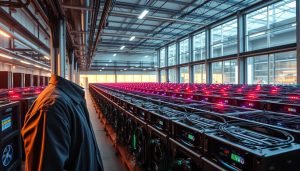
Bitcoin Mining Business for Sale: New Market Options
Here’s something that caught me off guard: the number of available bitcoin mining business for
XDC Price Shows Strong Momentum in Crypto Market Today
XDC cryptocurrency is making waves in the digital asset world. Its impressive market performance is catching investors’ eyes. The XDC price shows remarkable strength in
Etherscan: Your Gateway to the Ethereum Blockchain
Tracking over 700,000 active Ethereum addresses is now a breeze with Etherscan. This blockchain explorer has transformed our understanding of digital transactions1. With crypto trading
VWAP Trading Strategy Gains Traction on Wall Street
Wall Street is buzzing with a new trading strategy. The Volume Weighted Average Price (VWAP) indicator is changing the game for big investors. This sophisticated
 Bitcoin (BTC) $ 63,535.00
- Ethereum (ETH) $ 1,664.20
- Tether (USDT) $ 0.999411
- BNB (BNB) $ 603.27
- USDC (USDC) $ 0.999819
- XRP (XRP) $ 1.13
- Solana (SOL) $ 66.69
- TRON (TRX) $ 0.315295
- Lido Staked Ether (STETH) $ 2,265.05
- Figure Heloc (FIGR_HELOC) $ 1.04
 Bitcoin
  Ethereum
  Tether
  BNB
BNB  USDC
USDC  XRP
XRP  Solana
  TRON
TRON  Lido Staked Ether
  Figure Heloc